

Physical therapy, occupational therapy, sports medicine and chiropractic
Physical Therapy Clinic Equipment
Rehab Equipment in Rooms We Have Installed
3 photos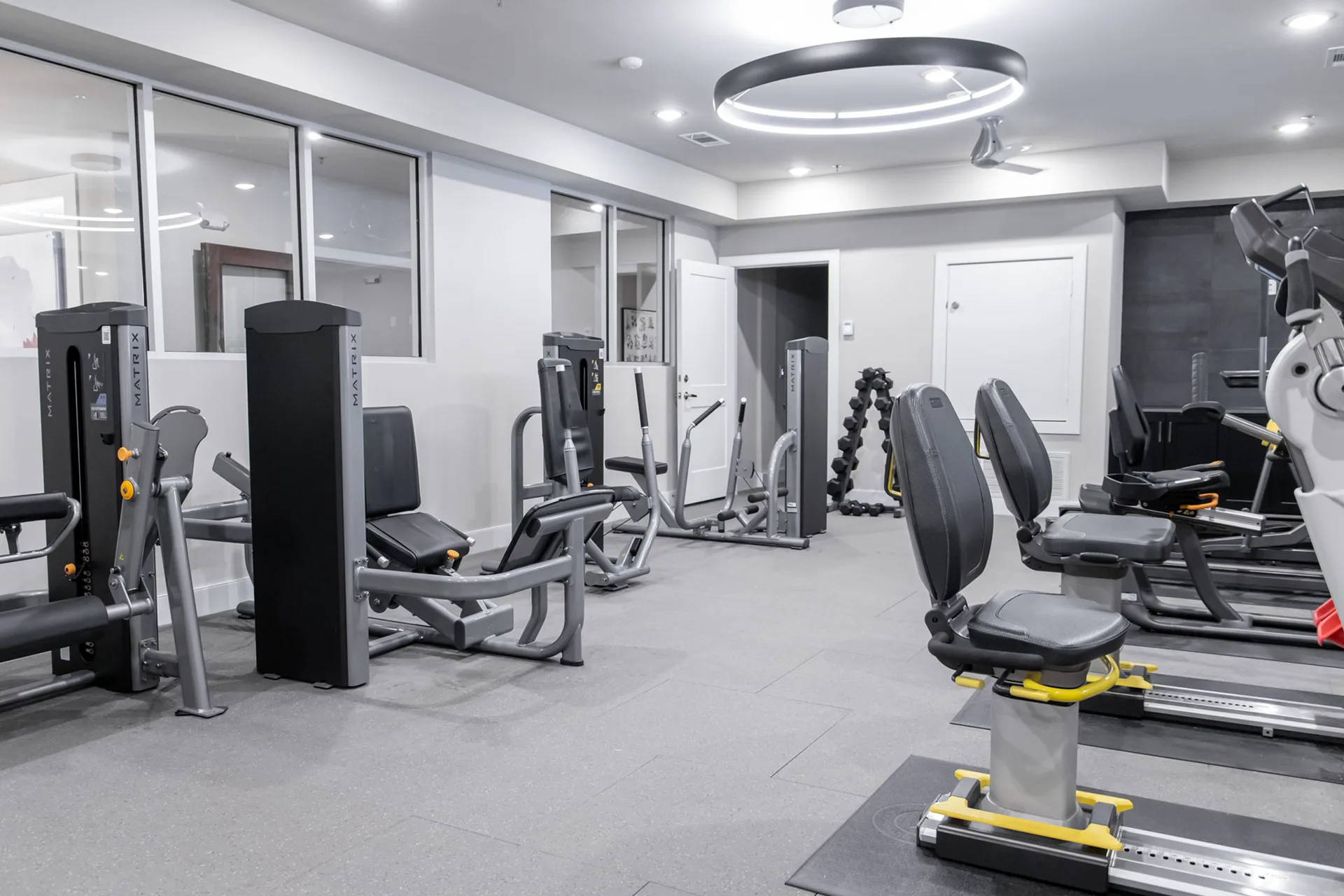
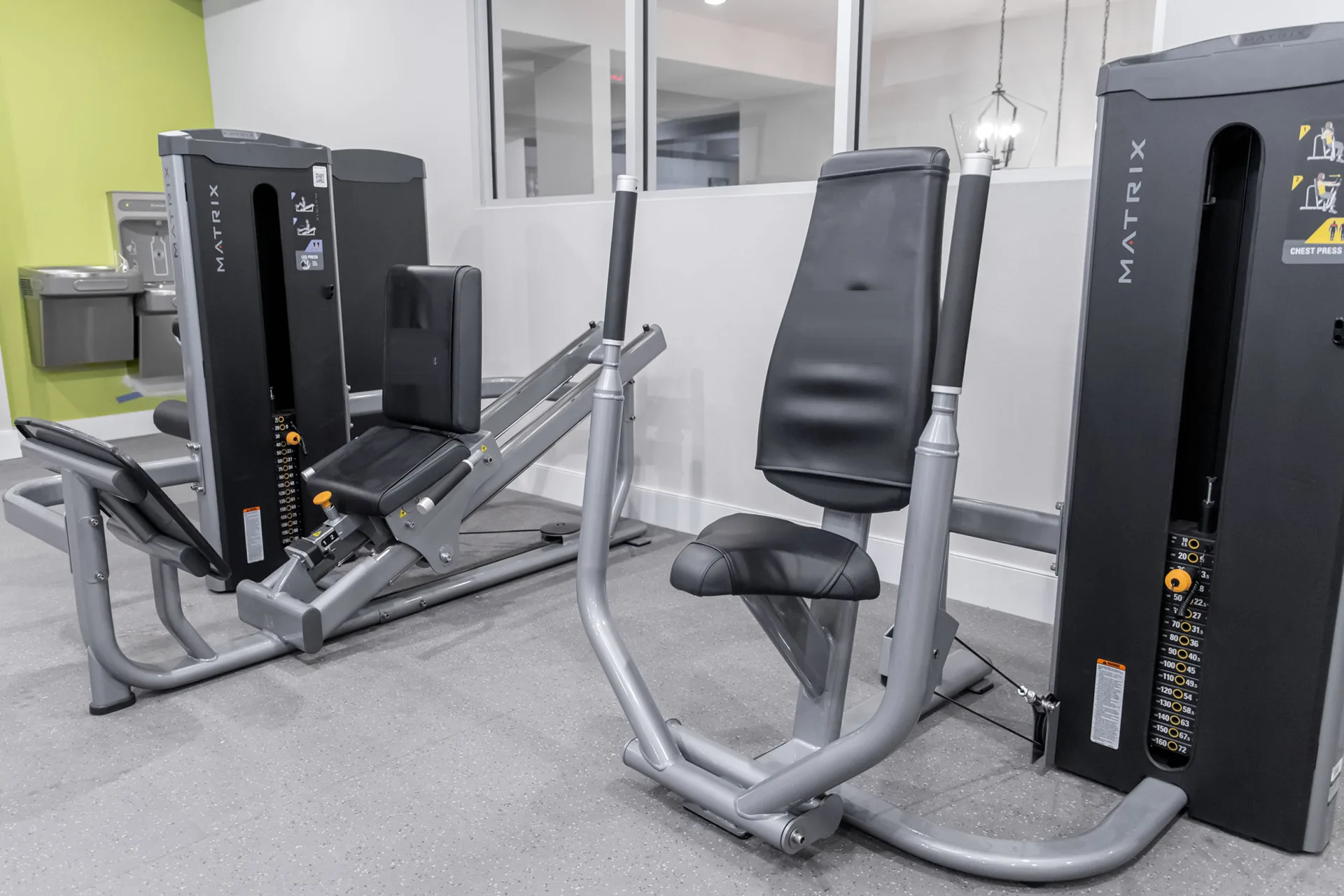
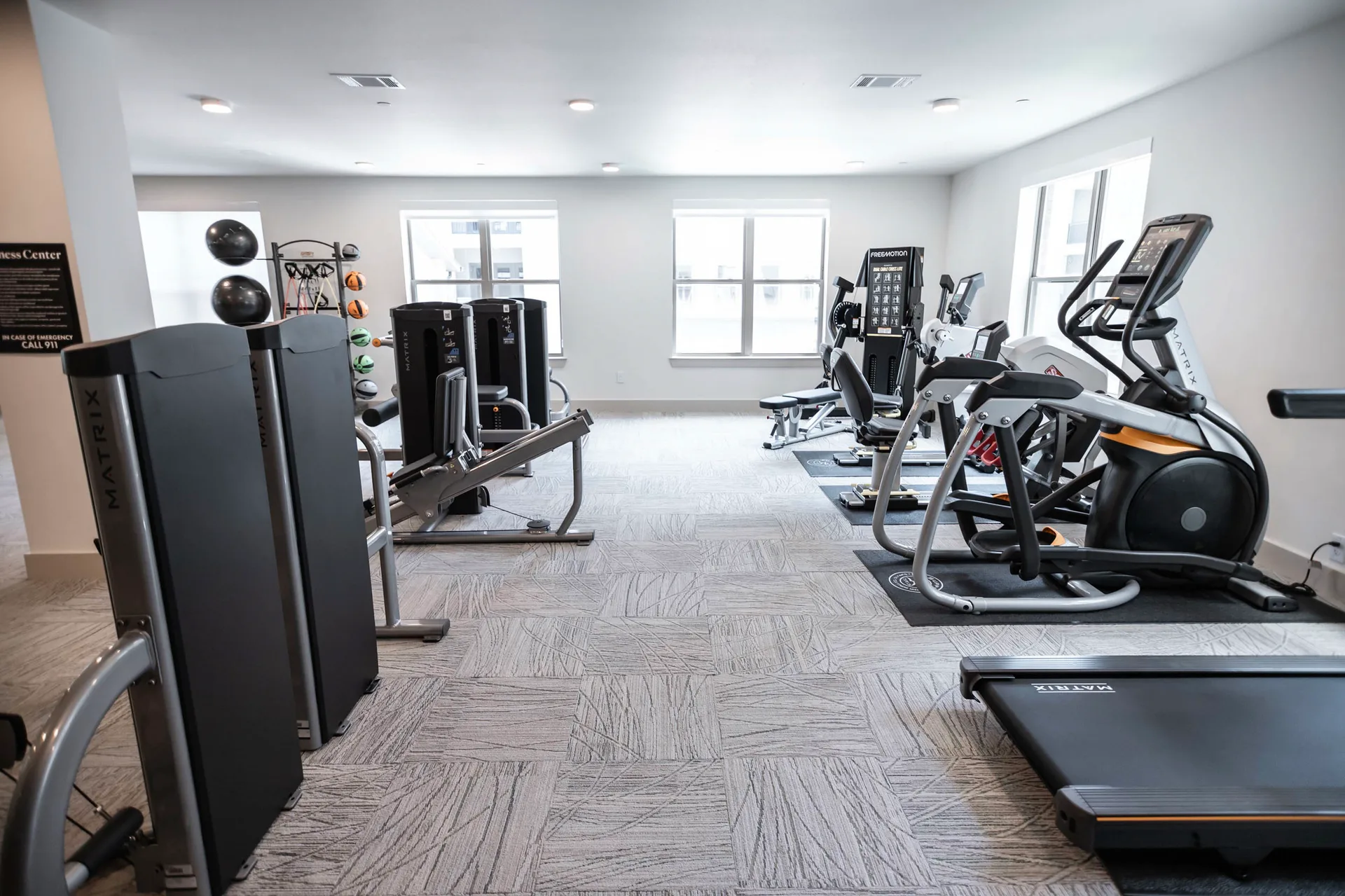 3 photos
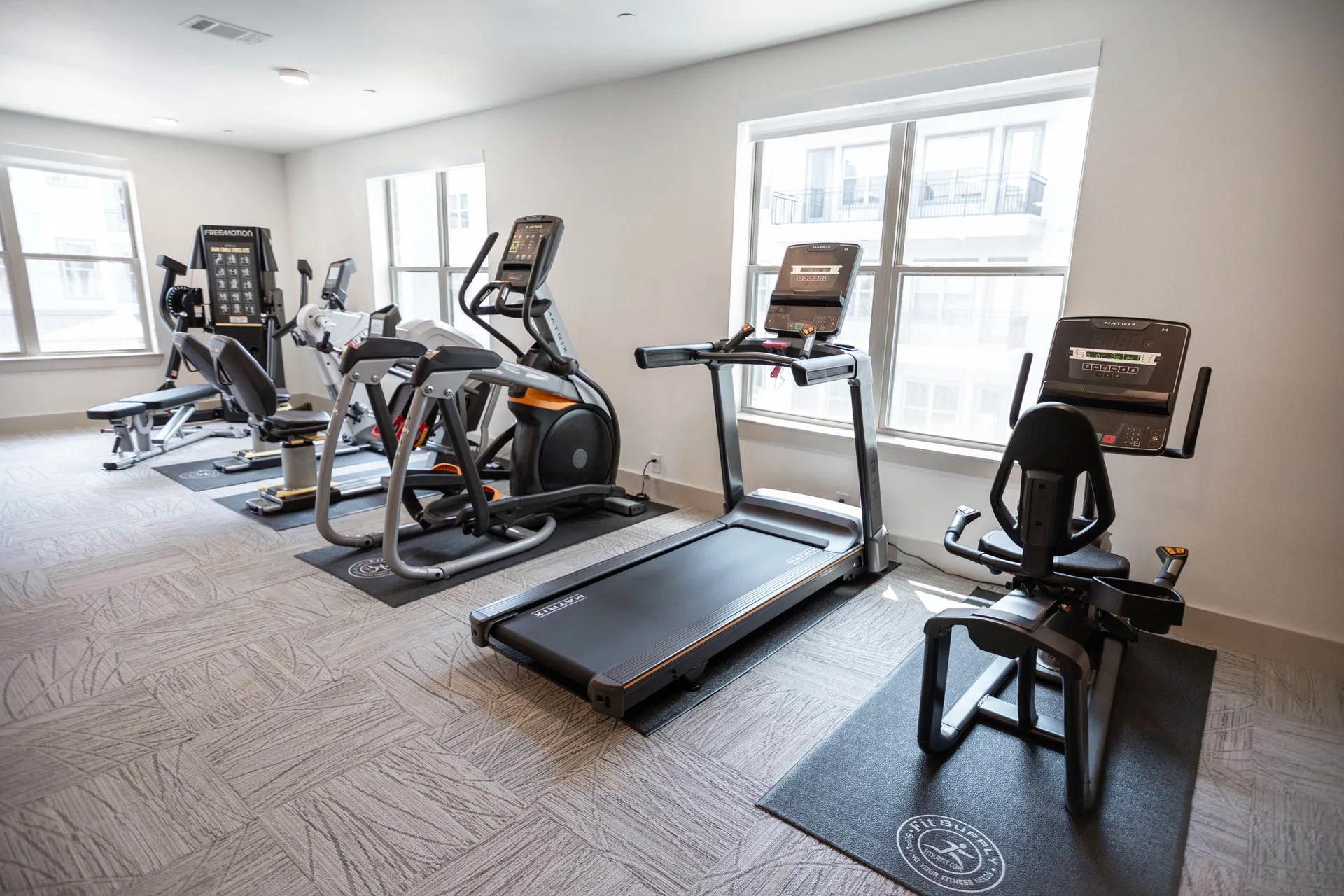
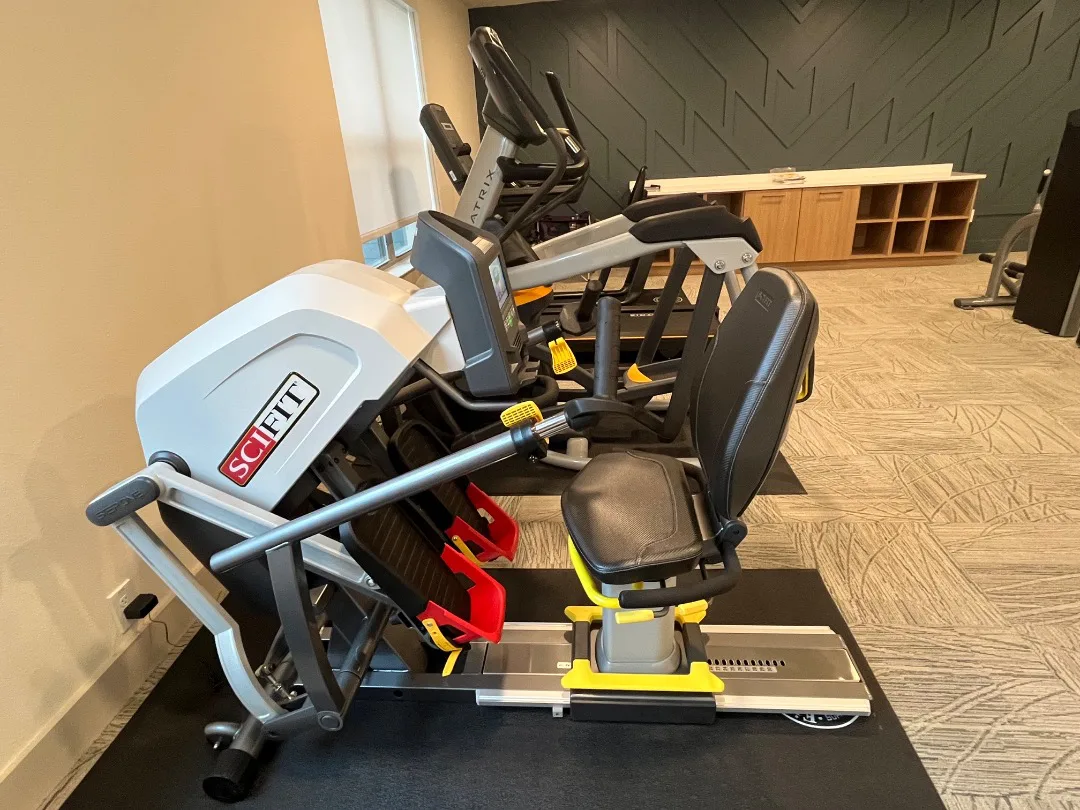
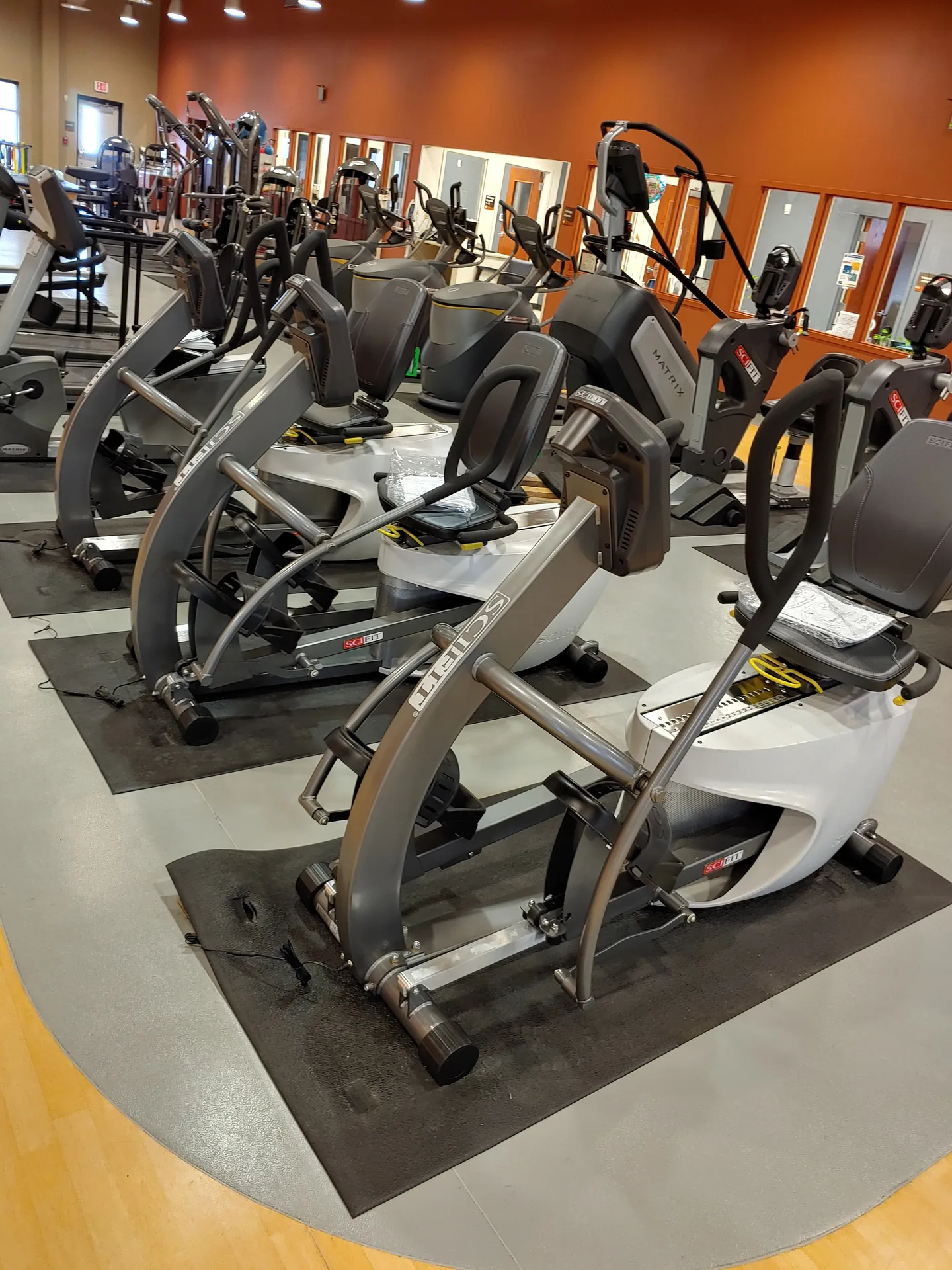
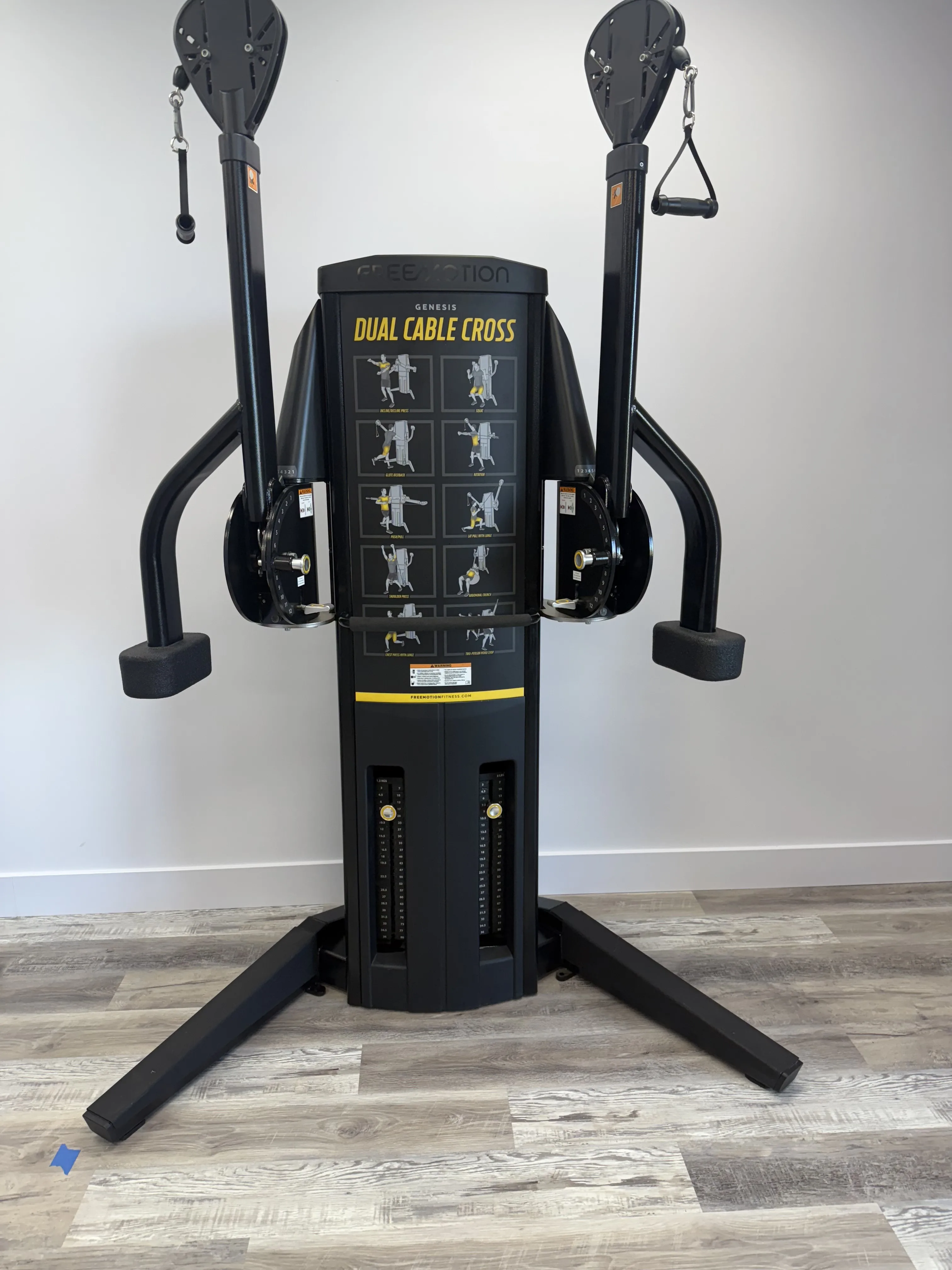 6 photos
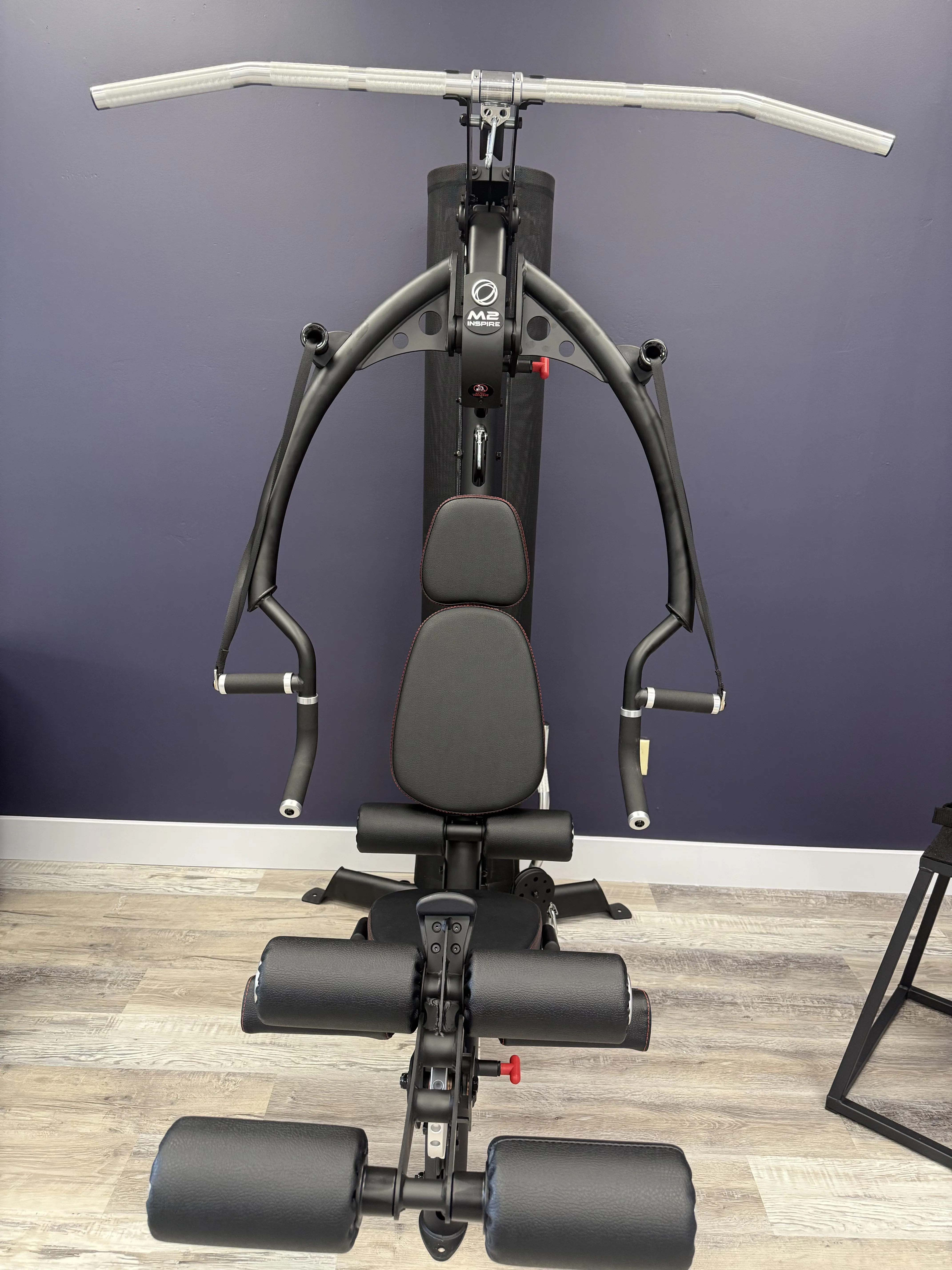
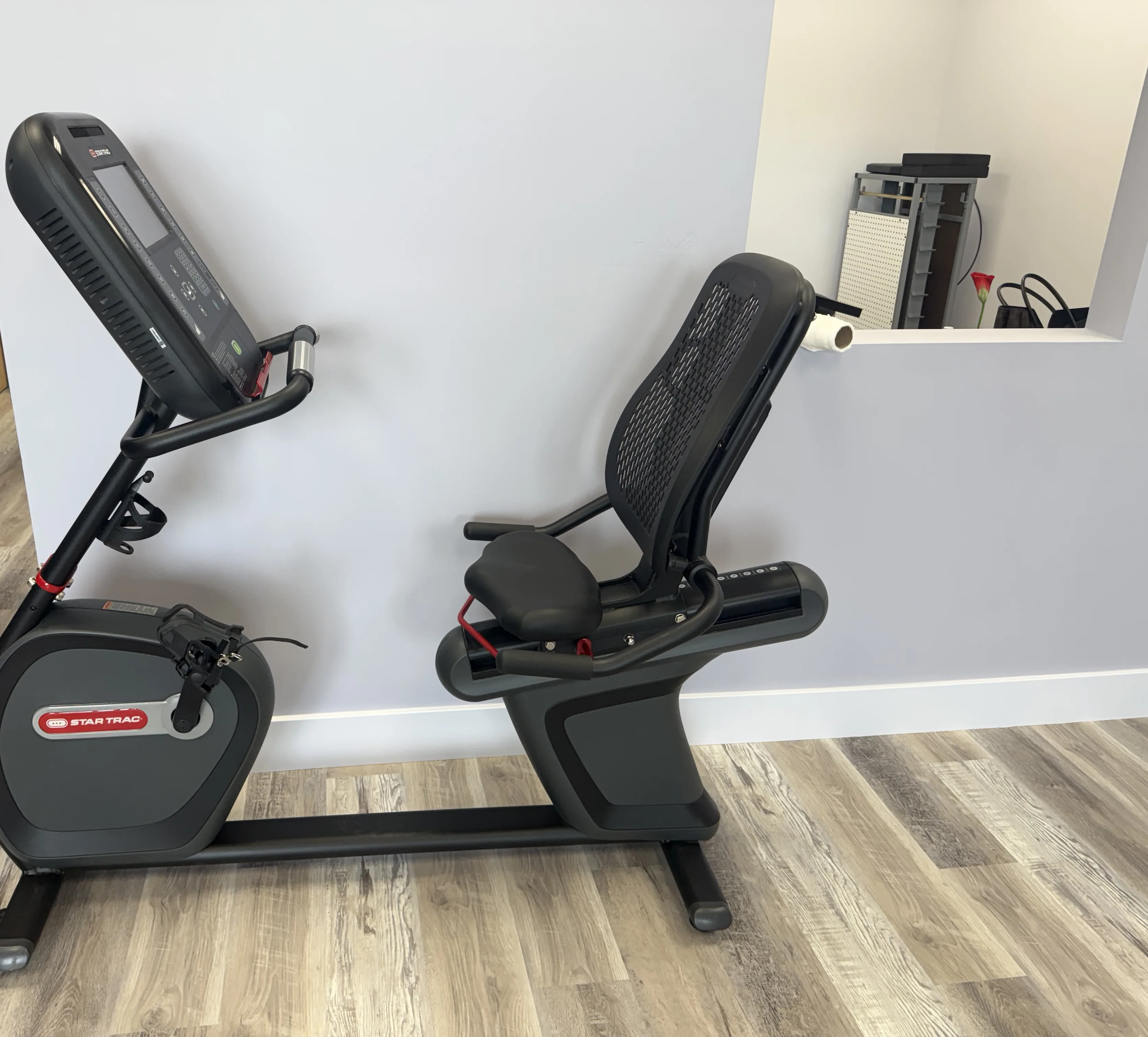
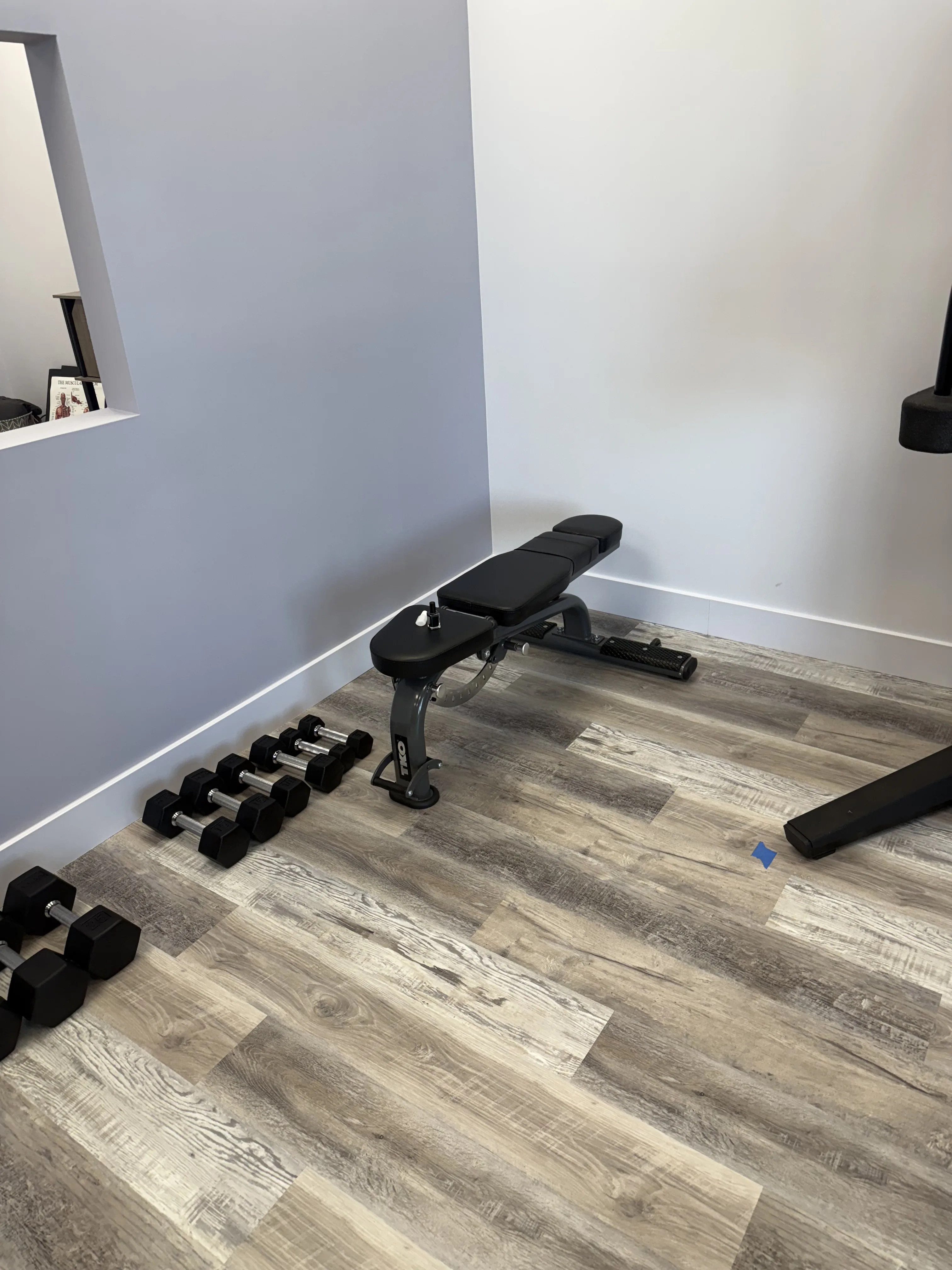
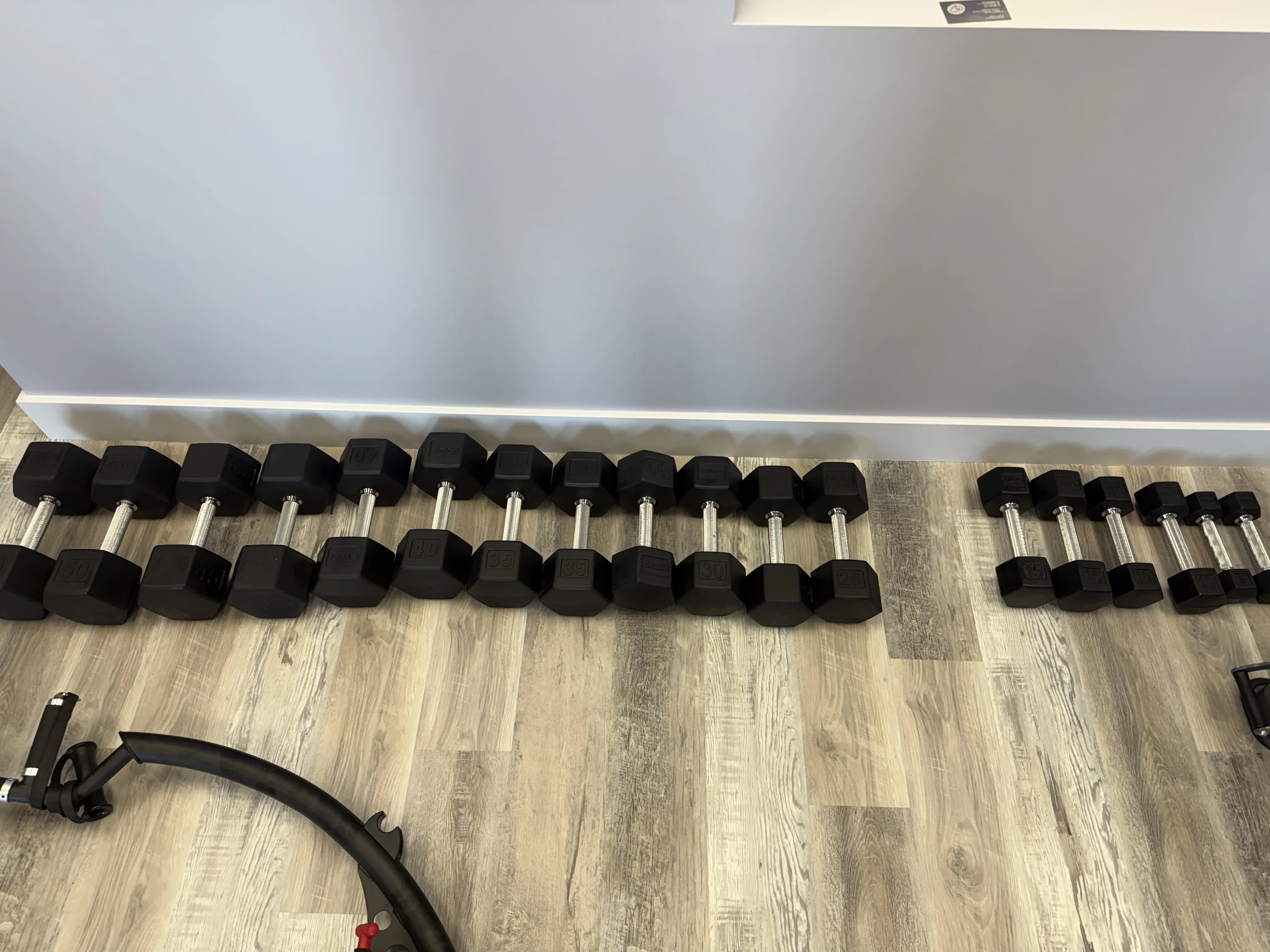
Therapy Clinics Like the Ones We Equip
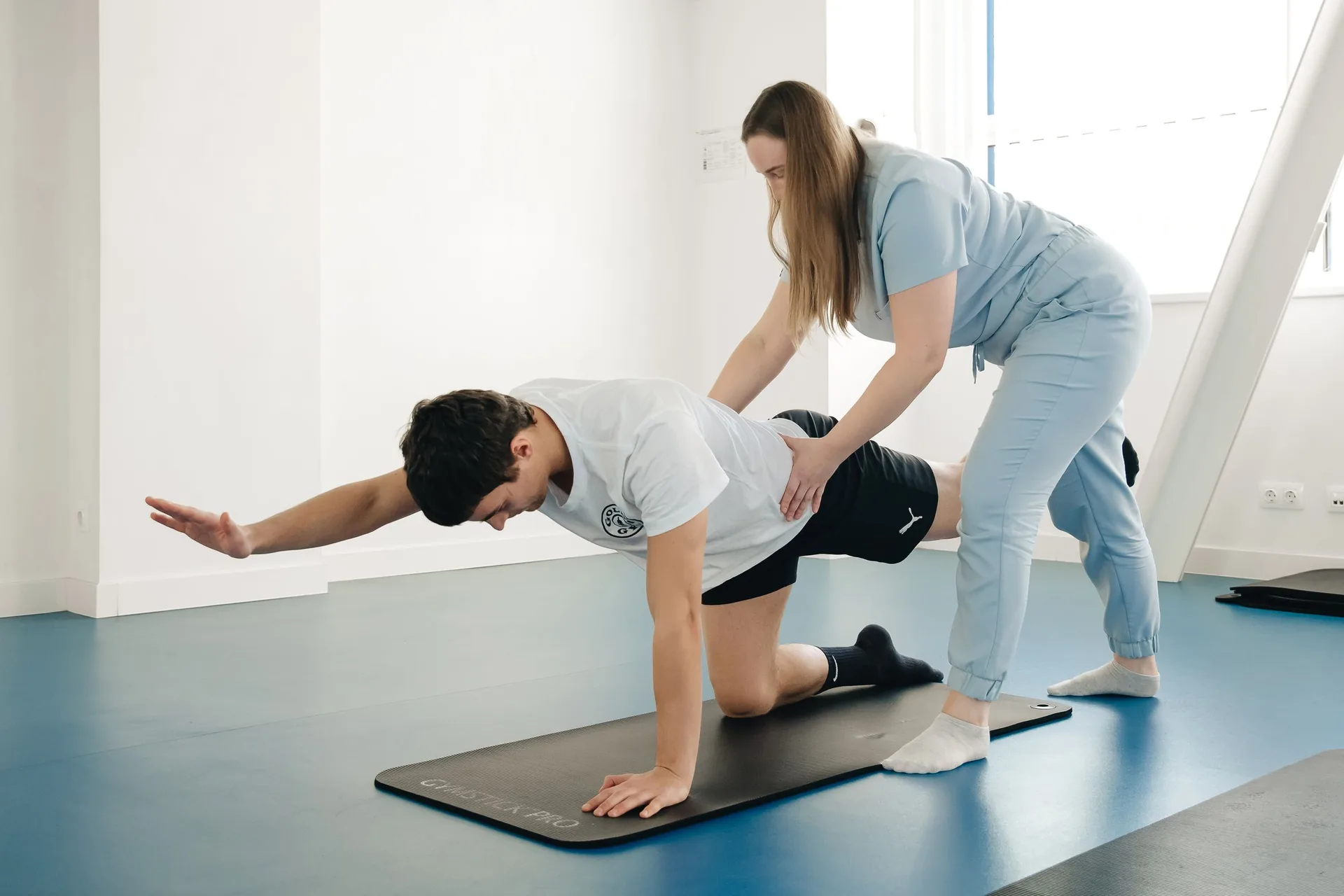
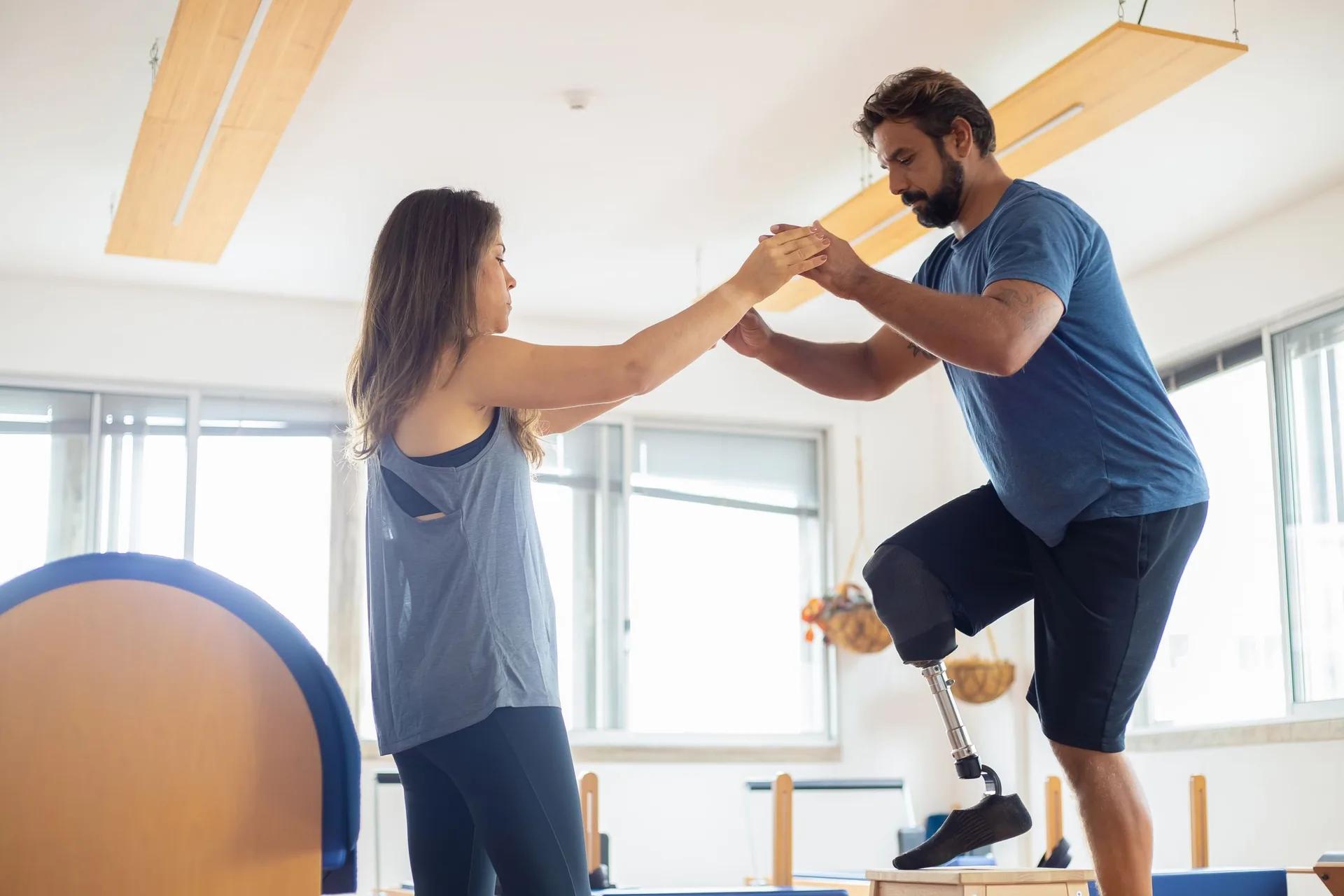
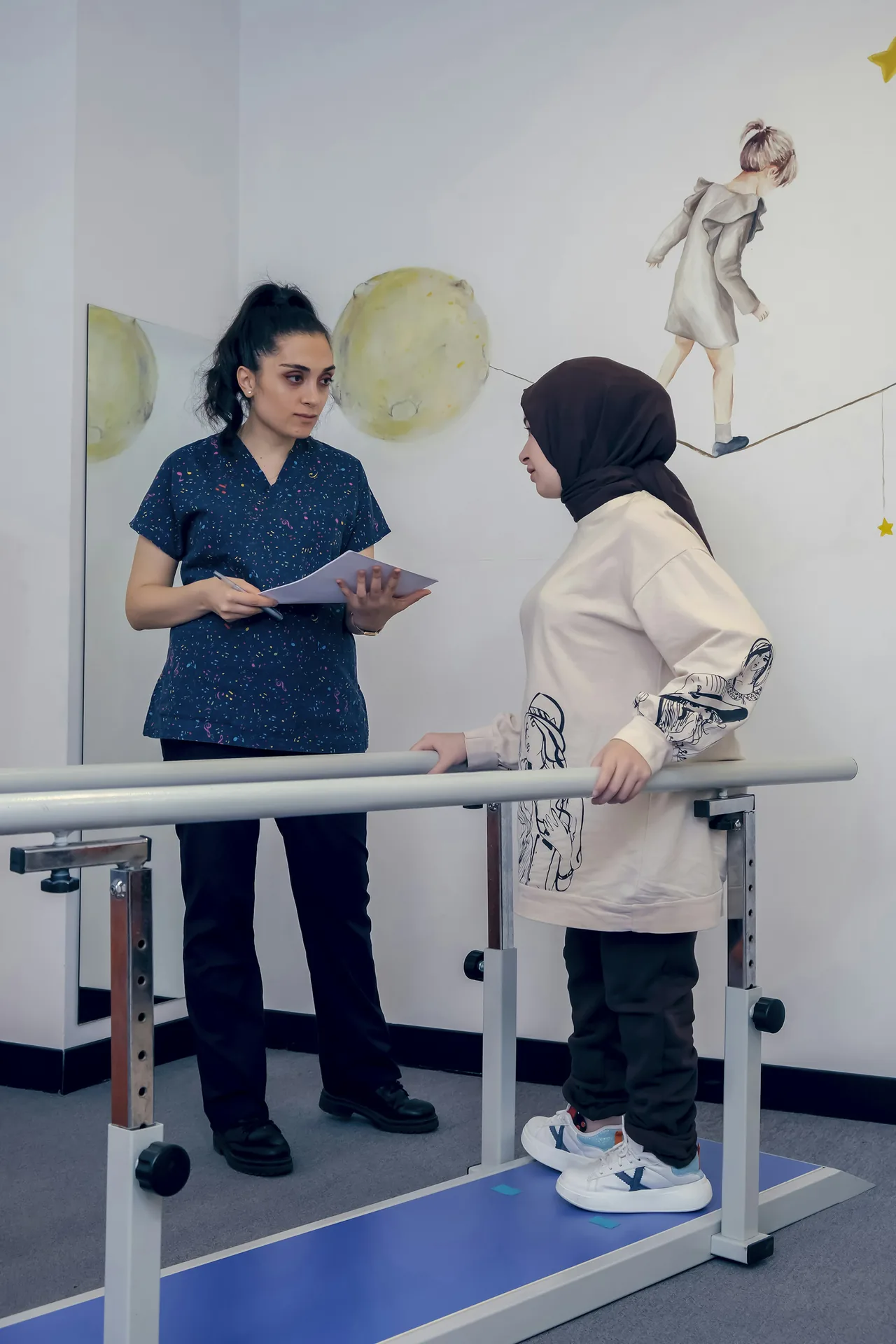
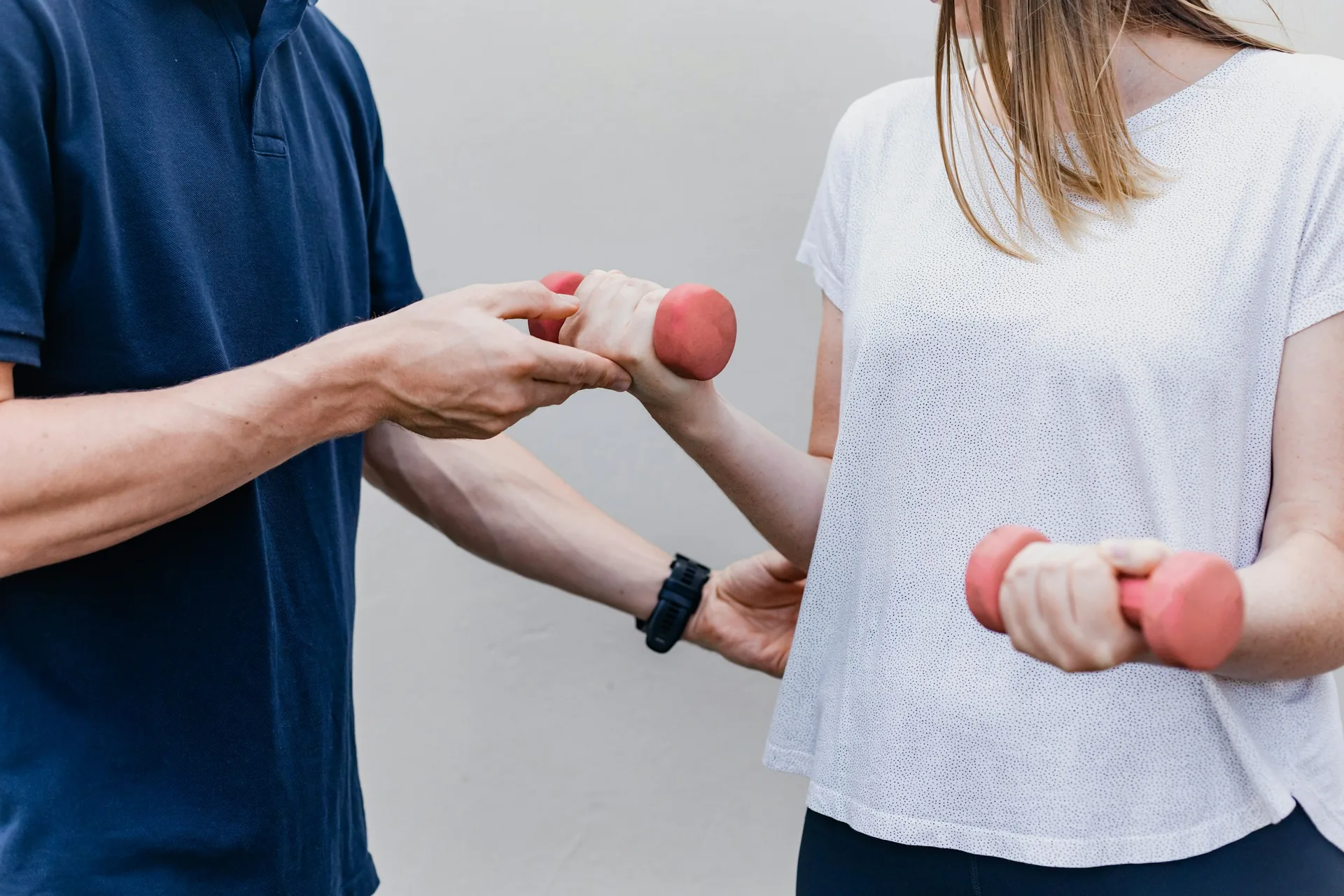
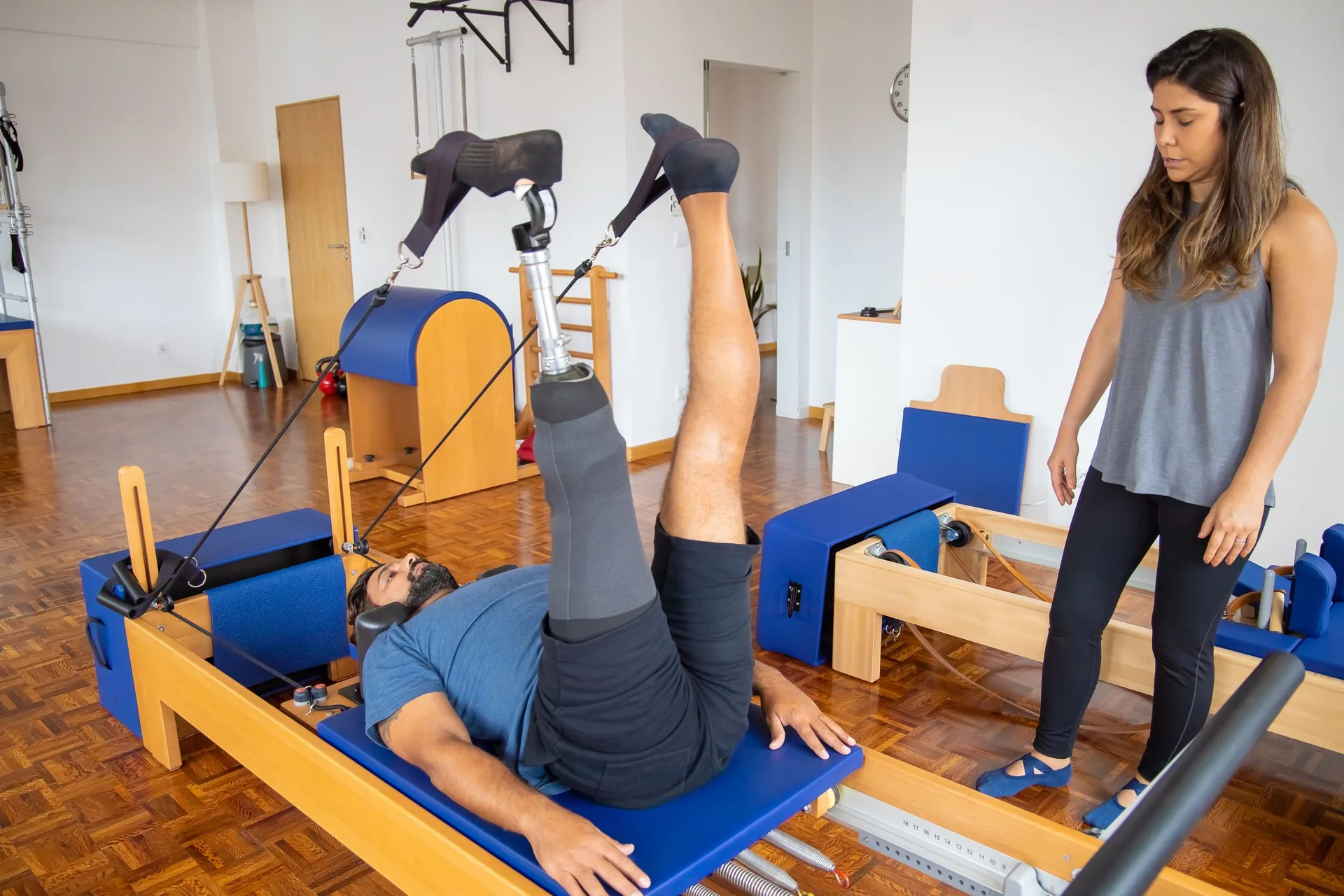
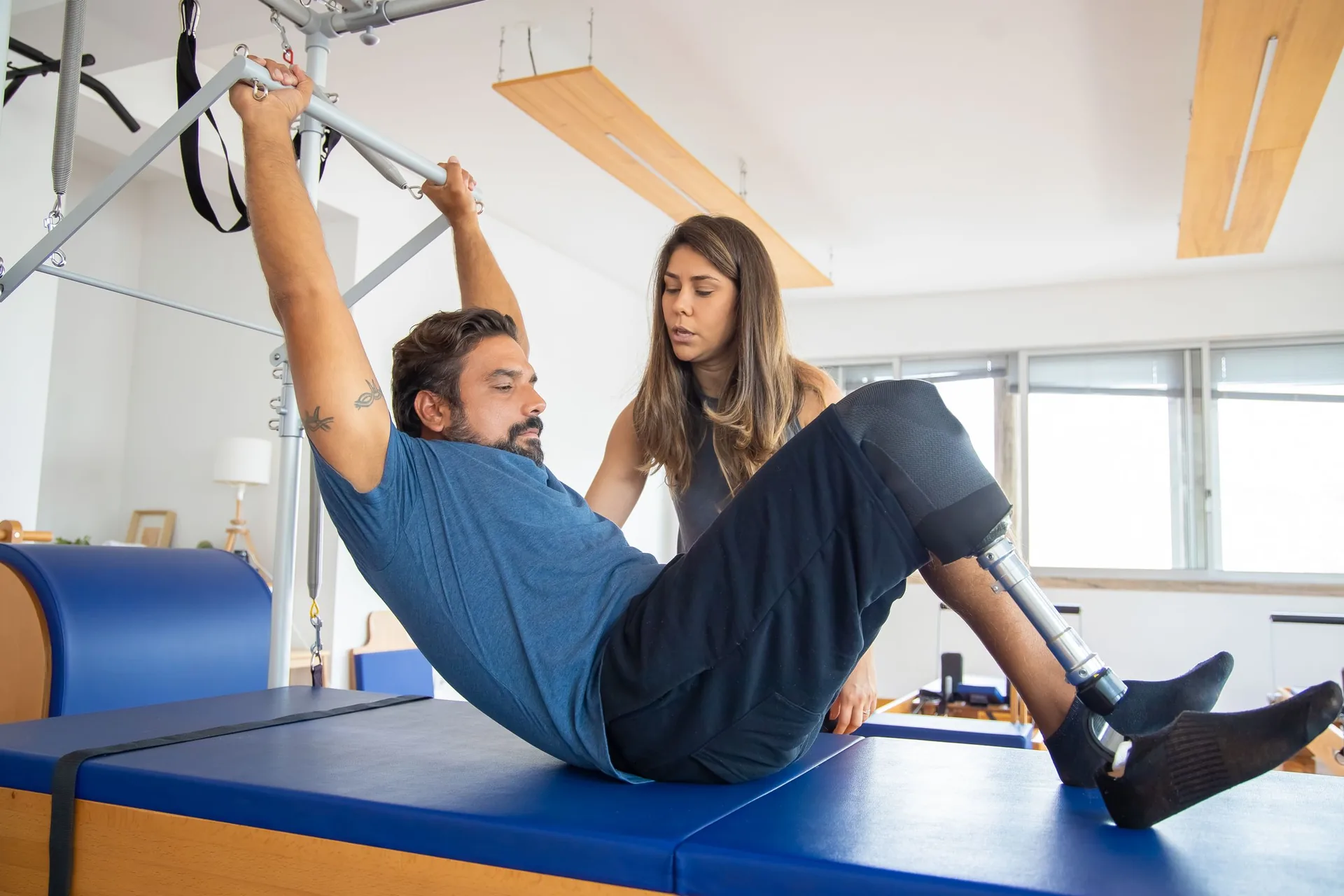
New and Pre-Owned Rehab Equipment, Clinic Layouts and Installation for Outpatient Therapy
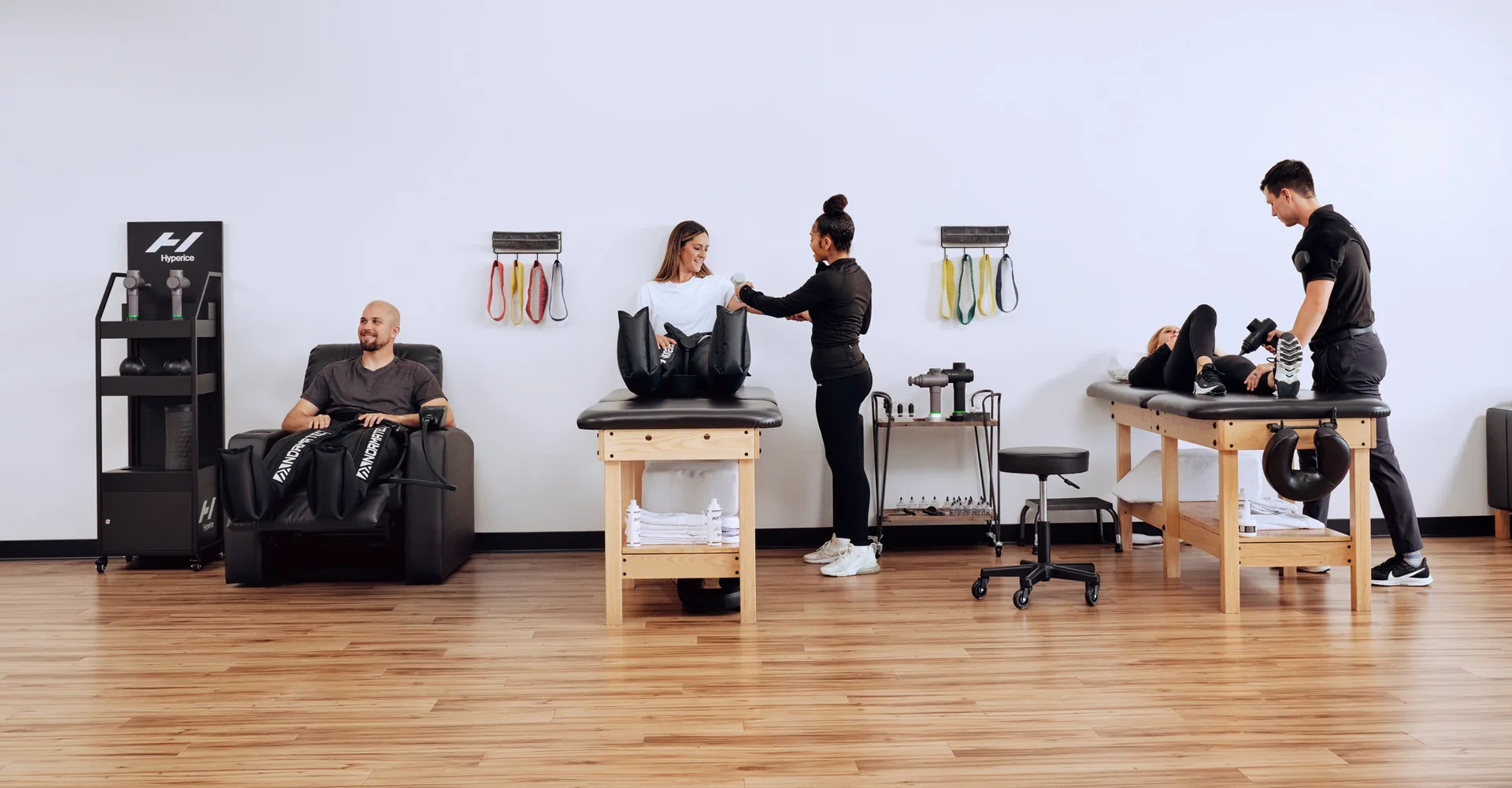
A therapy gym is a treatment room with equipment in it. Every machine has to start lighter than a commercial gym would ever need, adjust for a patient who cannot adjust it alone, and leave room for a therapist to stand beside it — and the whole gym usually has to fit inside a leased suite between the treatment tables and the front desk.
What a physical therapy clinic runs on
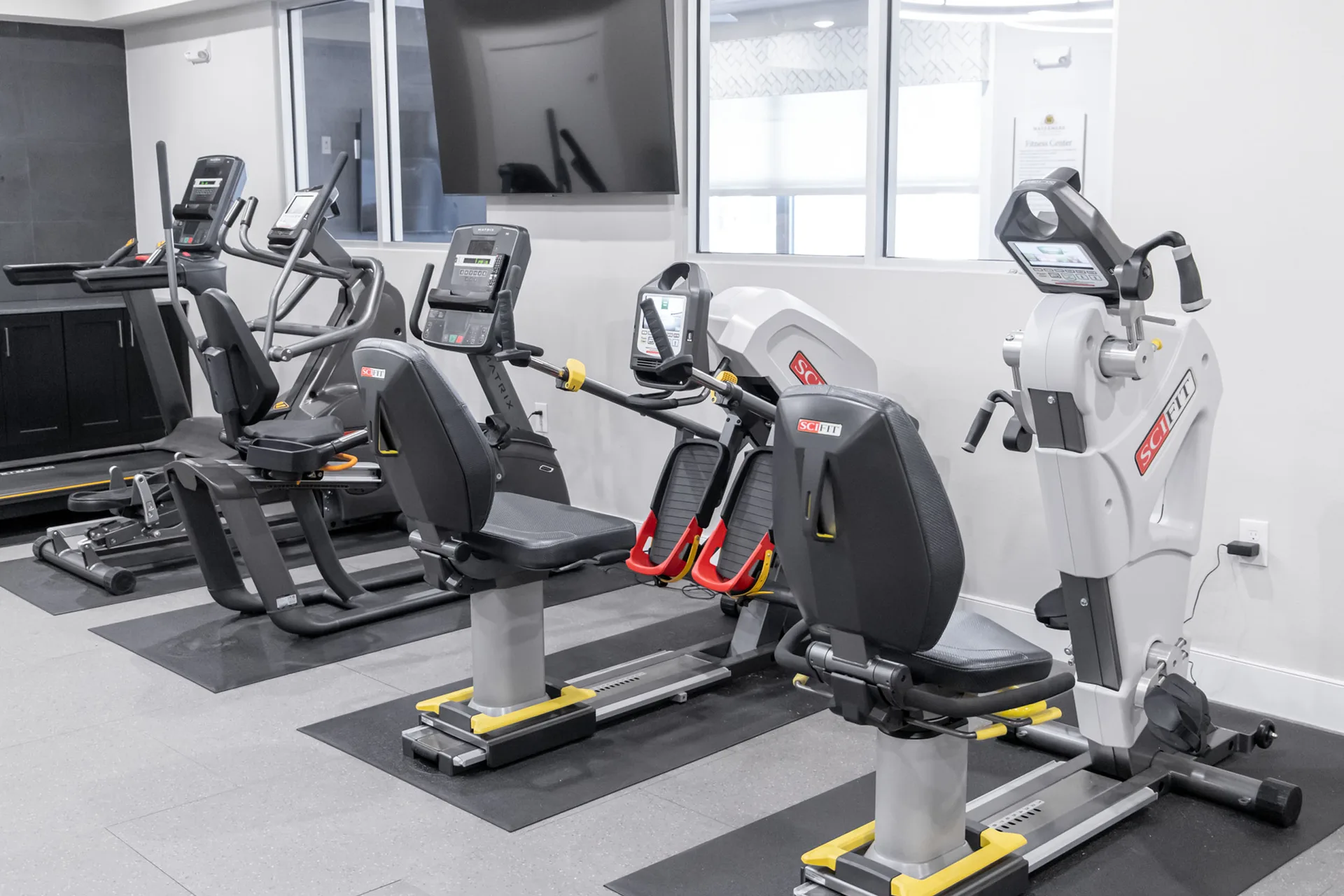
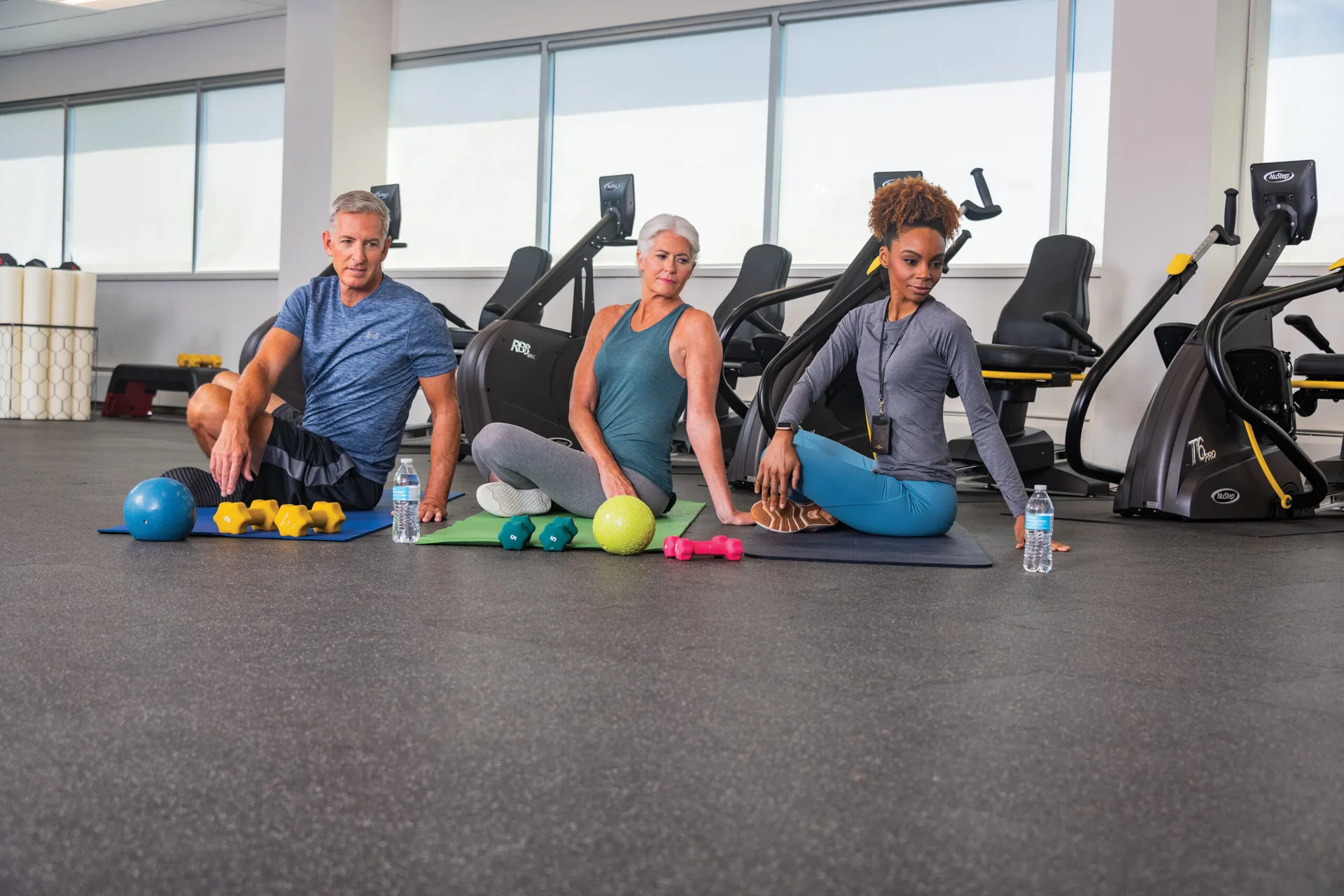
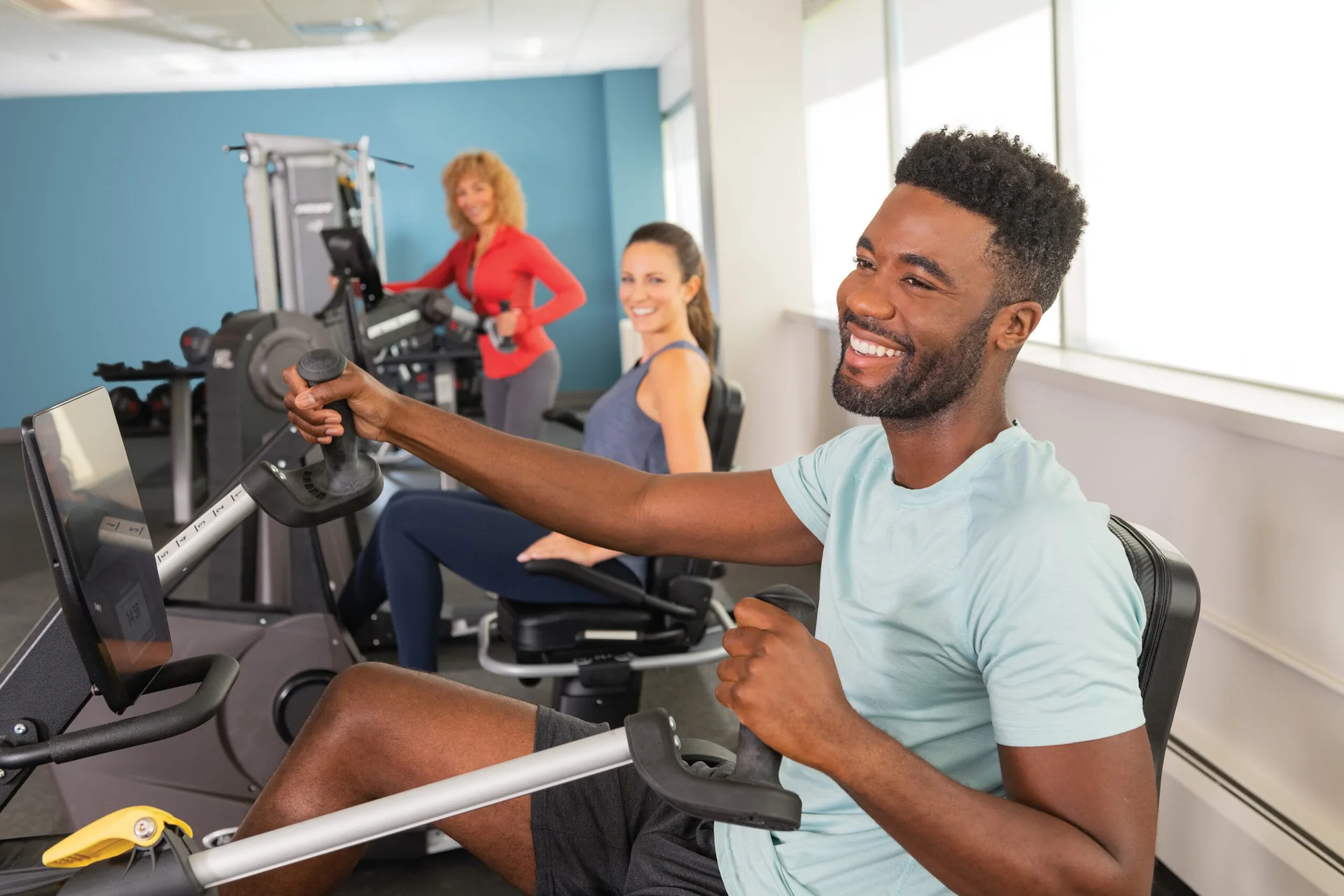
Most outpatient therapy gyms are built around the same short list. A seated total-body recumbent stepper — NuStep, SciFit or Spirit — does more of the work than anything else in the room, because a patient who cannot yet stand to exercise can still work arms and legs together from a seat they swivel into. An upper body ergometer carries the shoulder and upper-extremity caseload, and the clinical models take a wheelchair in place of the seat. A rehab treadmill starts at a walking pace slower than any club treadmill, runs in reverse, and carries full-length handrails a patient can hold the whole way. Around those sit recumbent and upright bikes, a cable column or dual cable cross, a few strength machines that start at a few pounds, and the balance, suspension and functional tools the treatment plan calls for.
The strength side is where a clinic differs most from a gym. A selectorized stack that starts at 10 or 15 lb and climbs in 10 lb plates is beyond an early post-surgical patient, so clinics lean on machines that start light and increment finely: pneumatic Keiser resistance, which moves in small steps from close to zero, cable columns with fractional add-on weights, and incline body-weight trainers that load a fraction of the patient's own weight.
Occupational therapy
An OT gym trains function — reaching, lifting, carrying, gripping, transferring — so its fitness equipment is chosen for the upper body and for tasks that look like a working day: an upper body ergometer, a cable column set at every height a patient reaches to, wall bars, light dumbbells and weighted balls, and an open area for lifting from floor to shelf. We supply that exercise equipment and draw the gym around the rest of the OT room; the fine-motor, hand-therapy and daily-living tools come from the therapy supply houses that specialize in them, and we leave space for them on the plan.
Sports medicine and return to sport
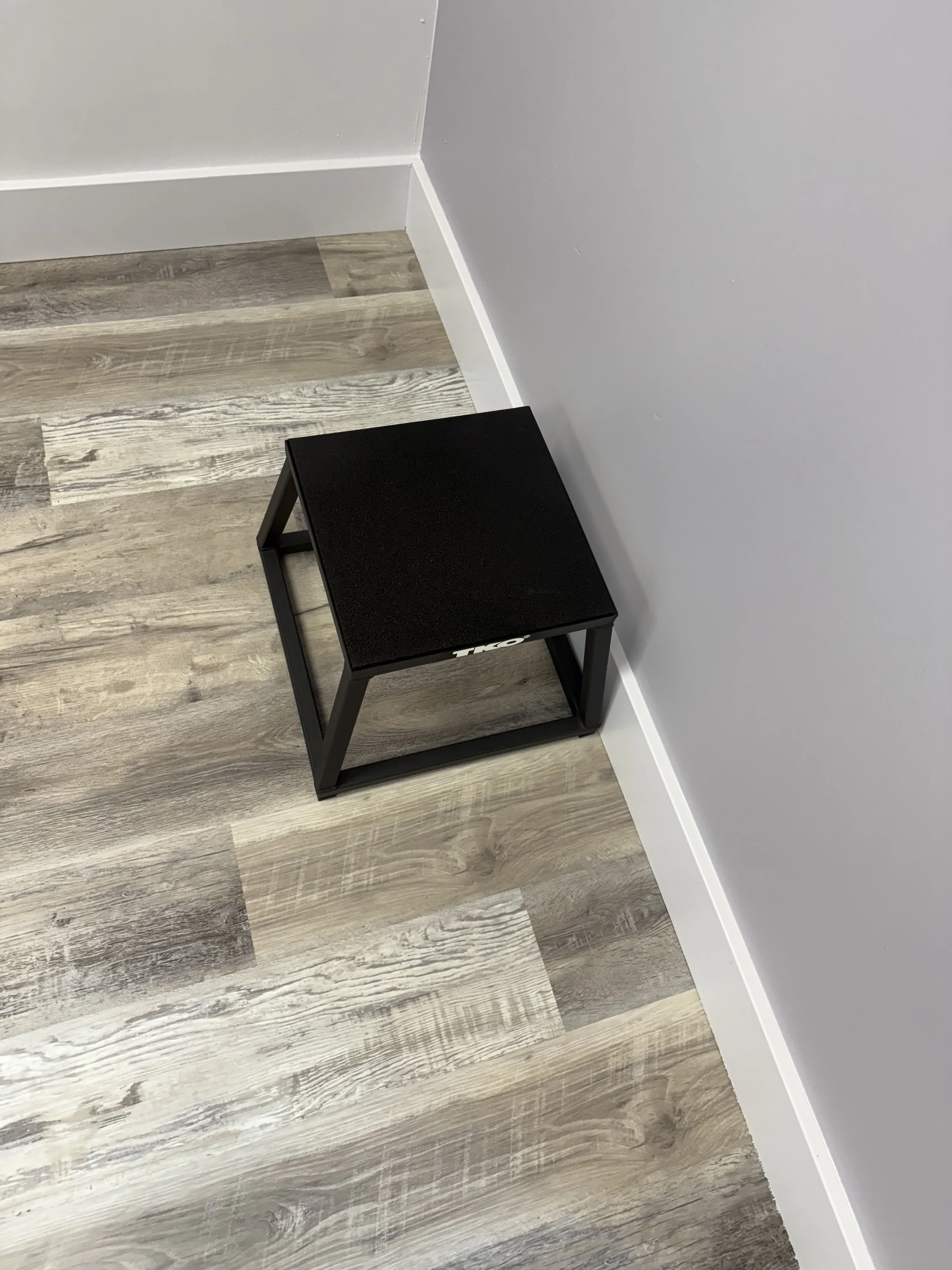
A sports-medicine practice treats the athlete as well as the injury, and the last weeks of a return-to-sport program look like a training floor: a rack and platform, a turf lane for sleds and change of direction, plyo boxes, a cable cross, pneumatic machines for power at speed, and conditioning cardio. That is the same specification as our athletic weight rooms, scaled to a clinic, and it sits beside the recumbent and upper-body equipment the early phases need.
Chiropractic and active care
Chiropractic practices that add an active-care or rehab room usually have the least space of all. A recumbent stepper, a cable column, suspension straps on a wall mount, a BOSU, a Power Plate vibration platform and a stretch trainer fit a single room, and the same layout rules apply: room to transfer, room to coach, and nothing a patient has to climb over.
New or pre-owned, piece by piece
Therapy clinics are the buyers who gain most from pre-owned equipment, because the pieces they use hardest are the ones that are built to be rebuilt. A recumbent stepper, a recumbent bike or a cable column coming out of a hospital or club refresh, rebuilt properly, does the same job as a new one. Every pre-owned machine goes through our own Texas shop to a written 20-point inspection and leaves in one of two conditions — Cleaned & Serviced, with a 30-day parts-and-labor warranty, or Remanufactured, repainted with its worn components replaced and a 90-day warranty. Most clinics buy a mix: the physical therapy clinic in Carefree, Arizona, opened with a pre-owned dual cable cross, elliptical and recumbent bike, each Cleaned & Serviced, alongside new wall bars, a BOSU, plyo boxes and dumbbells. Life Fitness, Precor and Cybex are lines we supply pre-owned only, and the quote says so. New, refurbished or remanufactured explains the difference; our sister company Discount Online Fitness lists the certified pre-owned range online, and a clinic replacing equipment can trade in what it has.
How a therapy gym is laid out
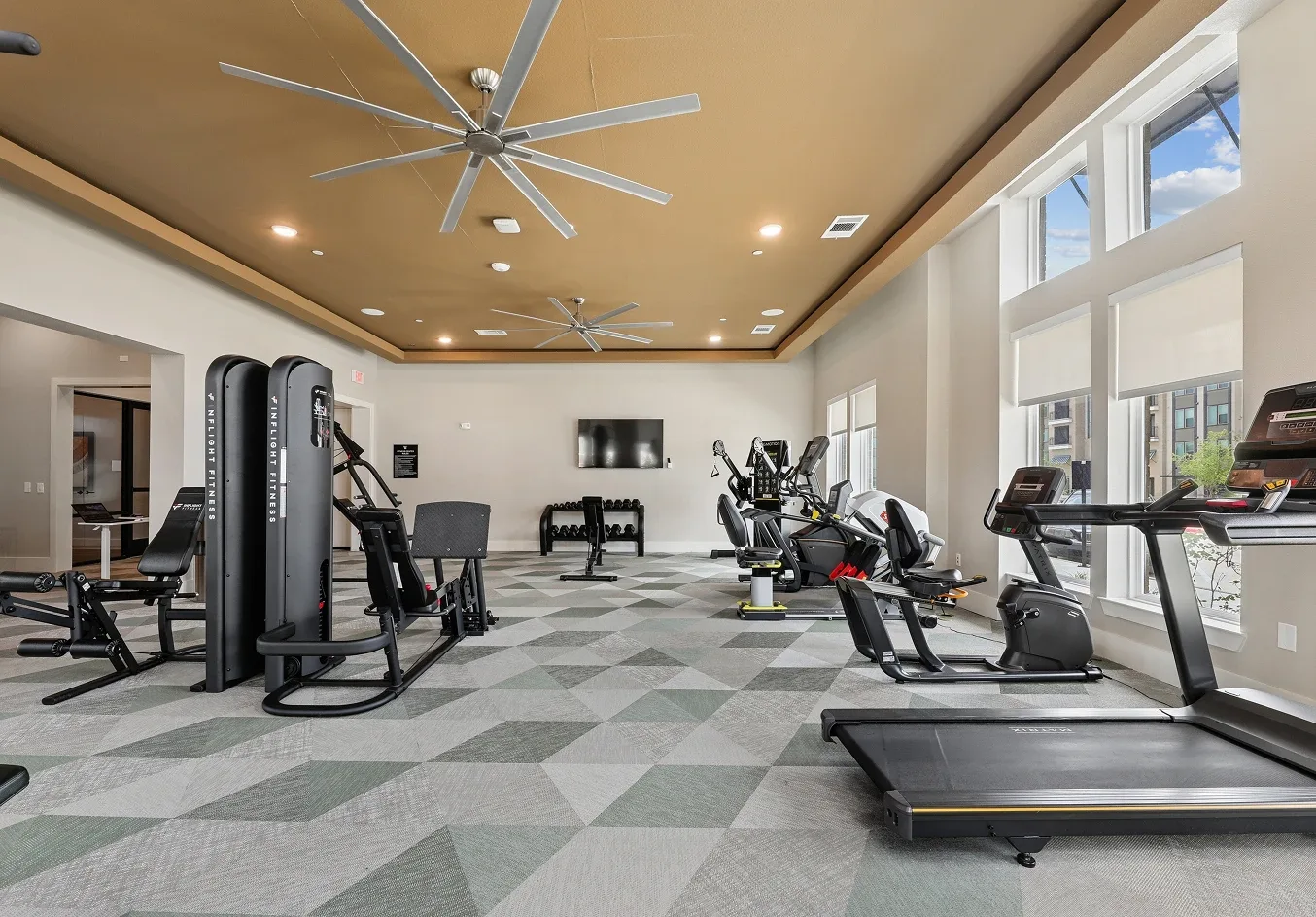
The layout comes before the equipment list, because a clinic floor carries more circulation than a gym and a patient may arrive on a walker. Four things set it.
-
Transfer space at every station
The ADA Standards require at least one of each type of machine to have a 30 by 48 in clear floor space positioned for transfer, on an accessible route; a therapy gym gives it to most stations, so a wheelchair user can move onto the seat with a therapist alongside.
-
Routes a walker can use
36 in clear routes between machines and a 60 in turning space where a patient turns, treated as minimums — patients on crutches, walkers and gait belts share the floor with everyone else.
-
A therapist on both sides
Stations are spaced so a clinician can stand at either side of a patient mid-exercise, and the floor is in sight from the treatment tables and the aide station.
-
Movement patterns per square foot
Clinics specify for the range of movements a footprint allows, not machine count: one cable column and an open mat area earn more than three single-purpose machines in a leased suite.
From our manufacturer partners
What a Therapy Gym Is Built From
The machines a PT or OT clinic runs its plan of care on, from the partners we supply new. Every one is available pre-owned when the right unit is in stock, and the quote says which is which.
Recumbent steppers and total-body trainers
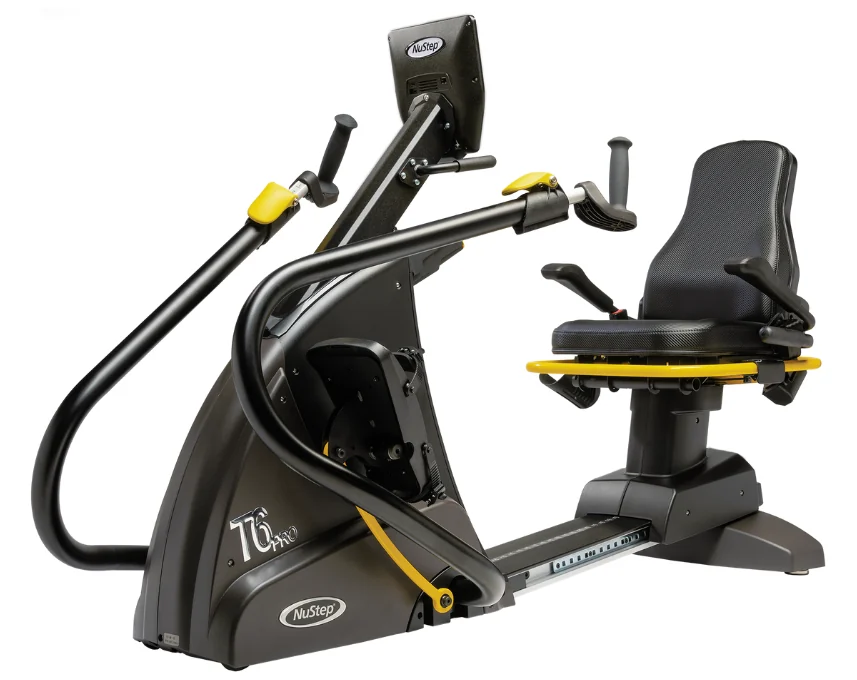
The seated piece most patients use from the first visit to the last: a swivel seat to transfer onto, a step-through frame, and arms and legs working together from a very low starting load.
NuStep
Recumbent Cross Trainer / T6PRO
A 360° swivel seat that locks every 45°, a low step-through, low-inertia start-up and 15 resistance levels, for users up to 500 lb.
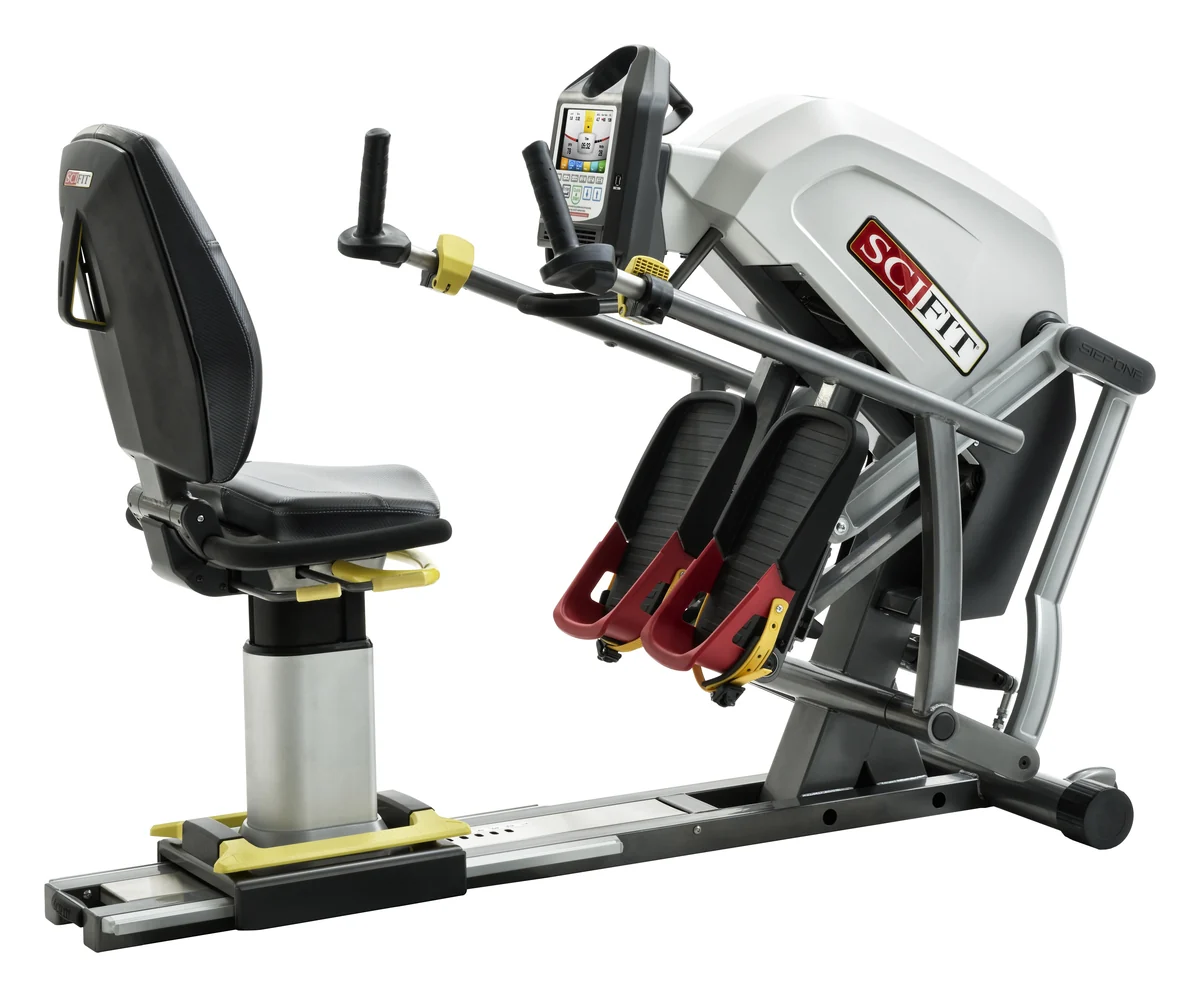
SciFit
Recumbent Stepper / StepOne
Starts at 6 watts with 191 resistance levels and a user-defined 2 to 11.5 in stride; the seat removes for direct wheelchair access.
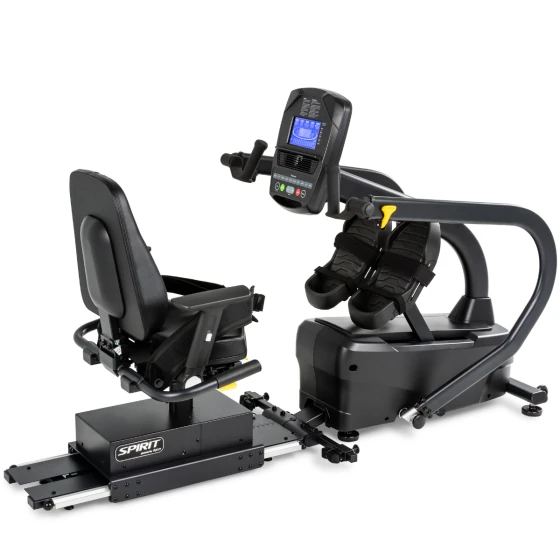
Spirit Fitness
Recumbent Stepper / 7.5S
ADA-compliant with direct wheelchair access through a removable 360° seat, with a 1 to 12.5 in adjustable step range.
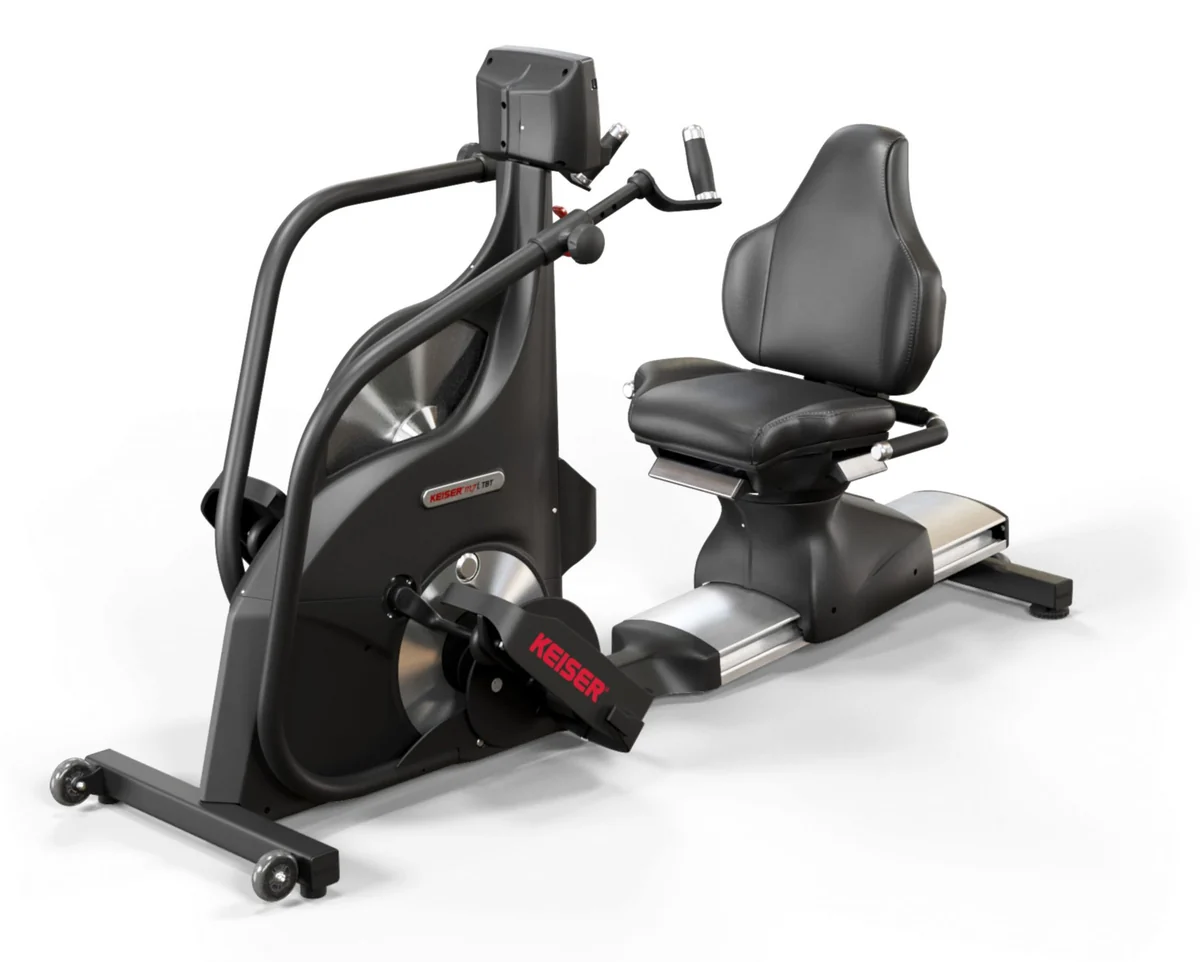
Keiser
Recumbent Total Body Trainer / M7i
A 3 in step-through height, a seat that swivels for transfer from a wheelchair, and dependent upper and lower cranks for passive assistance.
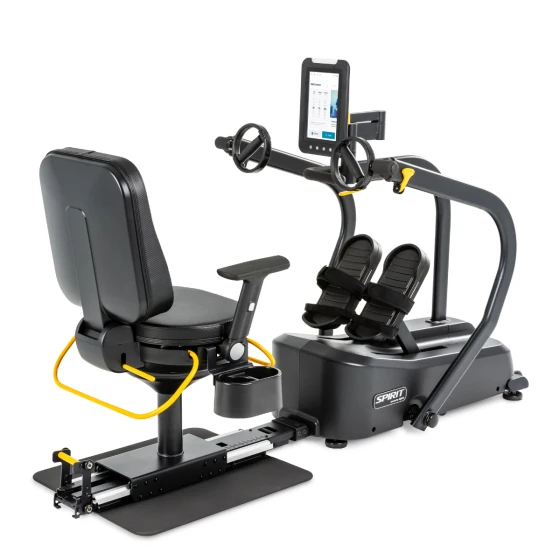
Spirit Fitness
Recumbent Stepper / 8.5S
Constant power, isokinetic and constant resistance modes across 50 levels, a left-right symmetry program and a removable seat.
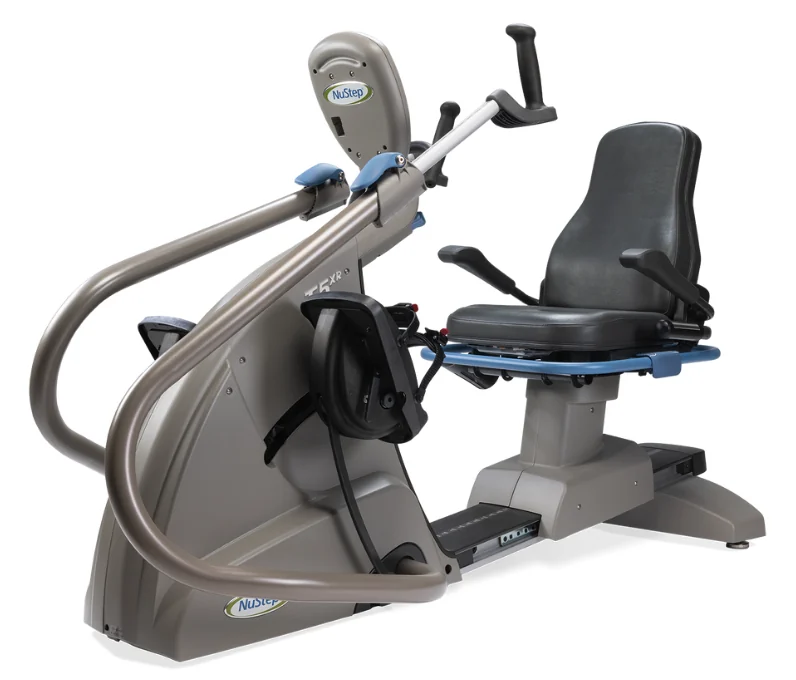
NuStep
Recumbent Cross Trainer / T5XR
A 600 lb user capacity, a reclining 360° swivel seat and StrideLock, which locks the handles and pedals in place.
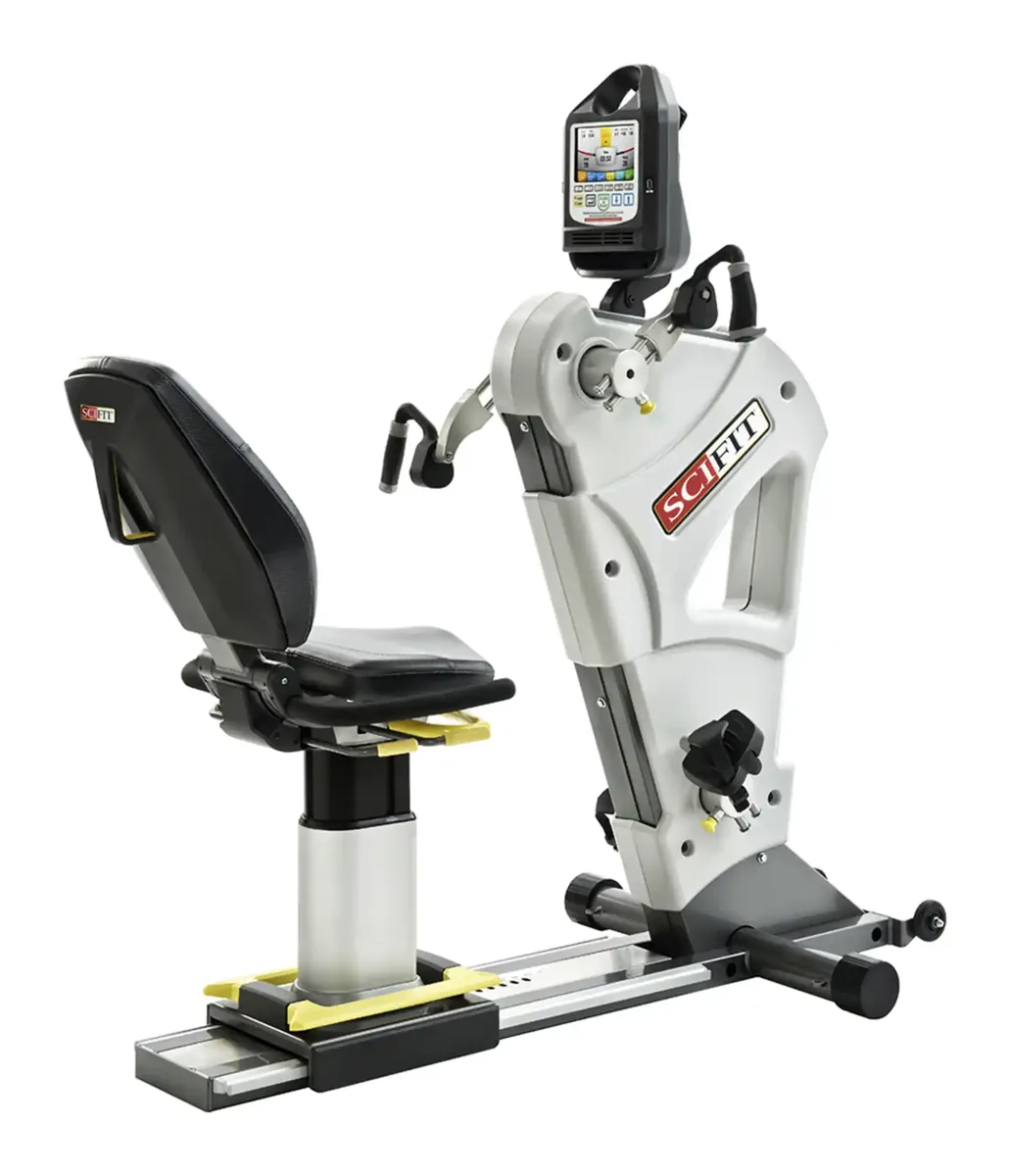
SciFit
Total Body Trainer / PRO2
An arm ergometer and a recumbent bike in one frame, with linked upper and lower cranks so one pair of limbs can drive the other.
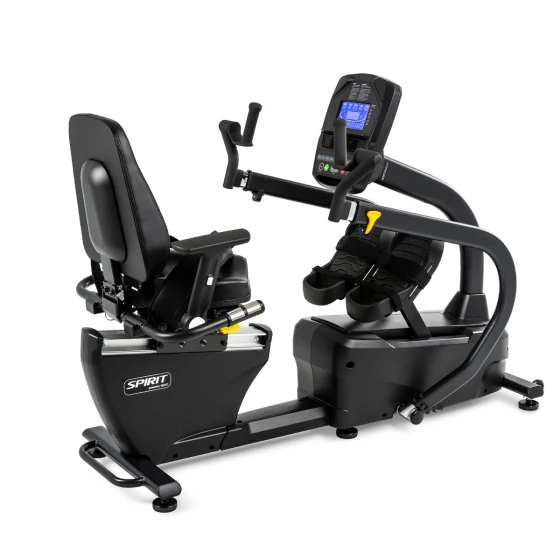
Spirit Fitness
Recumbent Stepper / 7.0S
A semi-recumbent stepper with 1:1 linear leg-and-arm motion, a 360° swivel seat and a low step-over height.
Upper body ergometers
Shoulder and upper-extremity rehab, arm endurance for pulmonary patients, and exercise from a wheelchair — the clinical models take the chair in place of the seat.
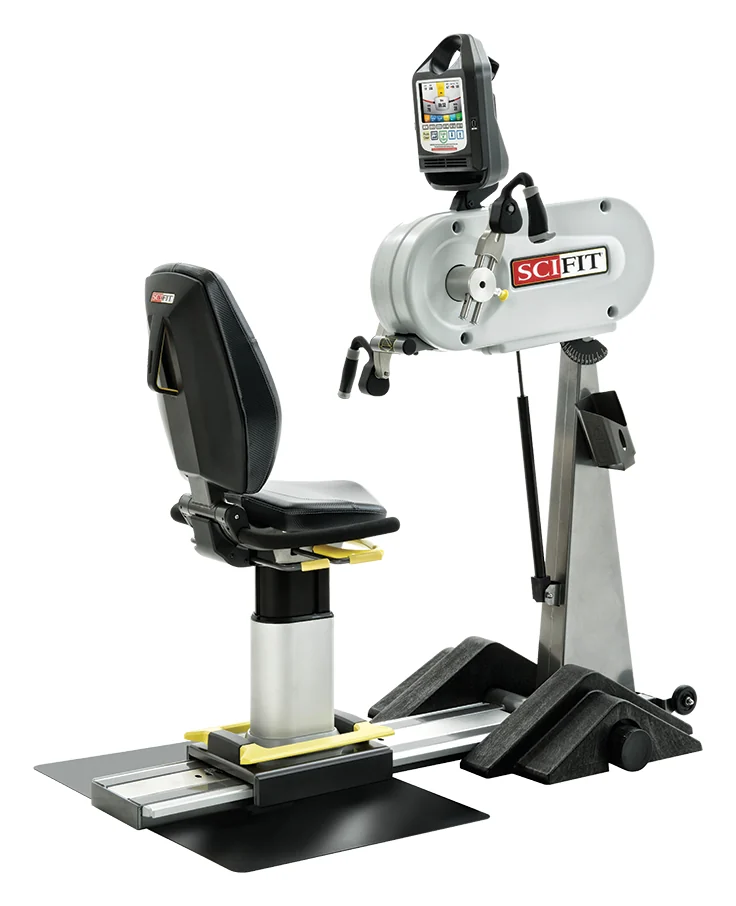
SciFit
Upper Body Ergometer / PRO1
Seated, standing or from a wheelchair: a removable seat, a wheelchair platform, a tilting head and bi-directional motion across 191 levels.
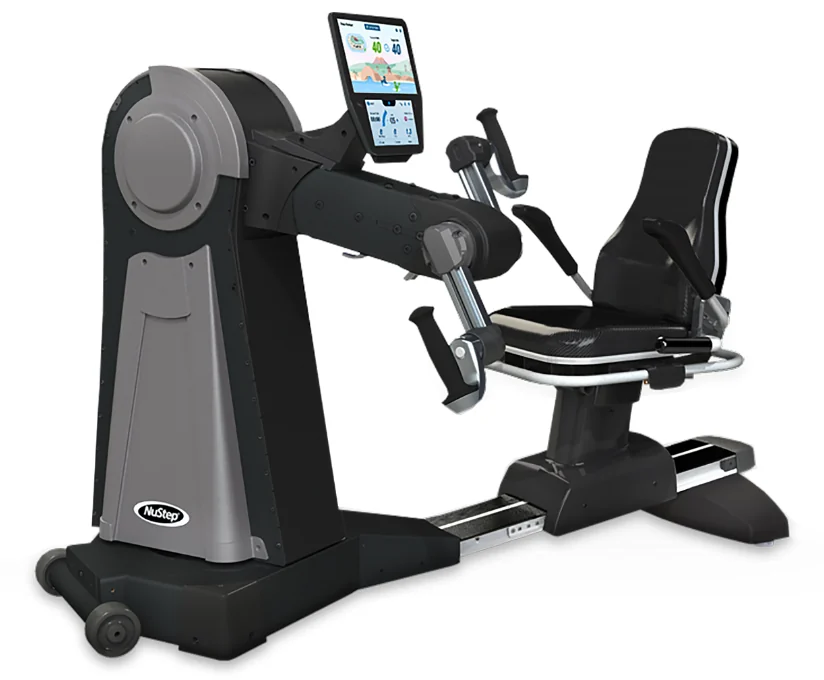
NuStep
Upper Body Ergometer / UE8PRO
Direct wheelchair access with no seat removal, bidirectional motion, and live power and left-right symmetry data.
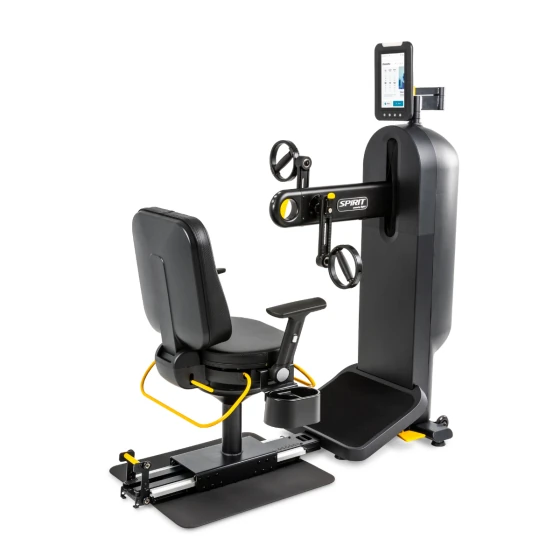
Spirit Fitness
Upper Body Ergometer / 8.5UE
A fully removable seat for direct wheelchair access, very low starting resistance and 50 levels forward and reverse.
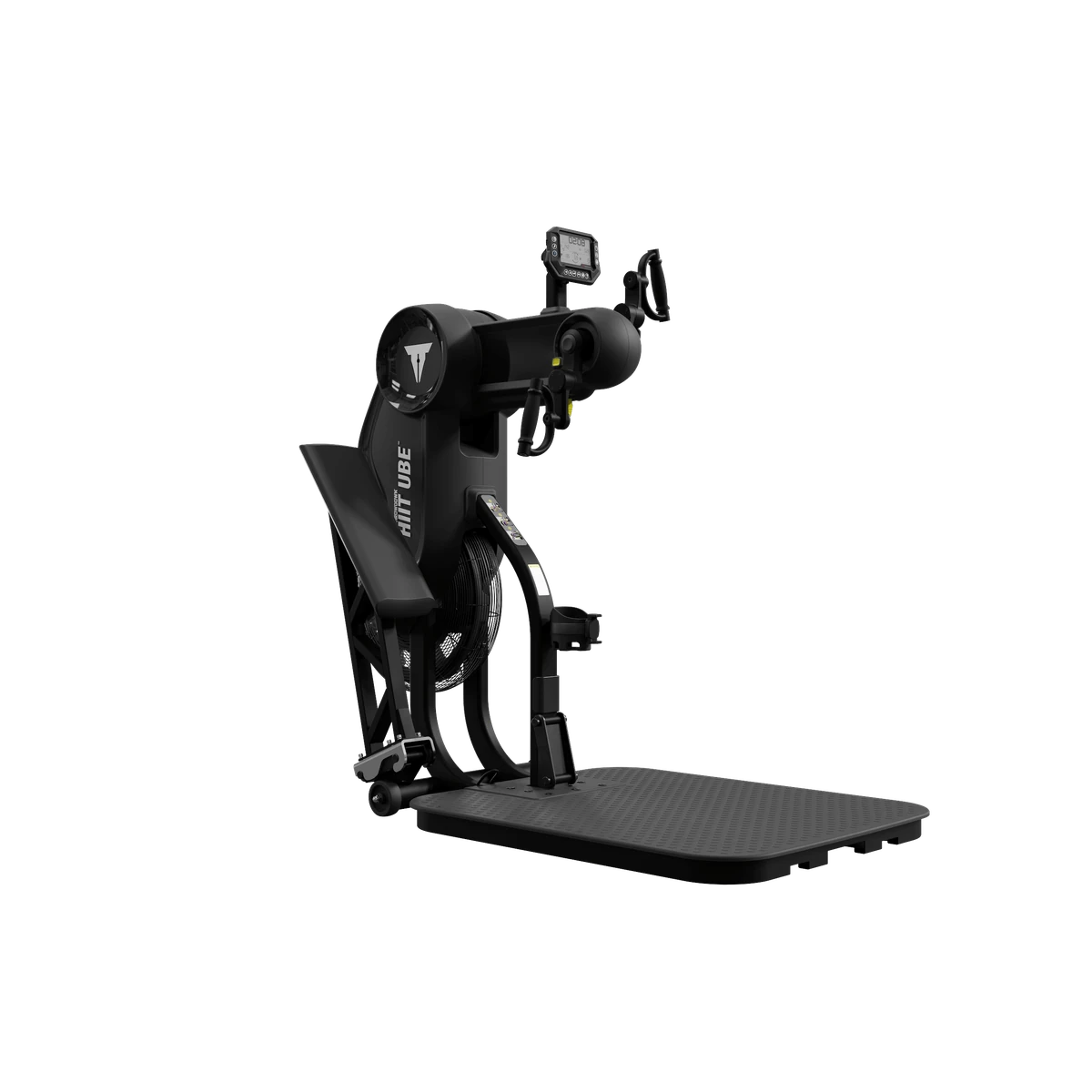
Throwdown
HIIT UBE / 9-4840
An adjustable tower and convertible crank arms, with an optional ramp and removable bench for wheelchair access.
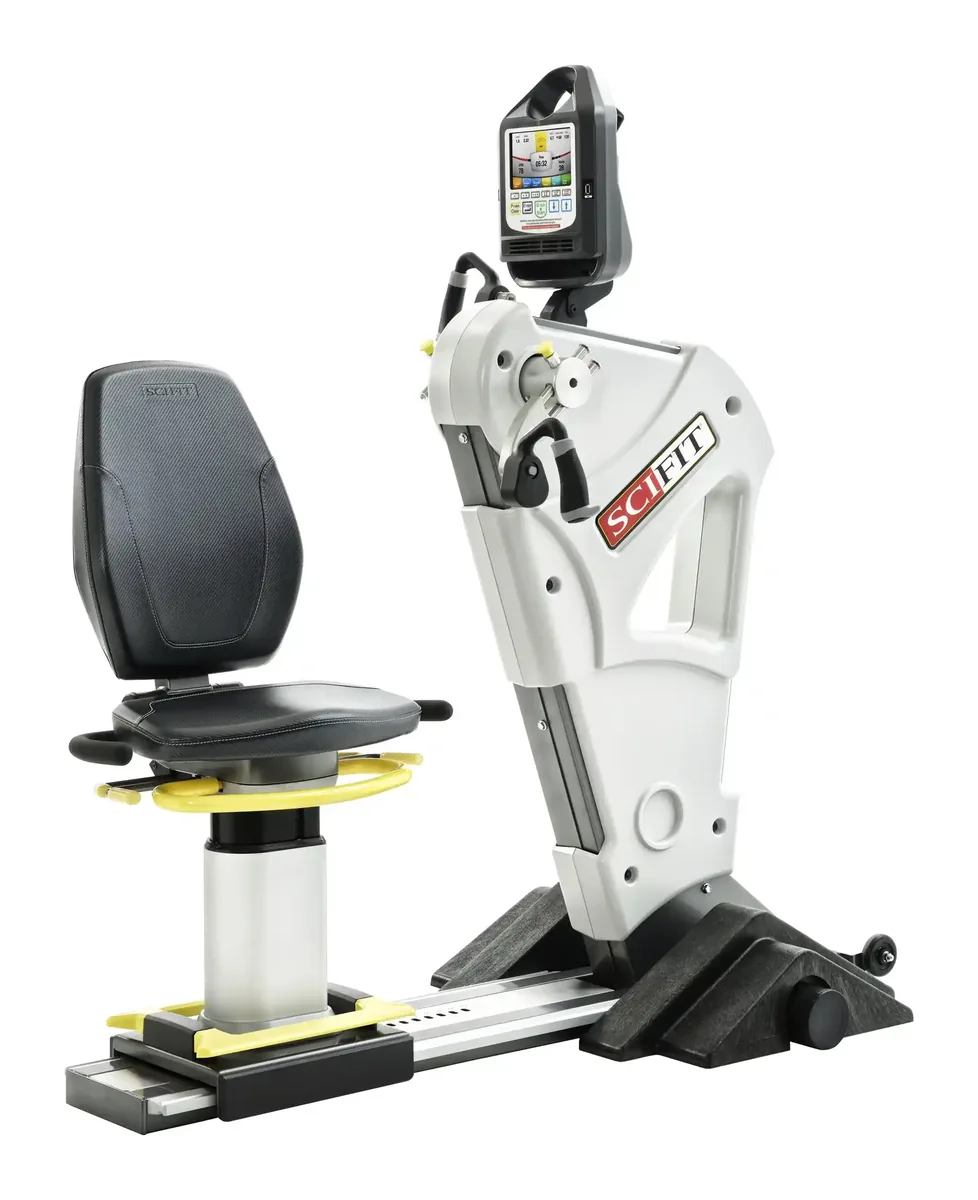
SciFit
Seated Upper Body Ergometer / PRO1000
Adjustable cranks, a step-through frame and a seat that comes off for wheelchair access, from a very low starting resistance.
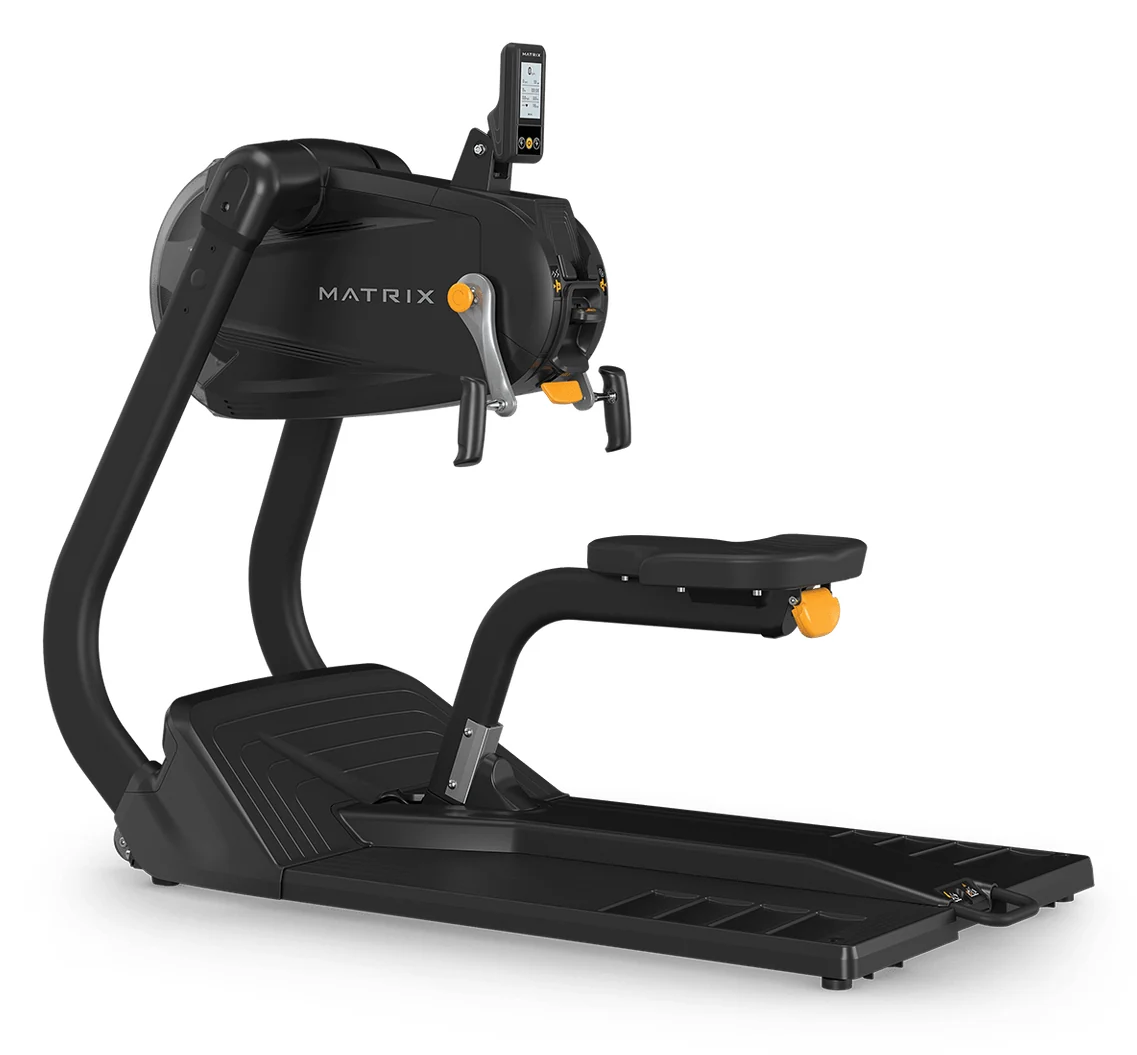
Matrix
Upper Body Cycle / UBC-M
The seat flips out of the way for standing or wheelchair workouts, with synchronous, asynchronous and independent arm rotation.
Rehab and low-speed treadmills
Start speed is what separates a rehab treadmill from a club treadmill. These start as low as 0.1 mph, carry full-length handrails, and run in reverse for gait work.
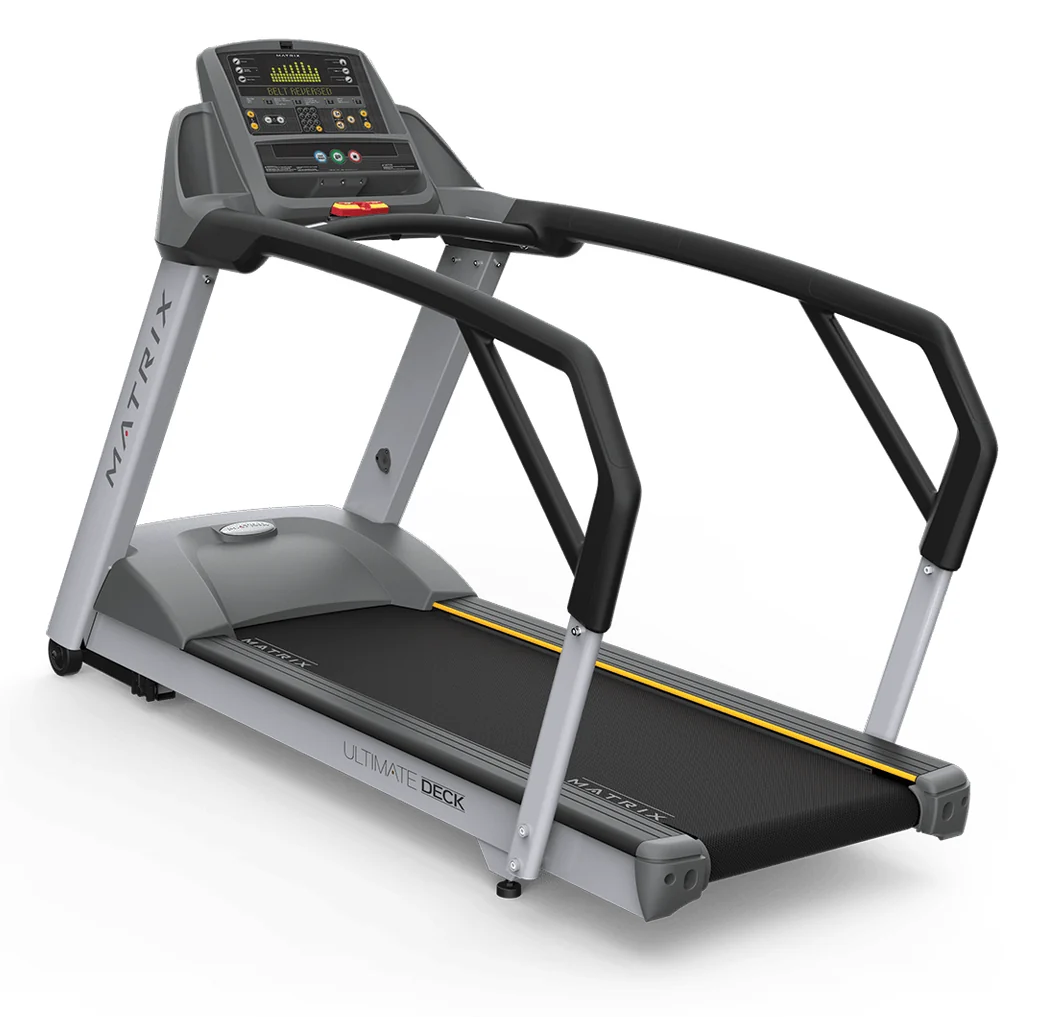
Matrix
Treadmill / T3xm
Starts at 0.1 mph forward and reverse, with extended handrails, a 7.5 in step-on height and a sensor that stops the belt.
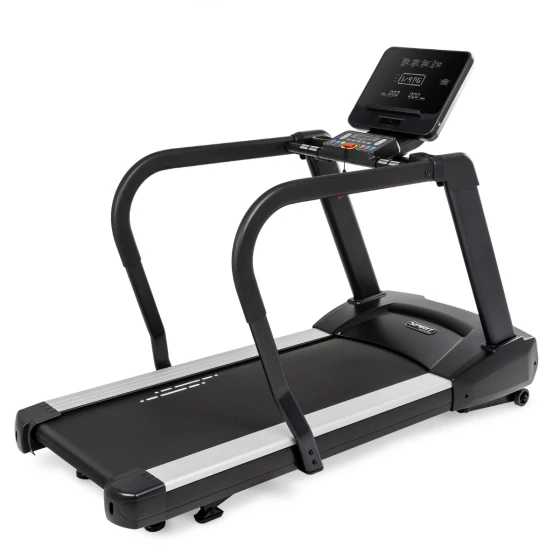
Spirit Fitness
Rehab Treadmill / 4.0T
0.3 to 12 mph forward and 0.3 to 3.0 mph in reverse, -5% to 15% incline, and full-length handrails.
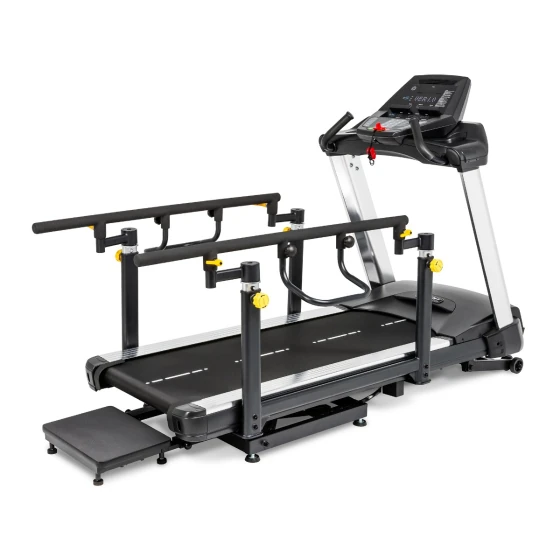
Spirit Fitness
Rehab Treadmill / 7.0T
Bidirectional -3 to 10 mph walking, -10% to 15% incline and decline, and adjustable-height full-length handrails.
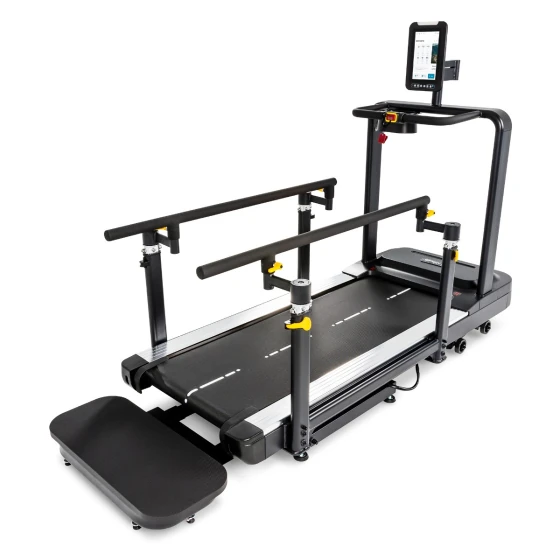
Spirit Fitness
Rehab Treadmill / 8.0T
Bidirectional -5 to 13.6 mph with zero-speed braking, a gait symmetry index, Safe Step and stress-test protocols.
Strength that starts light
Low starting weights, fine increments and limits on range of motion, so a load can be set to what a healing joint will take and repeated exactly at the next visit.
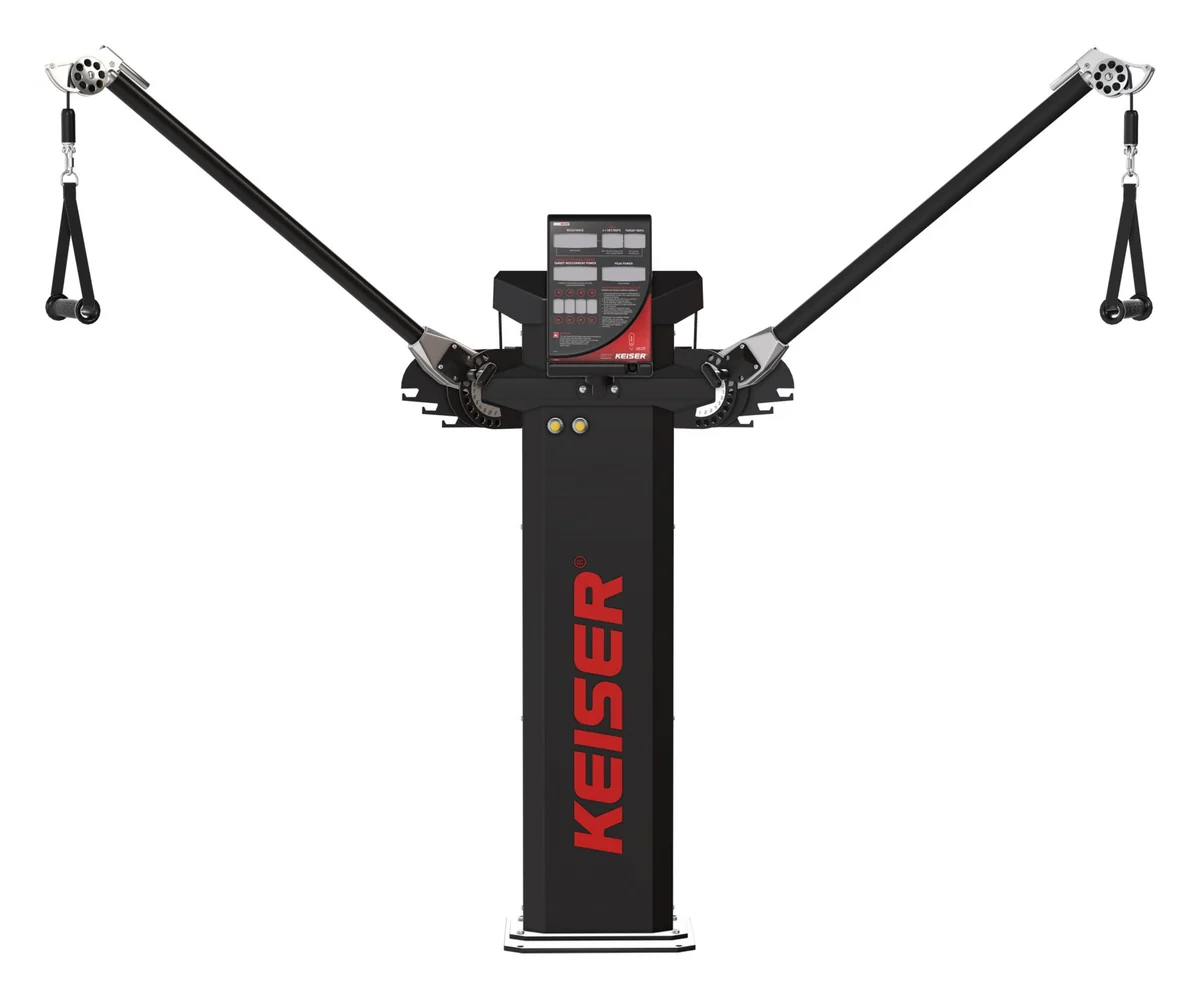
Keiser
Functional Trainer / A300
Pneumatic cable resistance from zero in increments as low as a tenth of a pound, with a live power display.
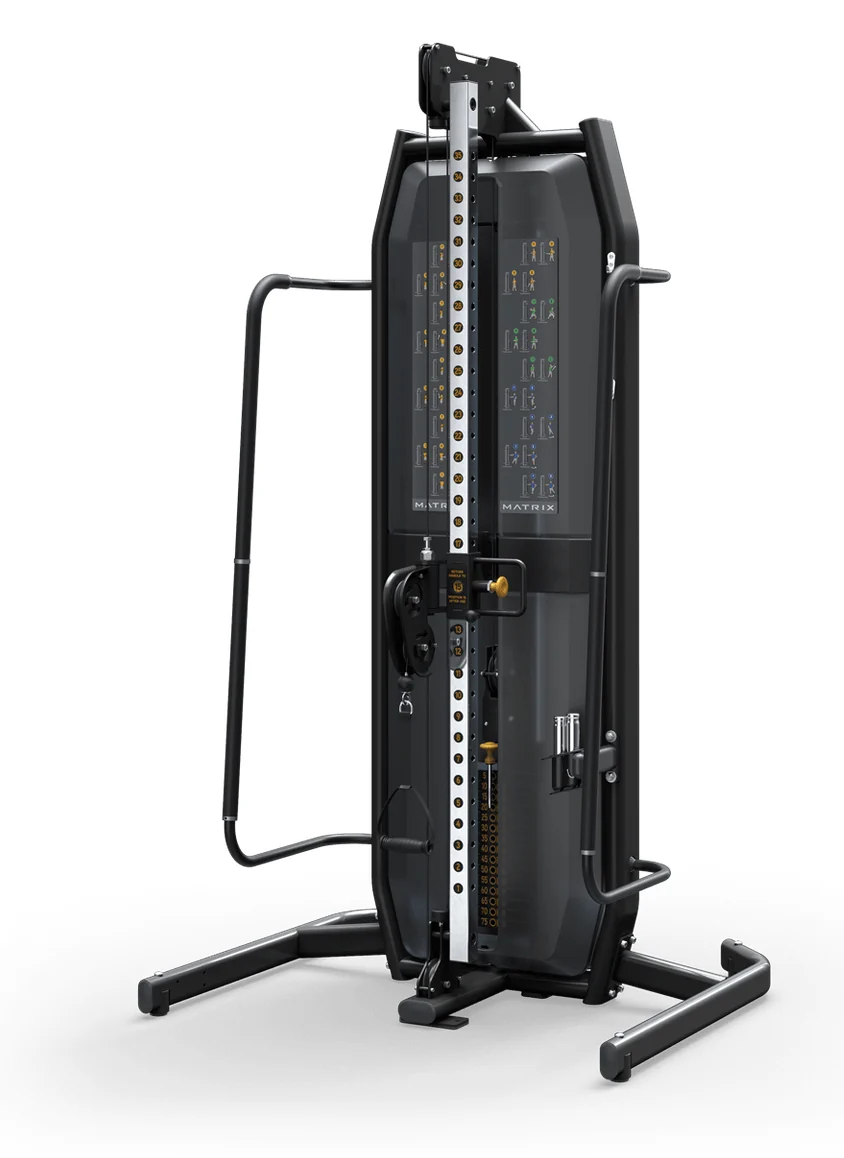
Matrix
Adjustable Pulley / Versa MD-AP
A 5 lb starting weight, effective increments of 1 to 4 lb and 35 numbered height positions.
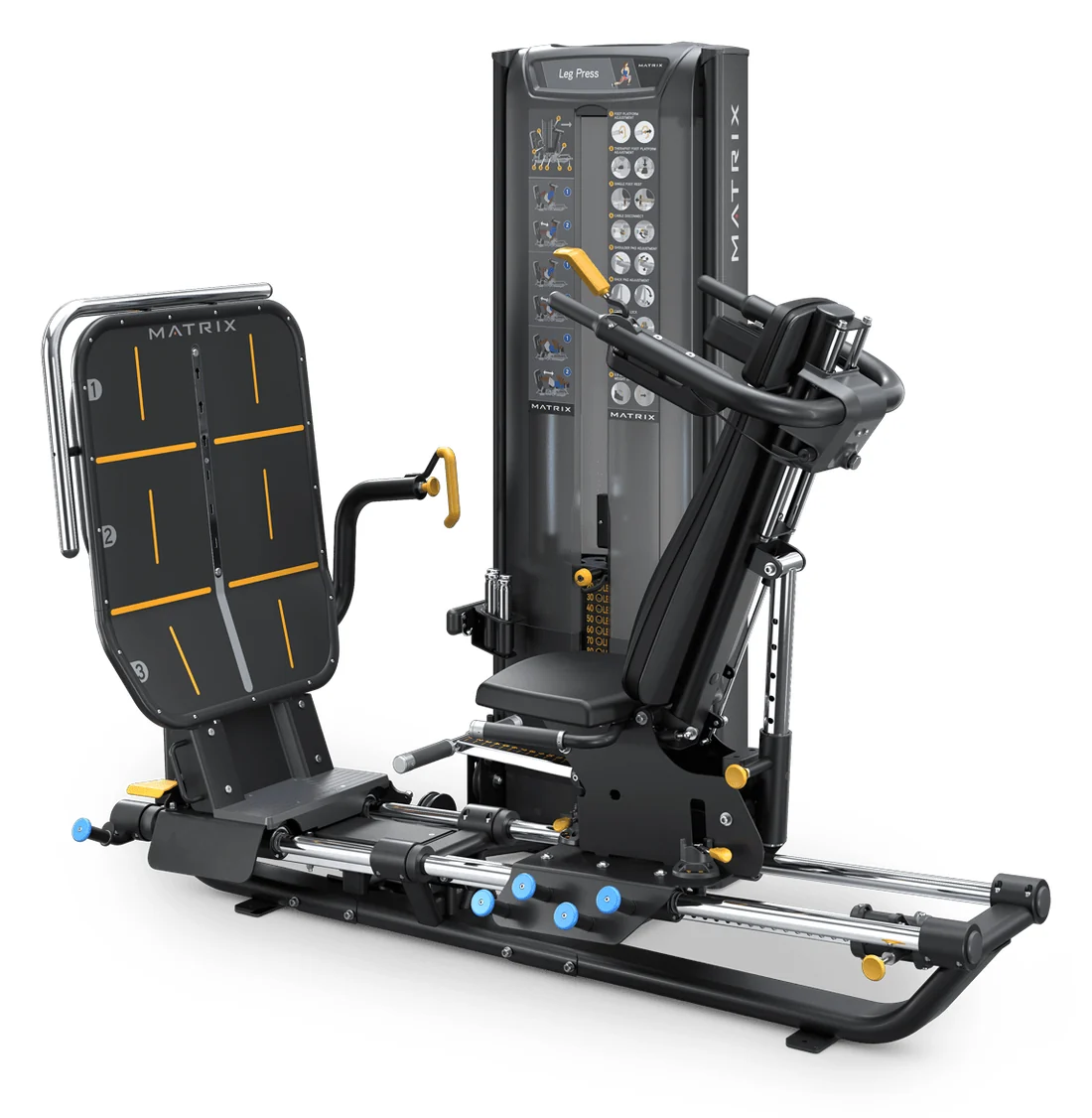
Matrix
Leg Press / Versa MD-S70
A carriage lockout and gas-assisted platform to limit range of motion, in isometric through plyometric modes.
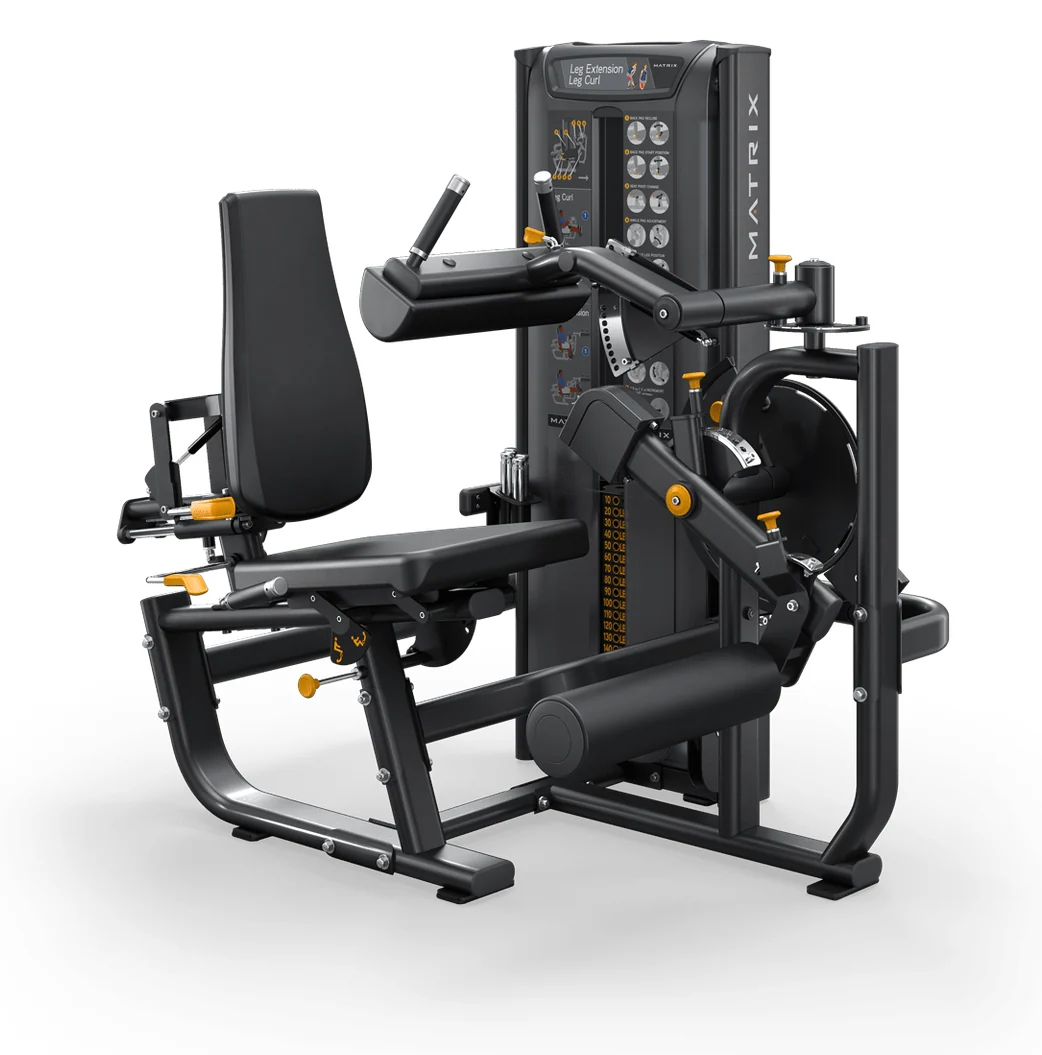
Matrix
Leg Extension / Leg Curl / Versa MD-S711
A low starting weight with 2, 4, 6 and 8 lb increments, 12 starting positions and a range-of-motion limiter.
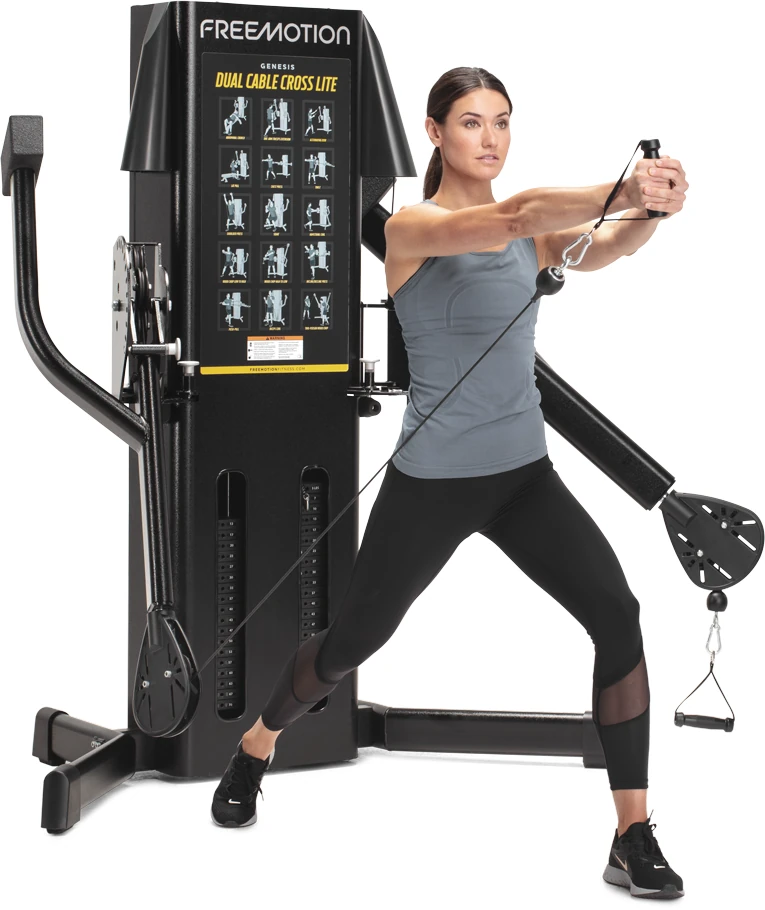
FreeMotion
Dual Cable Cross Lite / G424
Two independent 210 lb stacks in a smaller footprint, with an open frame FreeMotion lists as wheelchair accessible.
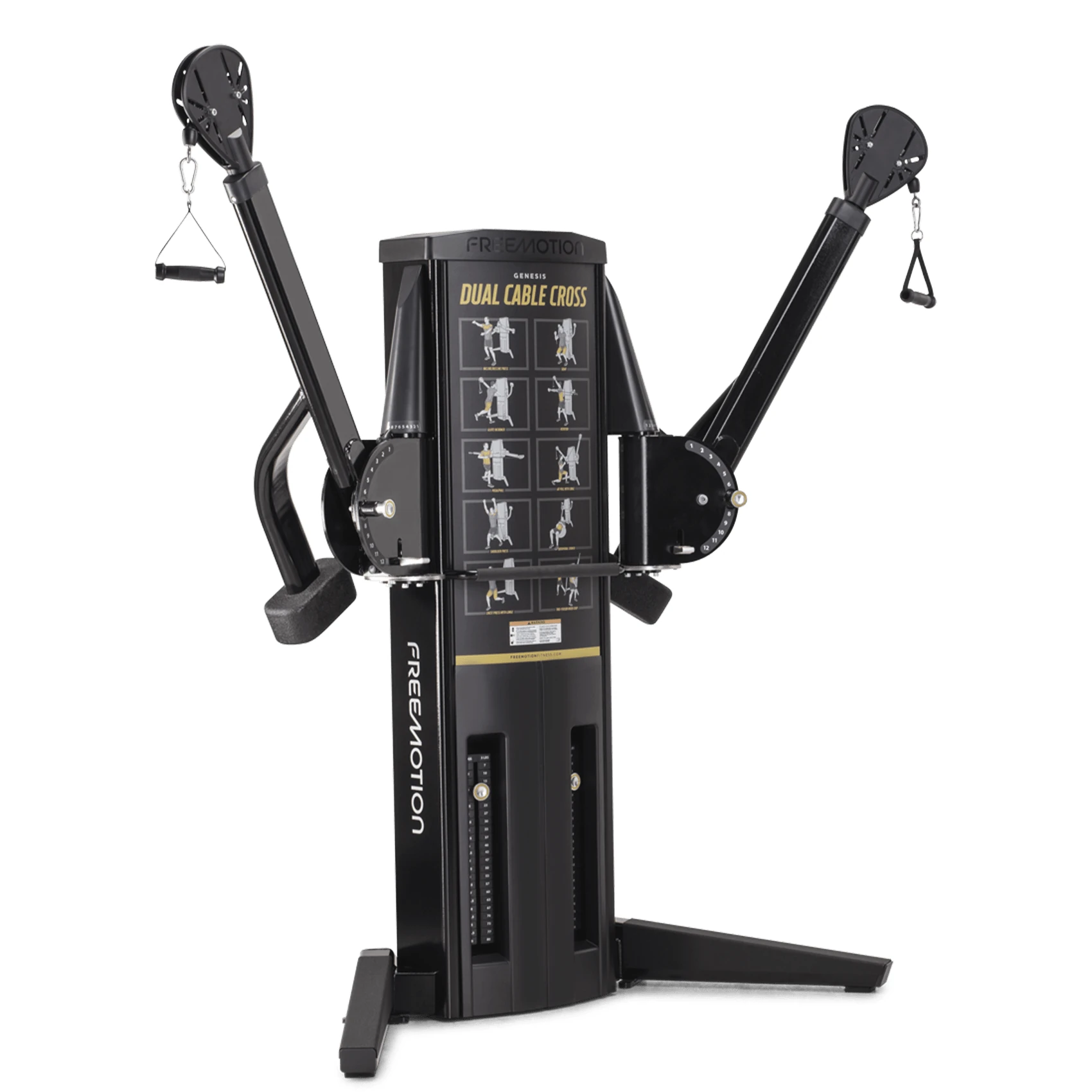
FreeMotion
Dual Cable Cross / G624
Dual 240 lb independent stacks, 97 in of cable travel and an open, wheelchair-accessible design.
Balance, vibration and functional tools
What a treatment plan reaches for between the machines — balance and proprioception, suspension, whole-body vibration, clinical Pilates and stretching.
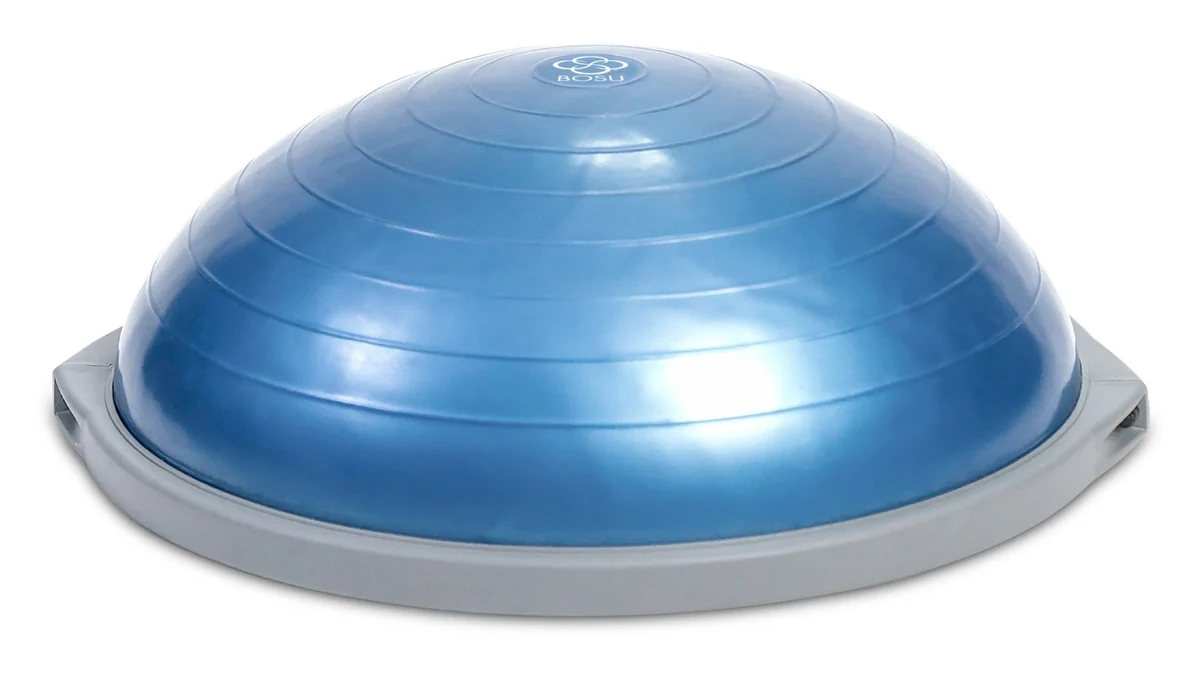
BOSU
Balance Trainer / PRO
A 65 cm dome on a non-skid, non-marking base, rated to 350 lb, made for fitness, sports conditioning and rehabilitation use.
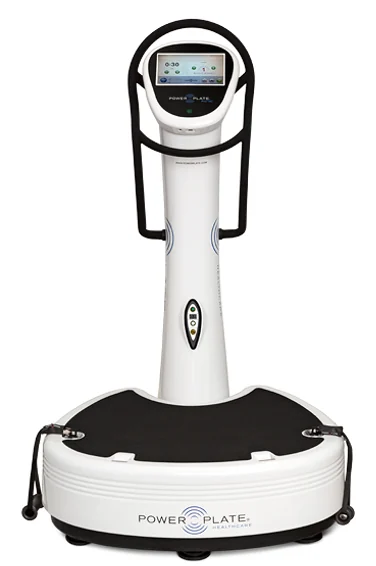
Power Plate
Vibration Platform / pro7HC
Whole-body vibration at 25 to 50 Hz in low or high amplitude, a 500 lb maximum load and range-of-motion tracking.
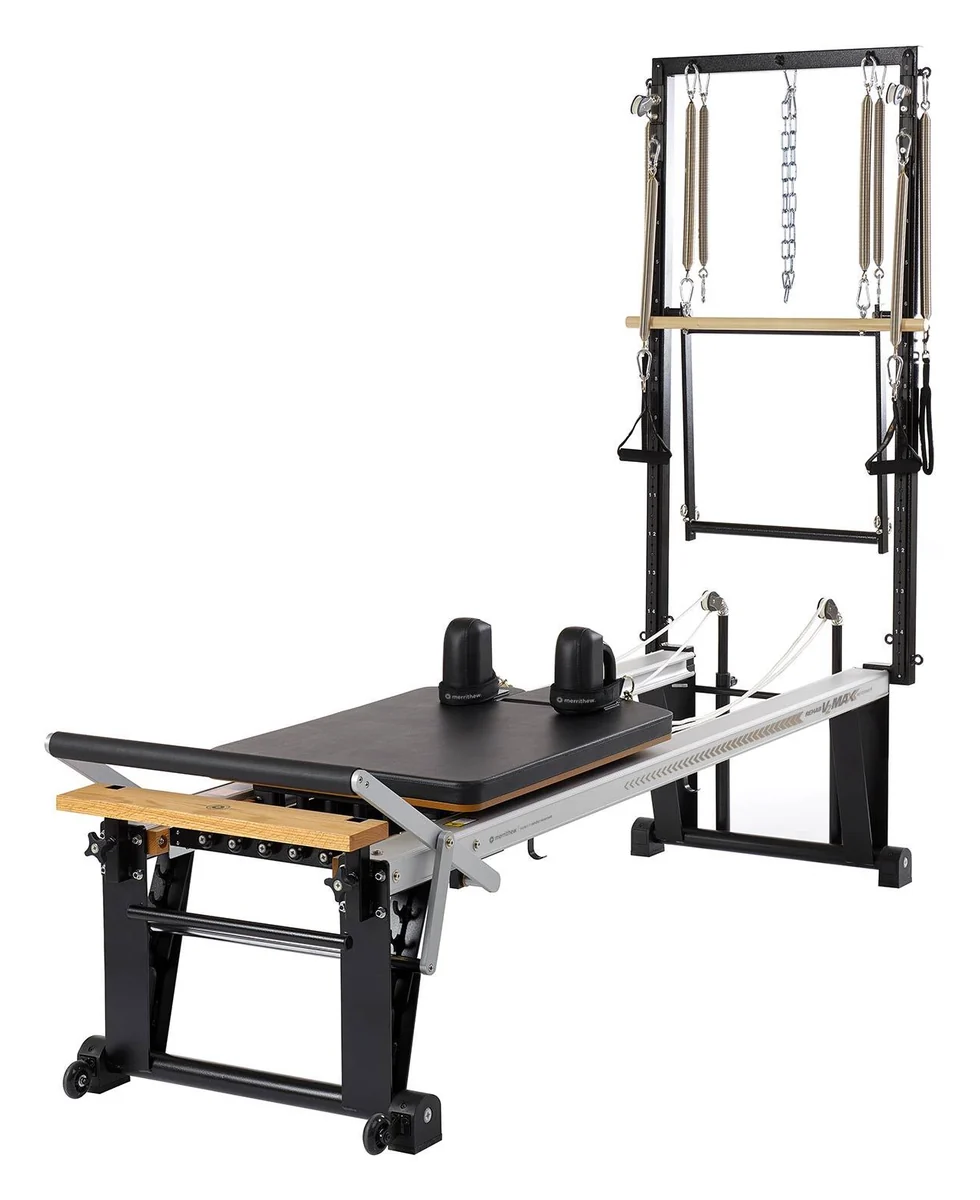
Merrithew
Rehab Reformer / Rehab V2 Max Plus
A raised rehab reformer with a vertical frame, rated to 425 lb and CE-marked in Europe as a Class I medical device.
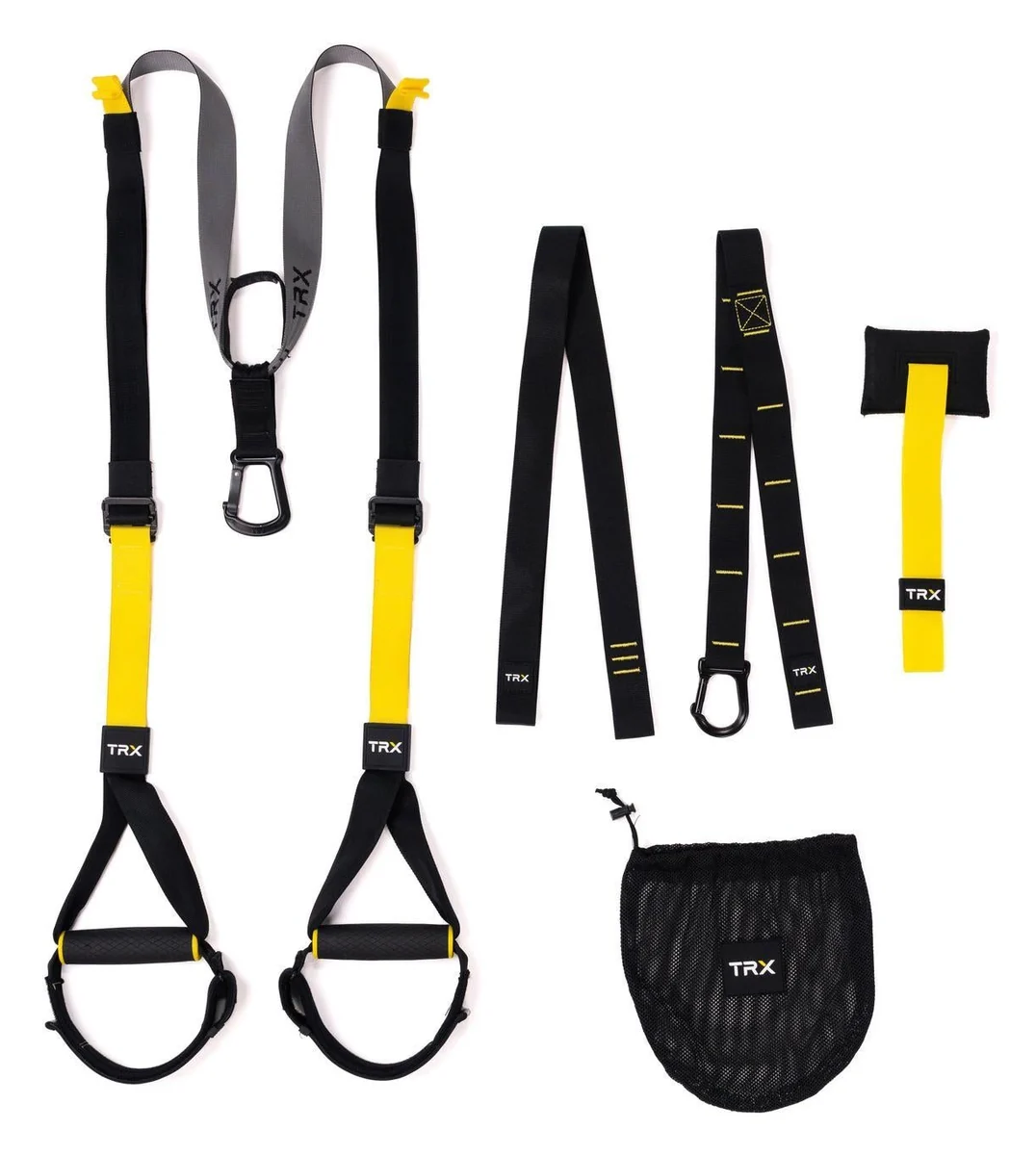
TRX
Suspension Trainer / PRO4
Suspension straps with door, suspension and extension anchors; TRX runs a rehab education course for therapists.
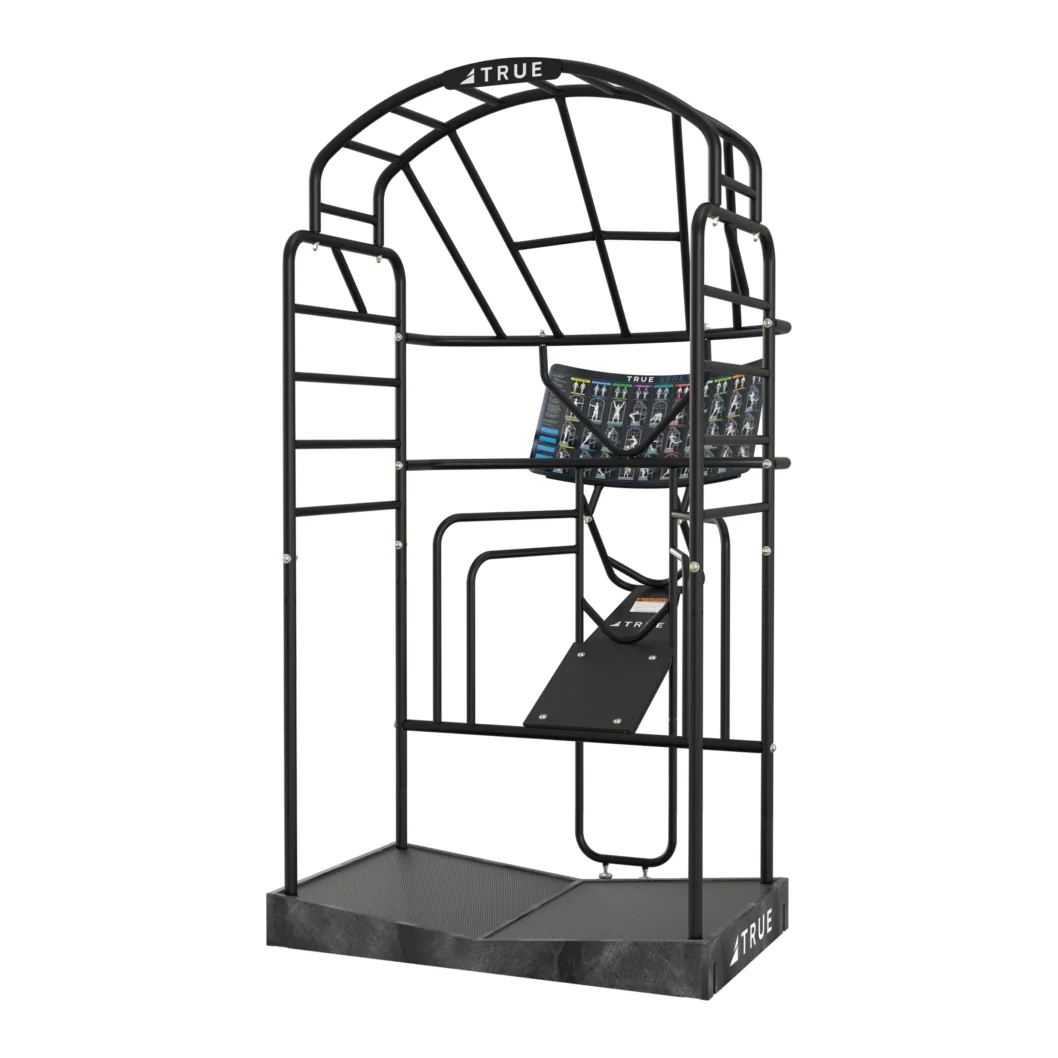
TRUE Fitness
Stretch Pro / TRUE Stretch
A self-contained stretching station, 95 in tall with stretch placards, so stretching happens off the floor.
A representative selection, not the full range. Each card with a product page links to it; for the rest, ask us for the full line.
How a clinic gets equipped
From the Caseload to the Floor
Five stages, the same for a single-therapist practice and a group opening its tenth location.
1. Start from the caseload
Who the clinic treats decides the room: post-surgical orthopedics, neuro, sports and return-to-sport, work injury, older adults. We ask how many patients are on the floor in the busiest hour, how many therapists and aides work it, and which pieces the plan of care leans on, before a single machine is named.
2. Drawn to scale around the tables
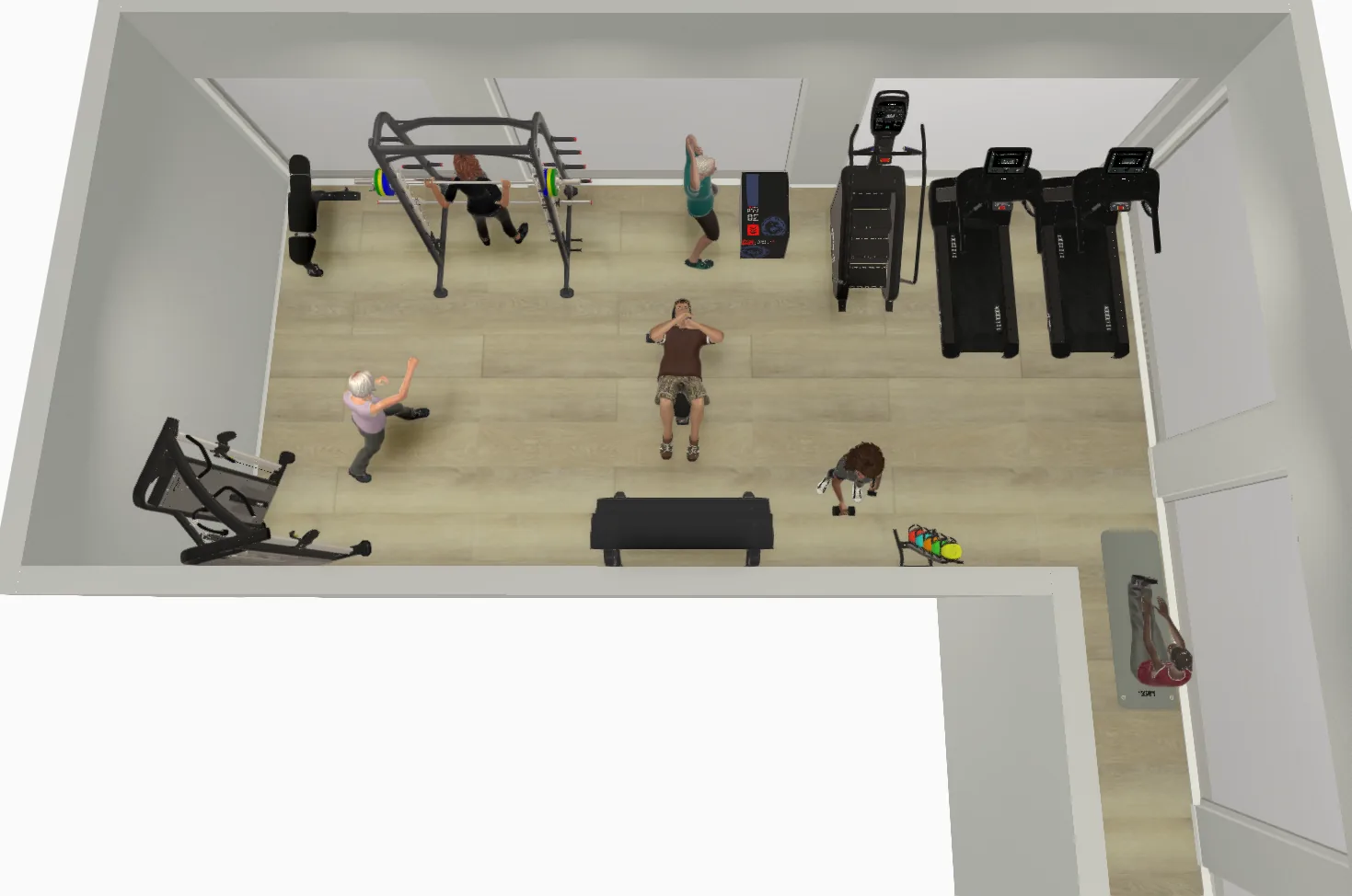
The gym is drawn inside the suite as it is — treatment tables, parallel bars, the gait lane, the front desk and the restrooms — with transfer space beside each station and a route a walker or wheelchair can use. A 3D rendering follows, so the owner and the lead therapist approve the same room.
3. New and pre-owned, side by side
Most clinics buy a mix: a new recumbent stepper the patients use all day, a reconditioned cable column or bike where a pre-owned unit does the same job for less. The quote lists each piece as new or pre-owned, the brand and the model, so the choice is made line by line.
4. Installed around patient hours
Delivery and installation are scheduled for a closed day, an evening or a weekend so a working clinic keeps its appointments — our own crews in Texas and Arizona, installation partners in every other state — and the packaging leaves with the crew.
5. Serviced on a record
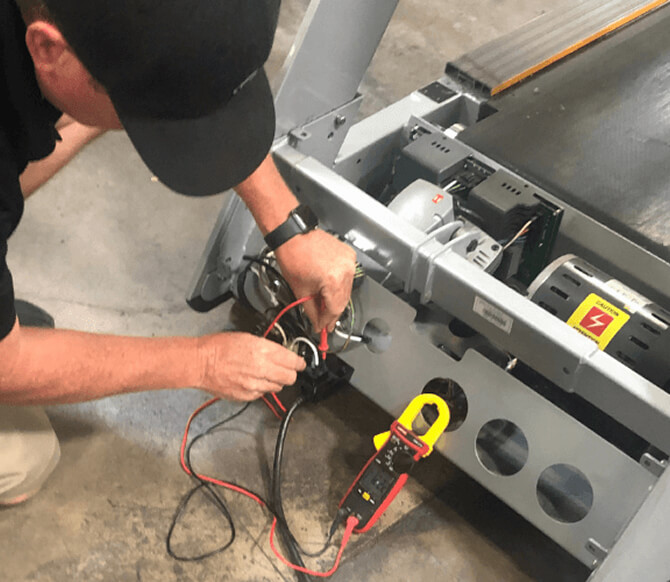
In Texas and Arizona our own technicians service the equipment and keep a per-machine preventive-maintenance record a clinic can produce on request. Everywhere else we coordinate the manufacturer warranty and parts, and the support after the sale stays with us.
Clinic groups and new locations
Therapy groups growing by acquisition and de novo openings need the same gym at every location, so a patient and a floating therapist find the same equipment in the same place. We hold a group's standard specification and floor plan, adapt it to each suite, and schedule each opening around its lease date — supply in all 50 states, one contact for every location, and service by our own technicians at the Texas and Arizona sites. The same approach runs our work with facility management companies.
Where we have equipped therapy clinics
Fit Supply has supplied physical therapy clinics, rehab centers and medical practices across the country — among them clinics in Dallas, Fort Worth, Frisco, Plano, Austin, San Antonio, Lubbock and Amarillo, rehab centers in Abilene and McKinney, and therapy clinics in Phoenix and Carefree, Arizona, and in Arkansas, Kansas, Oklahoma and Oregon. Texas and Arizona are where our own crews install and where we service the equipment afterwards.
Paying for it
Clinic equipment is usually financed or leased rather than bought outright, and the payment is often weighed against the treatment revenue a new piece supports. Equipment financing spreads the cost of a full fit-out or a single machine, and pre-owned equipment lowers the total before financing starts. The rest of the clinical range — hospital rehab programs, wellness practices and the medical fitness center — is on medical and rehab facilities.
The three things a therapy gym cannot do without

Seated total-body cardio
A recumbent stepper or total-body trainer with a swivel seat, step-through frame and linked arms and legs — the piece most patients use, from the first visit to the last.

Strength that starts near zero
Low starting stacks, fine increments and pneumatic resistance, so a load can be set to what a healing joint will take and repeated exactly at the next visit.

A cable column at every height
A dual cable cross or functional trainer covers pulls, presses, rotations and reaches from the floor to overhead — the most movement per square foot a clinic can buy.
In short
Fit Supply supplies physical and occupational therapy clinics nationwide with new and pre-owned rehab equipment — recumbent steppers and total-body trainers, upper body ergometers, rehab treadmills with full-length handrails, low-start strength and cable columns, and the balance and functional tools around them — and draws the therapy gym to scale before anything is ordered. Delivery and installation are nationwide; on-site service and preventive maintenance are in Texas and Arizona. We have booked more than 150 equipment orders for therapy clinics, rehab centers, hospitals and medical practices.
Physical therapy clinics — questions
What equipment does a physical therapy clinic need?
Most outpatient clinics are built around a seated total-body recumbent stepper, an upper body ergometer, a rehab treadmill with full-length handrails, a recumbent or upright bike, a cable column or dual cable cross, a few strength machines that start very light, and balance, suspension and functional tools — plus the treatment tables and parallel bars the gym is drawn around. The caseload decides the mix: an orthopedic clinic, a neuro clinic and a sports-medicine practice need noticeably different rooms.
Do you sell used physical therapy equipment?
Yes. We supply new and pre-owned equipment, and most clinics buy a mix — a new recumbent stepper the patients use all day, a reconditioned bike, cable column or elliptical where a pre-owned unit does the same job for less. Every pre-owned machine is rebuilt in our own Texas shop to a written 20-point inspection and sold Cleaned & Serviced (30-day parts-and-labor warranty) or Remanufactured (90-day), and the quote lists every piece as new or pre-owned with its brand and model.
Do you carry NuStep and SciFit?
Yes, both, along with Spirit's rehab line, Keiser, Matrix, FreeMotion and the rest of our more than 50 manufacturer partners. NuStep and SciFit recumbent trainers are also the units most often available pre-owned, which is worth asking about when a clinic is equipping on a budget.
Can you lay out our clinic before we order?
Yes. The therapy gym is drawn to scale inside the suite — treatment tables, parallel bars, the gait lane and the front desk included — with transfer space beside each station and routes a walker or wheelchair can use, then rendered in 3D for the owner and the lead therapist to approve. The equipment list comes from the drawing, not the other way round.
What does occupational therapy equipment include?
For the gym side of an OT clinic: upper body ergometers, cable columns adjustable to every height a patient reaches, wall bars, light dumbbells and weighted balls, and open floor for lifting and carrying tasks. Fine-motor, hand-therapy and daily-living equipment comes from therapy supply specialists; we lay the room out around it.
Do you install and service clinic equipment?
We deliver and install nationwide — our own crews in Texas and Arizona, installation partners in every other state — scheduled around patient hours. On-site service and preventive maintenance with a per-machine record are in Texas and Arizona; elsewhere we coordinate manufacturer warranty and parts.
Can you equip several clinics to the same standard?
Yes. For a therapy group we hold one standard specification and floor plan, adapt it to each suite, and schedule each opening around its lease date, with one contact for every location in all 50 states.
How do clinics usually pay for equipment?
Most finance or lease, and many lower the total first with pre-owned pieces. Financing is available for a full fit-out or a single machine; ask for both options on the same quote.