

Before the truck arrives
The site survey is the schedule
Installation timelines are set by the building, not the equipment. What decides a smooth day is whether the route from the loading dock to the floor was measured before anything shipped.

The route in is measured first
Door and gate widths, elevator car dimensions and weight limits, stair turns and landing depths, corridor pinch points and the loading dock height all determine what can reach the room intact. Doorways are the usual pinch point and the most commonly misjudged: the 2010 ADA Standards require a 32-inch minimum clear opening, measured with the door open 90 degrees between the face of the door and the stop — so a nominal 3-foot leaf does not give you 36 inches to work with. A machine that will not pass has to be broken down and rebuilt in place, which is a different job, planned differently. A staircase’s own weight rating matters just as much — see our Phoenix second-floor install, real video included, for what happens when a prefab stair cannot carry the load and a powered lift takes over instead.

Assembled on site or taken apart to get in
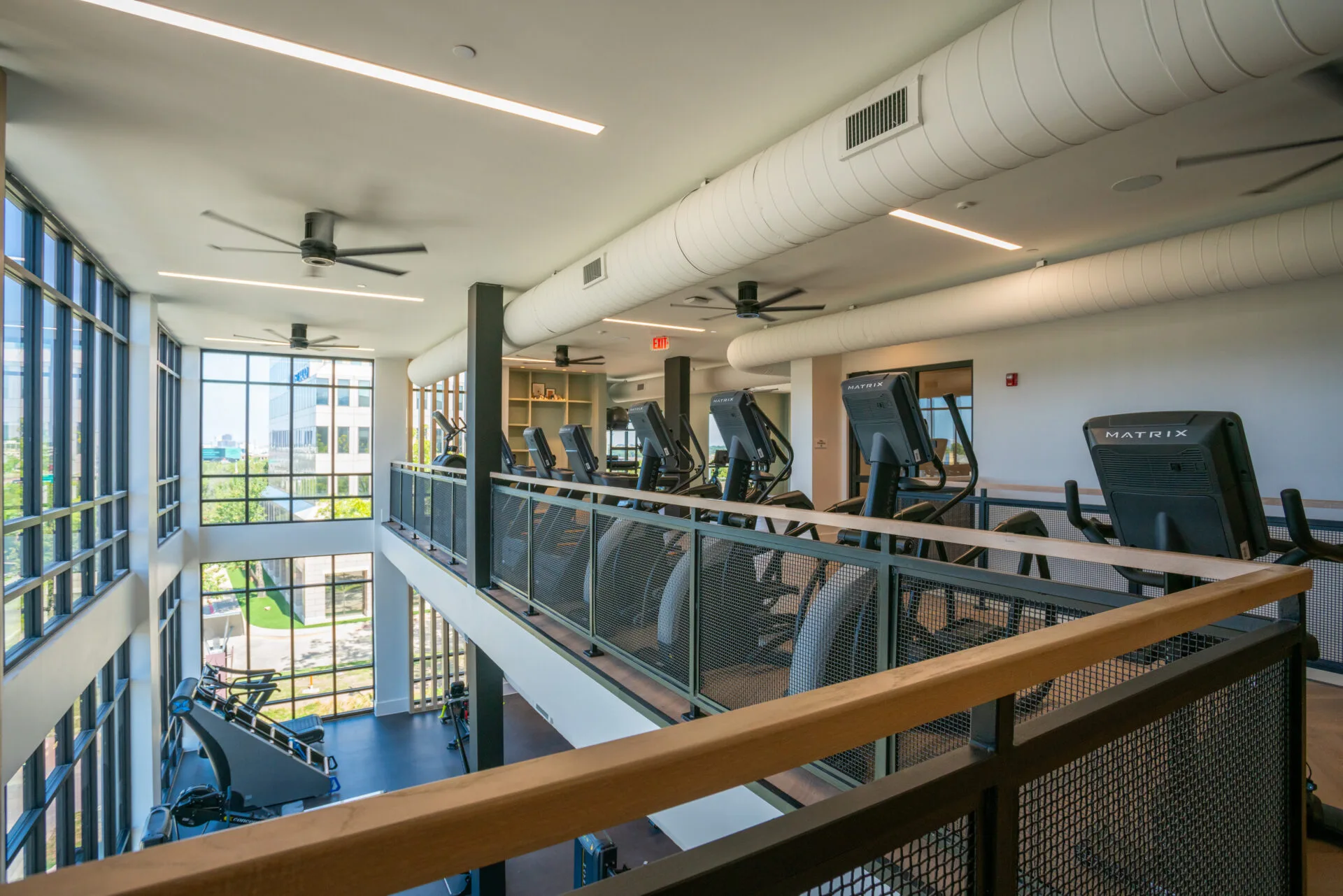
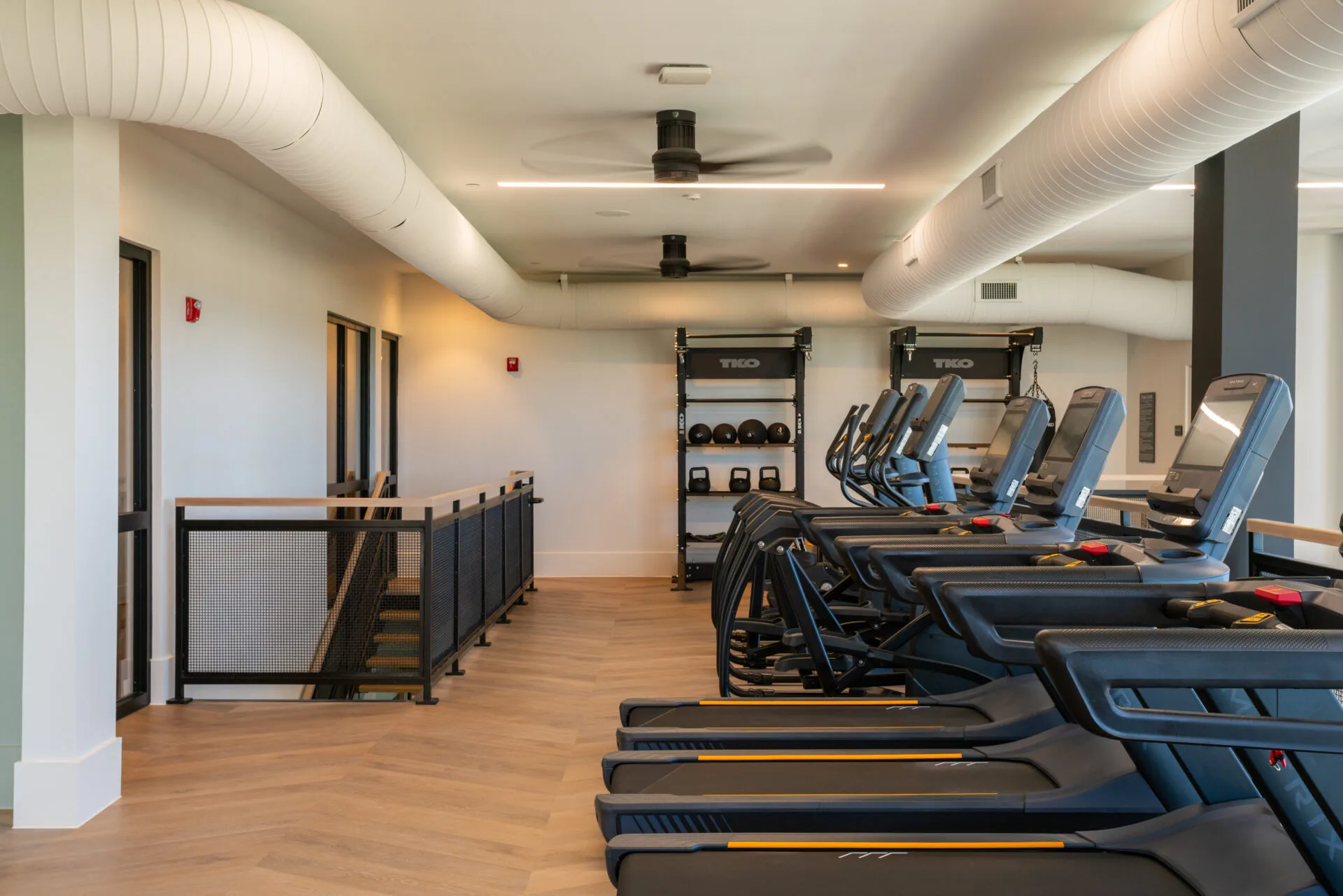
Some equipment ships largely built and simply needs positioning and commissioning. Some arrives knocked down and is assembled on the floor. And some has to be dismantled at the door and reassembled the other side because the access will not take it whole. Which of the three applies changes the crew, the time on site and the sequencing against other trades, so it is established during the survey rather than discovered on delivery day.

Protection, removal and what leaves with us
A finished amenity space is usually installed after the floor covering is down, so floor and lift protection, door jamb protection and debris handling are part of the plan rather than an afterthought. Where old equipment is being replaced we can take it in trade where it holds value, and where it does not we can still extract and remove it for a fee — so a room can be cleared and re-equipped as one project instead of leaving disposal as the property's problem.
Featured install
A Phoenix Amenity Floor, Lifted Past the Stairs
On a recent Phoenix, Arizona install, the only way to the second floor was a prefab metal staircase — and its real weight rating couldn’t safely carry the equipment up by hand. Rather than risk it, the crew brought a powered material lift and raised everything up and over the mezzanine’s glass railing instead, with zero damage to the equipment, the railing or the property’s finishes.
Watch the install and read the full story →Where we install
Installed by Our Own Crews Across Texas
Fit Supply’s records show 3,754 Texas sales orders shipped as a commercial installation, across 2,469 separate customer sites — orders the system records as installed by us rather than dropped at a dock. Each metro below has its own installation page with that market’s real figure.
- Dallas–Fort Worth 463 orders across 302 sites, by our own crew from the Irving office inside the metroplex
- Houston 371 orders across 274 sites, from Katy and Sugar Land through Spring and Pearland
- Austin 294 orders across 194 sites, in the fastest-building multifamily market in the state
- San Antonio 169 orders across 131 sites, a market that specifies heavier free-weight equipment than most
A figure worth separating out: 866 of those Texas orders were installations performed for other manufacturers and dealers, across 623 customers — not our own equipment sales. Manufacturers subcontract the work to us because the crews do it every week. Outside Texas and Arizona, installation is coordinated through the nationwide partner network to the same standard. See a finished room end to end in the Dallas apartment cardio room or the DeSoto municipal recreation center, and the wider portfolio on our Texas work.
Delivery and installation questions
How long does a gym installation take?
It varies enough by site that a single number would be misleading, which is why we survey first. The variables that actually drive it are door and gate widths, whether there is an elevator and what it will take, stairs and tight hallways, and whether units can come in built or have to be dismantled and reassembled in place. Once we have measured the route we give you a schedule for your building rather than an average that may not survive contact with your loading dock.
Do you install nationwide, or only in Texas and Arizona?
Both — the model just changes with location. Outside Texas and Arizona, installation is coordinated through Fit Supply’s network of installation partners, so a multi-site developer or a national account can specify equipment once and get the same installation standard in every market. In Texas and Arizona, Fit Supply’s own crews perform the work directly rather than through a partner. Either way, the same site survey and the same manufacturer relationships apply — tell us where the project is when you request a quote and we’ll confirm which model covers it.
What do you need from me before installing?
Access details and a point of contact. Specifically: the delivery address and dock or entrance arrangements, door and elevator dimensions, any stairs on the route, building hours and any restrictions on when work can happen, plus whoever can grant access on the day. Measure doorways as clear opening rather than nominal leaf size — the 2010 ADA Standards set a 32-inch minimum clear width with the door open 90 degrees, and that is the number equipment has to pass through. If existing equipment has to come out first, tell us then rather than on delivery day — removal changes the crew and the sequence, and it is far cheaper to plan than to improvise.
What keeps our facility from getting damaged during installation?
The right equipment for the route, decided during the site survey rather than improvised on delivery day — usually floor and lift protection, door jamb protection and careful staging, and on some jobs something bigger, like the powered material lift in the video above. See the <a href="/case-studies/phoenix-second-floor-lift-install/">full story</a>. Having the right tool on hand for the access, not luck, is what keeps a property’s finishes intact.
Do you remove and dispose of our old equipment?
Yes. Where old equipment still holds value we will take it in trade and pay you for it, and where it does not we can extract and remove it for a fee. Either way the room can be cleared and re-equipped as a single project rather than leaving you to arrange disposal separately. Tell us what is currently in the space when you request the quote and we will price the removal alongside the installation.
Will you install equipment we bought somewhere else?
Yes. We install both new and pre-owned commercial fitness equipment, including equipment supplied by other dealers and manufacturers, and we have installed for leading manufacturers and dealers as a subcontracted installer. The same site survey applies — access, route and assembly requirements do not change based on who sold the machine. Tell us the make and model list and the building details when you ask for a quote.
Can you work outside normal business hours?
Often, and it is worth raising early. Occupied buildings frequently restrict when equipment can move through common areas, and some properties only allow amenity work outside resident or tenant hours. After-hours and weekend work is arranged per project and confirmed in the quote, since it affects crew scheduling and cost. Tell us the building's access rules when you request the quote rather than after the date is set.