

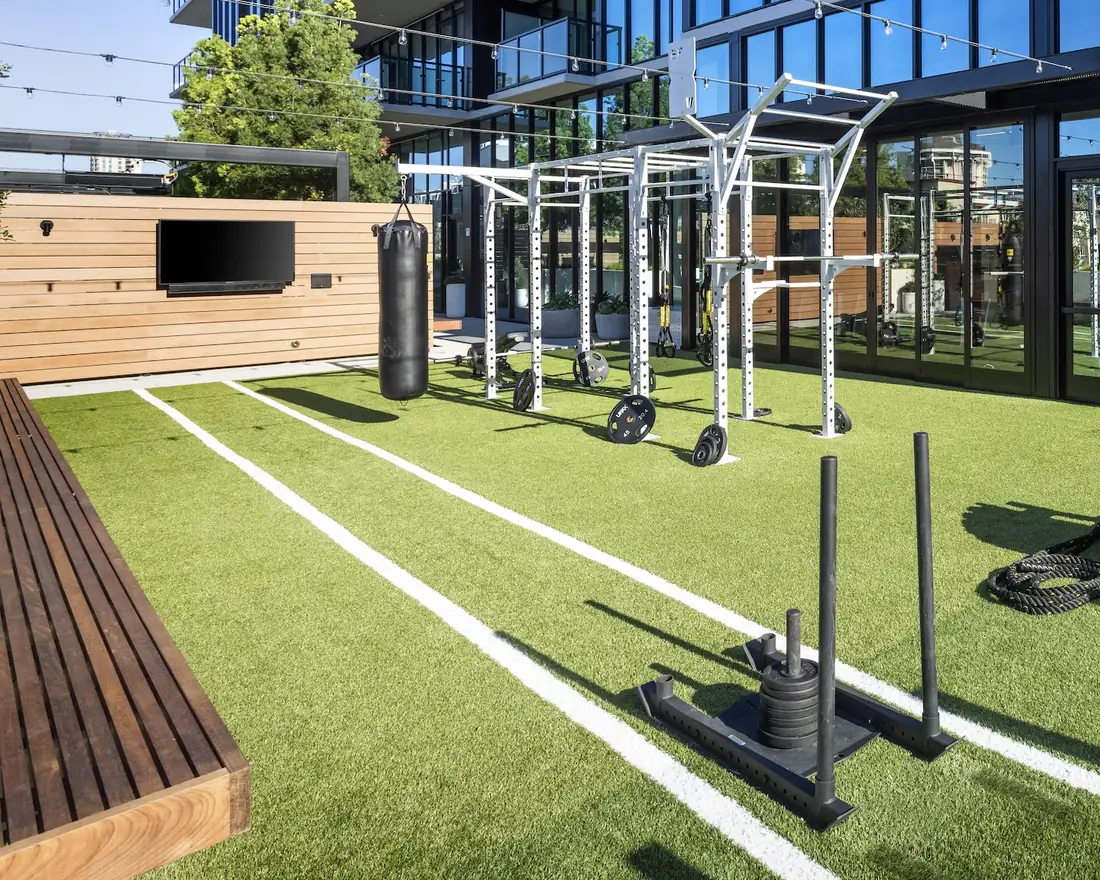
Outdoor build-outs
Outdoor space is the cheapest square footage a property owns
A courtyard, a pool deck, a covered patio or a flat roof is already paid for. What stops it being training space is weather, anchoring and storage — and all three are specification problems with known answers.

Anchoring is decided before the rig is chosen
An outdoor rig transfers load into whatever it is bolted to, so the footing comes first — a podium deck, a slab on grade and a roof over occupied units are three different engineering answers. On a roof or podium it is a structural review before it is a purchase, which is the same IBC Table 1607.1 conversation an indoor fitness floor has at 100 psf. Settling it early is what stops a rig being specified and then not installable.
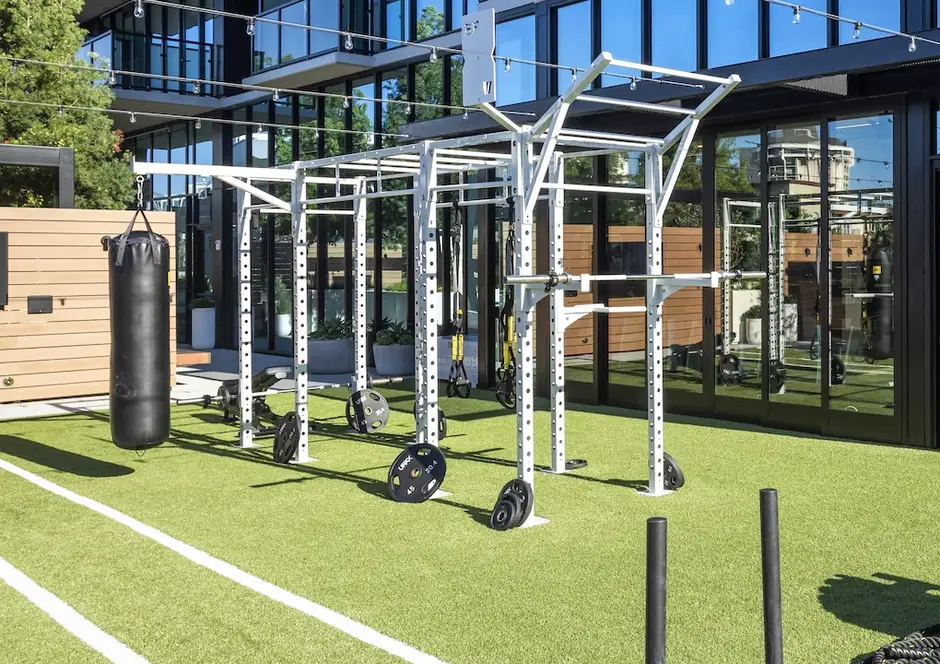
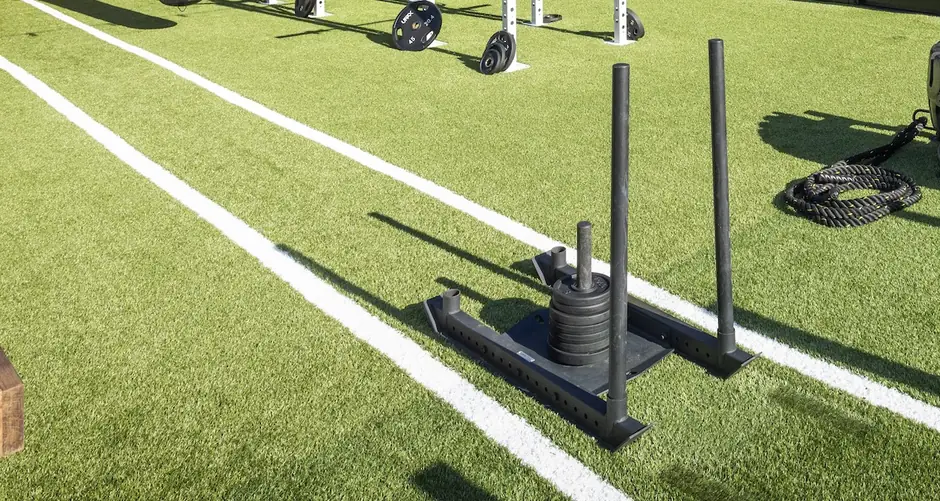

Surfacing carries the fall zone, not just the look
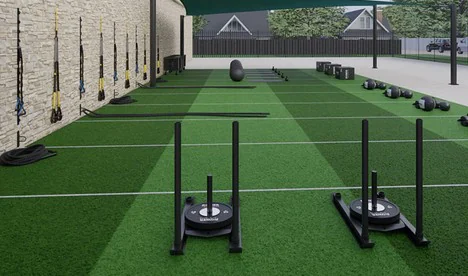
Turf and pads under an outdoor rig are doing two jobs: they define the training surface and they cover the fall zone around it. Drainage underneath matters as much as the surface on top, because standing water is what shortens the life of both the turf and the frame beneath it. Sled lanes and sprint tracks get specified separately from general turf — a drag lane and a stretch area are asking for different things.

Loose equipment needs somewhere lockable, or it disappears
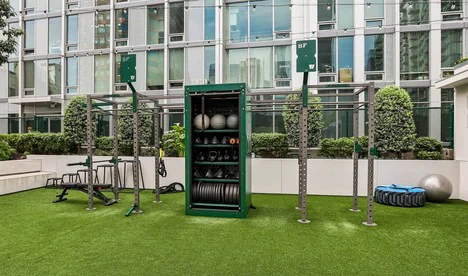
The reason outdoor zones fall out of use is rarely the rig — it is that the medicine balls, ropes and bands went missing or sat out in the rain. Lockable weatherproof storage, branded to the property, is what keeps a zone usable in year two. It is the cheapest item on the quote and the one most often cut from it.
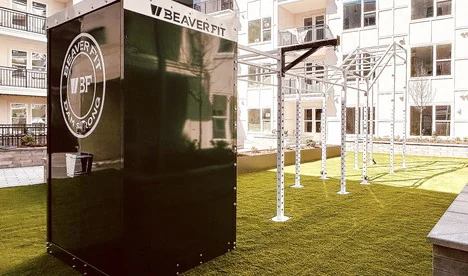
Rooftops, courtyards and pool decks, made train-ready all year
Weatherized rigs, functional structures and wellness stations, drawn to scale before anything ships — footprint, fall zones, anchoring and surfacing resolved up front.
- 6outdoor build types, from amenity lawns to covered patios
- 50+manufacturer partners, so the rig suits the footprint
- 2007equipping commercial facilities since
What we install
The outdoor lineup
-
Customizable rigs
Configured to the footprint you actually have and branded to the property, rather than a catalog size that nearly fits.
-
Functional structures
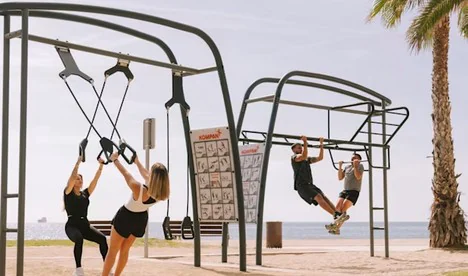
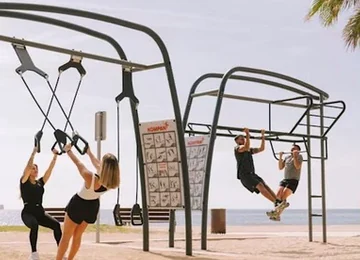
Multi-station frames for bodyweight work, rig training and small-group sessions outdoors.
-
Weatherproof storage
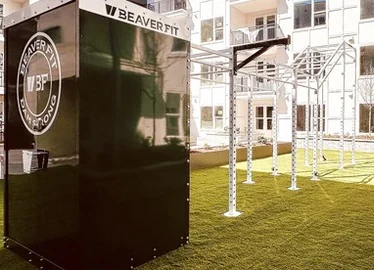
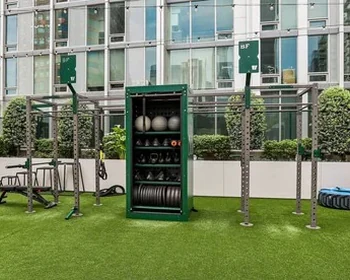
Lockable containers that keep balls, ropes and bands secure and out of the weather — the item most often cut and most often missed.
-
Turf and sled lanes
Sprint tracks, drag lanes and pads specified for outdoor use, with drainage resolved under the surface.
-
Shade and cover
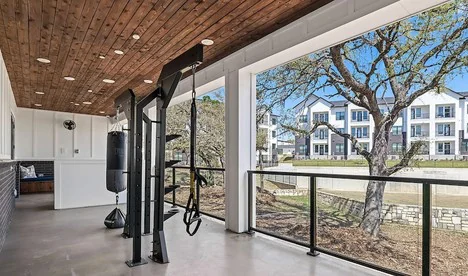
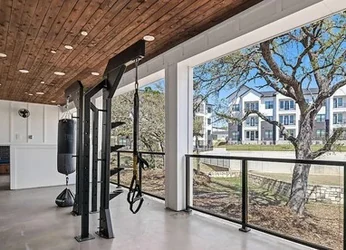
Canopies and covered structures that extend the training season at both ends of the year.
-
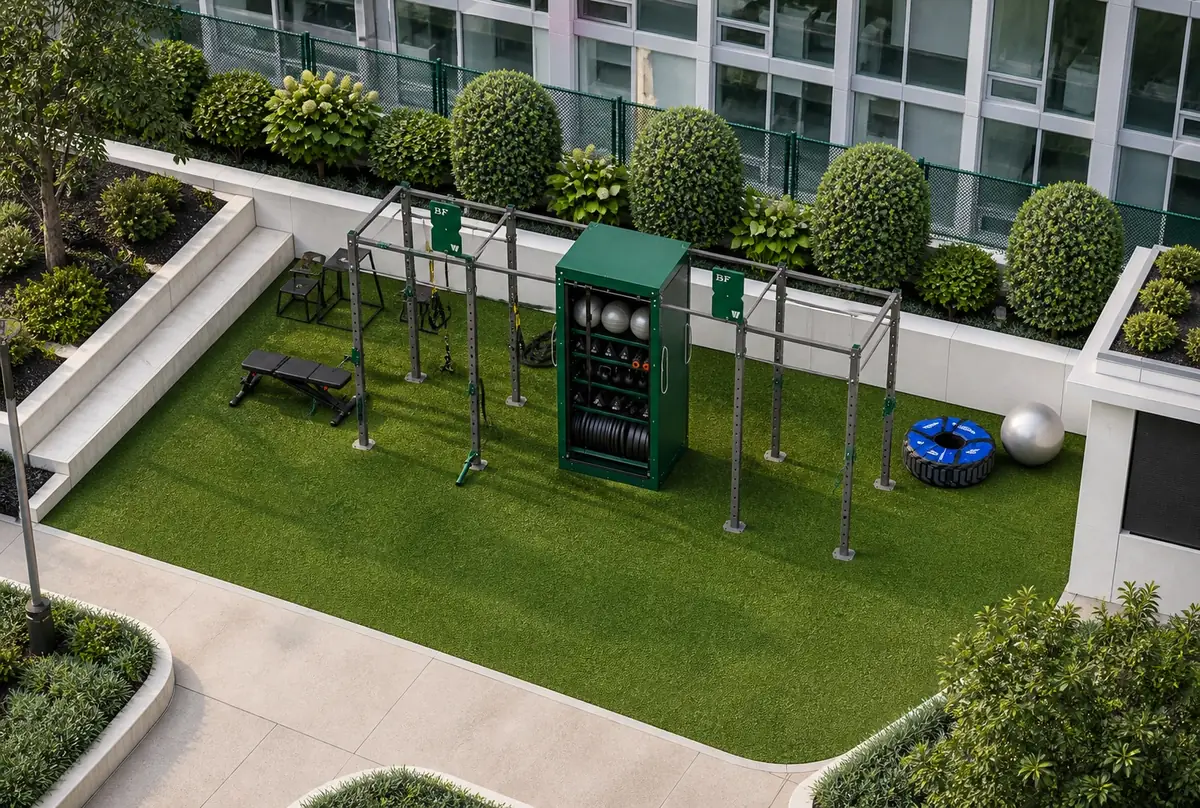
To-scale space plan
Footprint, fall zones, anchoring and surfacing drawn and agreed before anything is ordered.
Where outdoor training runs year round
Two States That Train Outside
Outdoor fitness is supplied and installed nationwide, and Texas and Arizona are where it earns its keep hardest — a courtyard rig or a turf deck in Phoenix or Austin is usable most of the year, which changes the economics of building one. The constraint is not the season, it is the surface, the fall zone and the anchoring.
- Phoenix Shade structure and surface temperature drive the design more than the equipment does
- Austin Pool-deck and courtyard training space in new multifamily construction
- Houston Drainage and corrosion resistance, in a climate that tests both
- Apartment and multifamily The buyer building most of the outdoor training space going in today
An outdoor build is settled on paper the same way an indoor one is: footprint, fall zones, anchoring and surfacing drawn and agreed before anything is ordered. A real example with both halves — an outdoor turf deck reached through a garage door off the indoor floor — is the Tempe apartment build. More across the two states on our Arizona work and our Texas work.
The hardest version of an outdoor build is a secure recreation yard. A jail or prison yard adds a security enclosure to the same drawing, and everything in it is fixed, anchored and free of removable parts; in Texas the minimum jail standards even set the yard’s size, and in Arizona the sun sets what surface it can have. That specification is on correctional facility fitness equipment.
Outdoor fitness questions
Can an outdoor rig go on a rooftop or podium deck?
Often, but it is a structural question before it is an equipment one. A rig concentrates load at its anchor points, and a roof or podium over occupied space is a different engineering answer from a slab on grade. Your structural engineer confirms what the deck carries and how it can be anchored; we plan the layout and the rig selection around that answer rather than the other way round.
What surfacing goes under an outdoor rig?
Turf or rubber pads sized to cover the fall zone around the equipment, with drainage resolved underneath. The surface does two jobs — it defines the training area and it protects users around the frame. Sled lanes and sprint tracks are specified separately from general turf, because a drag lane and a stretch area want different constructions.
How do you stop outdoor equipment being stolen or ruined?
Lockable weatherproof storage for everything loose, and outdoor-rated finishes on everything fixed. Rigs use powder-coated or galvanized steel rather than indoor finishes. The storage is usually the cheapest line on the quote and the first one cut, and it is the single item that decides whether the zone is still in use a year later.
Which outdoor spaces work best?
Amenity lawns, courtyards, covered patios, pool decks and flat roofs — space the property already pays for and rarely uses. Covered patios and terraces are the easiest wins because the cover is already there, which extends the season without adding a canopy.
Do you draw the space before quoting it?
Yes. Every outdoor build starts as a to-scale layout with the footprint, fall zones, anchoring and surfacing resolved before anything ships. Outdoor projects fail on clearances and anchoring far more often than on equipment choice, and both are cheap to fix on a drawing.