

Wellness, longevity, med spa and recovery practices
Wellness Clinic Equipment
Recovery Suites We Have Built
2 photos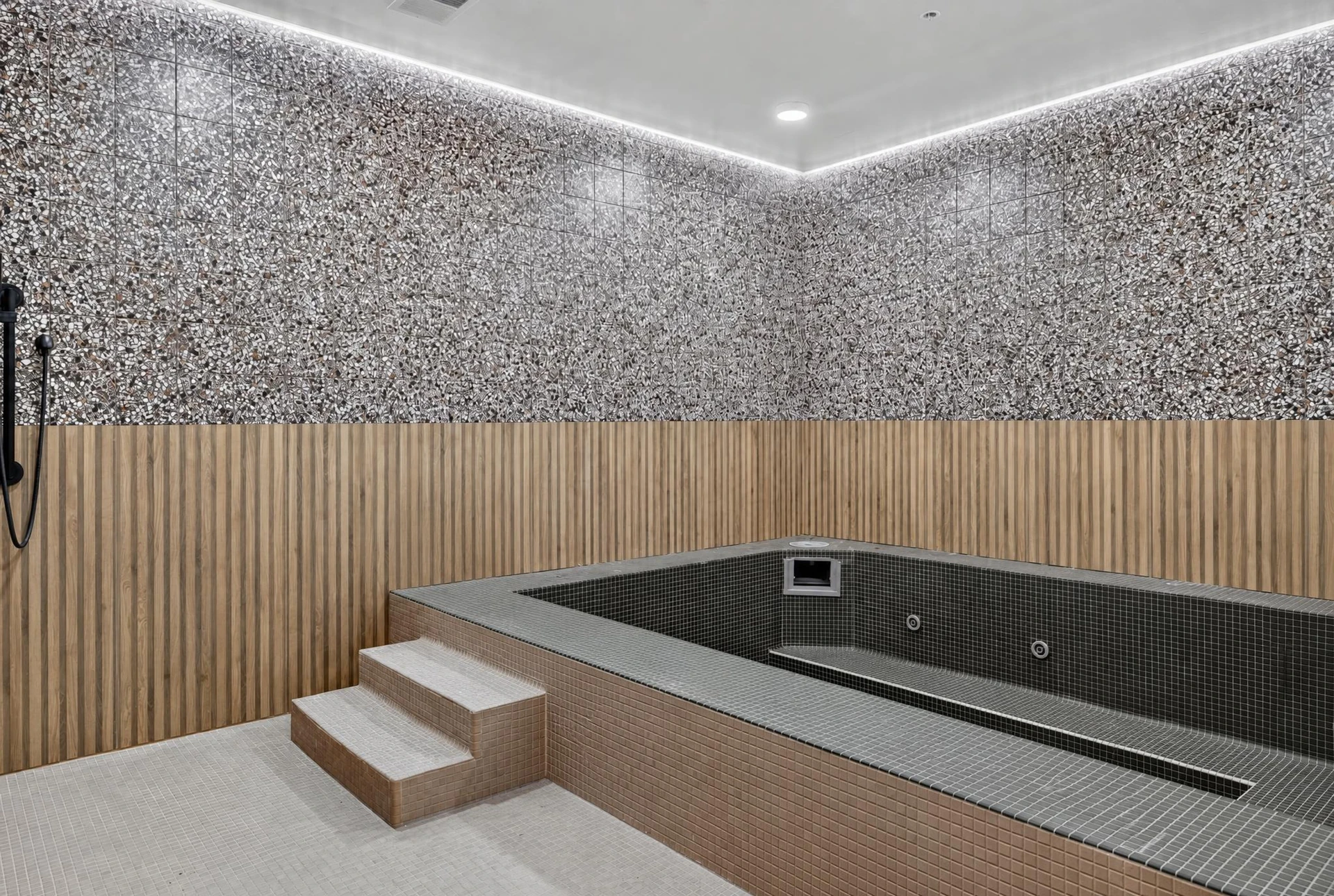
 2 photos
Wellness Suites Like the Ones We Build
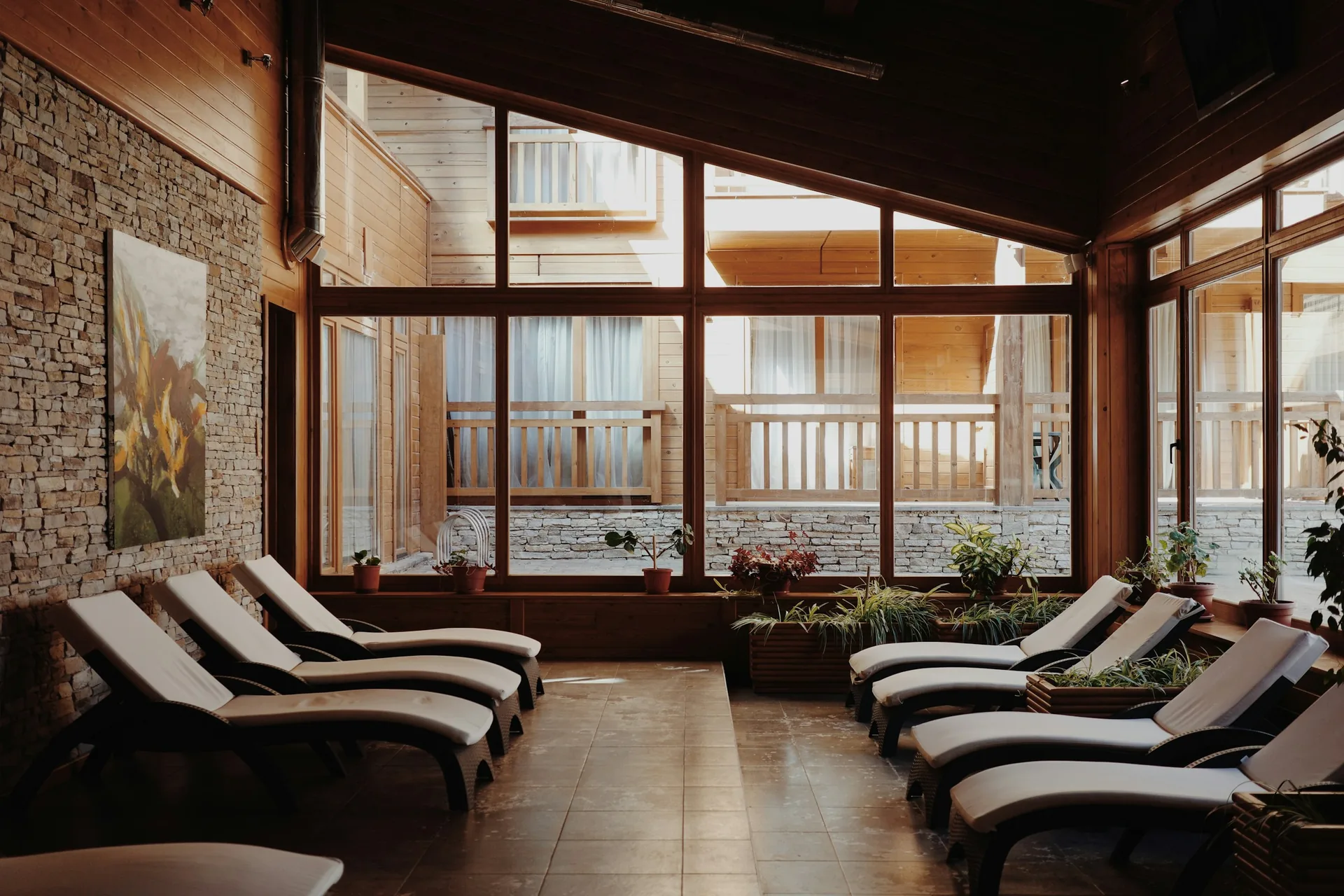
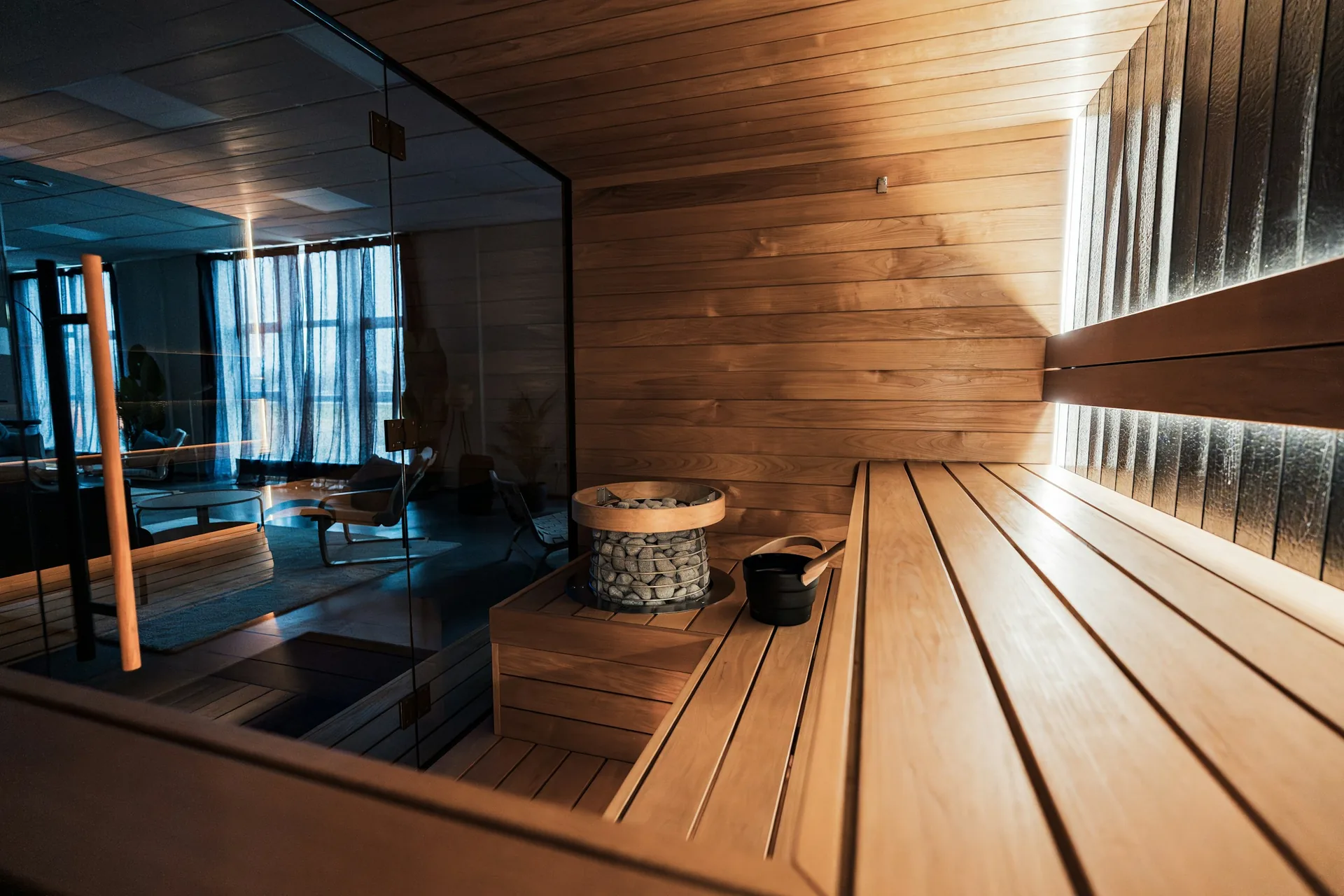
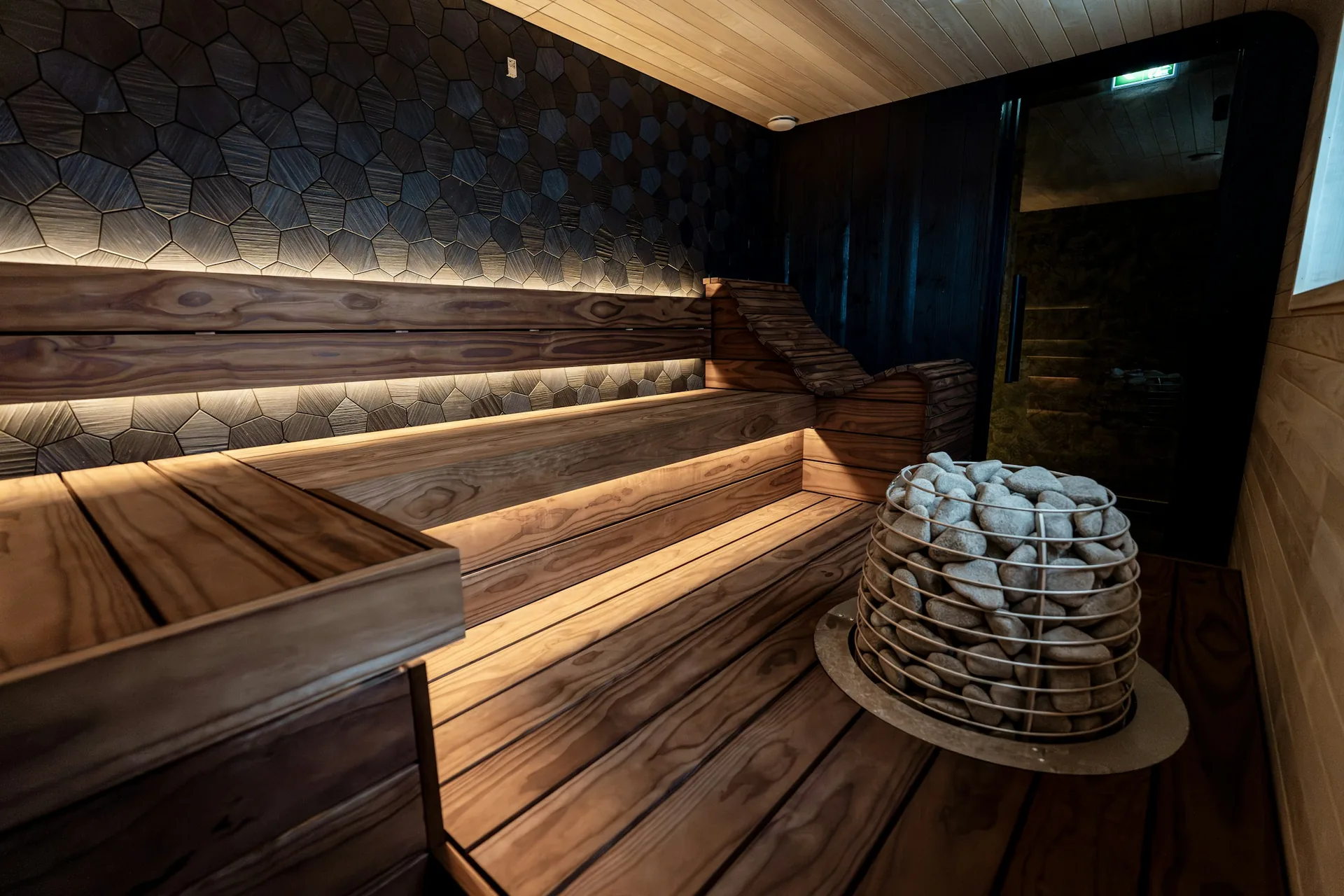
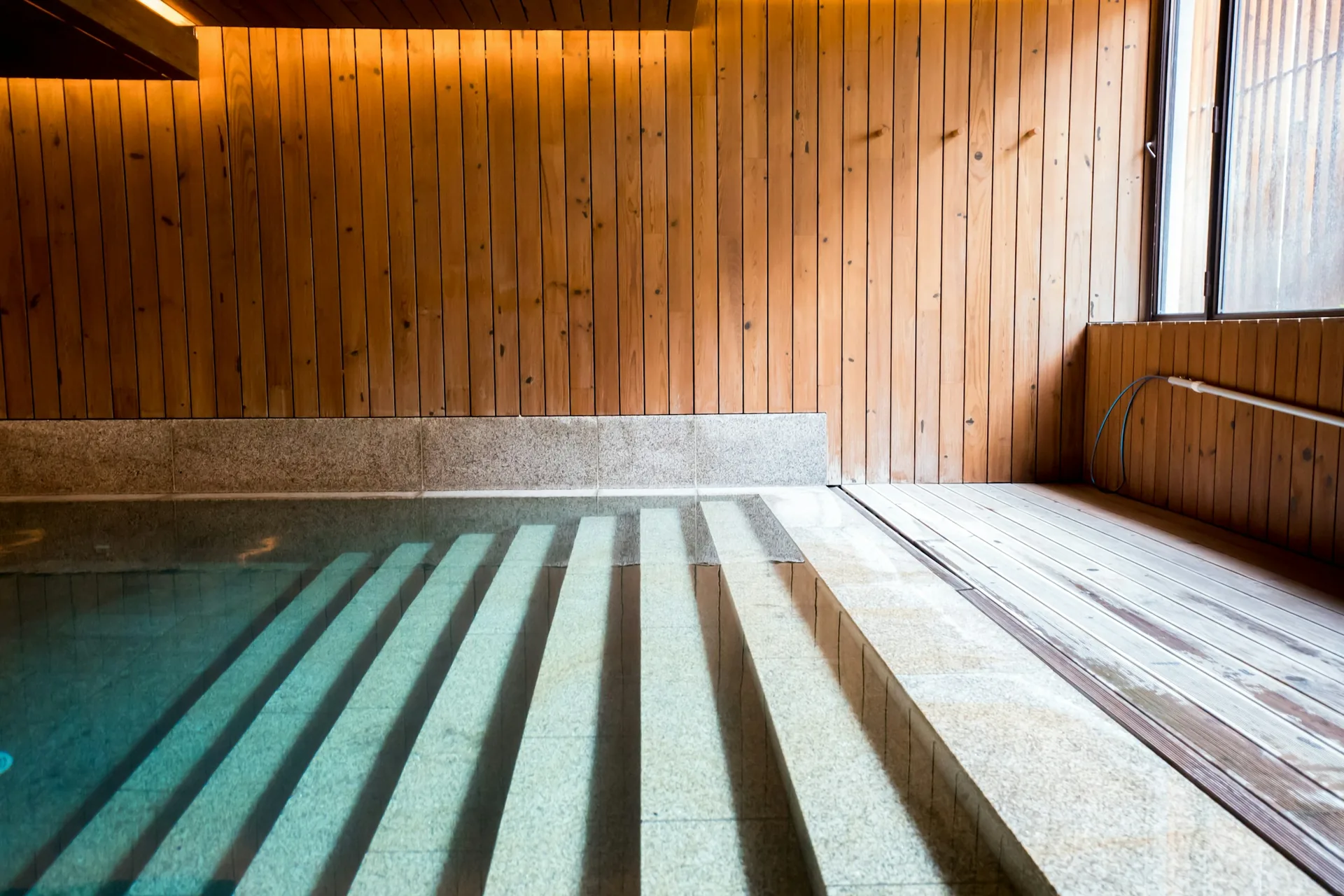
Saunas, Cold Plunge, Compression, Red Light and the Strength Floor Beside Them
A wellness clinic sells a session, so its equipment has to run back to back all day, look like the price of the session, and fit treatment rooms that were usually offices. The building decides more of the specification than the brochure does: a sauna is a fixed electric heater, a cold plunge is heavy, wet and powered at once, and both have to be planned before the walls close.
What each modality asks of the room
Saunas. A traditional heater draws 6 to 9 kW and commonly needs a 240-volt circuit sized for it; a comparable infrared cabin draws 1.5 to 2.5 kW, and a smaller unit can run on a standard 120-volt, 20-amp circuit. Both need a dedicated circuit, clearance to combustible material around the heater under NEC Article 424 and the manufacturer’s listing, and a real ventilation path. What a sauna needs from the building has the full list.
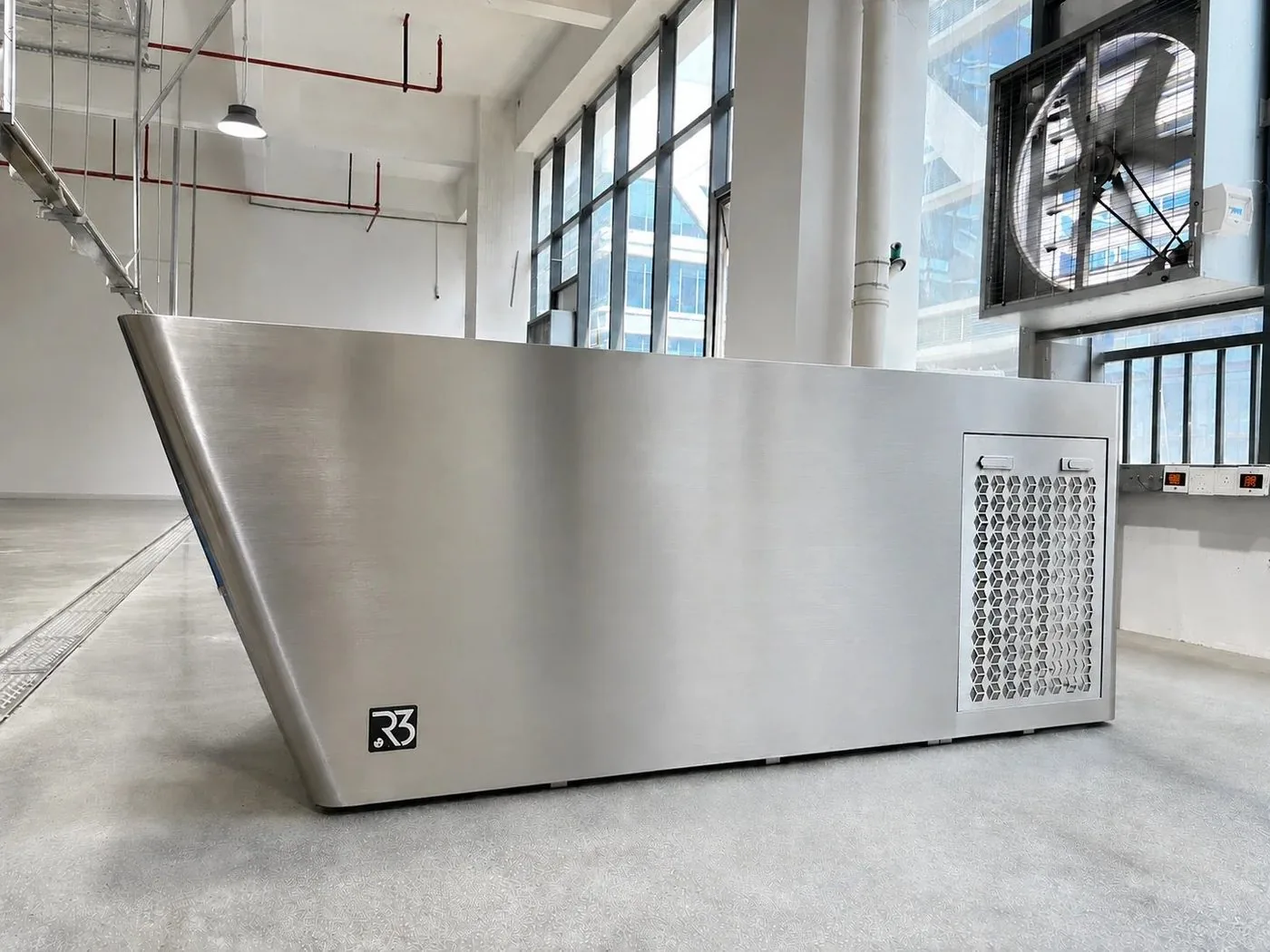
Cold plunge. Water weighs 8.34 lb per gallon, so a 100-gallon unit holds 834 lb before the shell, the chiller or the client is counted — and the room has to answer for a dedicated circuit, the heat the chiller rejects, and where the water goes when it is changed. What a cold plunge needs from the building covers it. Dry systems that cool through a membrane or a pad, with no immersion, avoid the water entirely and suit a treatment room with no drain.
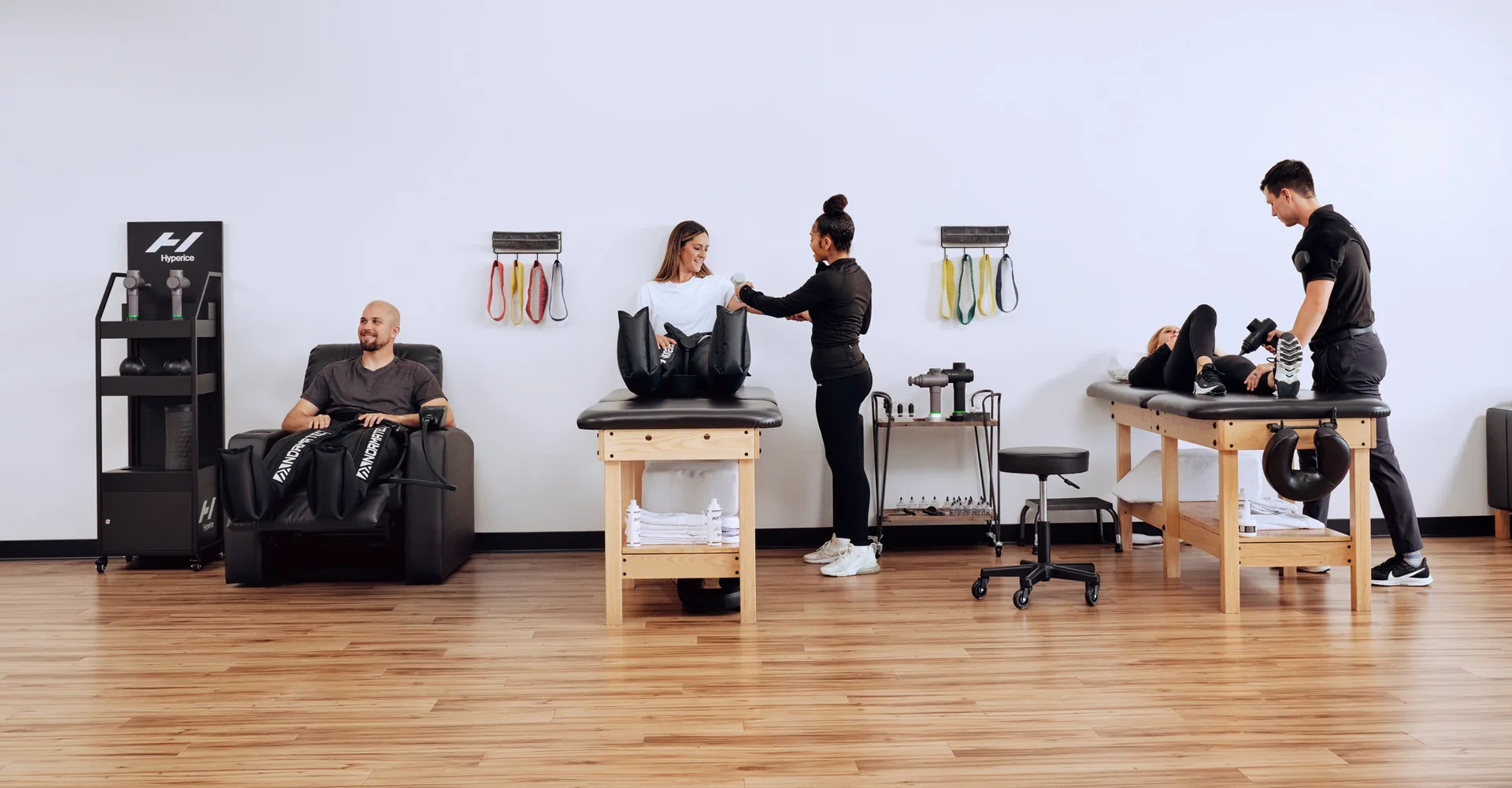
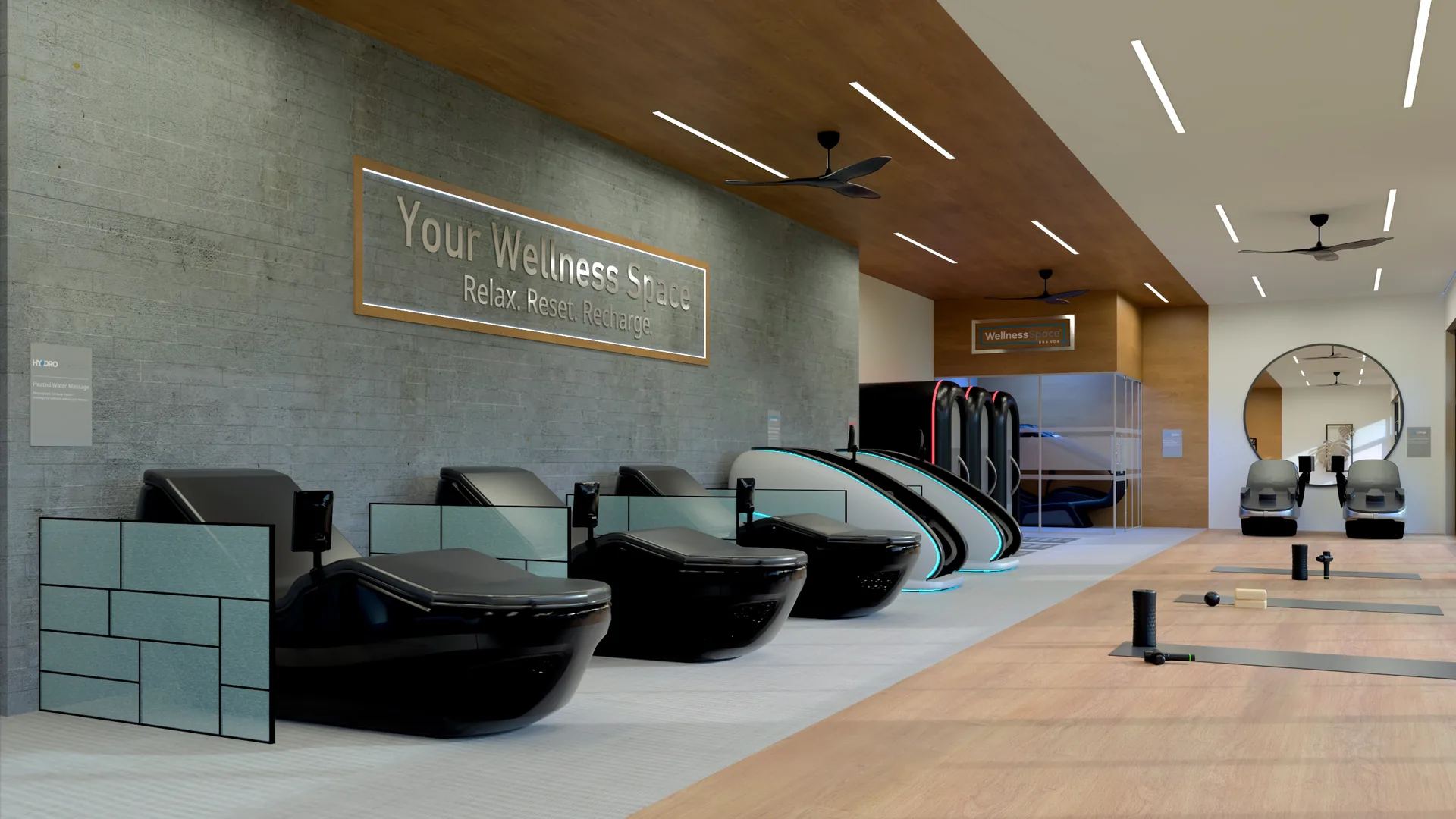
Compression, percussion, HydroMassage and red light. These ask for less of the building — an outlet, a chair or a table, and enough room for a client to settle and a practitioner to attach or adjust — which is why many clinics start with them and add heat and cold later.
Strength and longevity training
Longevity programs increasingly put training beside the recovery menu, and that floor is built on the same principles as a therapy gym: resistance that starts light and climbs in small steps, seated total-body cardio for clients who cannot run, and equipment that reports work done so progress can be tracked from one visit to the next. Pneumatic resistance, digital resistance and recumbent total-body trainers suit it; the full reasoning is on our physical therapy clinic equipment page.
Chiropractic, med spa and practice add-ons
A practice adding recovery to an existing clinic usually has one room to give it. Compression and a HydroMassage bed or lounge fit without plumbing; an infrared cabin needs only its circuit; a dry plunge needs neither water nor a drain. Adding recovery to an existing room walks through the order most retrofits follow, and what recovery equipment costs to keep running covers the operating side.
How a wellness suite is planned
Four building questions are answered before a single unit is chosen, because each one is expensive to answer after the finishes are in.
-
Power
A dedicated circuit for every heater, chiller and pod, at the voltage its listing calls for — 240-volt for a traditional sauna heater, often 120-volt, 20-amp for a smaller infrared cabin.
-
Water and drainage
A supply and a floor drain wherever a plunge is filled and changed, and a route for the water that does not cross a treatment room.
-
The floor
At 8.34 lb per gallon, a filled plunge is a concentrated load; the floor is checked before it is placed, and finished in a surface that stays safe wet.
-
Air
A ventilation path for every sauna, somewhere for a chiller’s rejected heat to go, and humidity control so a treatment room next door stays comfortable.
From our manufacturer partners
The Modalities a Wellness Practice Sells
Heat, cold, compression, light and the strength floor beside them, from the partners we supply. Every claim a modality makes is its manufacturer’s; we work from the published specification.
Heat, cold and recovery
The modalities wellness, chiropractic and sports-medicine practices offer between treatments — each one a building question as much as a product.
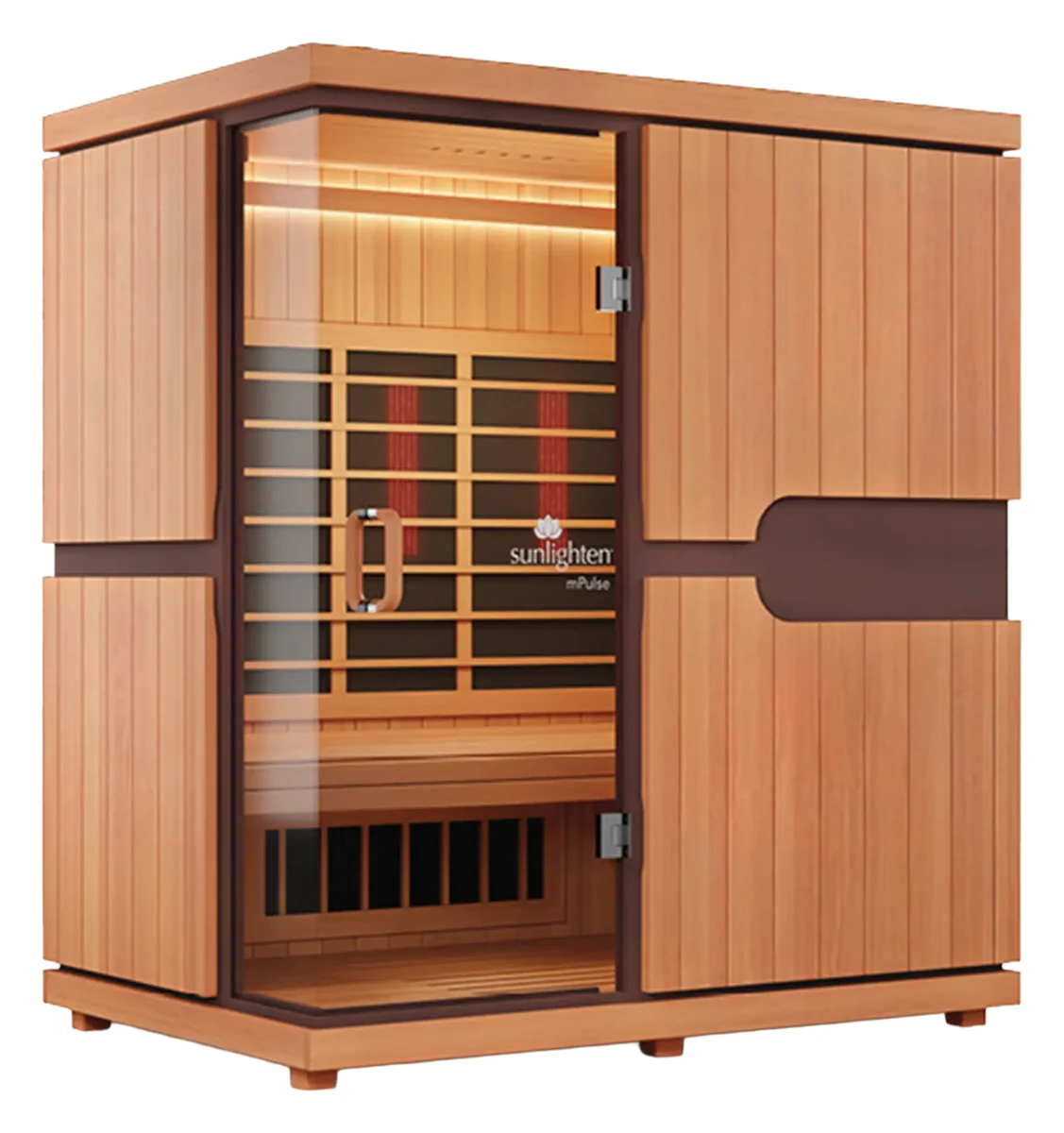
Sunlighten
Infrared Sauna / mPulse
Red light and near-, mid- and far-infrared delivered separately, in cabins for one to five people on 120 or 240 V by model.
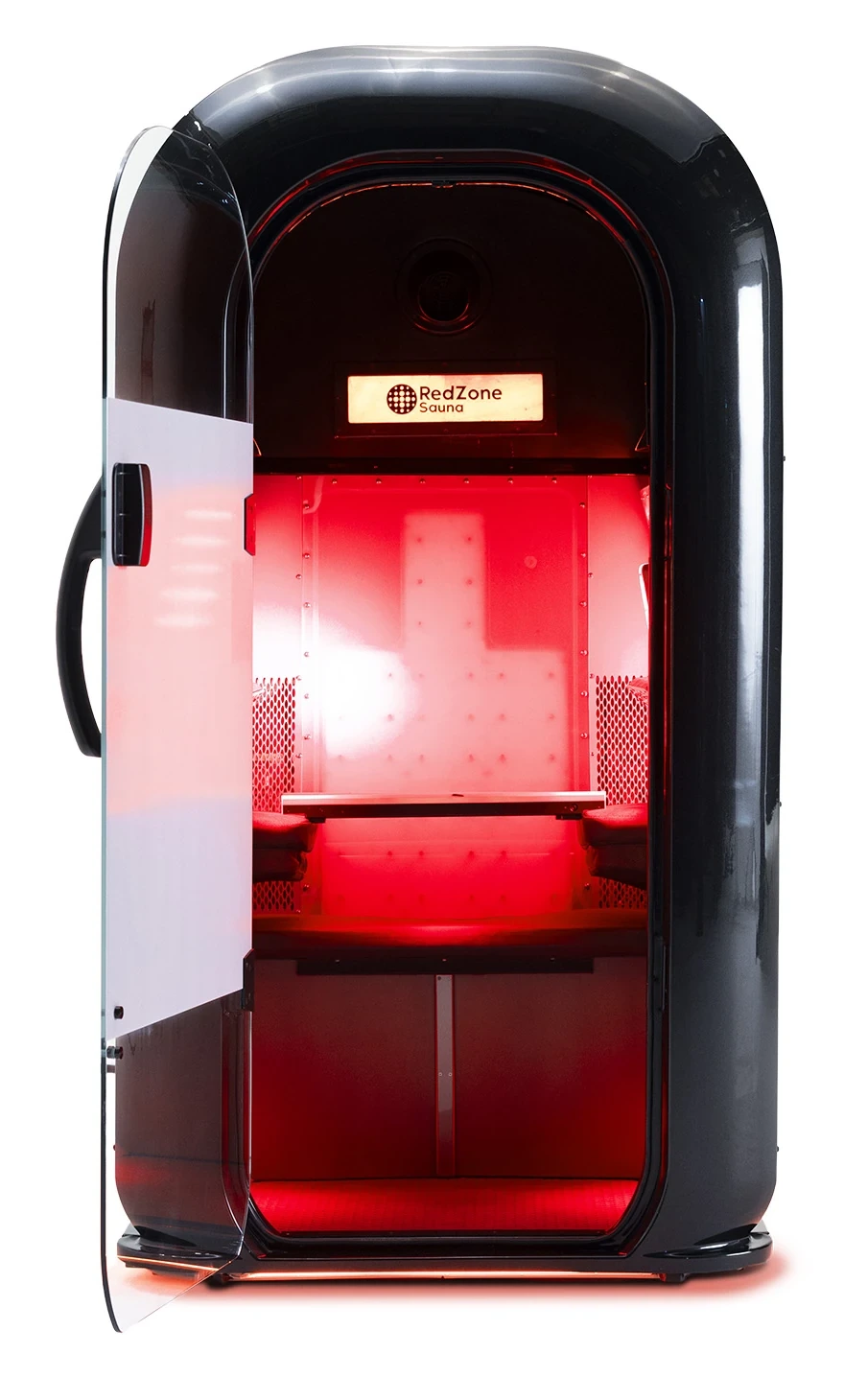
WellnessSpace
Infrared and Red Light Sauna / RedZone
Far- and near-infrared heat plus six red-light panels in one 10 to 15 minute session, with no staff needed.
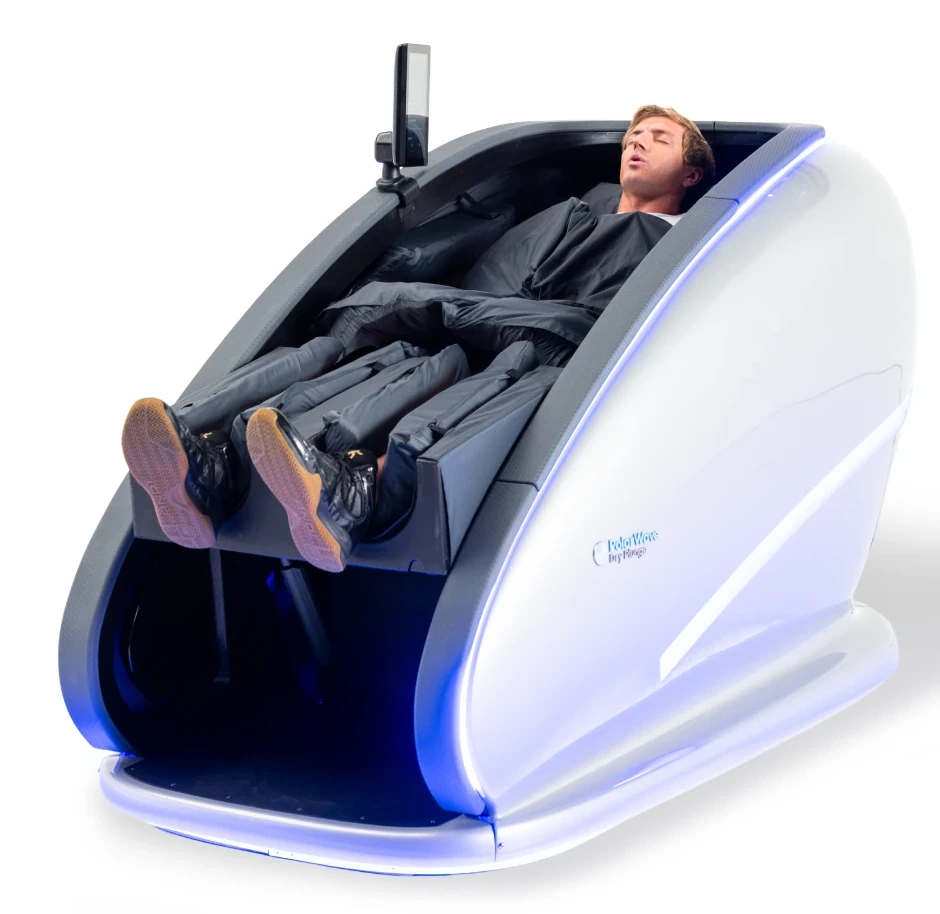
WellnessSpace
Dry Cold Plunge / PolarWave
Full-body cold at 28 to 34°F with no water contact, and no plumbing or drainage required.
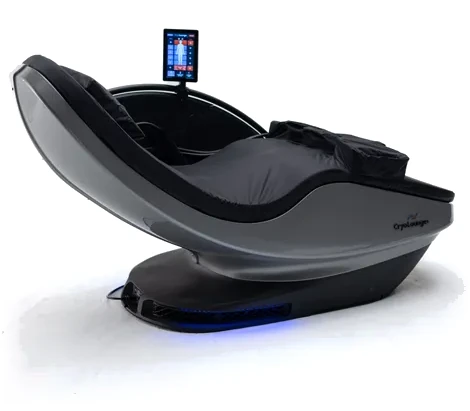
WellnessSpace
Contrast Therapy Lounge / CryoLounge+
Six zones of cold from 28 to 40°F and heat from 95 to 115°F, without ice or immersion.
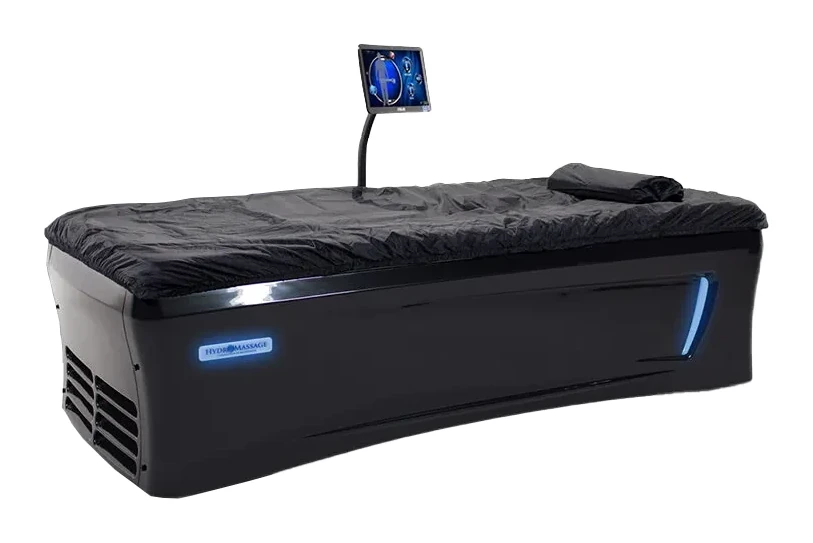
HydroMassage
HydroMassage Bed / 340/350
A heated water-jet massage bed with preset and saved programs; the client stays dry and fully clothed.
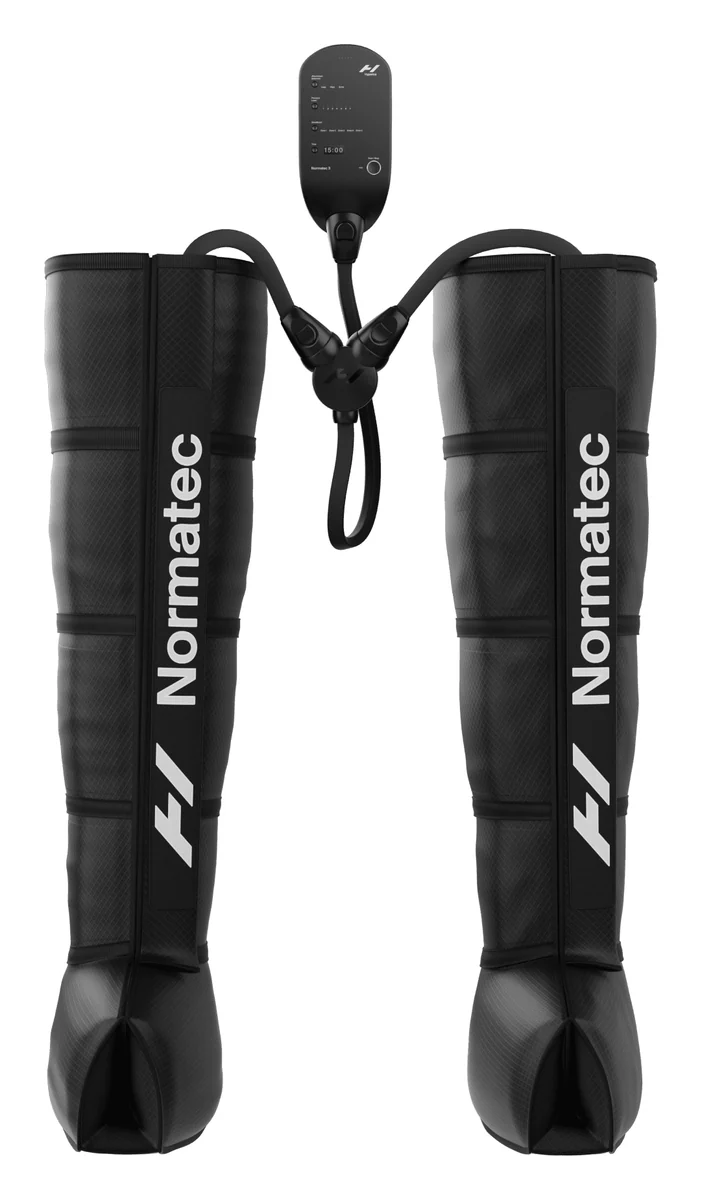
Hyperice
Leg Compression / Normatec 3
Dynamic air compression across five zones, with seven levels from 40 to 110 mmHg.
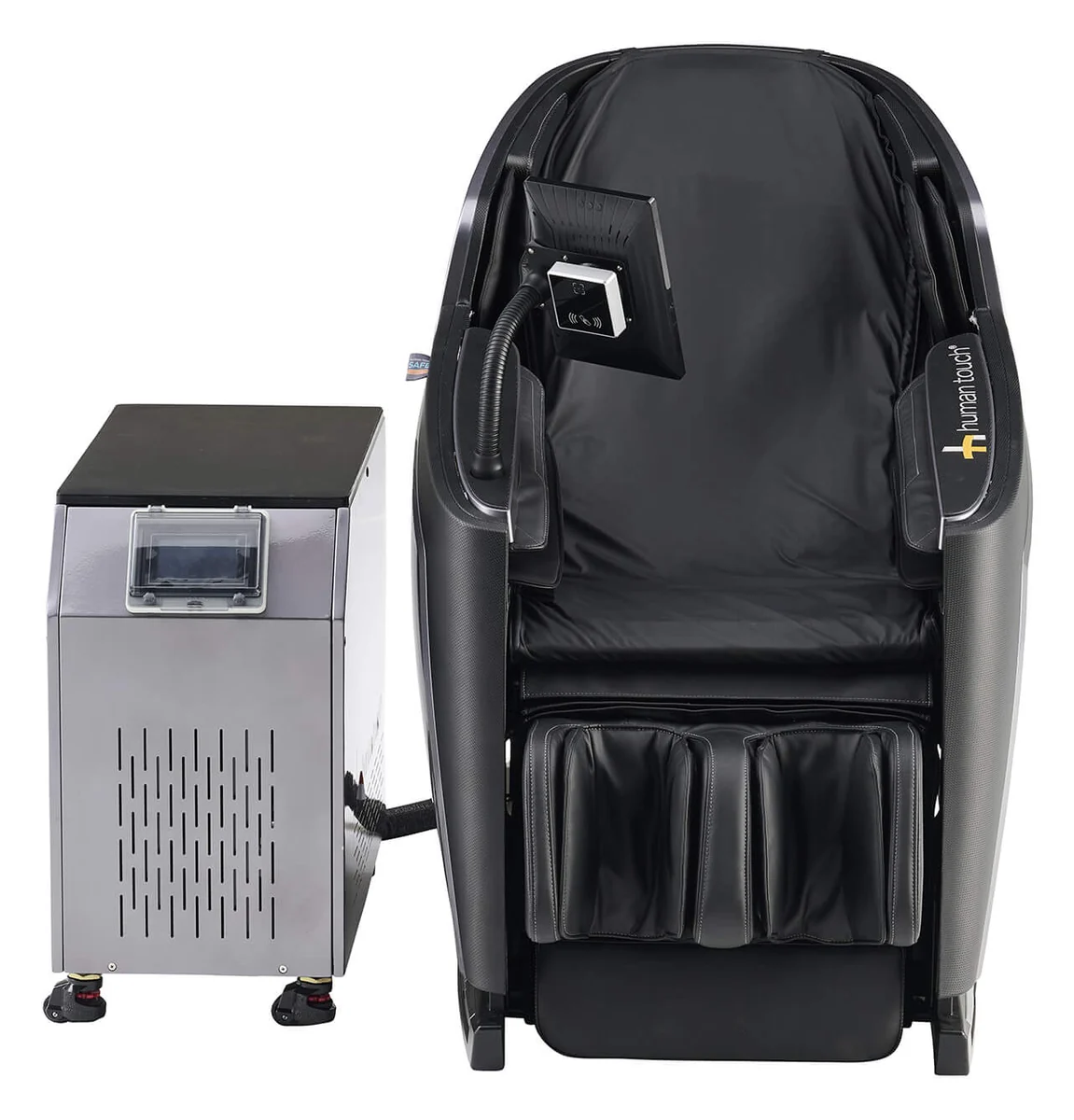
Human Touch
Hot and Cold Chair / Contrast Therapy PRO
A dry hot-and-cold chair, 105°F to 35°F, with sequential air compression in the forearms and calves.
Balance, vibration and functional tools
What a treatment plan reaches for between the machines — balance and proprioception, suspension, whole-body vibration, clinical Pilates and stretching.
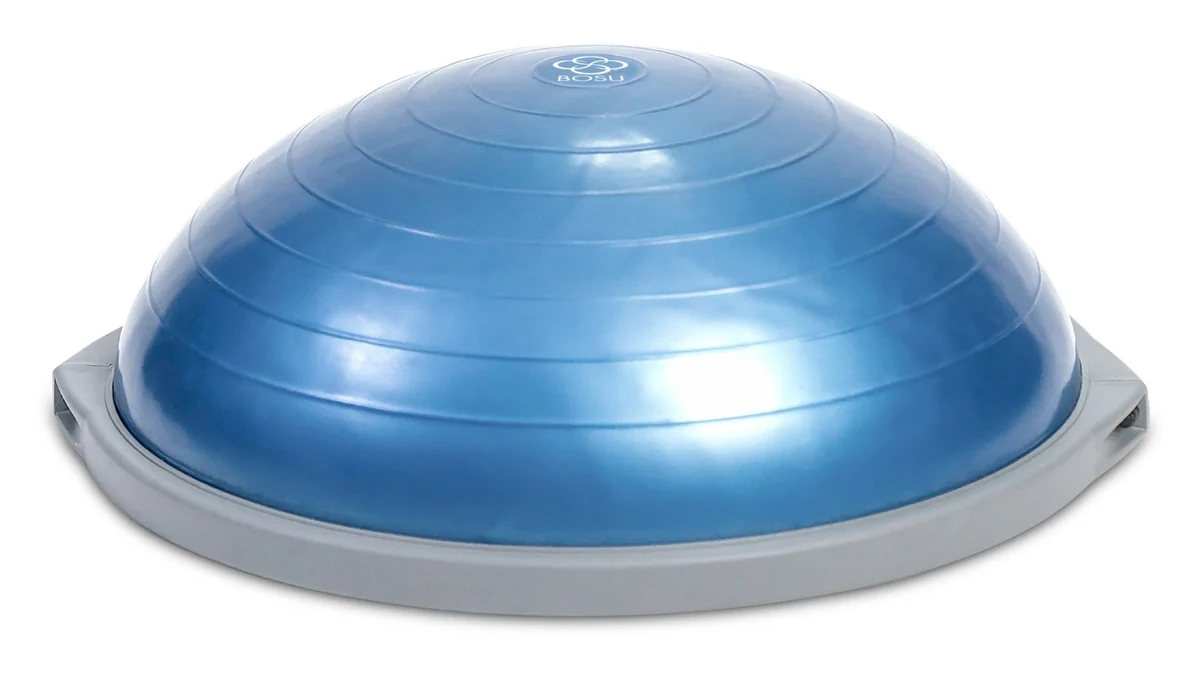
BOSU
Balance Trainer / PRO
A 65 cm dome on a non-skid, non-marking base, rated to 350 lb, made for fitness, sports conditioning and rehabilitation use.
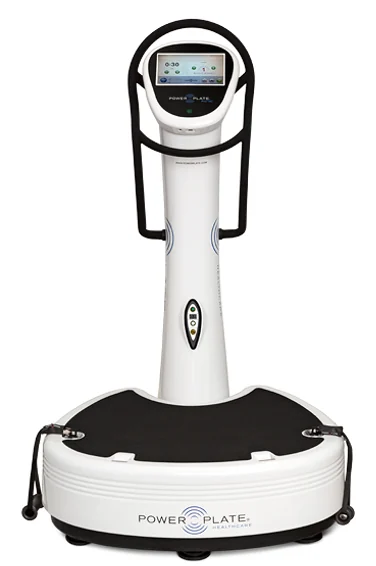
Power Plate
Vibration Platform / pro7HC
Whole-body vibration at 25 to 50 Hz in low or high amplitude, a 500 lb maximum load and range-of-motion tracking.
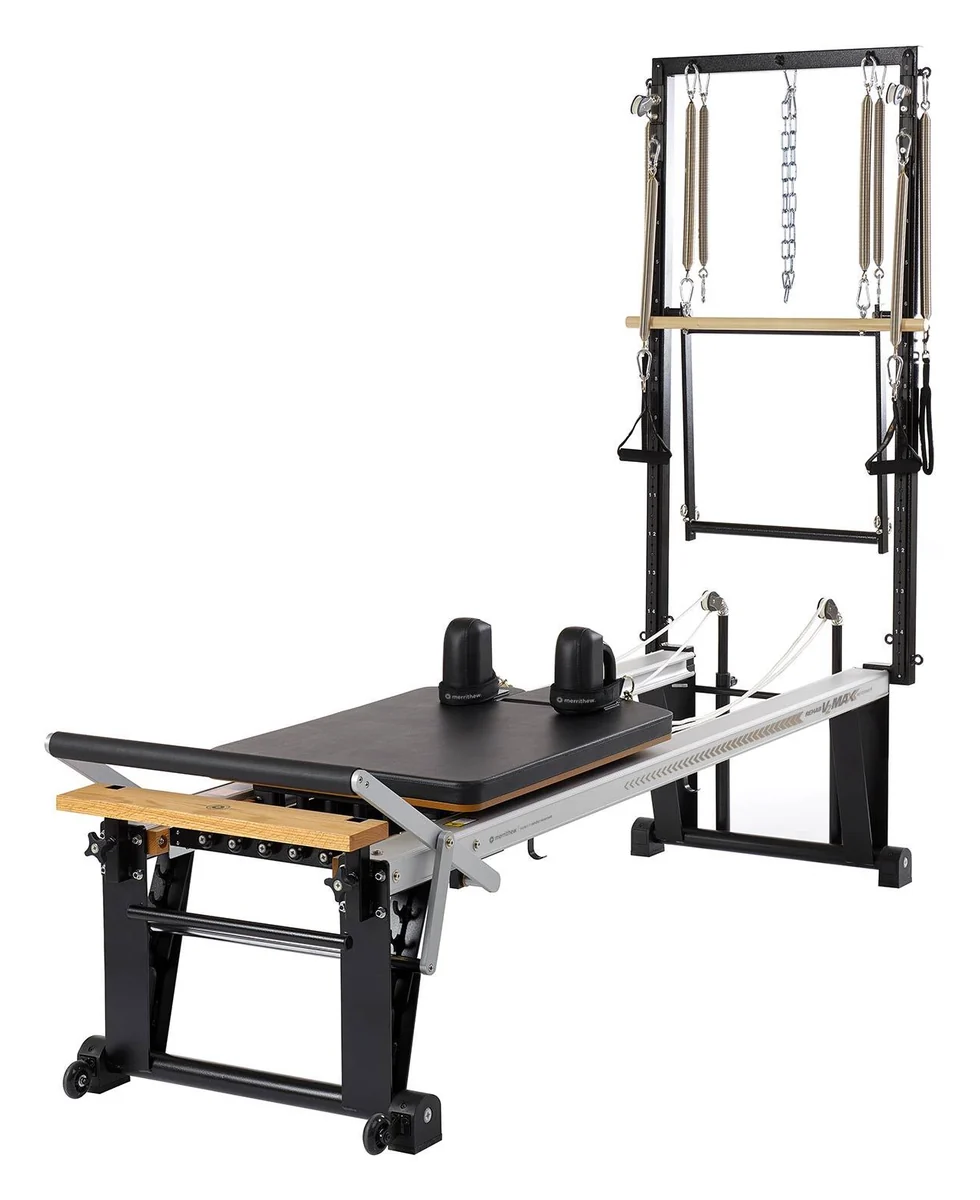
Merrithew
Rehab Reformer / Rehab V2 Max Plus
A raised rehab reformer with a vertical frame, rated to 425 lb and CE-marked in Europe as a Class I medical device.
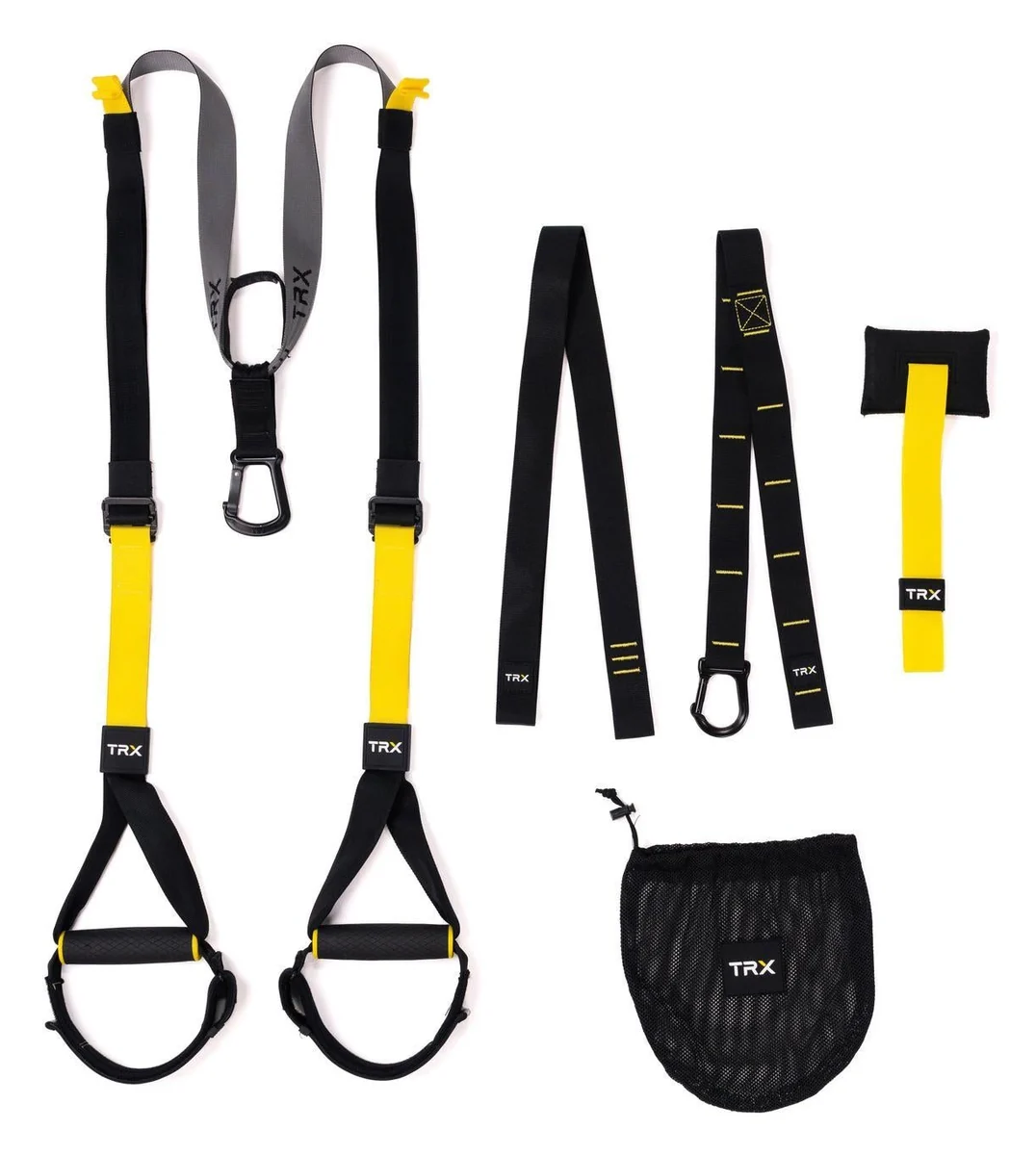
TRX
Suspension Trainer / PRO4
Suspension straps with door, suspension and extension anchors; TRX runs a rehab education course for therapists.
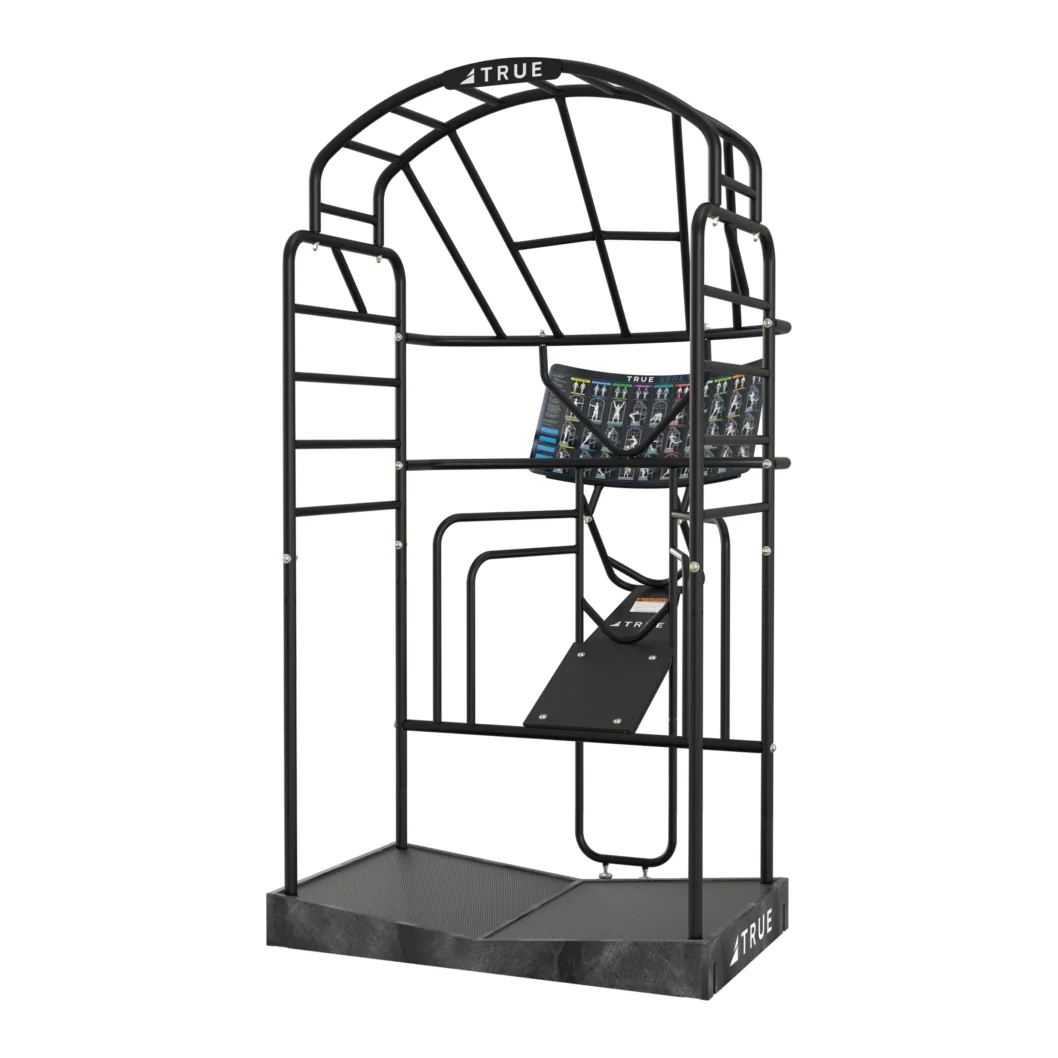
TRUE Fitness
Stretch Pro / TRUE Stretch
A self-contained stretching station, 95 in tall with stretch placards, so stretching happens off the floor.
Strength that starts light
Low starting weights, fine increments and limits on range of motion, so a load can be set to what a healing joint will take and repeated exactly at the next visit.
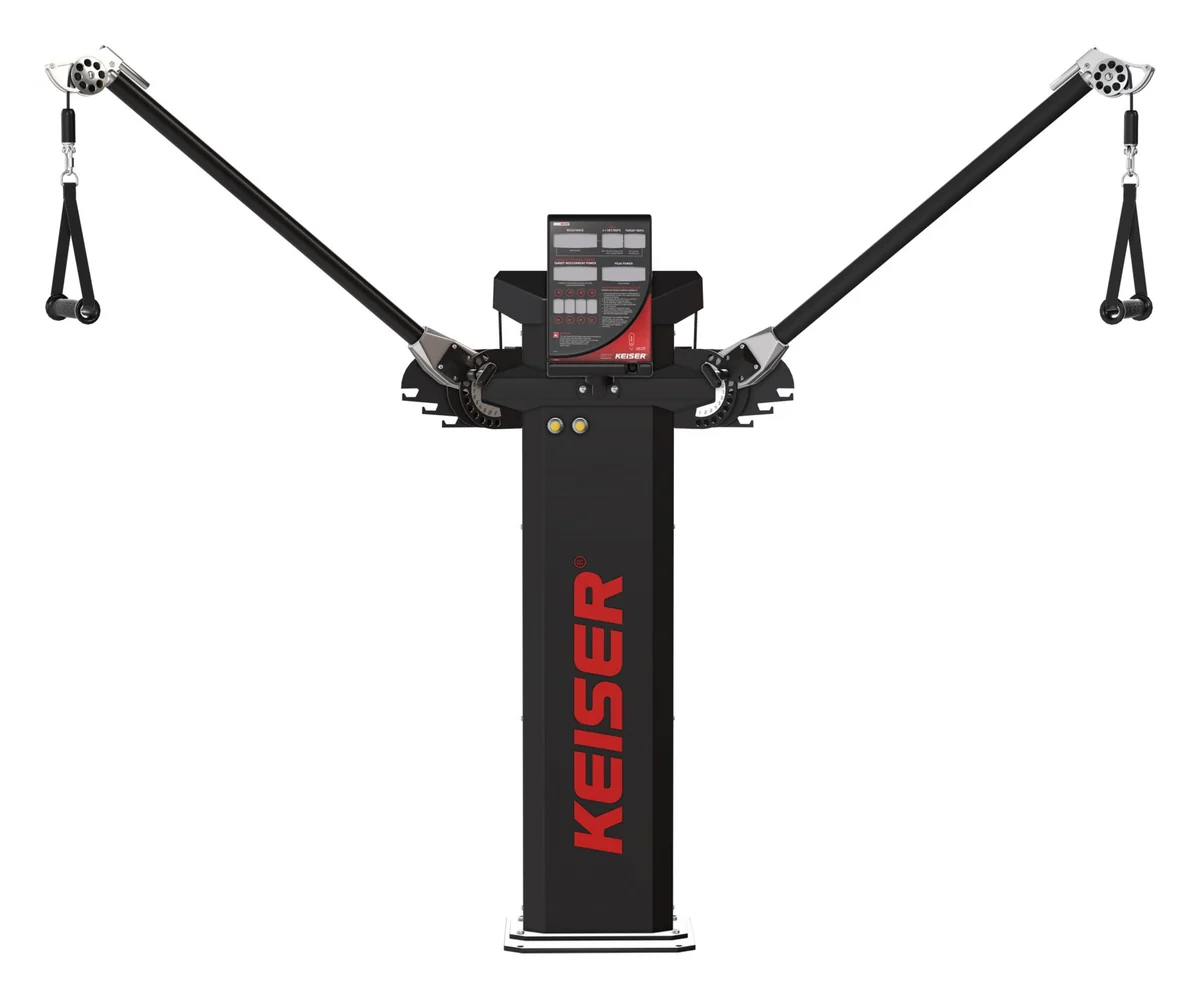
Keiser
Functional Trainer / A300
Pneumatic cable resistance from zero in increments as low as a tenth of a pound, with a live power display.
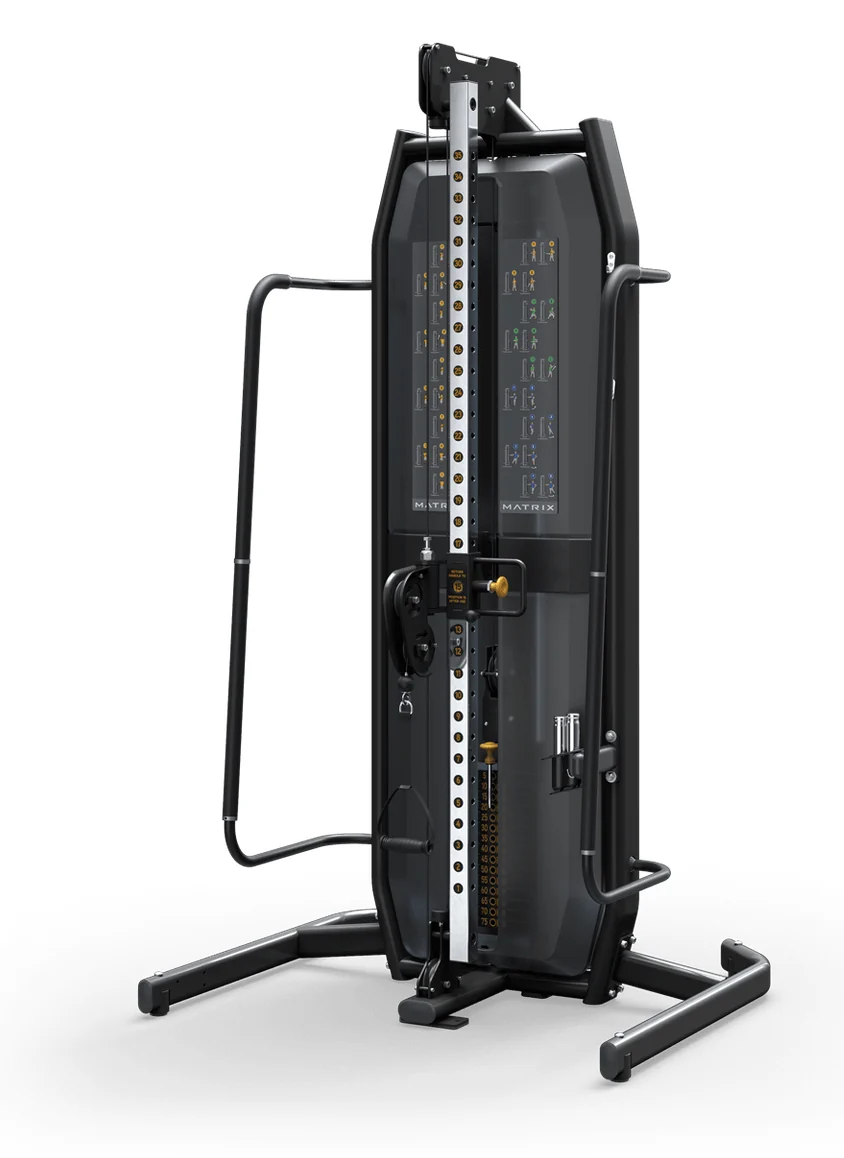
Matrix
Adjustable Pulley / Versa MD-AP
A 5 lb starting weight, effective increments of 1 to 4 lb and 35 numbered height positions.
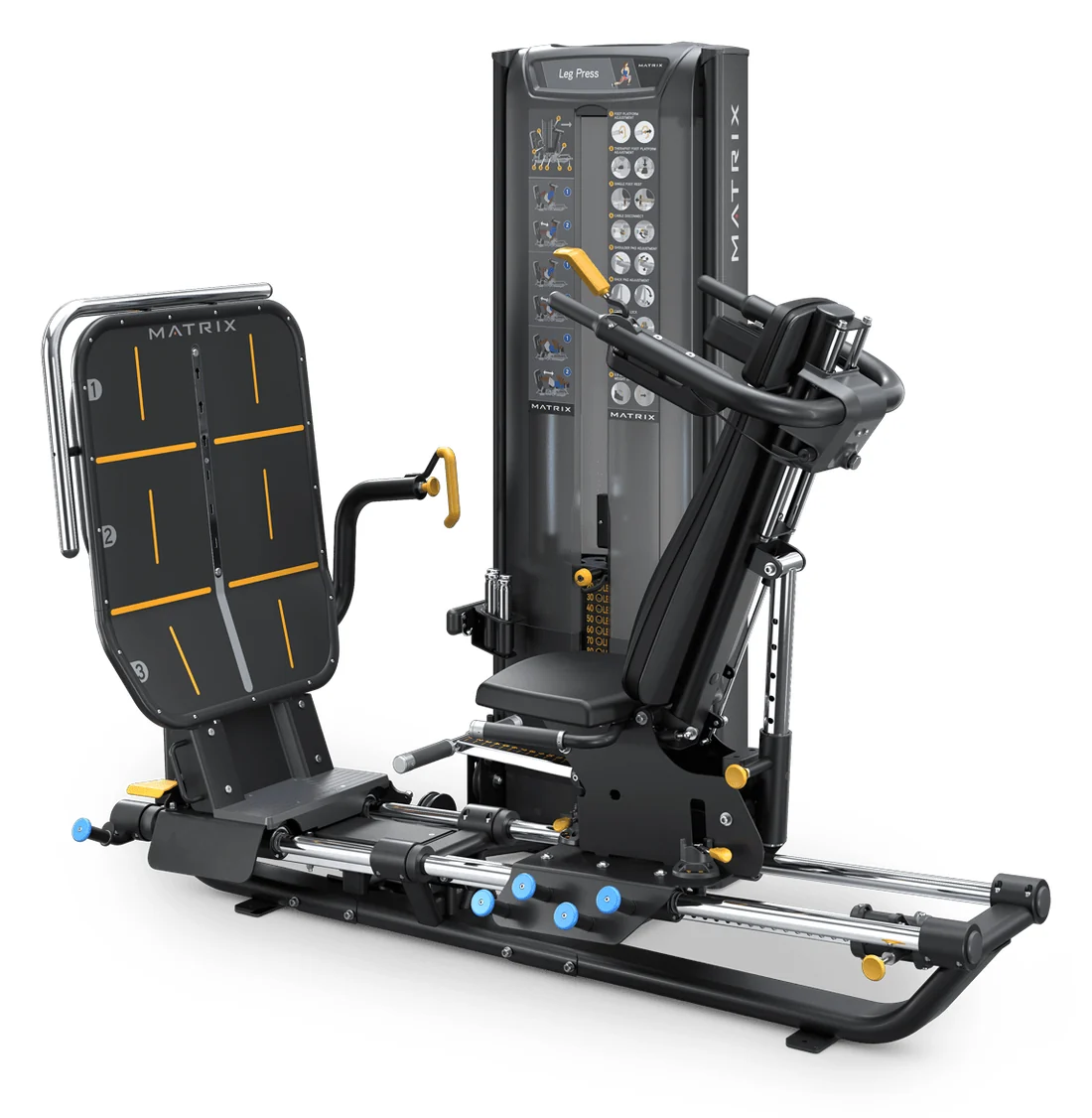
Matrix
Leg Press / Versa MD-S70
A carriage lockout and gas-assisted platform to limit range of motion, in isometric through plyometric modes.
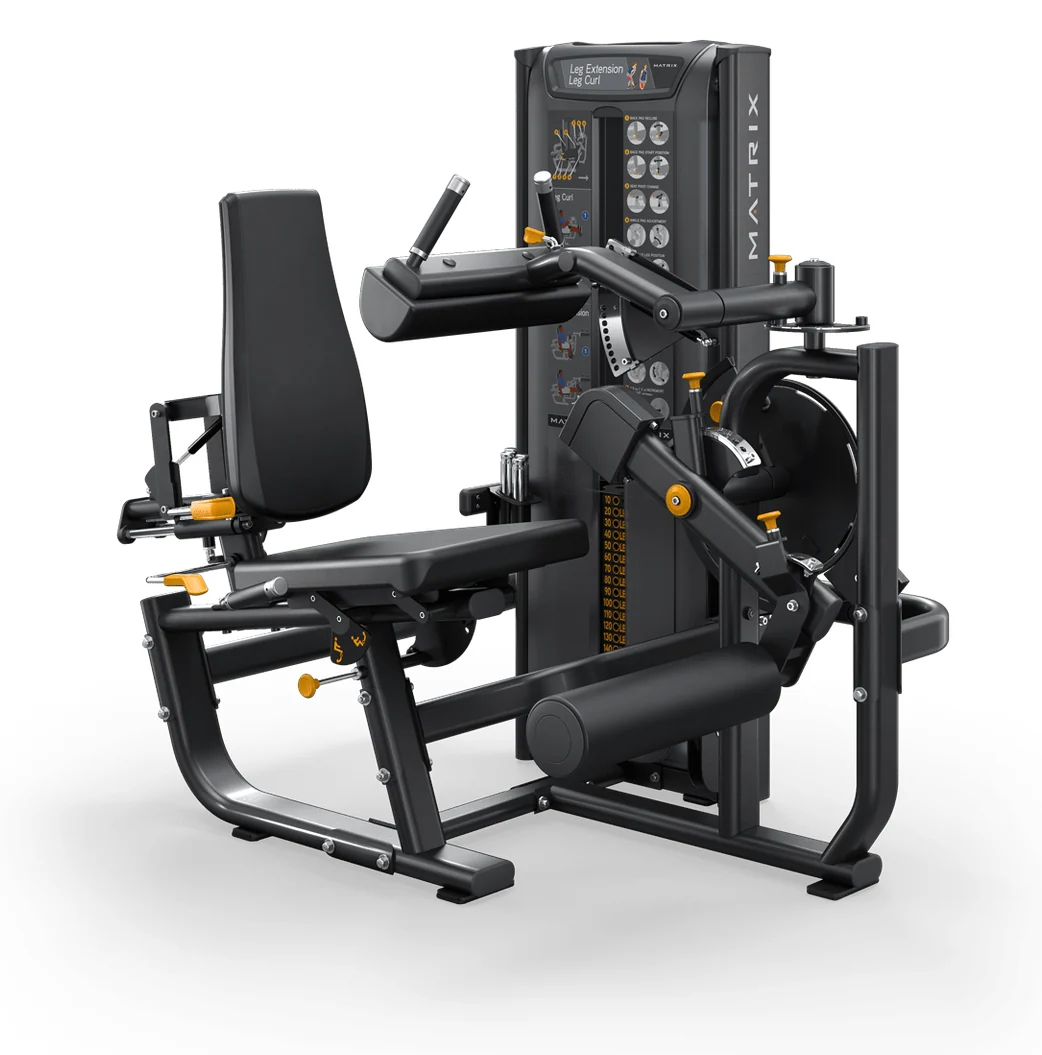
Matrix
Leg Extension / Leg Curl / Versa MD-S711
A low starting weight with 2, 4, 6 and 8 lb increments, 12 starting positions and a range-of-motion limiter.
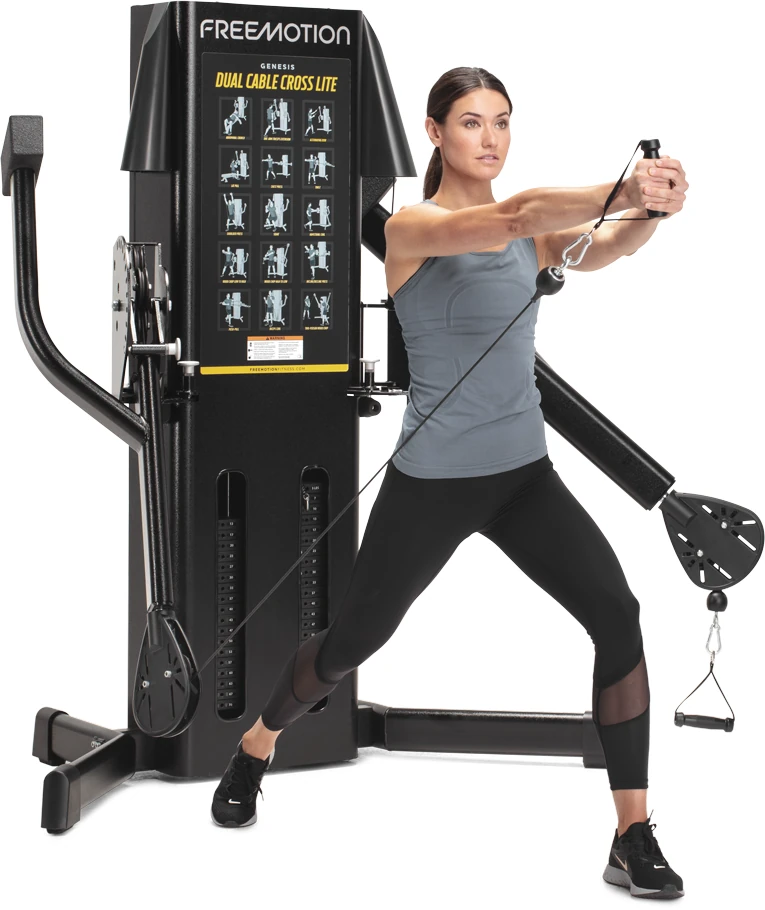
FreeMotion
Dual Cable Cross Lite / G424
Two independent 210 lb stacks in a smaller footprint, with an open frame FreeMotion lists as wheelchair accessible.
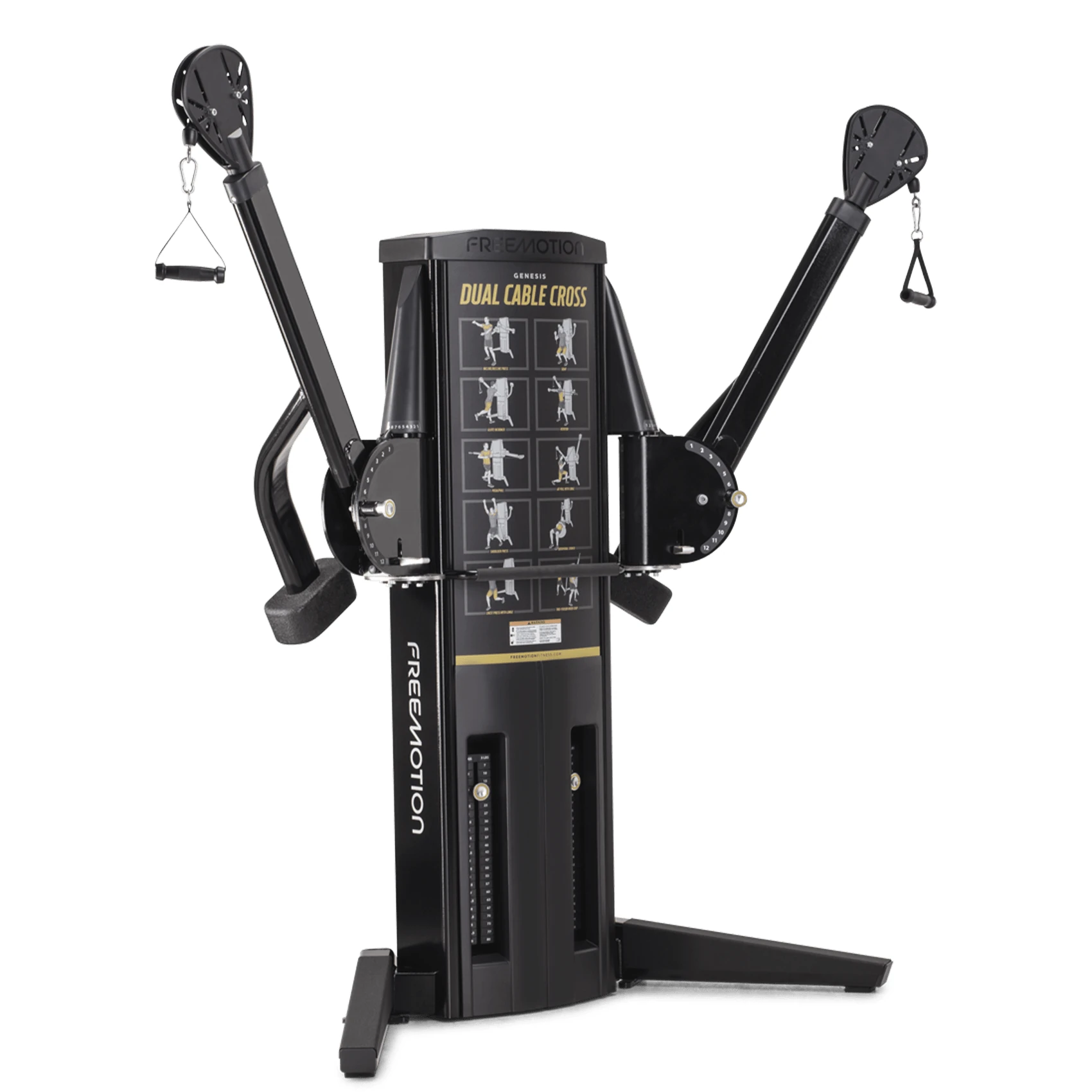
FreeMotion
Dual Cable Cross / G624
Dual 240 lb independent stacks, 97 in of cable travel and an open, wheelchair-accessible design.
A representative selection, not the full range. Each card with a product page links to it; for the rest, ask us for the full line.
How a wellness suite gets built
From the Service Menu to the Suite
Five stages, the same for one recovery room and a multi-room longevity clinic.
1. Start from the service menu
Which sessions the practice sells, how long each runs and how many it books in its busiest hour decide the room count and the unit count — a sauna that turns over every 40 minutes and a compression chair that turns over every 30 are planned differently.
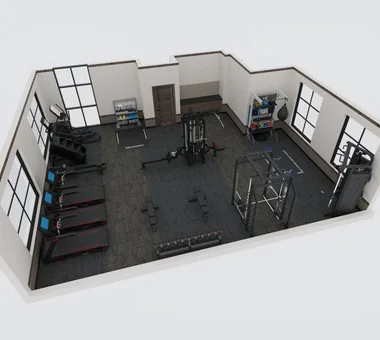
2. Every circuit and drain on the drawing
The suite is drawn with each unit’s dedicated circuit and voltage, every water supply and floor drain, the chiller’s heat and the sauna’s ventilation path marked on it, so the electrician and the plumber price the same room the equipment needs.
3. Specified for back-to-back sessions
Clinic use is commercial use. Units are specified for continuous daily sessions, finishes for constant cleaning, and the mix for the practice’s price point — with the strength and cardio floor beside it where the program includes training.
4. Installed once the rough-ins are in
Delivery is scheduled after the circuits and drains are in place, cabins are assembled in the room they stand in, plunges are set and filled, and every unit is run before the crew leaves — our own crews in Texas and Arizona, installation partners elsewhere.
5. Kept running
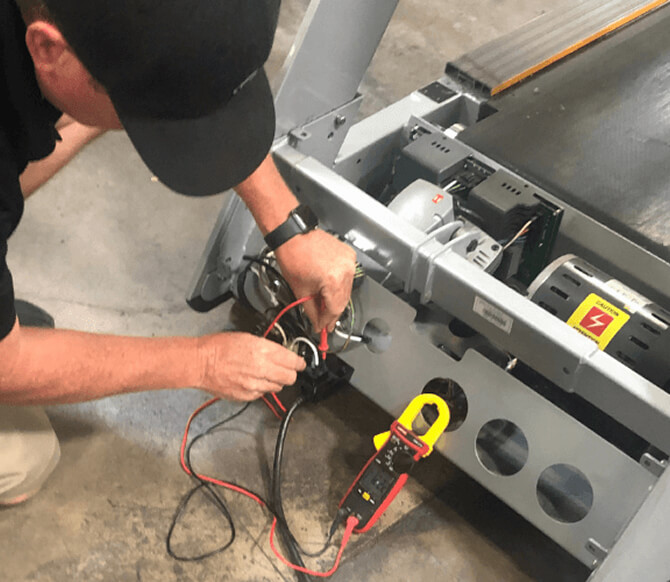
In Texas and Arizona our own technicians service the fitness equipment and keep the maintenance record; for recovery units we coordinate the manufacturer’s warranty and service network everywhere, so a cold plunge or sauna that goes down is back in the schedule quickly.
Recovery rooms we have built
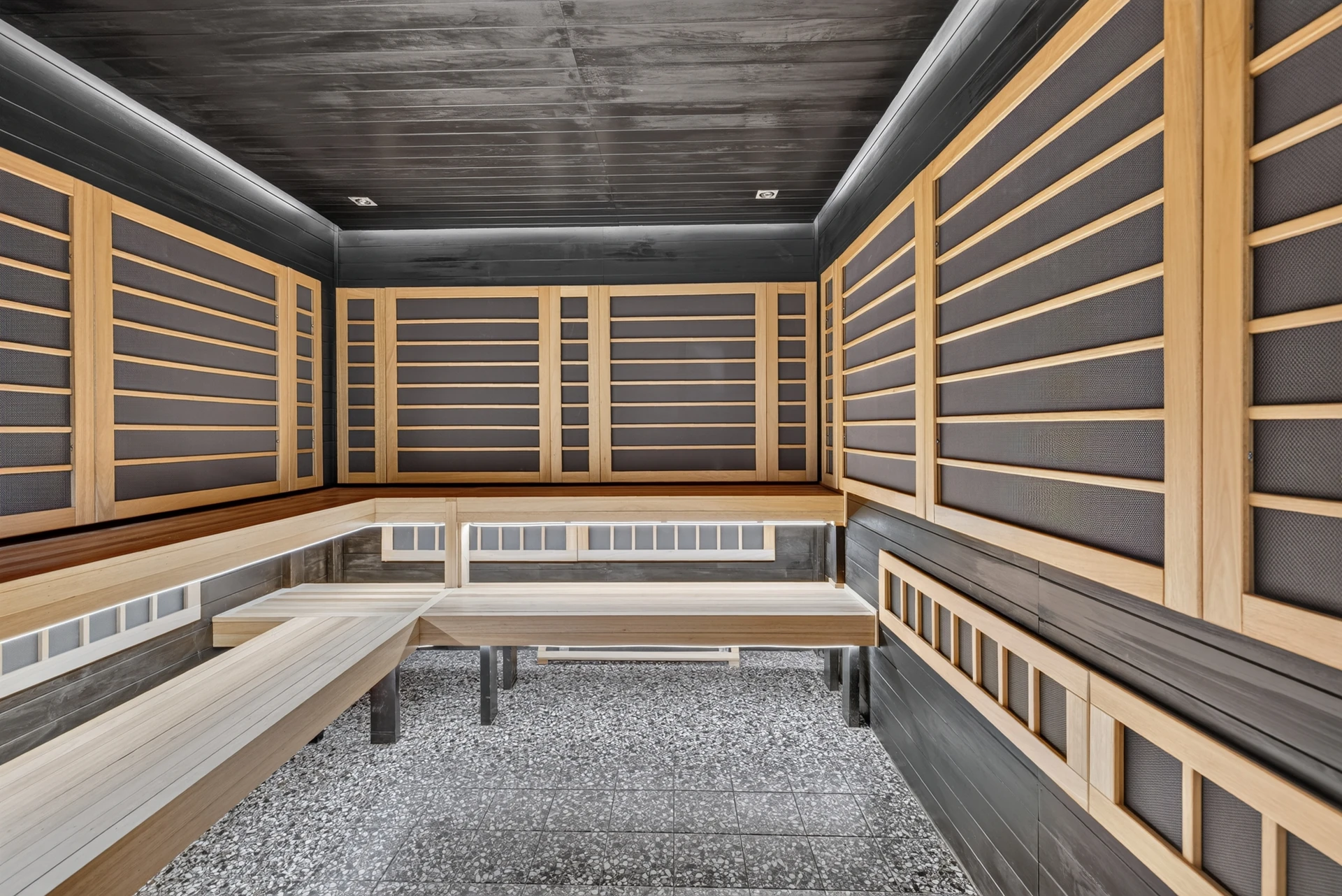
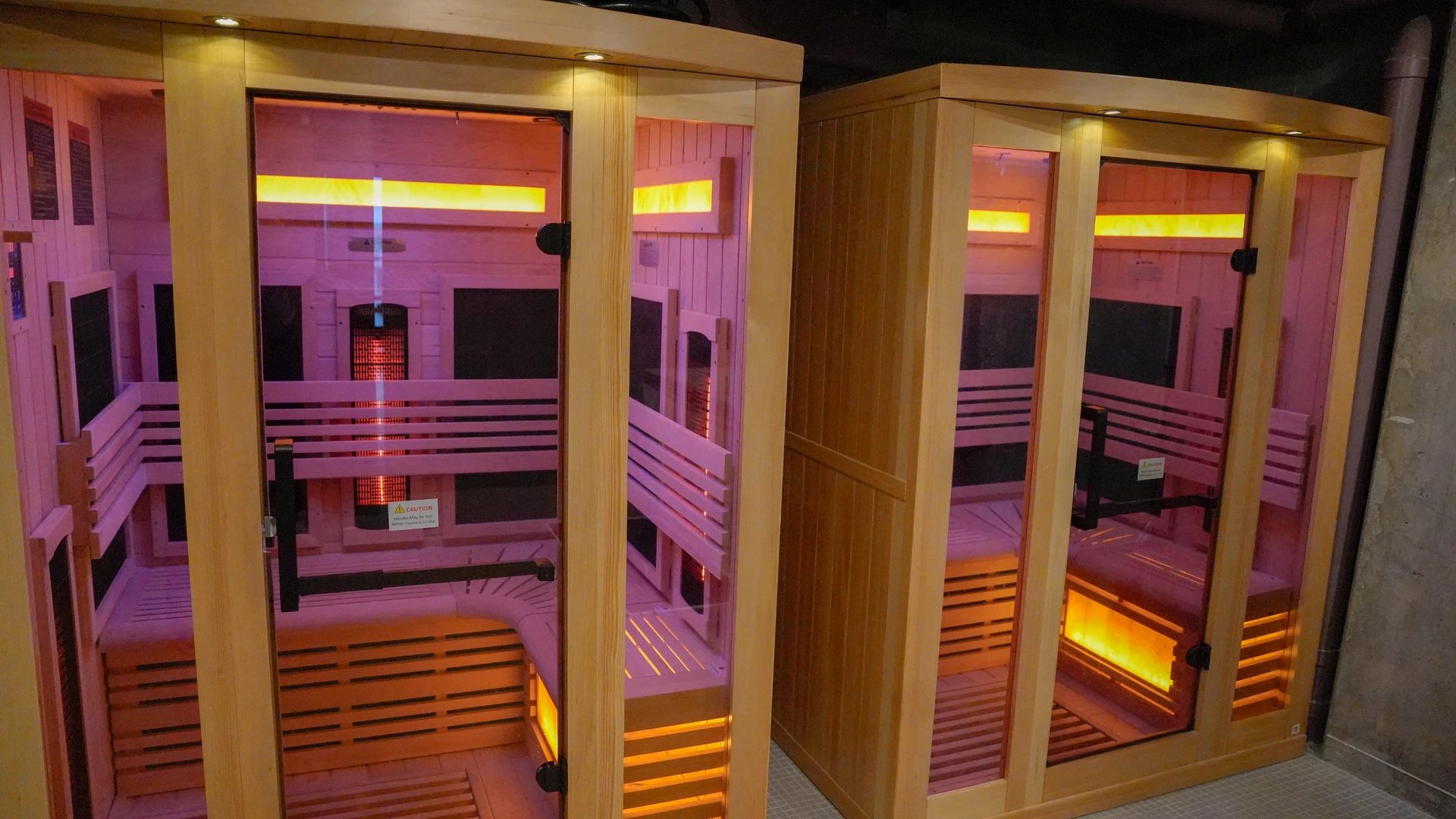
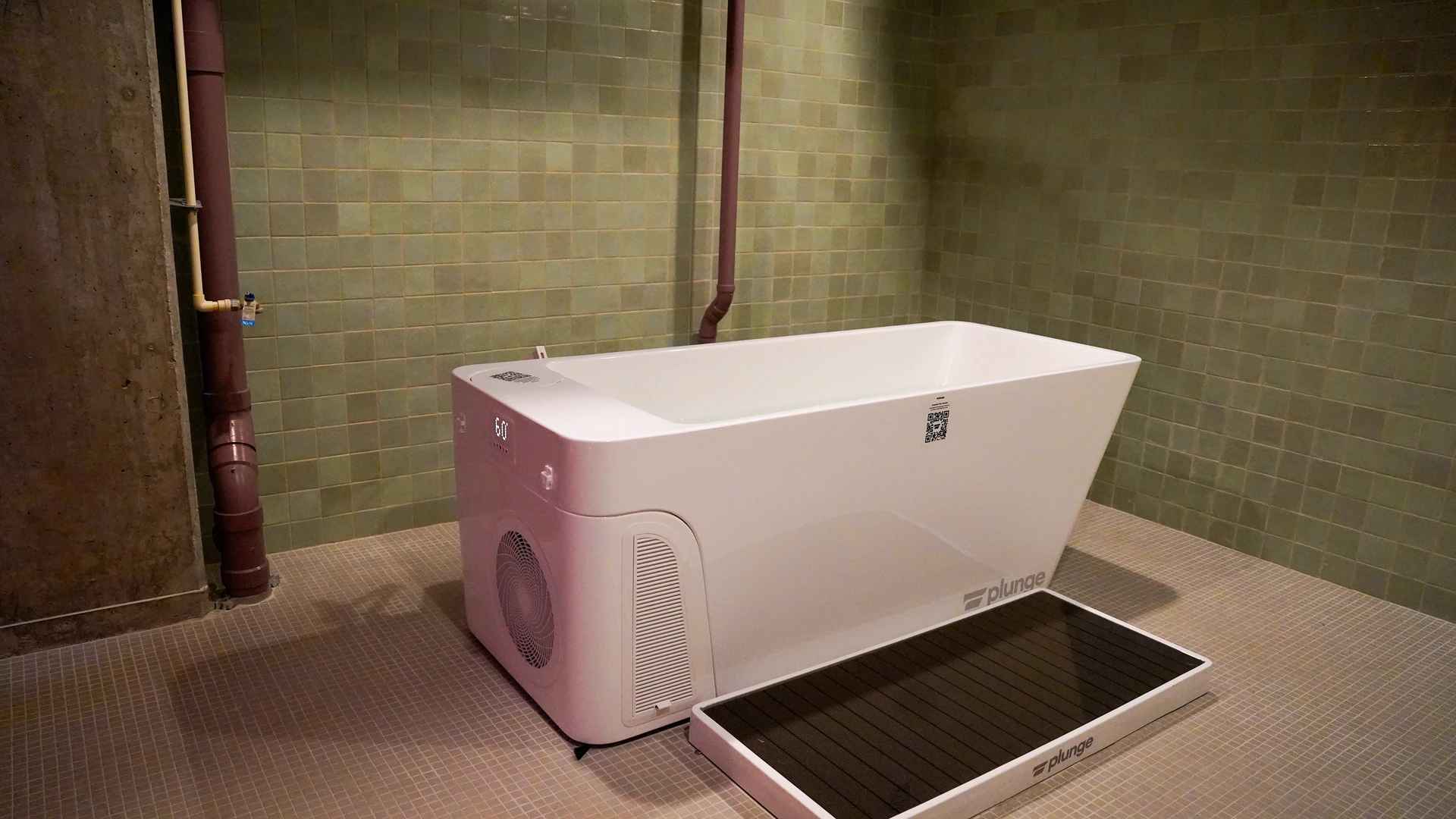
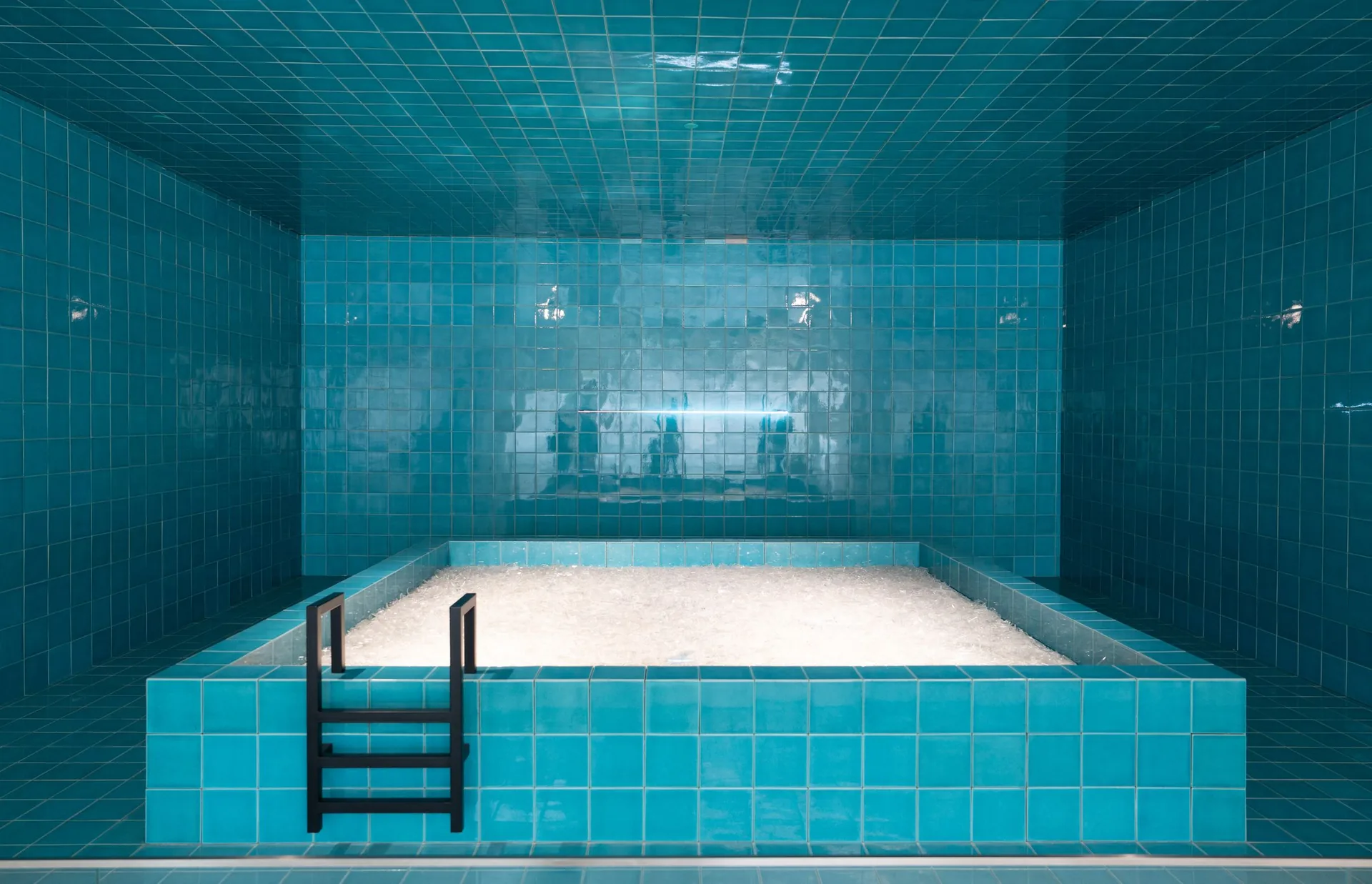
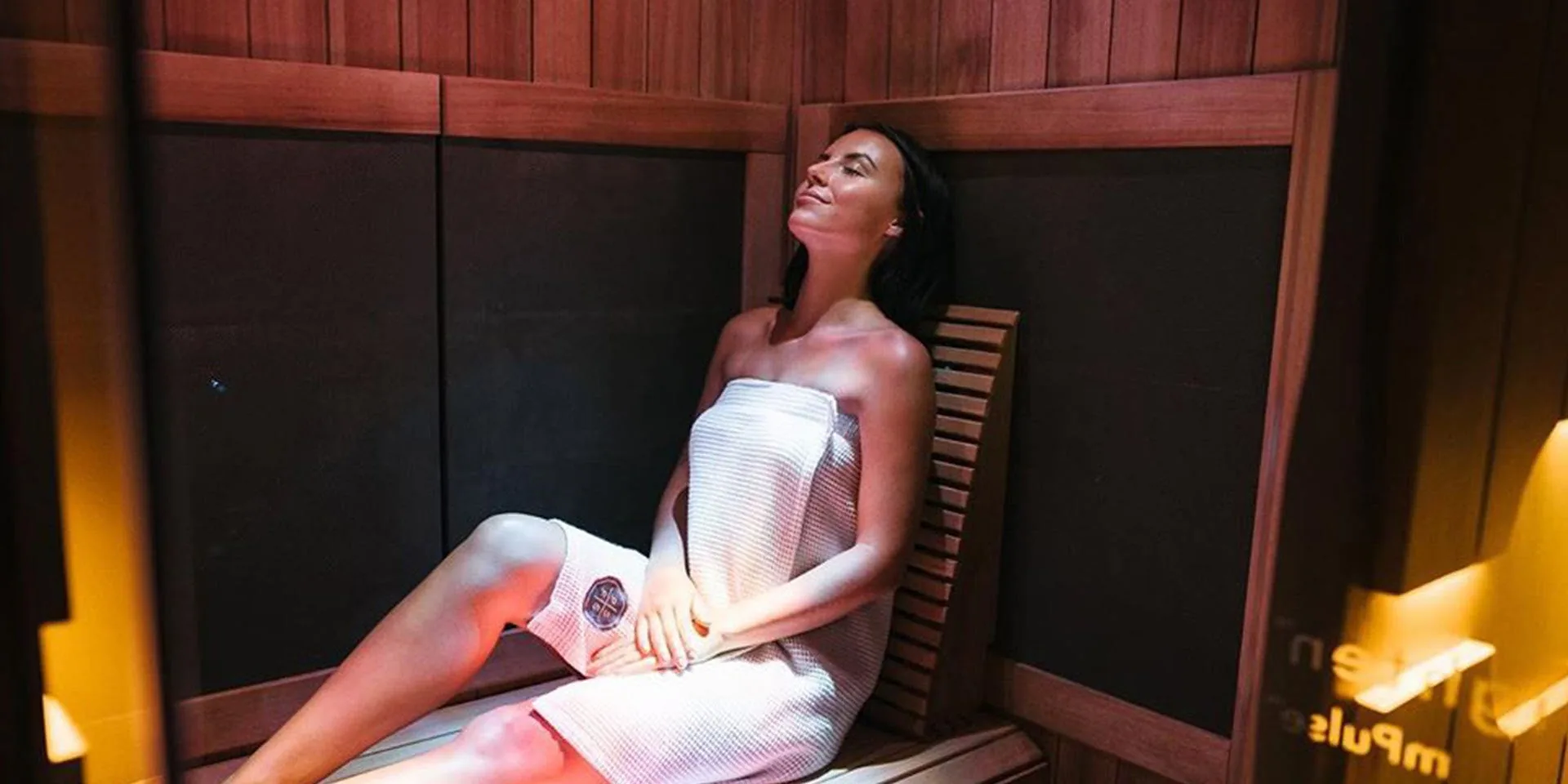
The recovery suites above are ours: a custom infrared sauna and hot tub in a Columbus, Ohio wellness complex, and infrared saunas and a cold plunge in a College Station, Texas wellness center. A clinic is the same build with a different client: the same circuits and drains, specified for more sessions a day. Our recovery and wellness spaces page covers the full range.
Where we work
Fit Supply supplies and installs recovery and fitness equipment in all 50 states — our own crews in Texas and Arizona, installation partners elsewhere — and services fitness equipment in Texas and Arizona. Therapy clinics, hospital rehab programs and medical fitness centers are on medical and rehab facilities.
The three groups of equipment a wellness clinic sells

Heat
Infrared and traditional saunas and full-spectrum cabins, sized to the session length and the number of clients a room turns over in an hour.

Cold
Cold plunge tubs with integrated chillers, and dry contrast systems that cool without immersion where the room has no drain.

Recovery between sessions
Compression, percussion, HydroMassage and red light — the modalities that need an outlet and a chair rather than a plumber.
In short
Fit Supply supplies wellness, longevity and med-spa clinics nationwide with infrared and traditional saunas, cold plunge and dry contrast therapy, compression, red light, HydroMassage and vibration, plus the strength floor many add beside them. Each suite is planned from the building first: a traditional sauna heater draws 6 to 9 kW, and a 100-gallon plunge holds 834 lb of water before anyone gets in. Installation is nationwide; service is in Texas and Arizona.
Wellness clinics — questions
What equipment does a wellness clinic need?
It depends on the service menu, but most wellness and longevity clinics build around heat (an infrared or traditional sauna), cold (a cold plunge or a dry contrast system), and recovery between sessions (compression, percussion, HydroMassage or red light), often with a small strength and cardio floor for training programs. The building — power, water, drainage, floor and ventilation — is planned before the units are chosen.
What electrical service does a clinic sauna need?
A dedicated circuit in every case. A traditional sauna heater draws 6 to 9 kW and commonly needs a 240-volt circuit sized for it; a comparable infrared cabin draws 1.5 to 2.5 kW, and a smaller unit can run on a standard 120-volt, 20-amp circuit. The manufacturer’s listing sets the exact requirement, and clearance to combustible material and a ventilation path are required either way.
Can a cold plunge go in a treatment room without a floor drain?
A water-filled plunge needs somewhere for its water to go when it is changed, so a drain or a planned drain route is the norm. Dry systems that cool through a membrane or a pad with no immersion avoid the water entirely and are the usual answer for a treatment room with no drain.
How much does a cold plunge weigh?
Water weighs 8.34 lb per gallon, so a 100-gallon plunge holds 834 lb of water before the shell, the chiller and the client are counted. The floor is checked for that concentrated load before the unit is placed, especially on an upper floor.
Do you make health claims for these modalities?
No. We specify, supply and install equipment to the manufacturer’s published specification; what a modality is claimed to do is the manufacturer’s statement, and the protocol is your practitioners’ decision.
Can you add training equipment to a wellness practice?
Yes — resistance equipment that starts light and increments finely, seated total-body cardio and equipment that reports work done, laid out on the same drawing as the recovery rooms so the practice runs as one floor.
Do you install and service wellness equipment nationwide?
We supply and install in all 50 states, through our own crews in Texas and Arizona and installation partners elsewhere. Our technicians service fitness equipment in Texas and Arizona; for recovery units we coordinate the manufacturer’s warranty and service everywhere.