

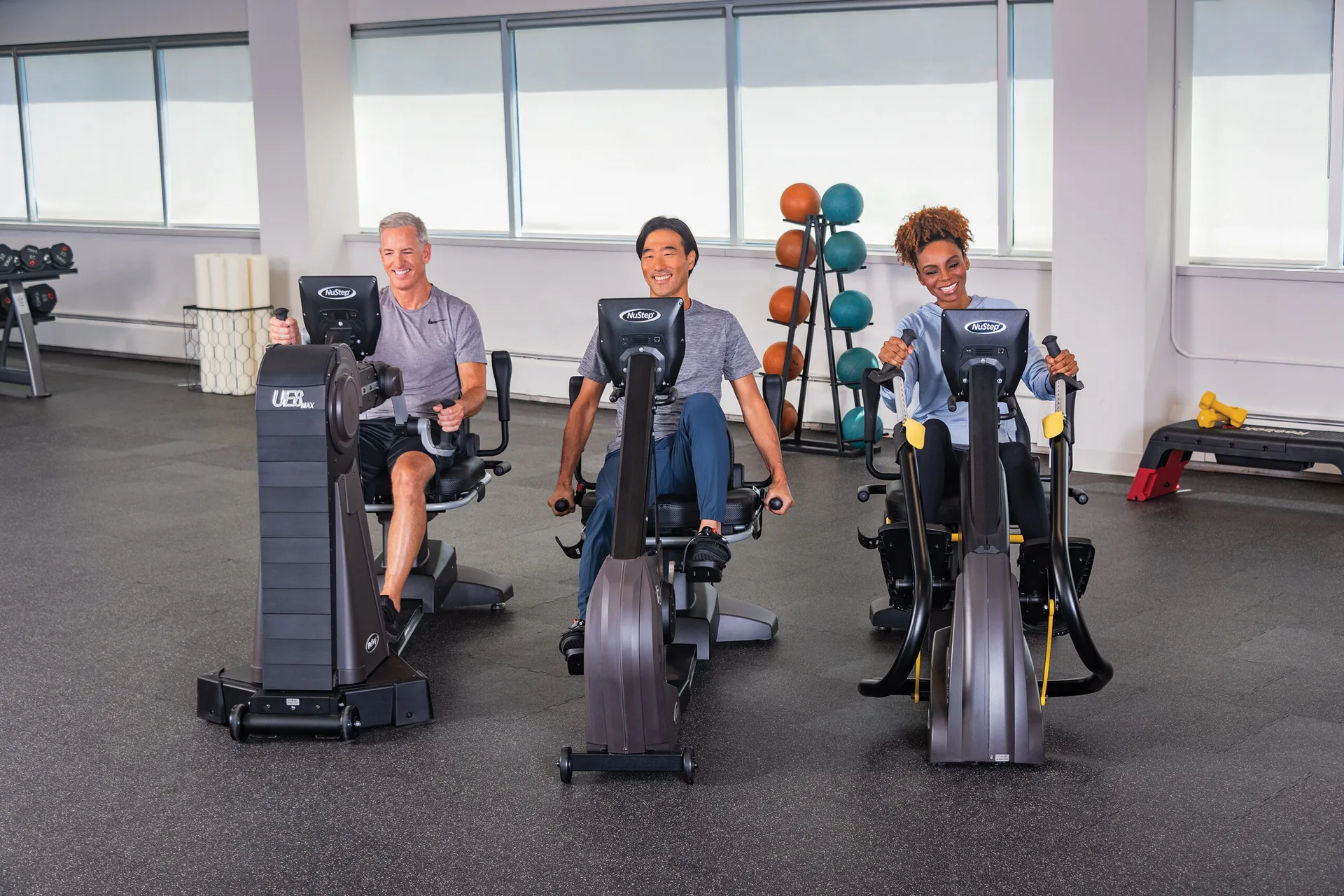
Hospital and outpatient cardiac, pulmonary and medical fitness programs
Cardiac and Pulmonary Rehab Equipment
Clinical Cardio Rooms We Have Equipped
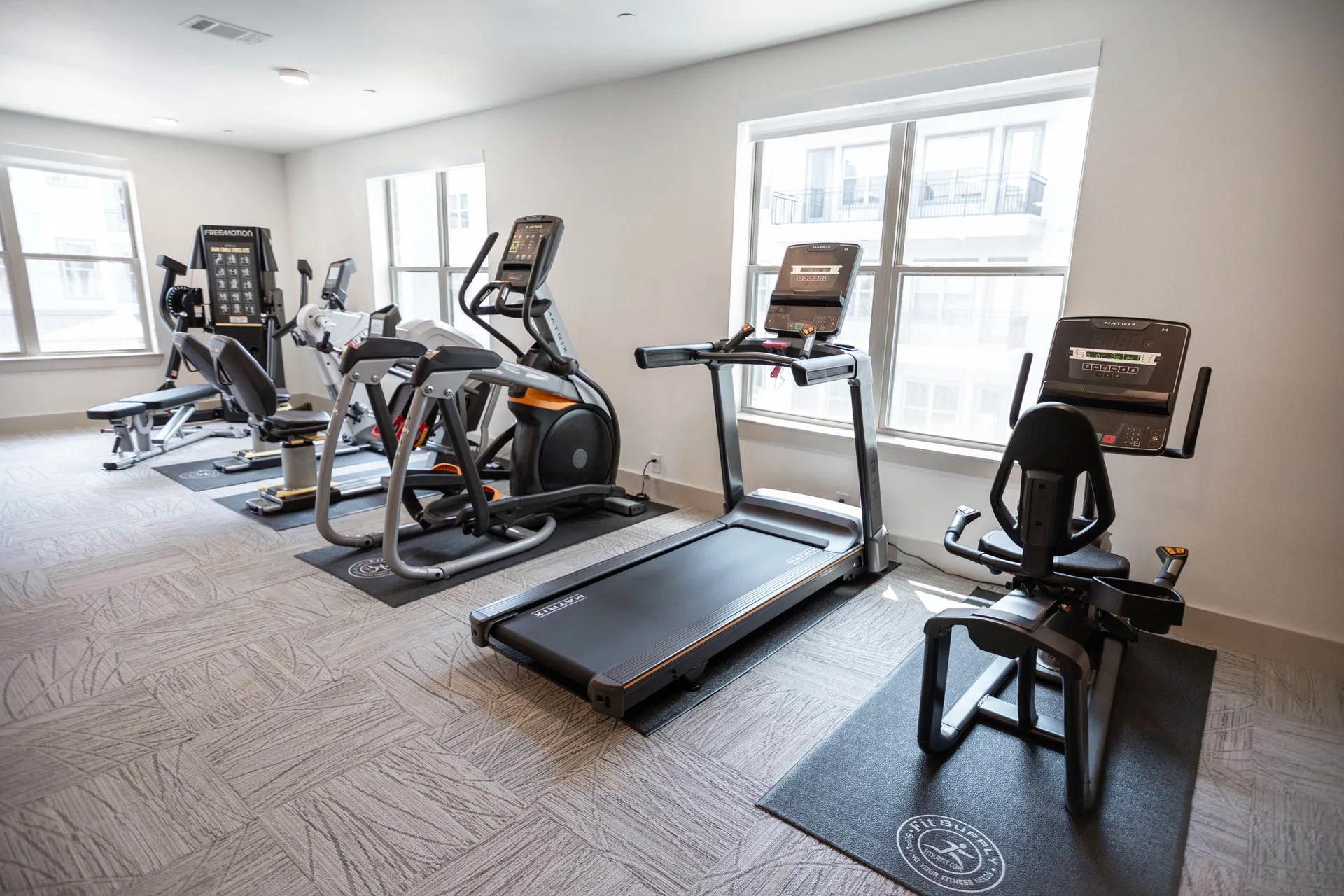 2 photos
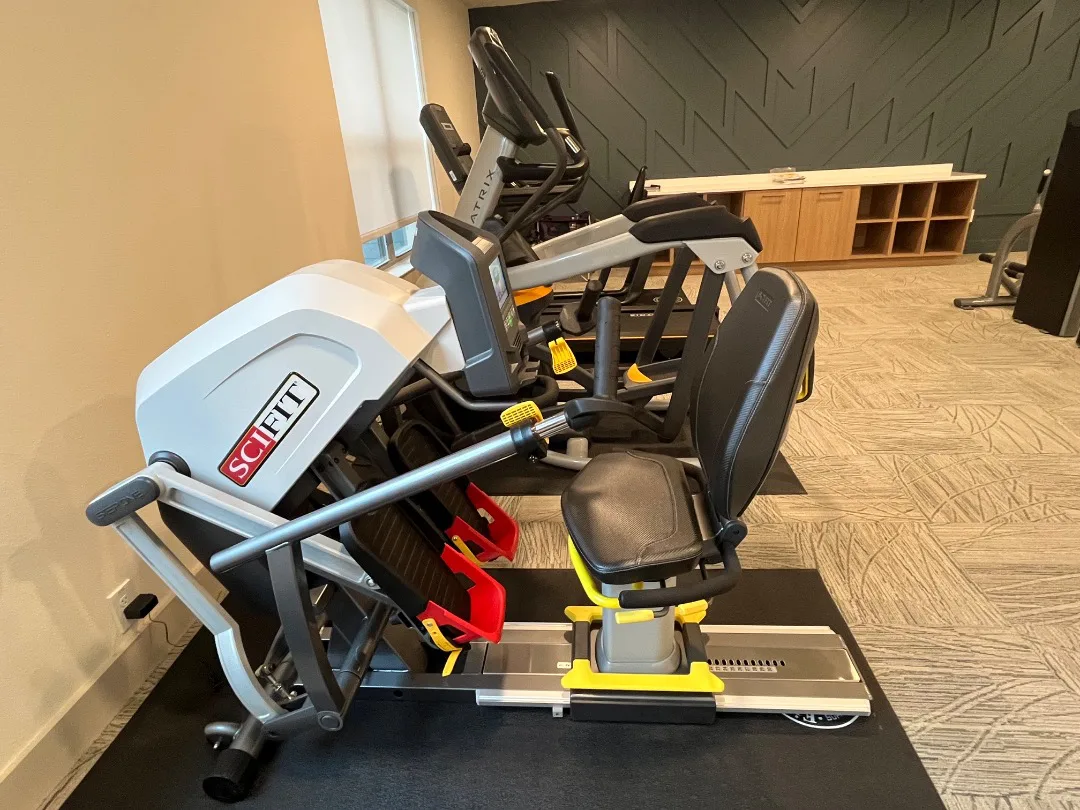
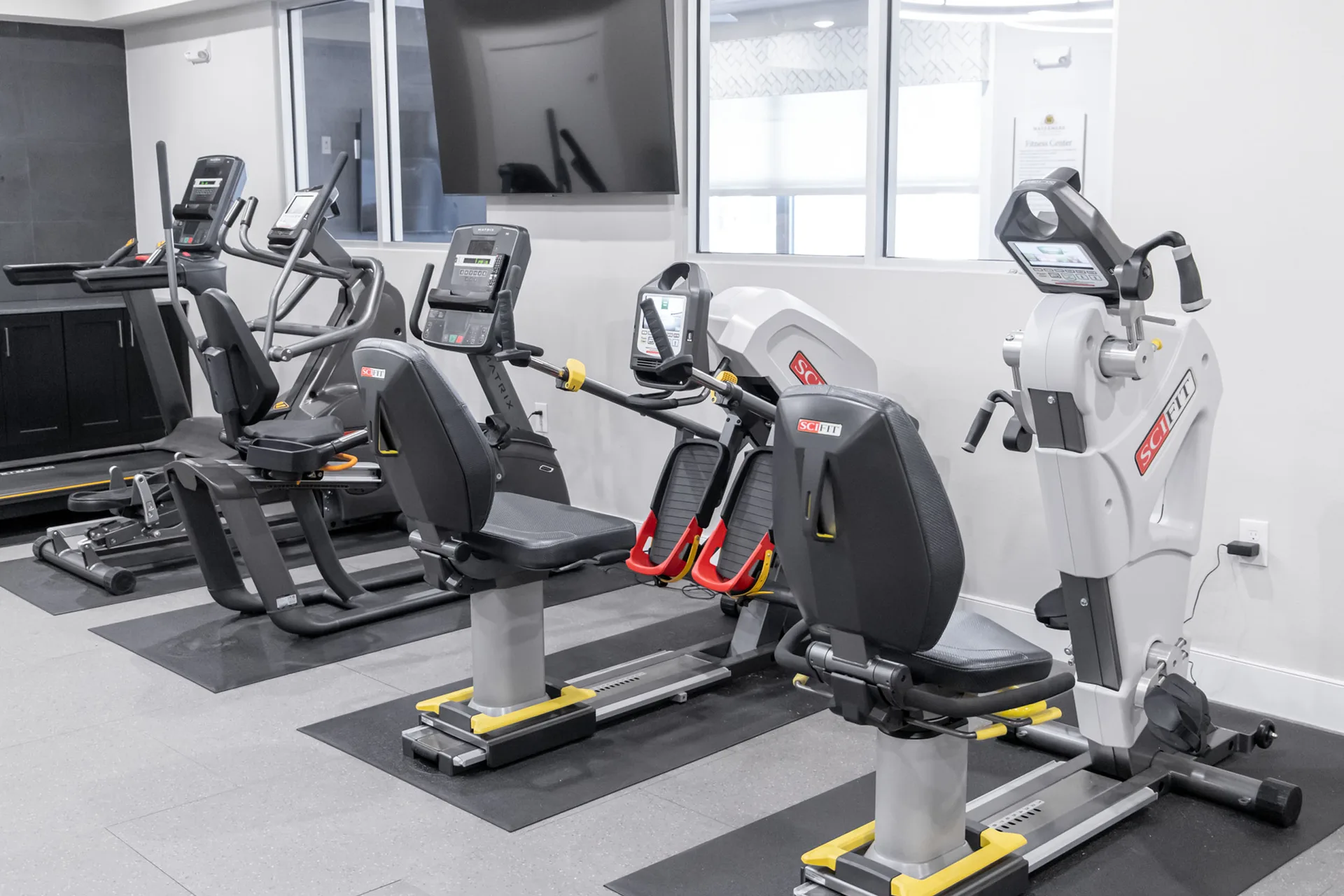
 3 photos
Rehab Rooms Like the Ones We Equip

Low-Start Treadmills, Seated Total-Body Cardio and Ergometers for Supervised Exercise
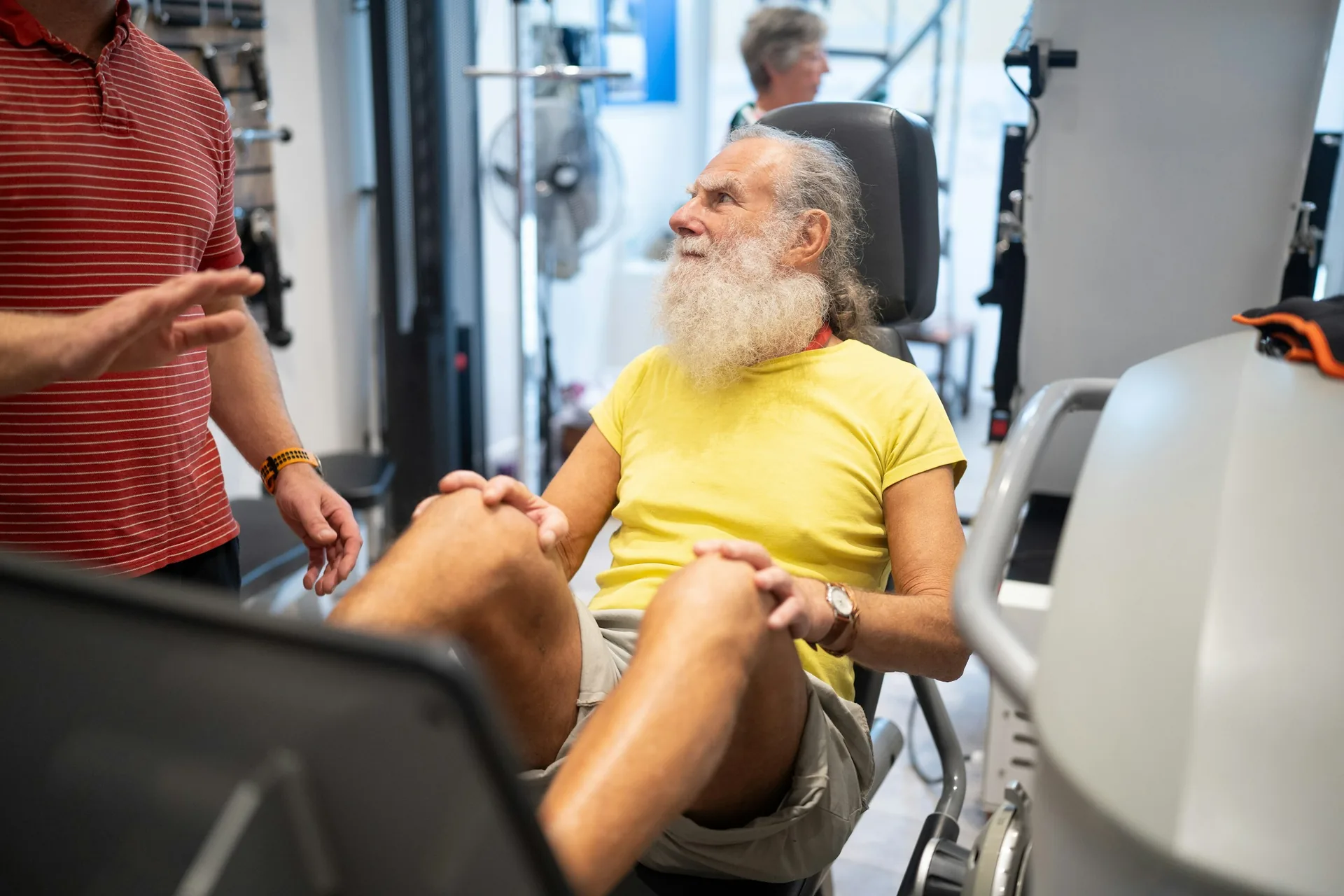
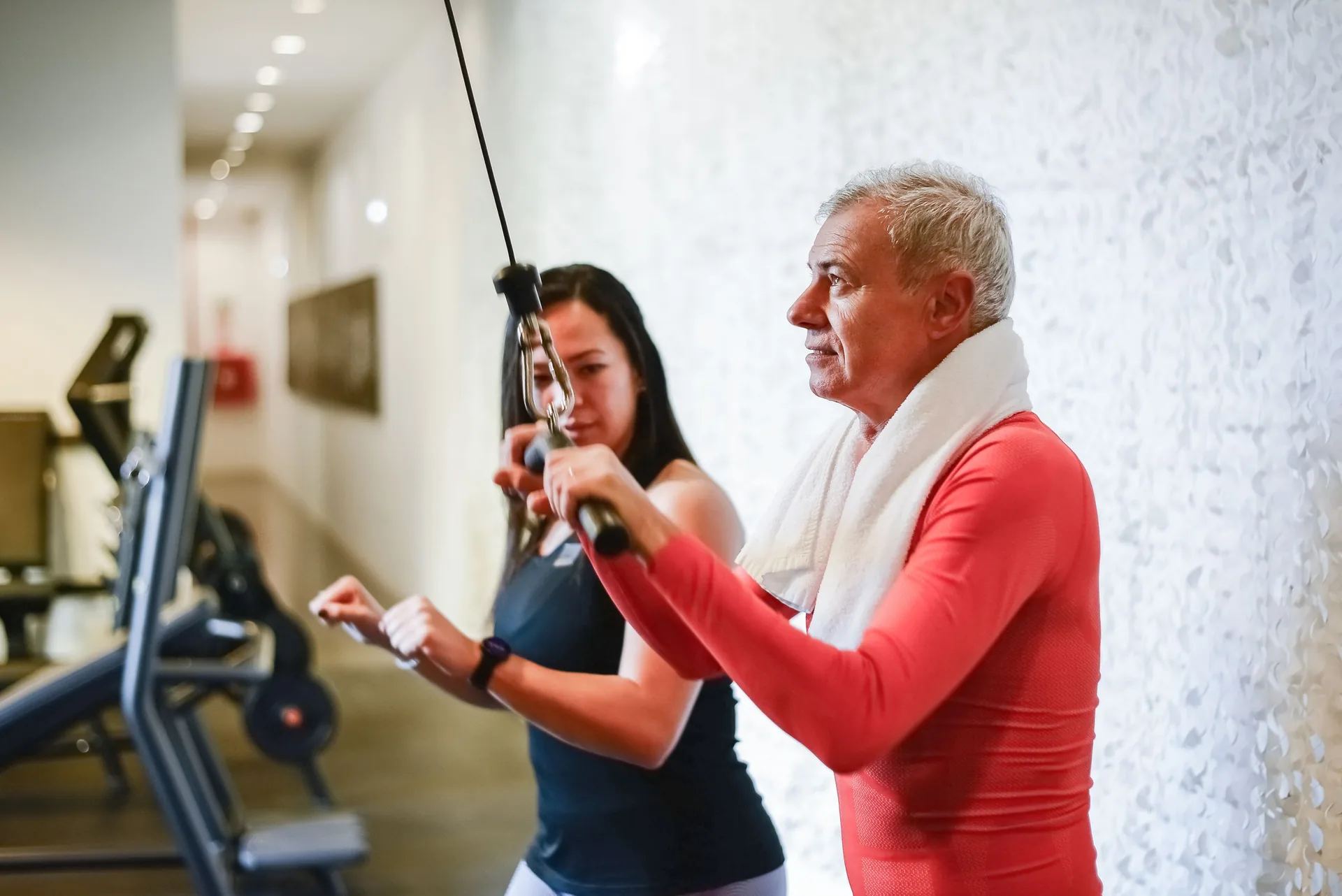
A cardiac or pulmonary rehab session is exercise prescribed in numbers — a speed, a workload, a heart-rate range — and supervised while it happens. The equipment has to start lower than any club machine, report what the patient actually did, and sit where the staff can see every patient and reach any of them in seconds.
What a supervised session needs from the equipment
Treadmills that start near zero. Start speed is the number that separates a rehab treadmill from a commercial one: Matrix’s T3xm starts from 0.1 mph forward and reverse, Spirit’s 4.0T from 0.3 mph, and Spirit’s 8.0T Safe Step program starts the belt from zero when the patient steps, against 0.5 mph on many light-commercial treadmills. Full-length handrails, a low step-up and a belt that stops on its own when something goes wrong come with it. Write the start speed into the bid rather than assume it.
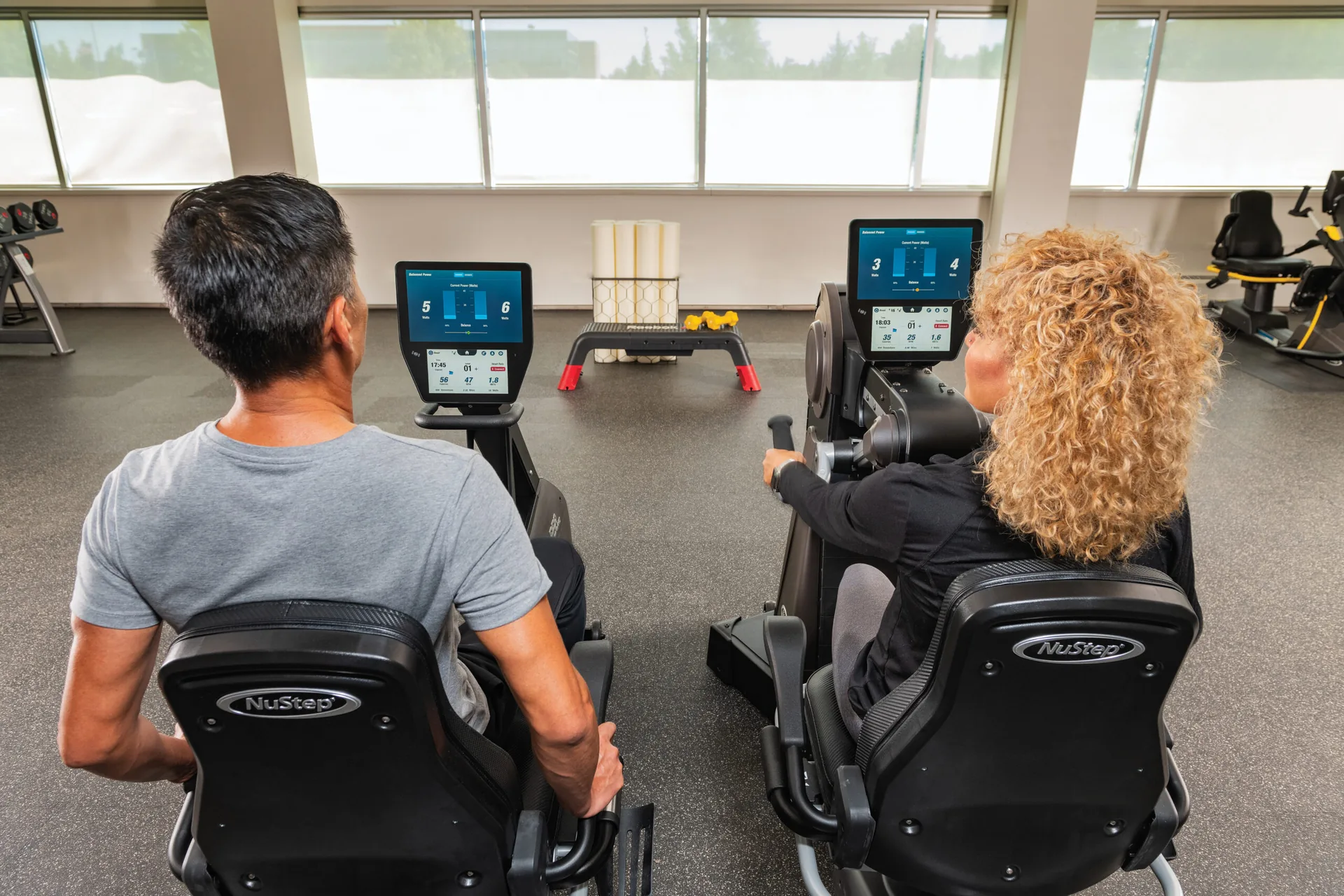
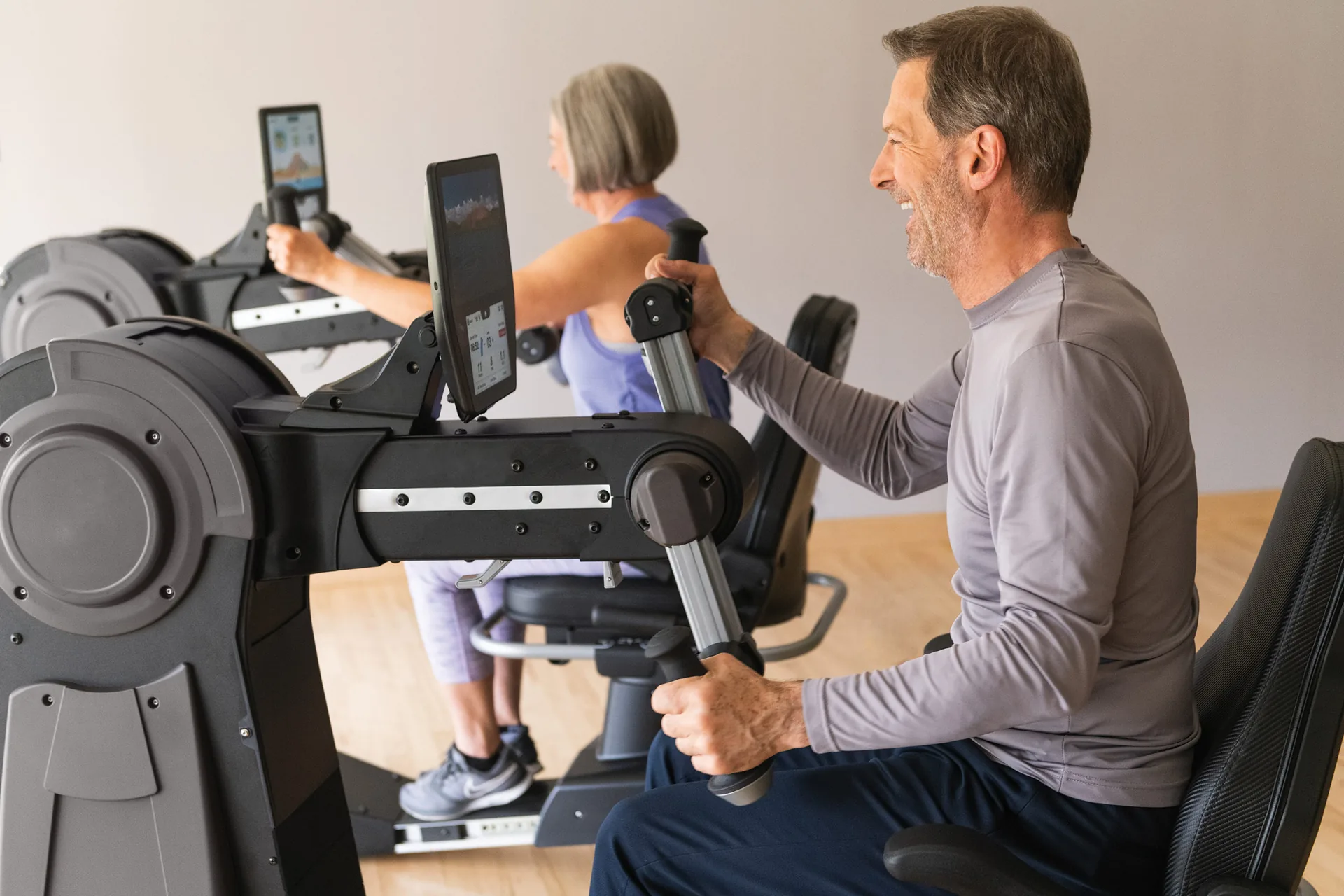
Seated total-body cardio. Patients who cannot yet walk the treadmill for a full session still need aerobic work, and a recumbent stepper or total-body trainer gives it from a swivel seat: NuStep, SciFit, Spirit and Keiser all build them with step-through frames, and several take a wheelchair in place of the seat. Recumbent bikes with short adjustable cranks and upper body ergometers fill out the room.
Output a clinician can record. Watts and METs on the console, constant-power and isokinetic modes on the clinical models, and heart-rate input that works with the program’s own telemetry, so the workload in the chart is the workload the patient did.
What the Medicare rules say about the room
The federal rule for cardiac rehab, 42 CFR 410.49, defines it as a physician-prescribed, practitioner-supervised exercise program with a supervising practitioner immediately available for emergencies, an individualized treatment plan signed every 30 days, and up to 36 one-hour sessions (72 for intensive cardiac rehab). It names no exercise equipment and no monitoring hardware; continuous ECG monitoring is a billing distinction between two procedure codes and, in some states, a licensing rule. The pulmonary rehab rule, 42 CFR 410.47, is the one that names equipment: the setting must have the cardio-pulmonary, emergency, diagnostic and therapeutic life-saving equipment a session can need, such as oxygen, CPR equipment and a defibrillator. We plan the floor around both — the stations, the monitoring sightlines and the space for that equipment — and leave the clinical protocol to the program.
Pulmonary rehab
A pulmonary program trains patients who are short of breath at low workloads, so the room leans further toward seated work: recumbent steppers and bikes, upper body ergometers for arm endurance, light free weights and bands for strengthening, chairs between stations for rest, and room beside each station for a portable oxygen tank. Treadmills stay, with the lowest start speeds and the longest handrails.
Medical device or fitness equipment
The same treadmill can be a general fitness product or a medical device, depending on how its manufacturer labels it: 21 CFR 890.5380 classes powered exercise equipment intended for medical purposes as a Class I device. We supply each machine exactly as its manufacturer labels and certifies it, and the quote carries the manufacturer’s documentation for the program’s file. We do not relabel or modify equipment.
After discharge: the medical fitness center
Many programs hand graduates on to a hospital-run medical fitness center for the maintenance phase, where the same seated and low-start equipment sits beside a fuller strength floor. That facility has its own page, medical fitness center design and equipment.
How a rehab program room is laid out
A program room is planned from the monitoring station out. Four things set the layout before any machine is chosen.
-
Every patient in sight
Stations face, or are visible from, the nurse or exercise physiologist’s station and the telemetry screen, with no tall machine blocking the line.
-
A clear path to every station
Routes wide enough for the emergency cart and a responder on each side, on top of the ADA 36 in accessible route between machines.
-
Transfer space and seated options
At least one of each type of machine with the ADA 30 by 48 in clear floor space positioned for transfer, and wheelchair-access ergometers where the patient stays in the chair.
-
Room for oxygen and leads
Space beside the stations for portable oxygen, and machines placed so telemetry leads and transmitters work with the patient exercising.
From our manufacturer partners
What a Monitored Session Runs On
Treadmills, seated total-body trainers, bikes and arm ergometers built for very low starting workloads and measured output, from the partners we supply new.
Rehab and low-speed treadmills
Start speed is what separates a rehab treadmill from a club treadmill. These start as low as 0.1 mph, carry full-length handrails, and run in reverse for gait work.
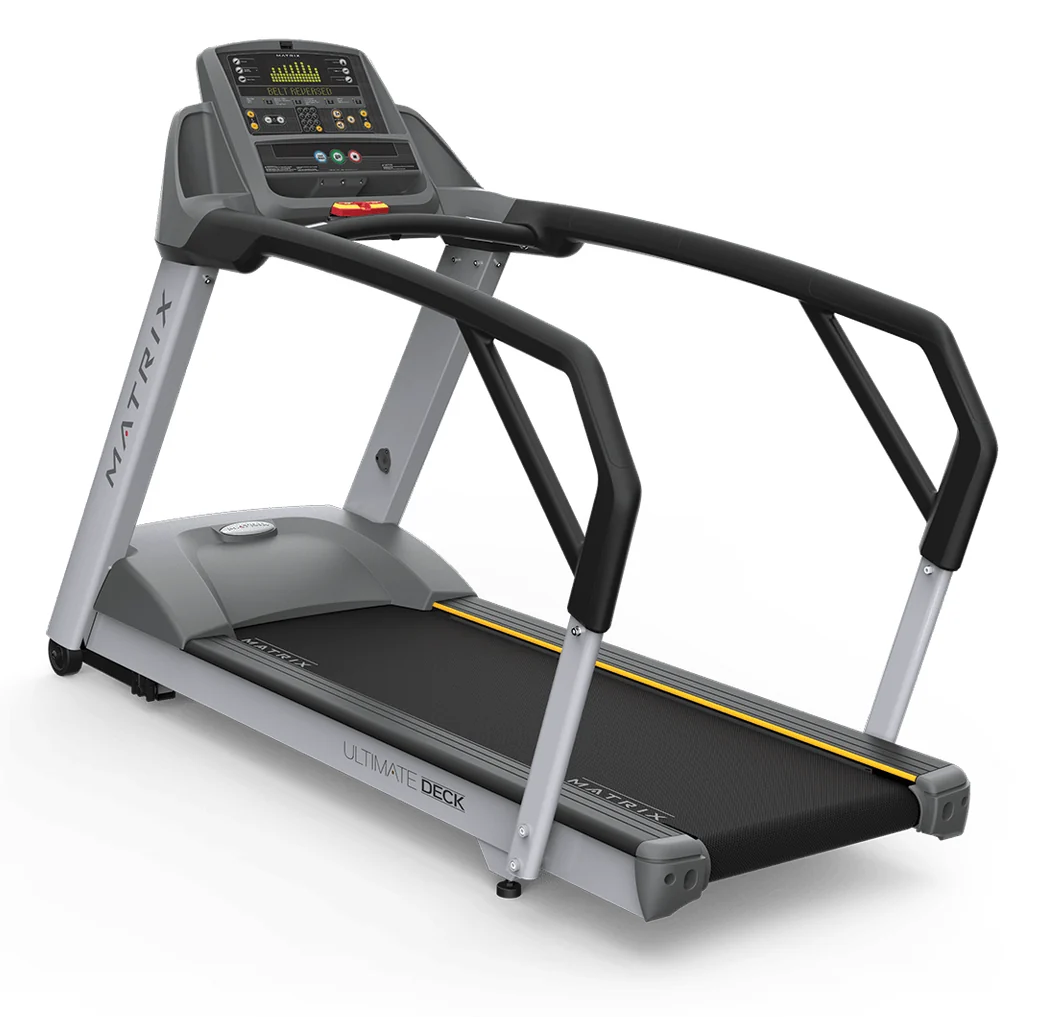
Matrix
Treadmill / T3xm
Starts at 0.1 mph forward and reverse, with extended handrails, a 7.5 in step-on height and a sensor that stops the belt.
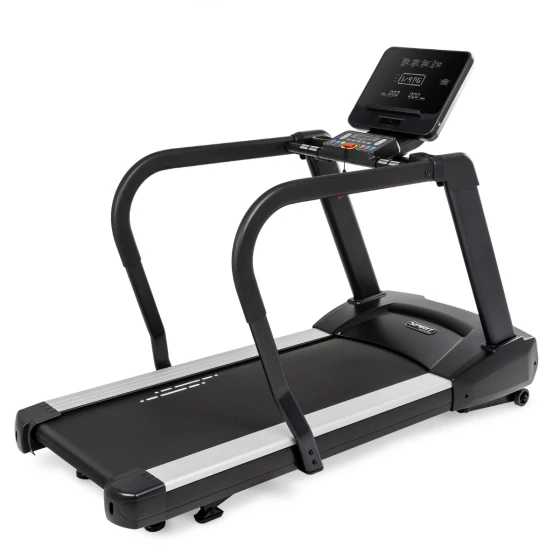
Spirit Fitness
Rehab Treadmill / 4.0T
0.3 to 12 mph forward and 0.3 to 3.0 mph in reverse, -5% to 15% incline, and full-length handrails.
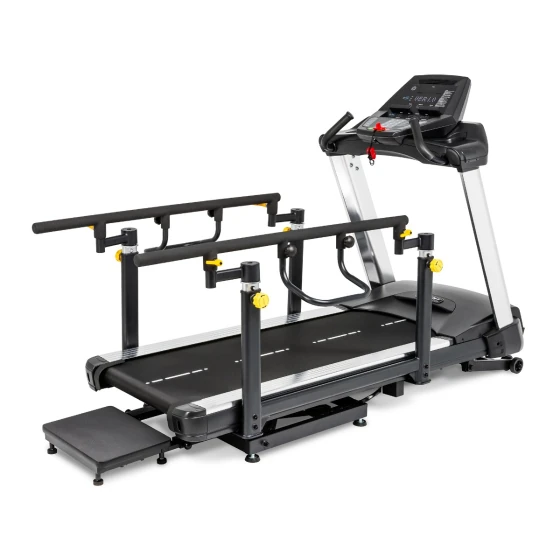
Spirit Fitness
Rehab Treadmill / 7.0T
Bidirectional -3 to 10 mph walking, -10% to 15% incline and decline, and adjustable-height full-length handrails.
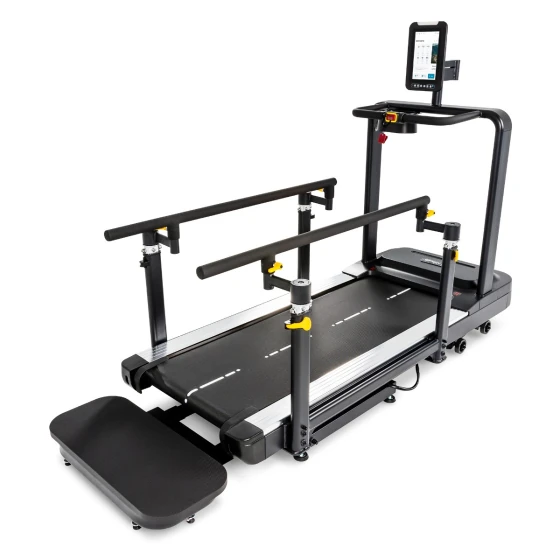
Spirit Fitness
Rehab Treadmill / 8.0T
Bidirectional -5 to 13.6 mph with zero-speed braking, a gait symmetry index, Safe Step and stress-test protocols.
Recumbent steppers and total-body trainers
The seated piece most patients use from the first visit to the last: a swivel seat to transfer onto, a step-through frame, and arms and legs working together from a very low starting load.
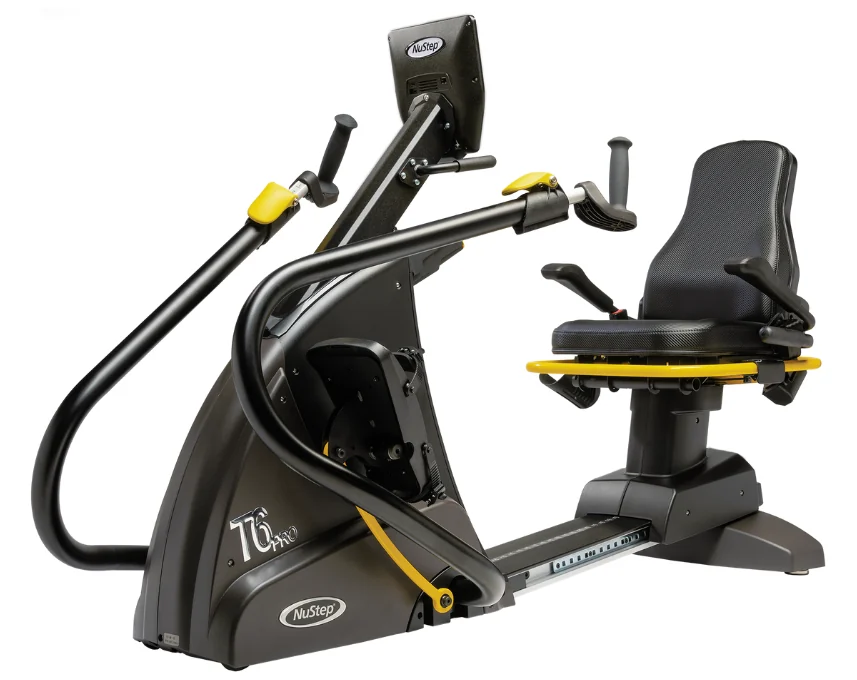
NuStep
Recumbent Cross Trainer / T6PRO
A 360° swivel seat that locks every 45°, a low step-through, low-inertia start-up and 15 resistance levels, for users up to 500 lb.
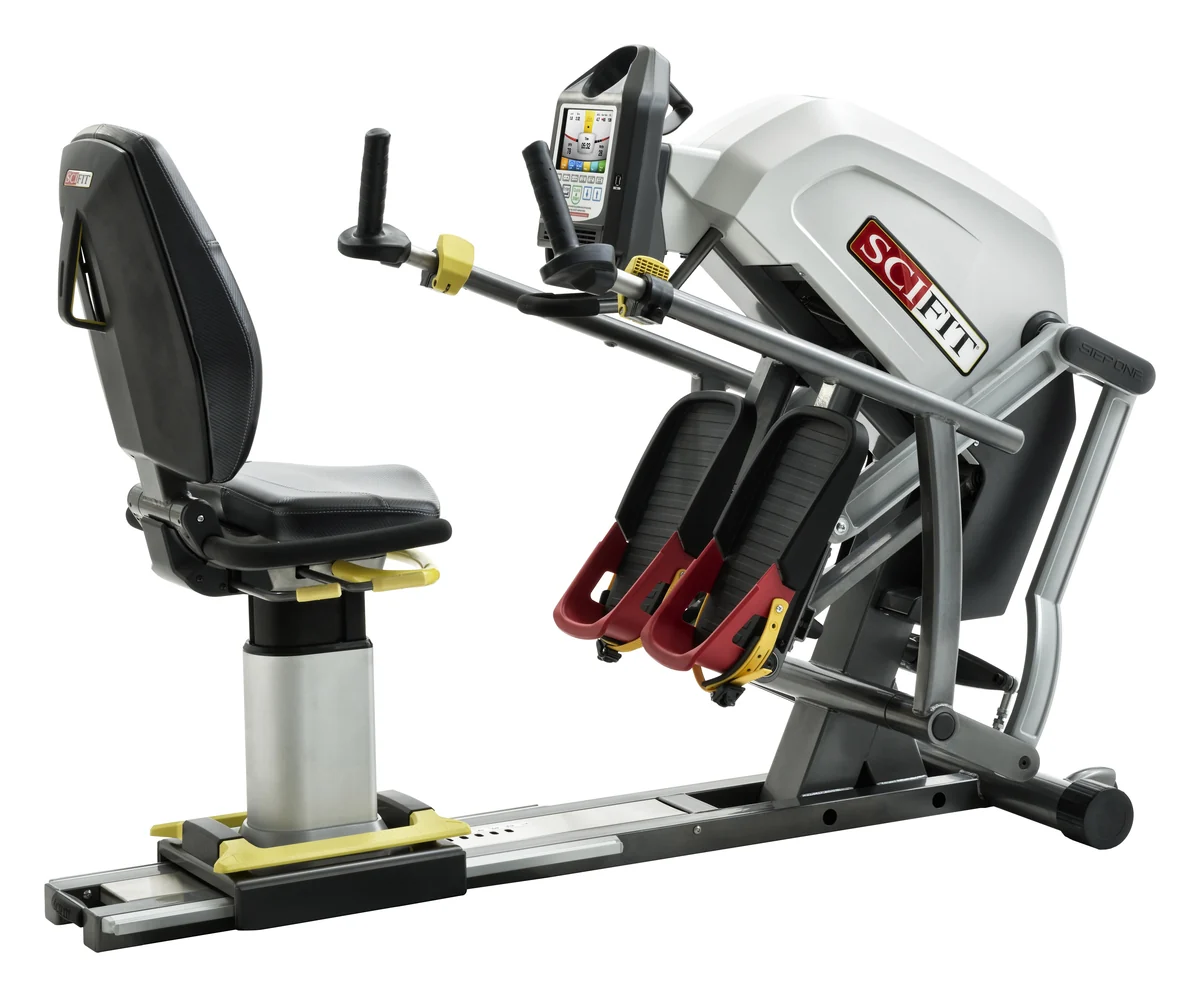
SciFit
Recumbent Stepper / StepOne
Starts at 6 watts with 191 resistance levels and a user-defined 2 to 11.5 in stride; the seat removes for direct wheelchair access.
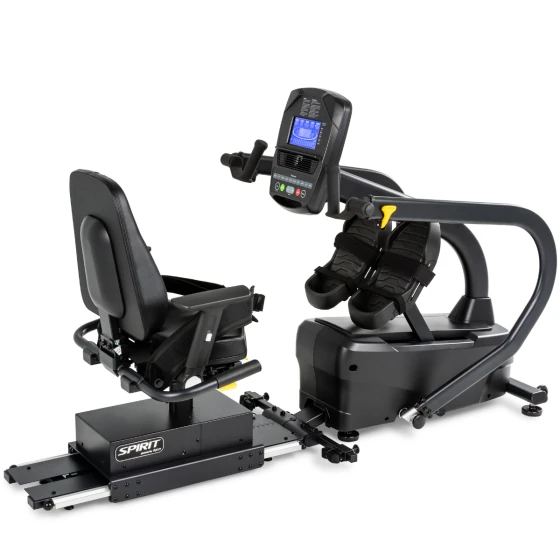
Spirit Fitness
Recumbent Stepper / 7.5S
ADA-compliant with direct wheelchair access through a removable 360° seat, with a 1 to 12.5 in adjustable step range.
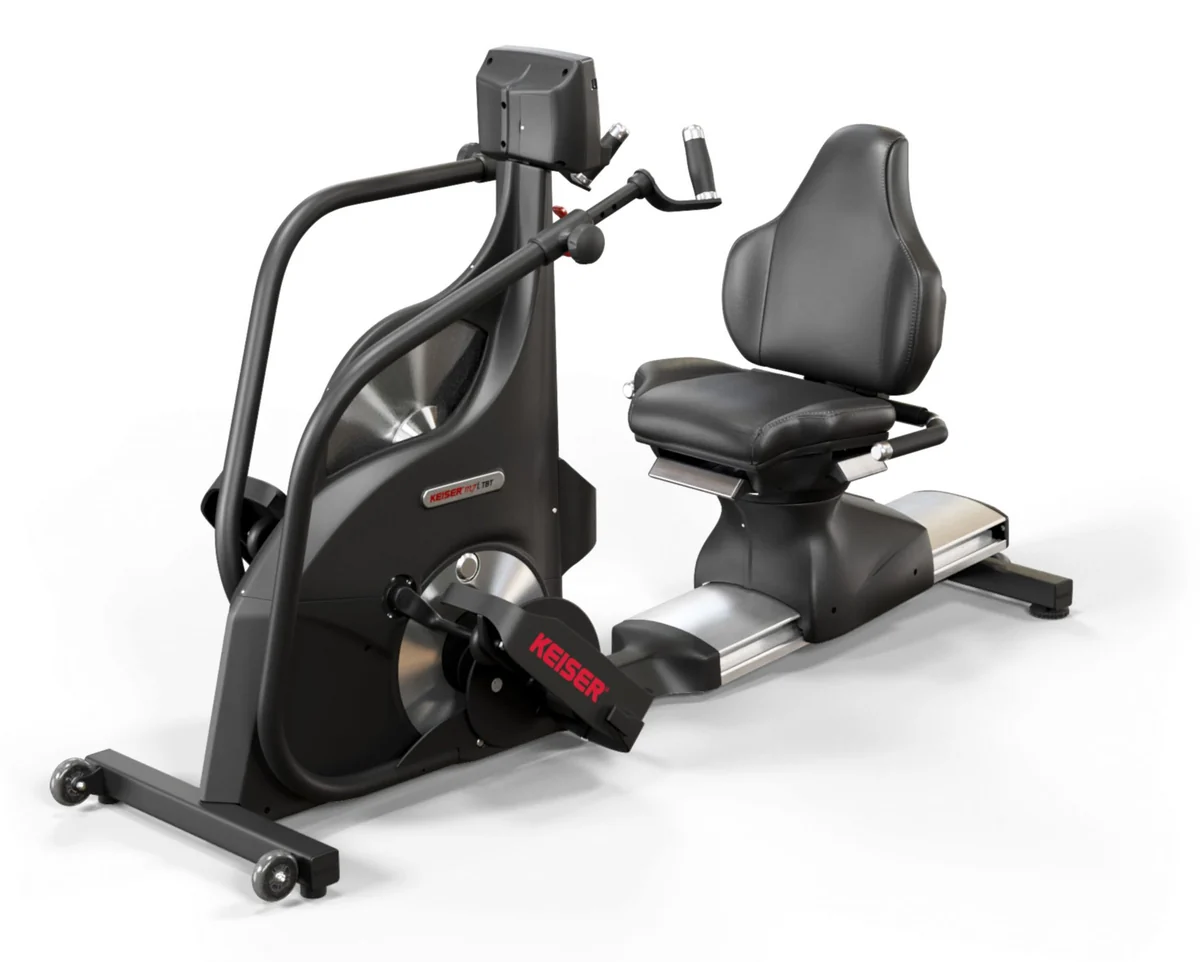
Keiser
Recumbent Total Body Trainer / M7i
A 3 in step-through height, a seat that swivels for transfer from a wheelchair, and dependent upper and lower cranks for passive assistance.
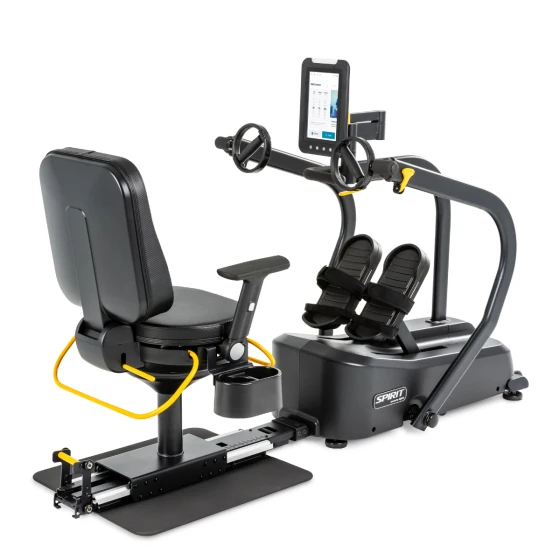
Spirit Fitness
Recumbent Stepper / 8.5S
Constant power, isokinetic and constant resistance modes across 50 levels, a left-right symmetry program and a removable seat.
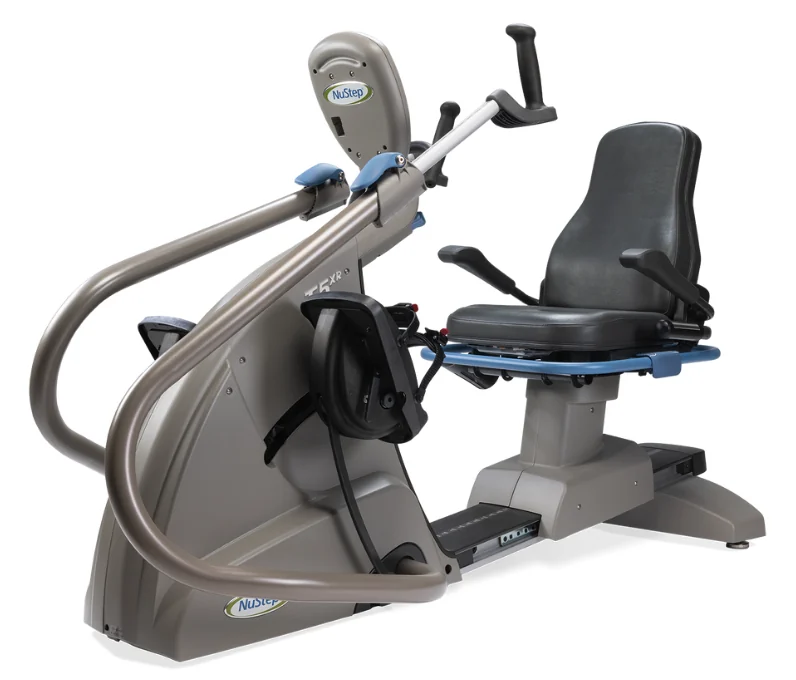
NuStep
Recumbent Cross Trainer / T5XR
A 600 lb user capacity, a reclining 360° swivel seat and StrideLock, which locks the handles and pedals in place.
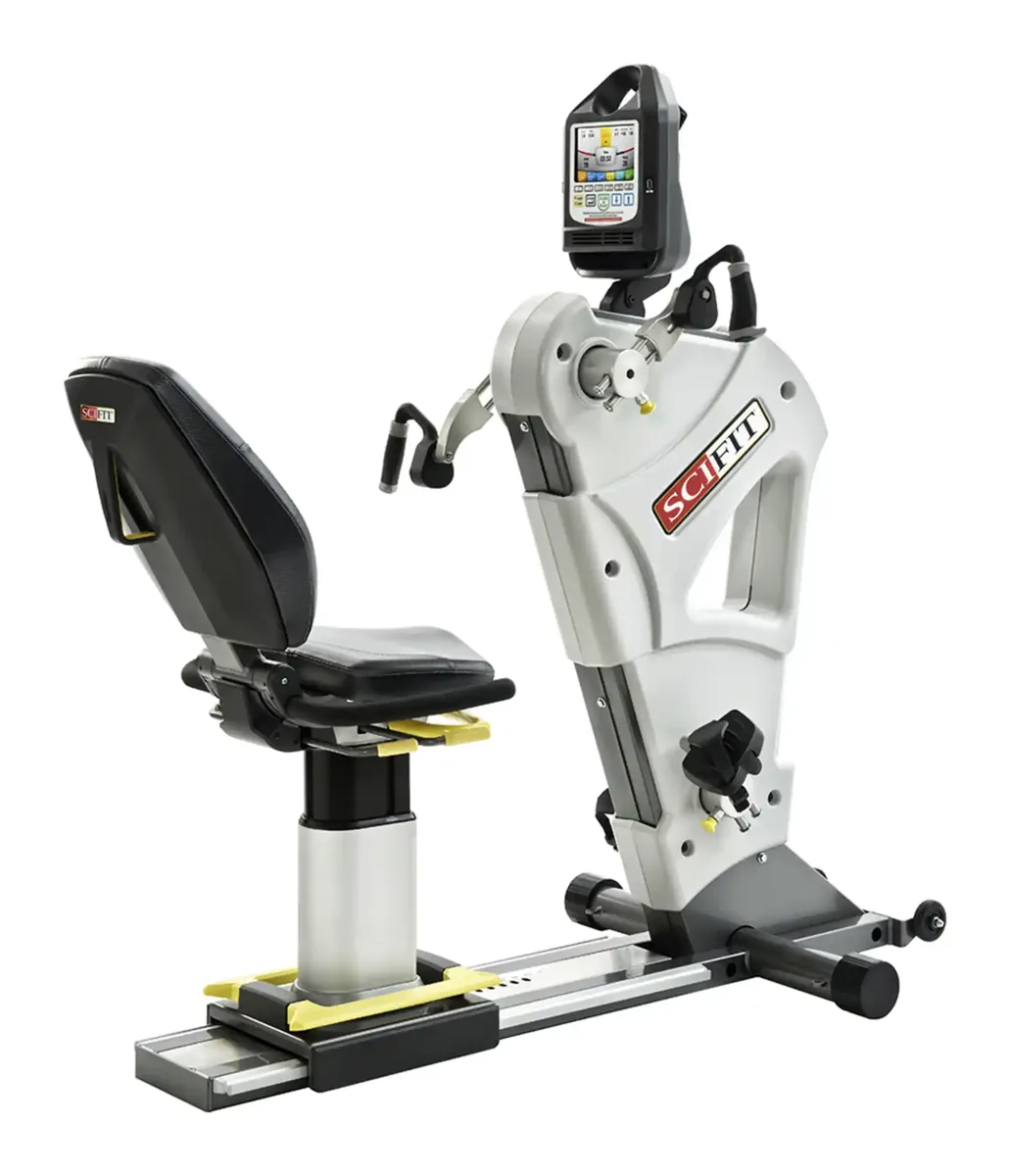
SciFit
Total Body Trainer / PRO2
An arm ergometer and a recumbent bike in one frame, with linked upper and lower cranks so one pair of limbs can drive the other.
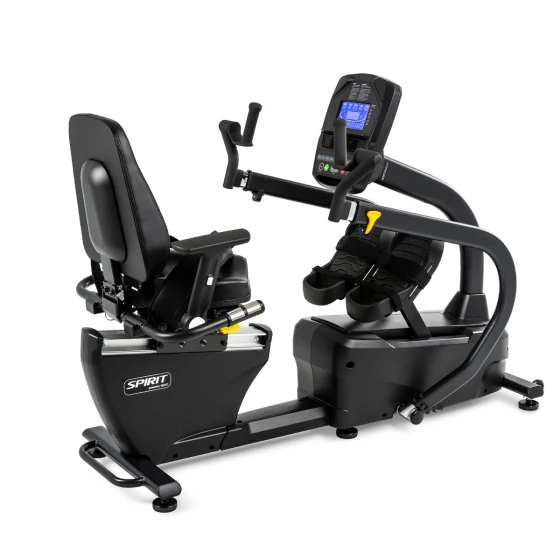
Spirit Fitness
Recumbent Stepper / 7.0S
A semi-recumbent stepper with 1:1 linear leg-and-arm motion, a 360° swivel seat and a low step-over height.
Rehab bikes
Recumbent and upright bikes with step-through frames, swivel or removable seats, and cranks short enough for a knee or hip that will not yet bend fully.
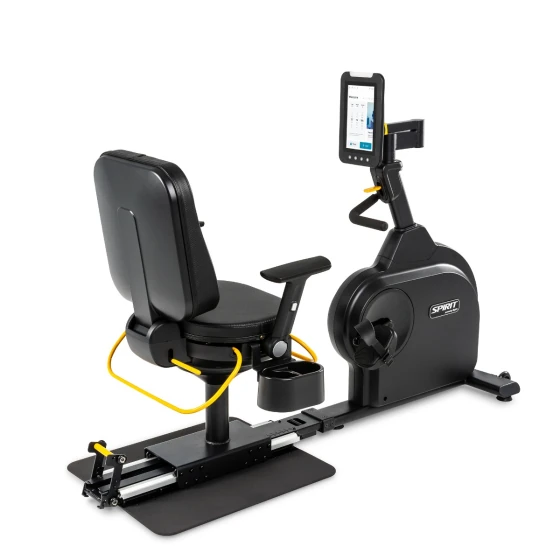
Spirit Fitness
Recumbent Bike / 8.5R
100 resistance levels forward and reverse, isokinetic and constant-power modes, and a removable seat for wheelchair access.
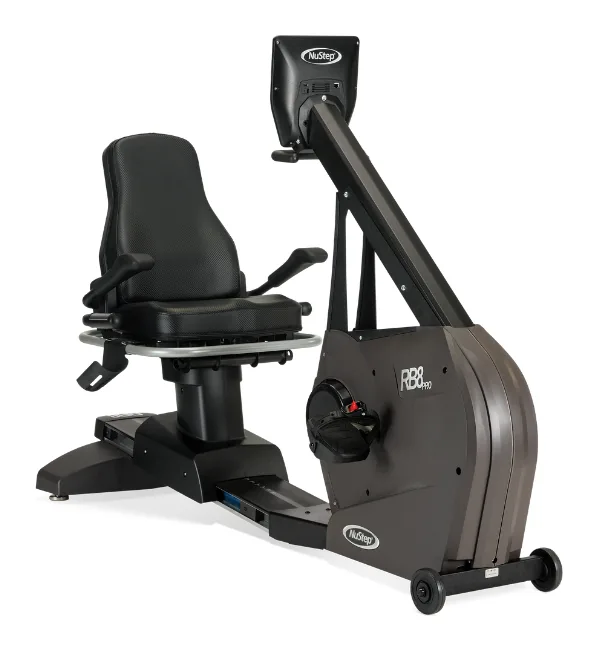
NuStep
Recumbent Bike / RB8PRO
A low step-through and a reclining 360° swivel seat, 15 levels from a low starting force, and live power and symmetry data.
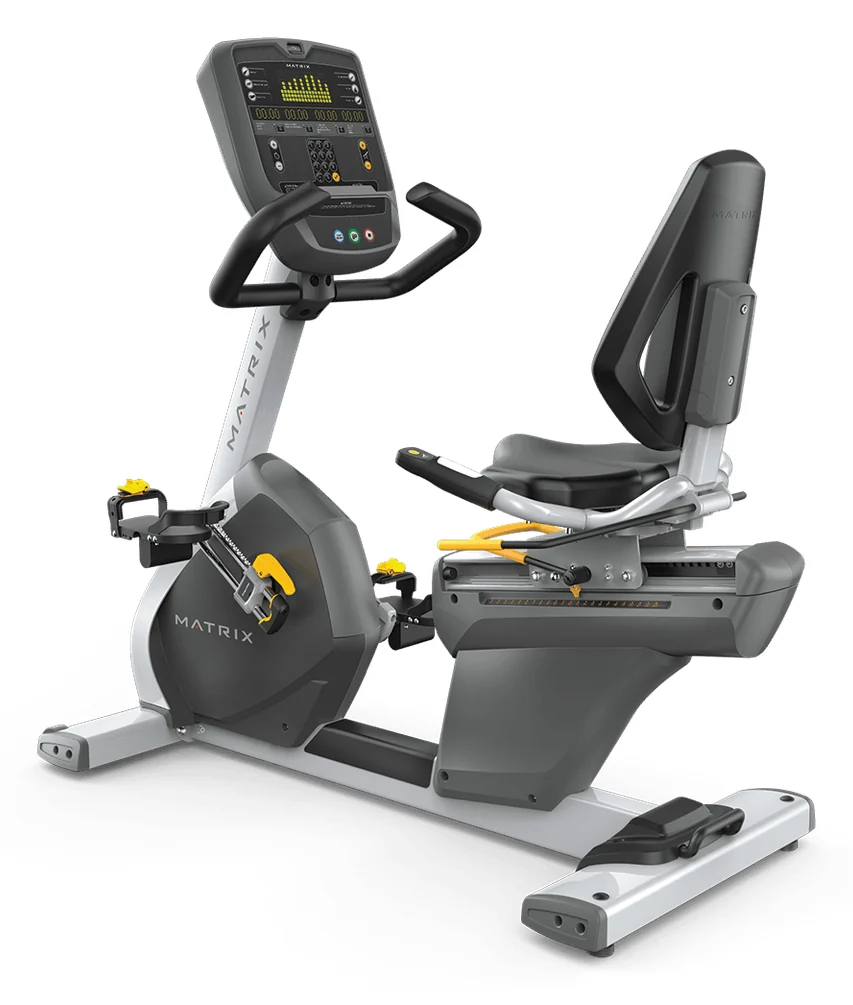
Matrix
Recumbent Cycle / R3xm
Crank arms adjust from 1.5 to 7 in without tools, the seat swivels 160° and locks, and the workload starts at 4 watts.
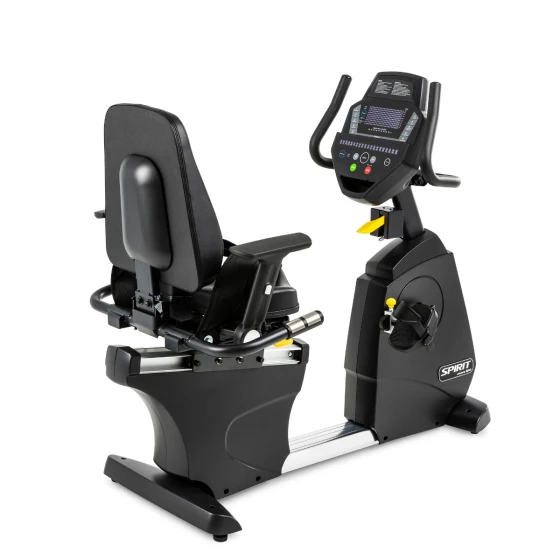
Spirit Fitness
Recumbent Bike / 7.0R
Numbered seat and pedal adjustments for repeatable alignment, a swiveling seat and 50 levels forward and reverse.
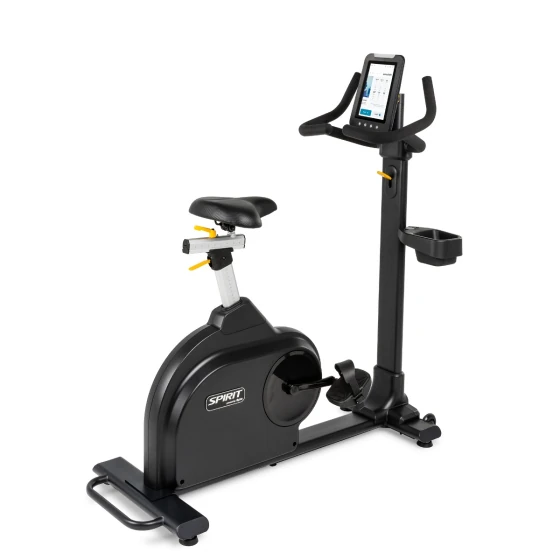
Spirit Fitness
Upright Bike / 8.0U
A step-through upright with 100 levels forward and reverse and constant power, isokinetic and constant resistance modes.
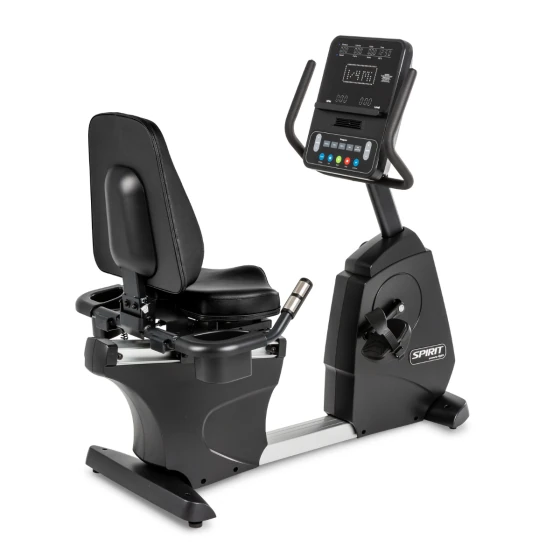
Spirit Fitness
Recumbent Bike / 4.0R
40 resistance levels and a step-through design for safe entry and exit.
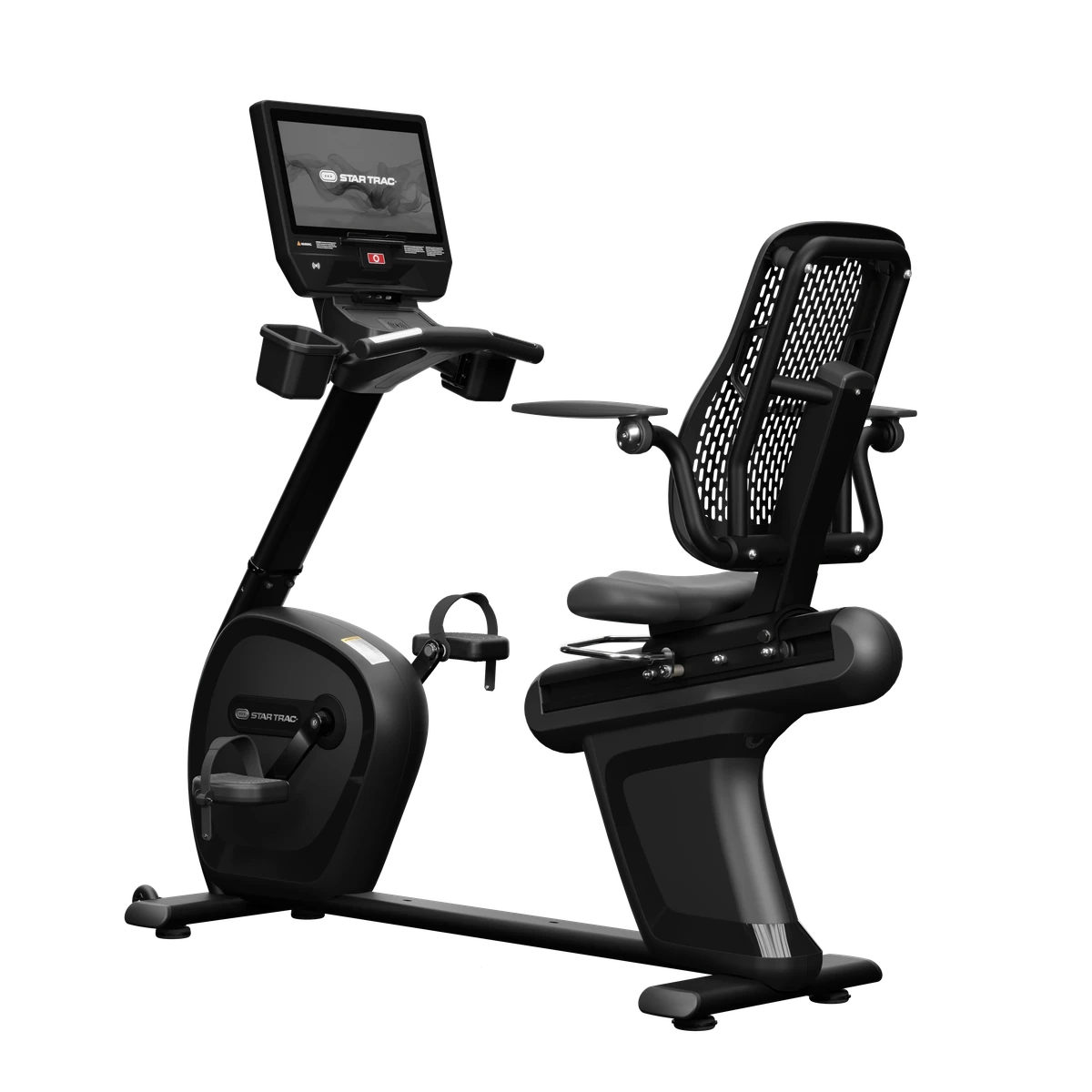
Star Trac
Recumbent Bike / 8RB
A walk-through frame for easy access and a contoured, supportive backrest.
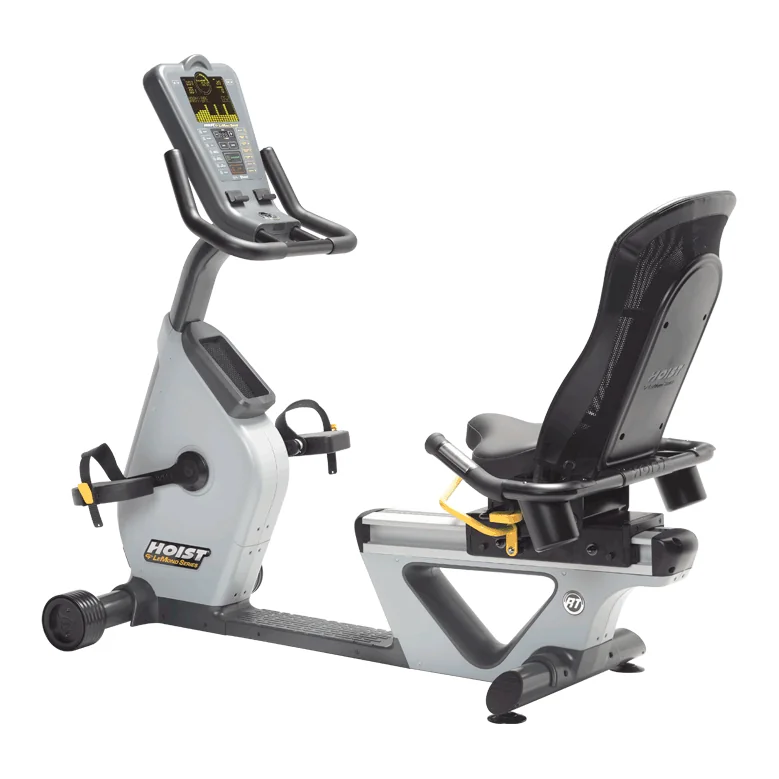
Hoist Fitness
RT Recumbent Trainer / L-80900
A true recumbent with a walk-through frame, five seat-recline positions and self-powered operation.
Upper body ergometers
Shoulder and upper-extremity rehab, arm endurance for pulmonary patients, and exercise from a wheelchair — the clinical models take the chair in place of the seat.
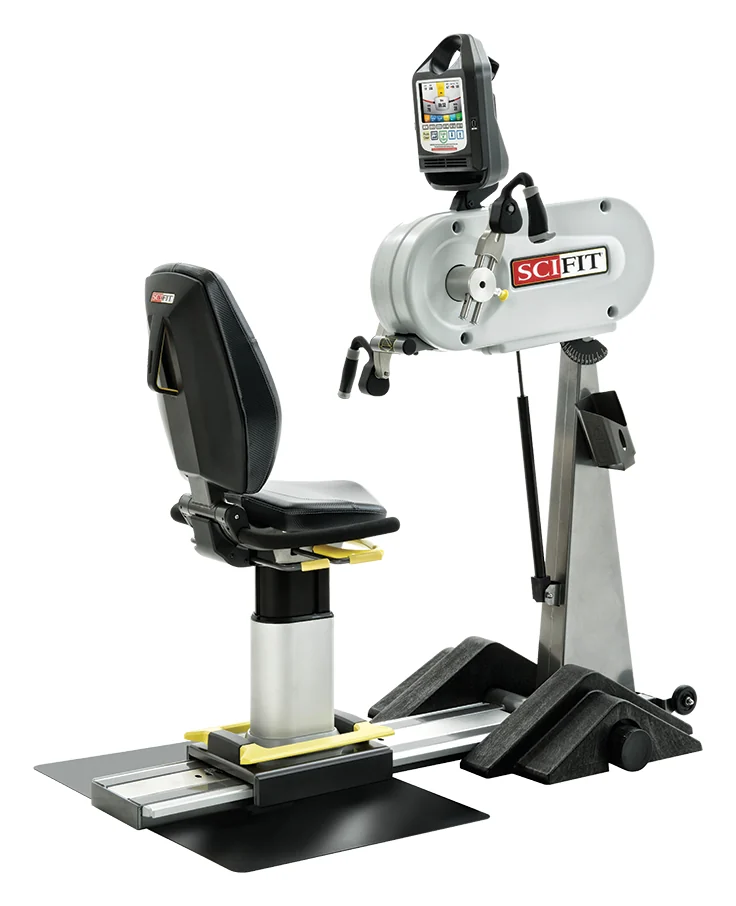
SciFit
Upper Body Ergometer / PRO1
Seated, standing or from a wheelchair: a removable seat, a wheelchair platform, a tilting head and bi-directional motion across 191 levels.
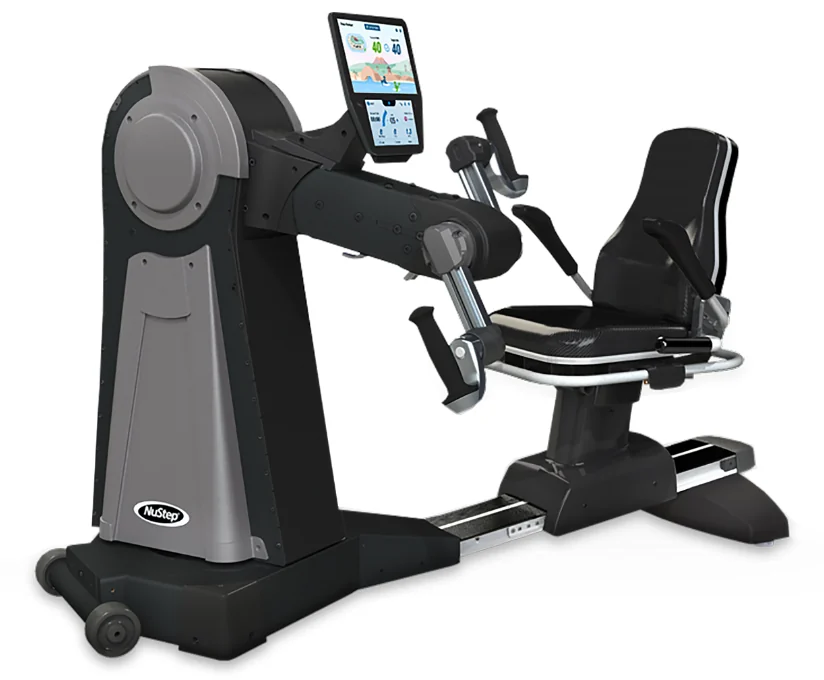
NuStep
Upper Body Ergometer / UE8PRO
Direct wheelchair access with no seat removal, bidirectional motion, and live power and left-right symmetry data.
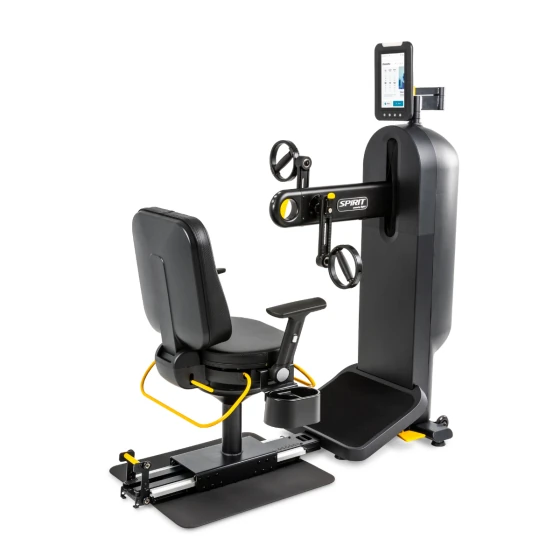
Spirit Fitness
Upper Body Ergometer / 8.5UE
A fully removable seat for direct wheelchair access, very low starting resistance and 50 levels forward and reverse.
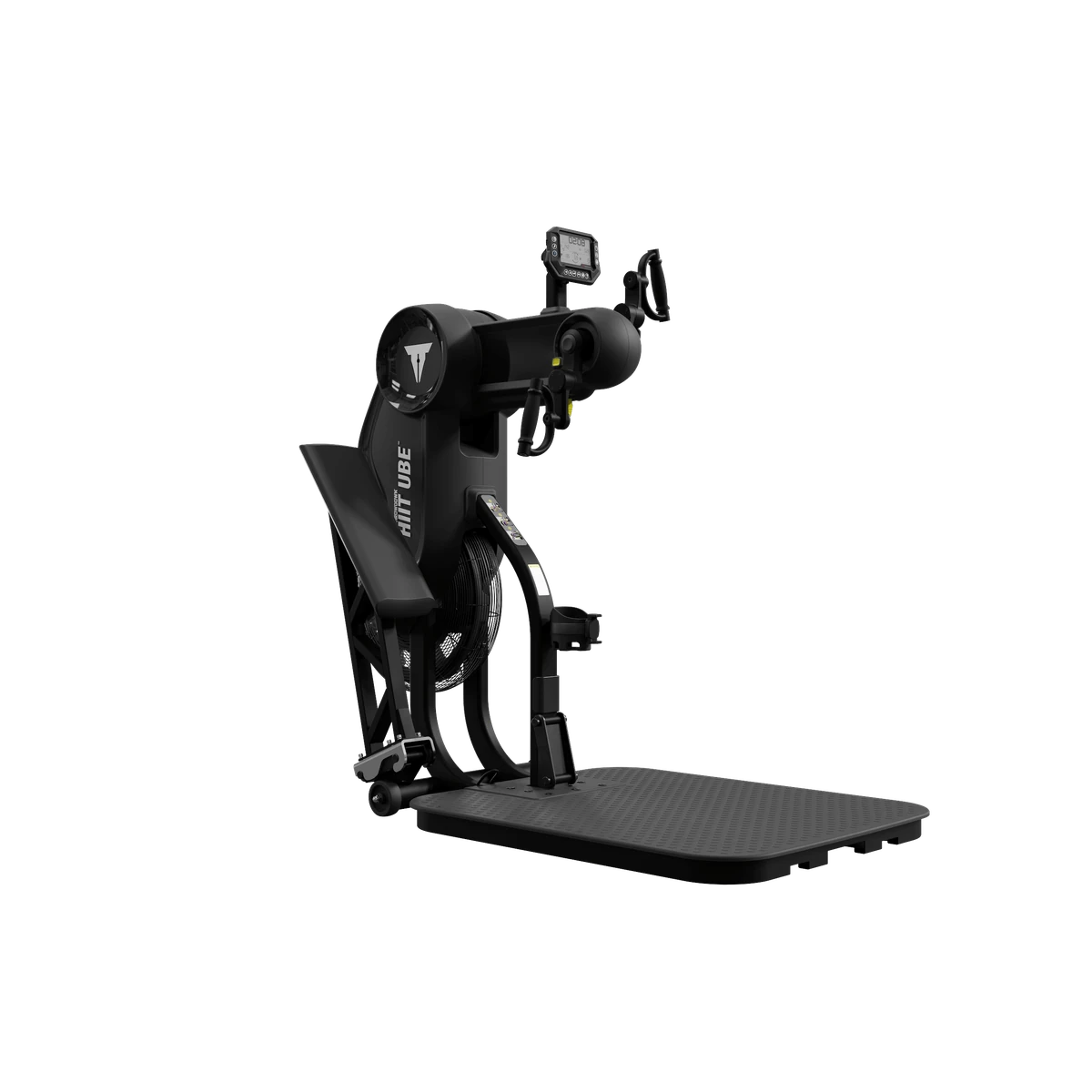
Throwdown
HIIT UBE / 9-4840
An adjustable tower and convertible crank arms, with an optional ramp and removable bench for wheelchair access.
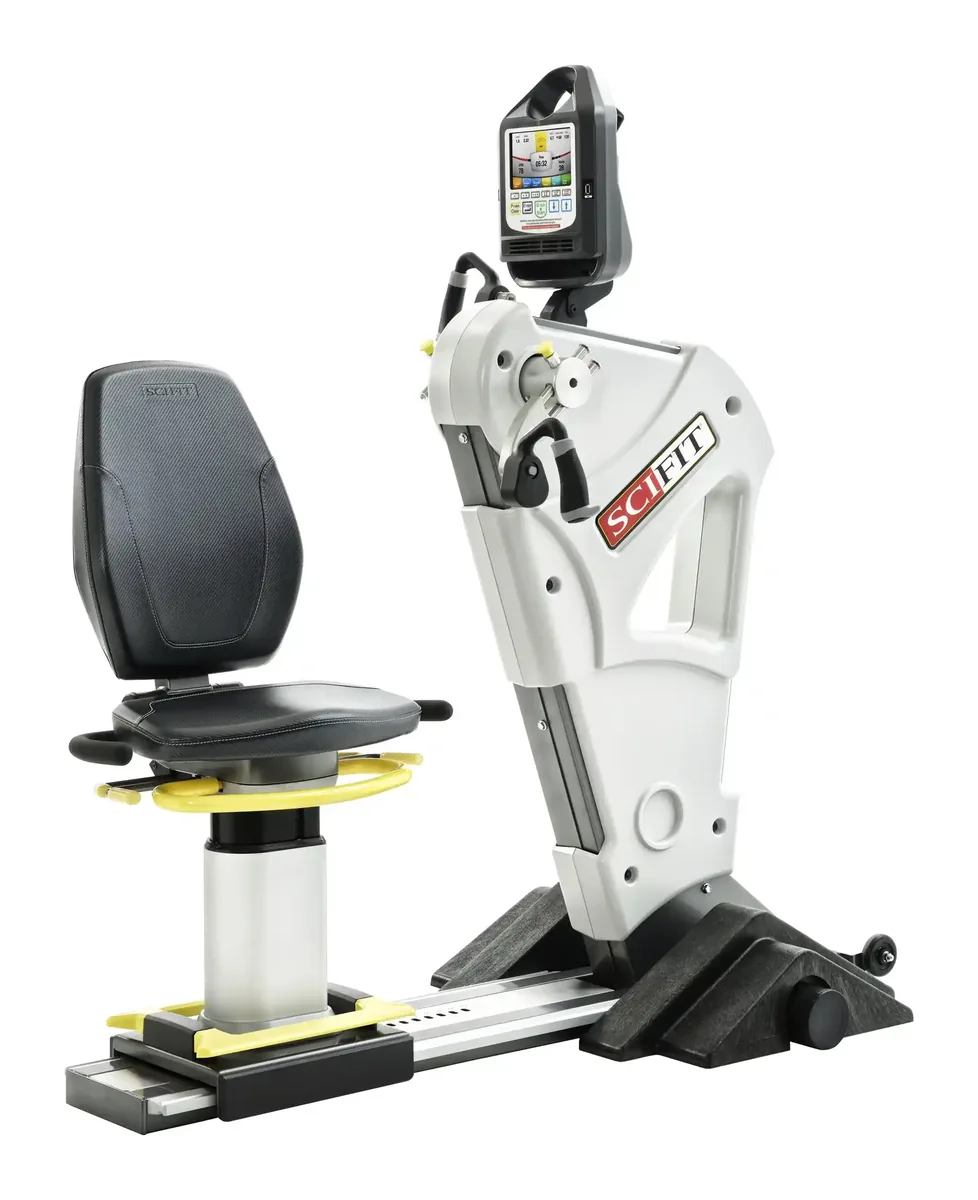
SciFit
Seated Upper Body Ergometer / PRO1000
Adjustable cranks, a step-through frame and a seat that comes off for wheelchair access, from a very low starting resistance.
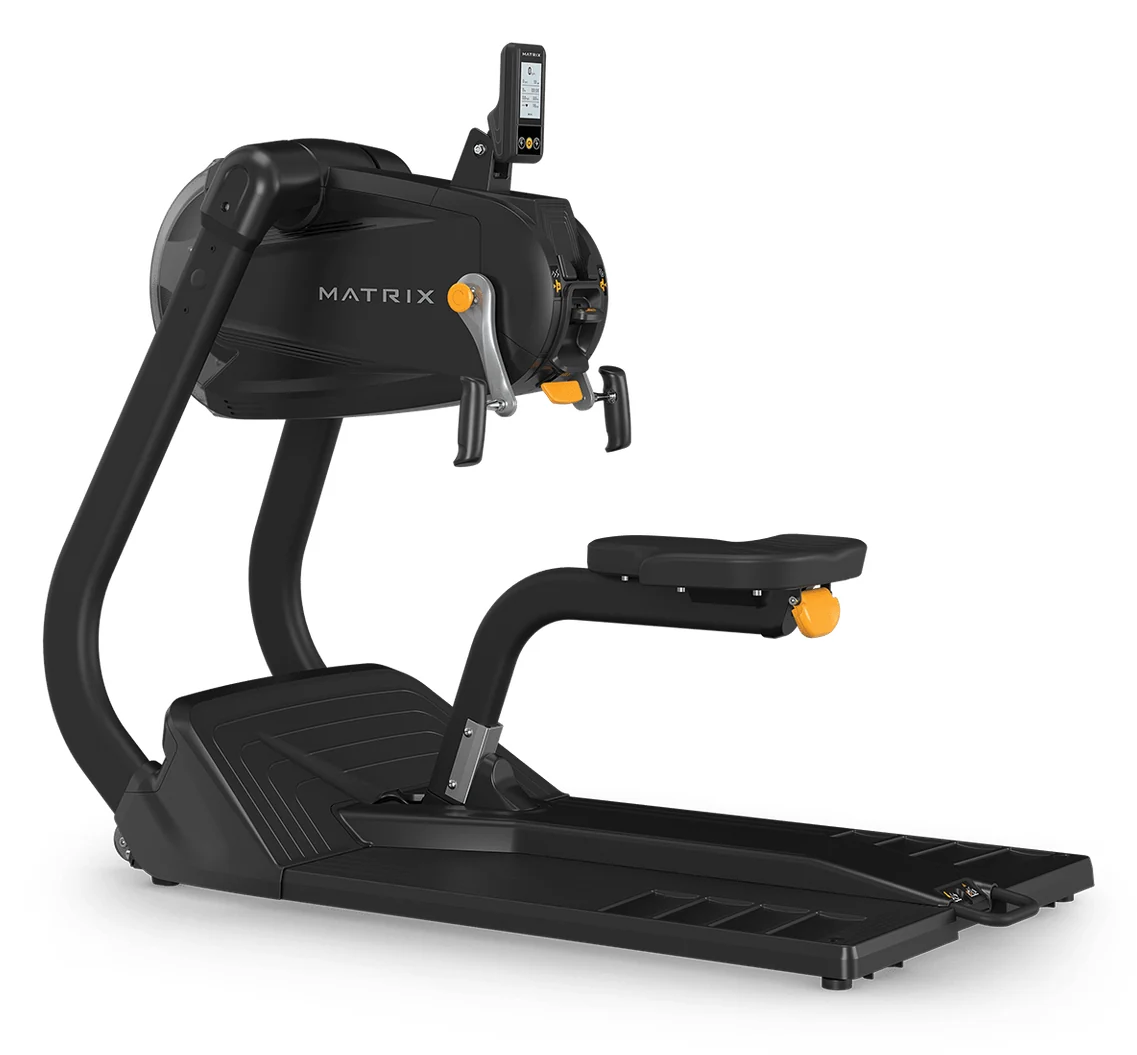
Matrix
Upper Body Cycle / UBC-M
The seat flips out of the way for standing or wheelchair workouts, with synchronous, asynchronous and independent arm rotation.
A representative selection, not the full range. Specifications are each manufacturer’s published figures; write the ones your program depends on into the bid. Each card with a product page links to it.
How a rehab program room gets equipped
From the Program to the Floor
Five stages, the same for a new hospital program and a refresh of an existing room.
1. Start from the program
Cardiac, pulmonary or both; how many patients exercise in one session, and how many staff run it; whether sessions are continuously monitored; and what the maintenance phase after discharge looks like. Those numbers set the station count and the mix of walking and seated equipment.
2. Drawn around the monitoring station
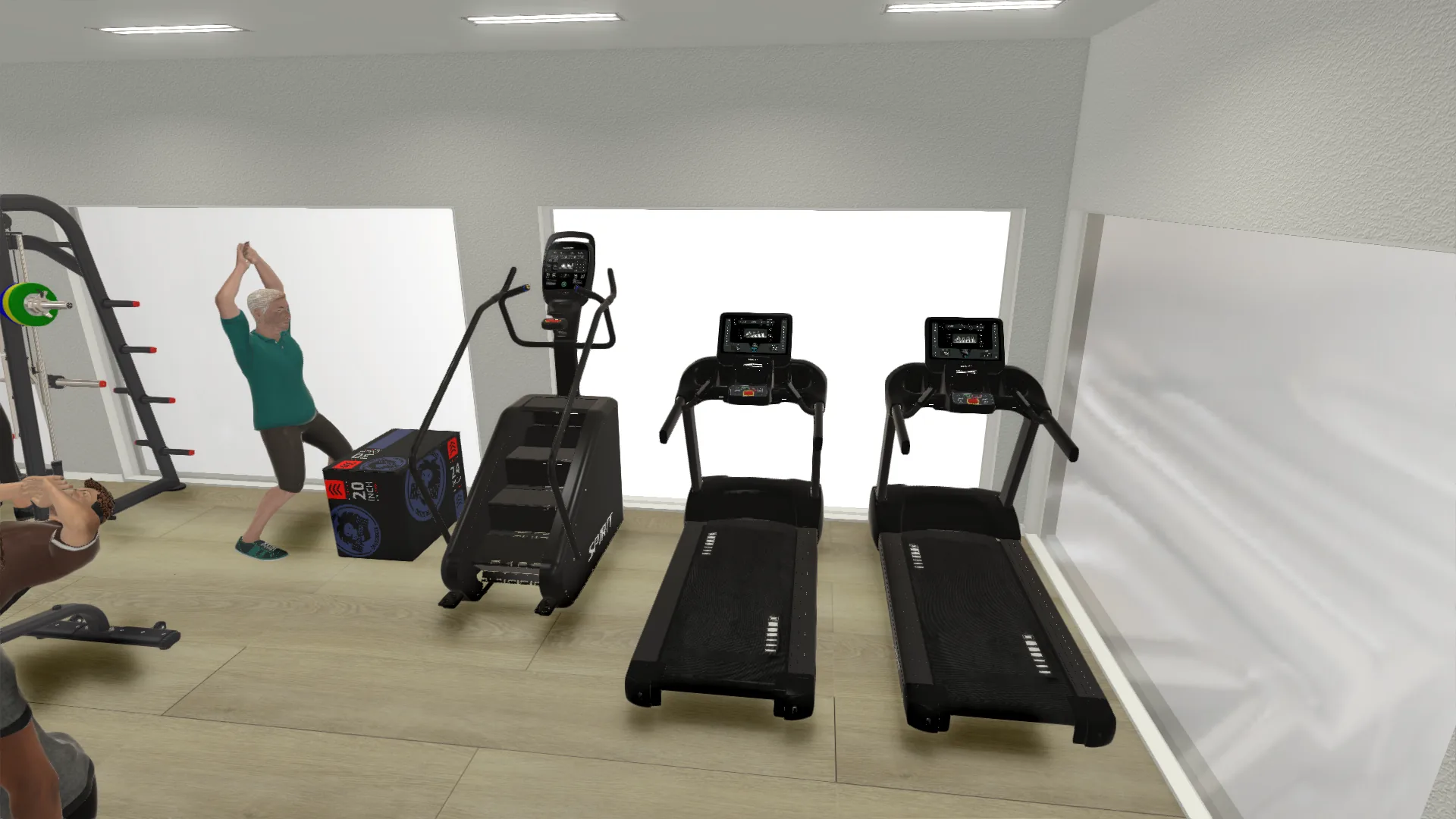
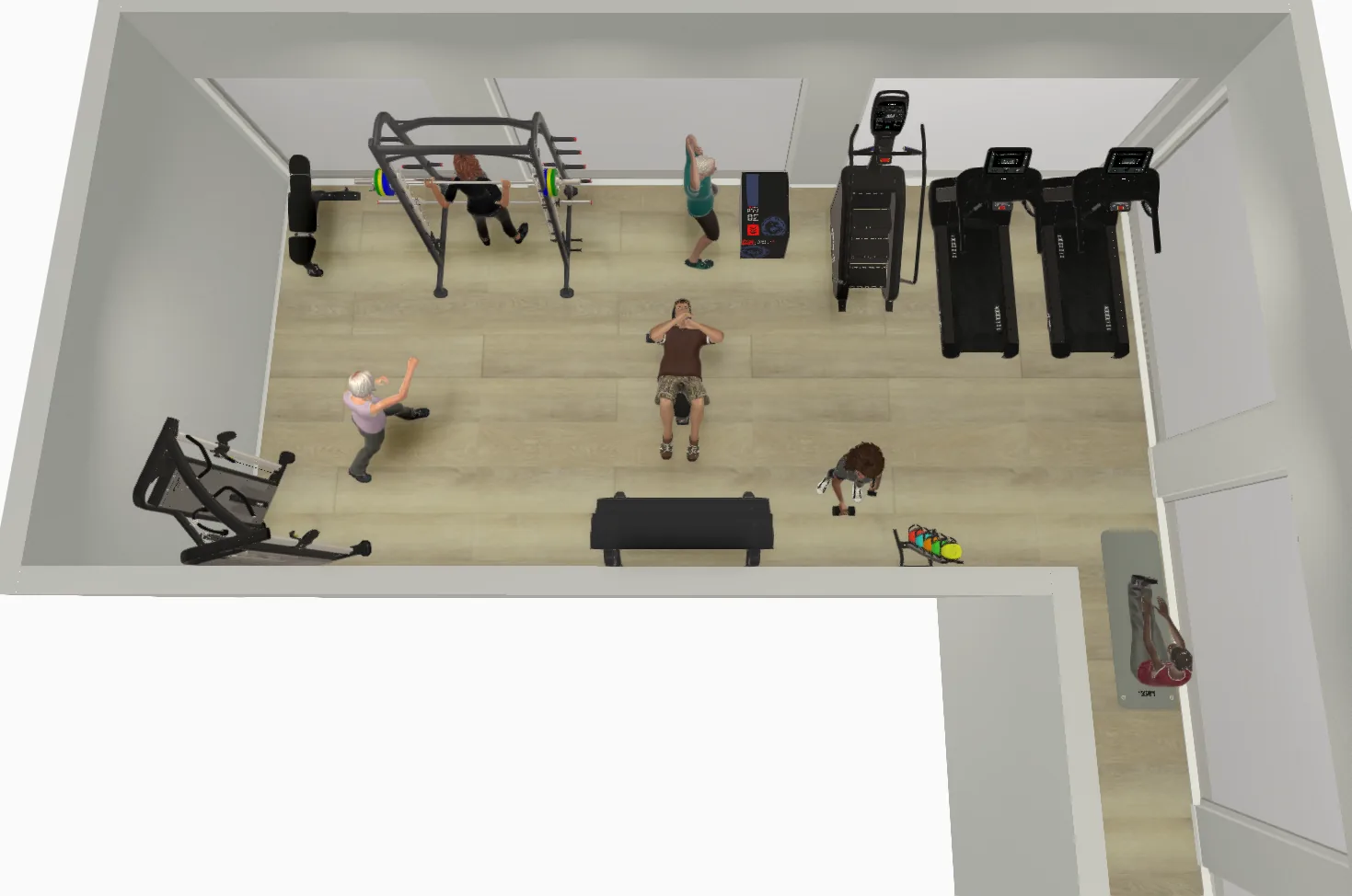
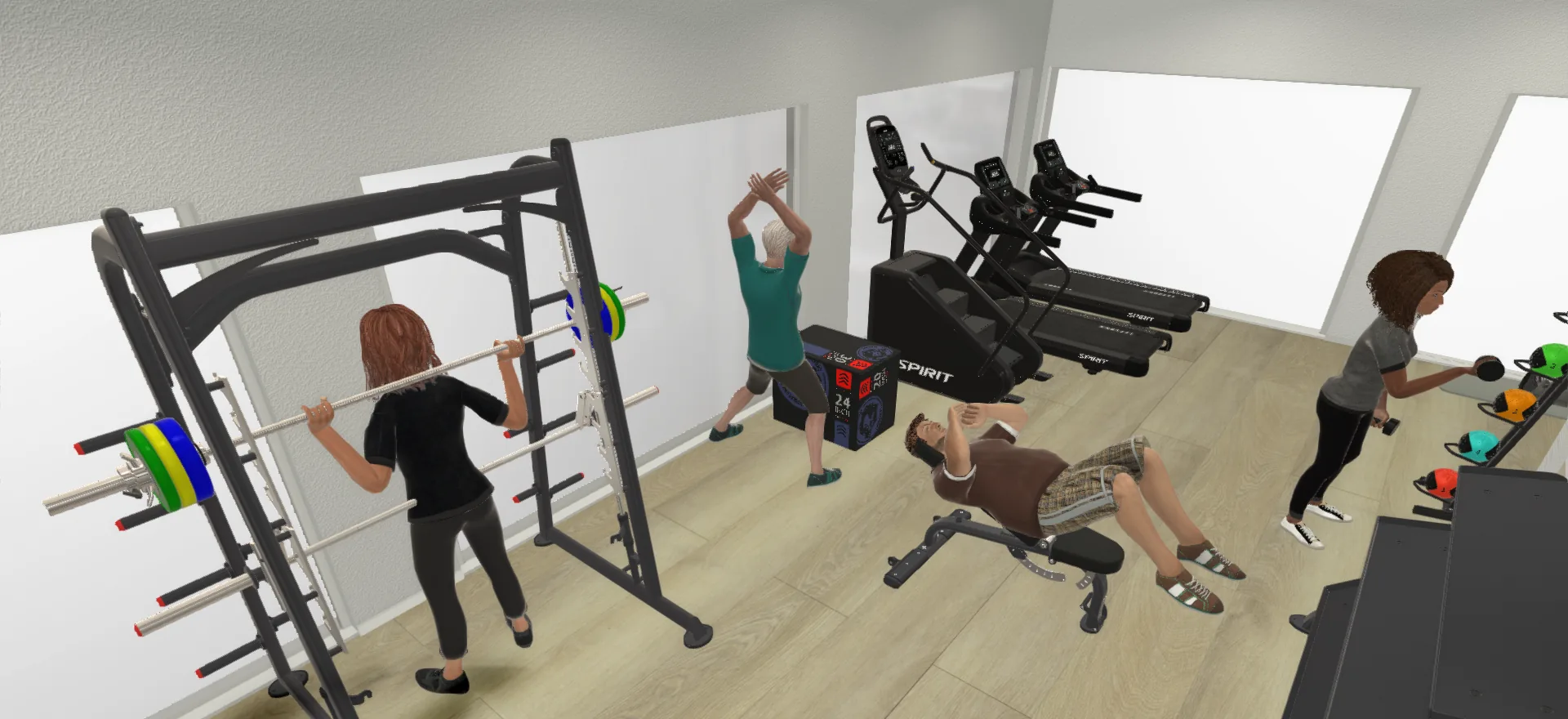
Every station is placed in sight of the nurse or exercise physiologist’s station, with a clear path to each patient for the emergency cart and room beside the station for oxygen, then rendered in 3D for the program director, facilities and the capital committee.
3. Specified to the program’s numbers
Start speed and workload, increments, watts and METs readouts, heart-rate compatibility with the program’s telemetry, user weight capacity and upholstery that stands up to the facility’s own disinfectant — written into the quote as numbers, so equipment from different makers can be compared on the same terms.
4. Installed inside a working hospital
Delivery is booked with facilities and security — loading dock, freight elevator, corridor protection and the hours the work is allowed — and carried out under the building’s own infection-control and badge rules, with the packaging leaving with the crew.
5. Maintained on a record
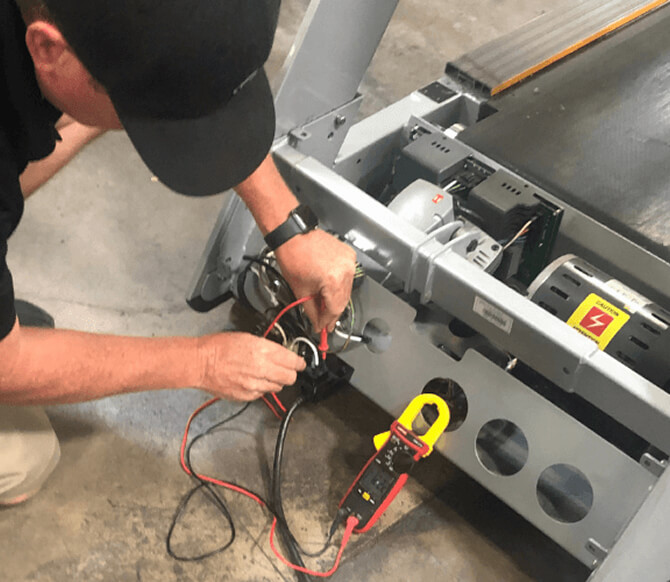
In Texas and Arizona our own technicians perform preventive maintenance and keep a per-machine service record for the program’s files; the Houston health-system fitness center below was ordered with a twice-yearly plan. Elsewhere we coordinate the manufacturer’s warranty and service.
Hospitals and medical fitness centers we have supplied
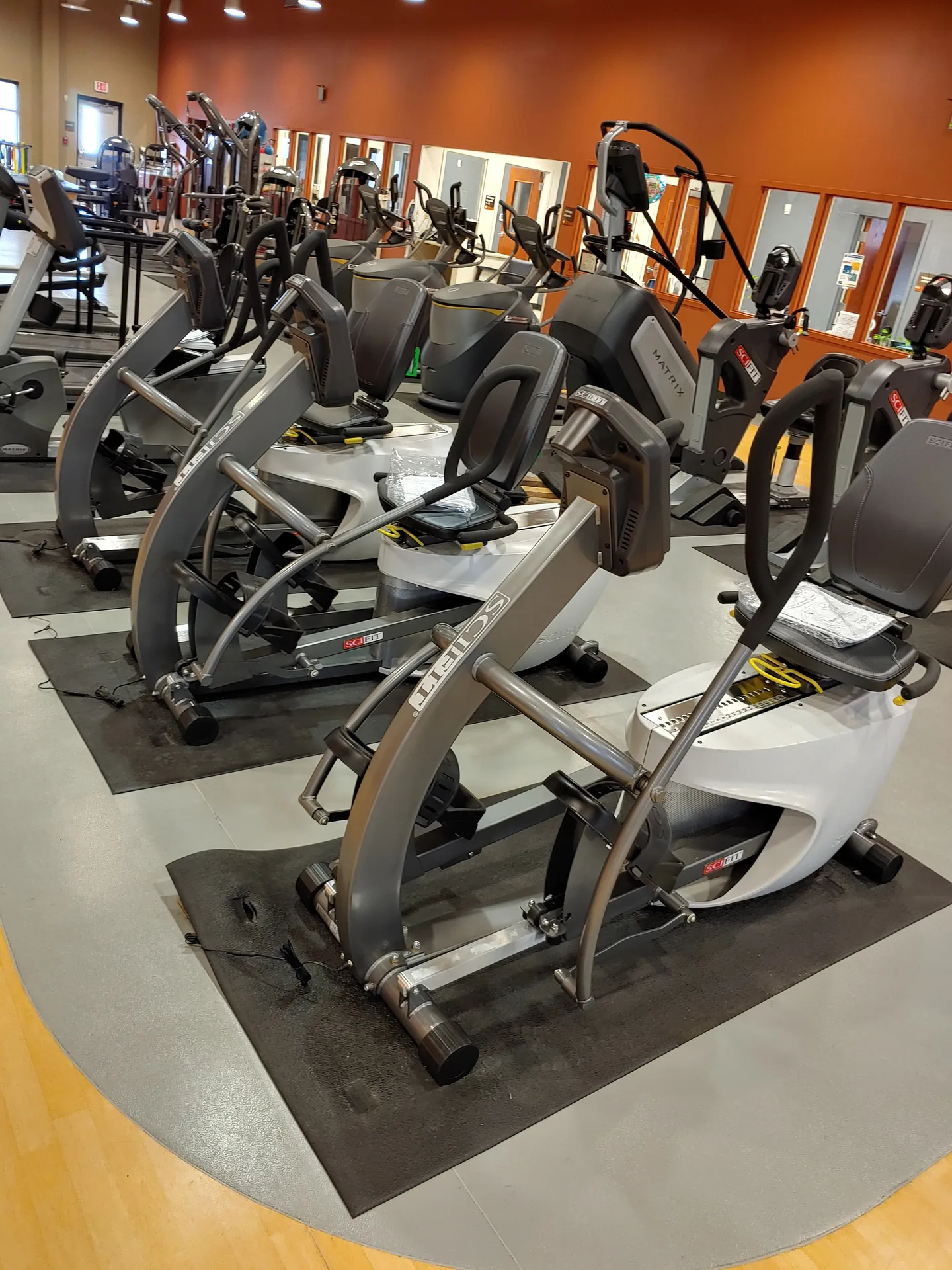
Fit Supply has supplied hospitals in Texas and Louisiana and medical fitness centers in Texas — among them the Olney medical fitness center above, with its row of SciFit recumbent ellipticals, and a Houston health-system fitness center that was drawn and rendered in 3D before it was ordered, installed in August 2026 and put on a twice-yearly preventive-maintenance plan. Physical therapy clinics and rehab centers are on physical therapy clinic equipment.
Capital requests and purchasing
Hospital equipment is usually bought on a capital request reviewed by a committee, then purchased through the system’s own purchasing department. We provide the to-scale drawing, the rendering and an itemized quote with each manufacturer’s specification sheets that the request needs, quote to the purchasing department’s terms, and price new and pre-owned options side by side where the program wants both. Financing is available where a capital purchase is not.
Three kinds of equipment a rehab program runs on

Treadmills that start near zero
A 0.1 mph start or a belt that starts from zero on the first step, fine speed increments, reverse where the program uses it, and full-length handrails a patient can hold the whole way.

Seated total-body cardio
Recumbent steppers and total-body trainers with swivel seats and step-through frames, reporting watts and METs from very low starting workloads.

Arm work and wheelchair access
Upper body ergometers with removable seats or direct wheelchair access, for pulmonary arm endurance and patients who exercise from the chair.
In short
Fit Supply supplies hospital and outpatient cardiac and pulmonary rehab programs nationwide: treadmills that start as low as 0.1 mph with full-length handrails, recumbent steppers and bikes that report watts and METs from very low workloads, and upper body ergometers that take a wheelchair — laid out so staff can see every patient from the monitoring station. Delivery and installation are nationwide; service is in Texas and Arizona.
Cardiac and pulmonary rehab — questions
What equipment does a cardiac rehab program need?
Most programs run on low-start treadmills with full-length handrails, seated total-body recumbent steppers, recumbent bikes and upper body ergometers, plus light free weights and bands for strengthening and chairs for rest between stations. The mix depends on how many patients exercise in a session and how many can walk a treadmill for the full time.
What start speed should a cardiac rehab treadmill have?
As low as the program’s slowest patient needs. Rehab treadmills start from 0.1 mph (Matrix T3xm) or 0.3 mph (Spirit 4.0T), or start the belt from zero on the patient’s first step (Spirit 8.0T Safe Step), where many light-commercial treadmills start at 0.5 mph. Put the start speed in the bid as a number so the models quoted can be compared on it.
Does Medicare require specific equipment for cardiac rehab?
The cardiac rehab rule, 42 CFR 410.49, sets supervision, the treatment plan and session limits but names no exercise equipment or monitoring hardware. The pulmonary rehab rule, 42 CFR 410.47, requires the setting to have necessary cardio-pulmonary, emergency, diagnostic and therapeutic life-saving equipment such as oxygen, CPR equipment and a defibrillator. State rules can add more, so check your state.
Is rehab exercise equipment an FDA medical device?
It can be. 21 CFR 890.5380 classes powered exercise equipment intended for medical purposes as a Class I device, and whether a given machine is one depends on how its manufacturer labels it. We supply equipment exactly as the manufacturer labels it, with the manufacturer’s documentation.
How should a rehab program room be laid out?
From the monitoring station out: every station in sight of the staff and the telemetry screen, a clear path to each station for the emergency cart, space beside stations for portable oxygen, and at least one of each type of machine with the ADA 30 by 48 in clear floor space positioned for transfer, on a 36 in accessible route.
Can you install inside an occupied hospital?
Yes. Delivery is booked with facilities and security for the loading dock, freight elevator, corridor protection and permitted hours, and the work follows the building’s infection-control and badge rules. Our own crews install in Texas and Arizona; installation partners elsewhere.
Do you service rehab equipment?
In Texas and Arizona our own technicians perform preventive maintenance and repairs and keep a per-machine record for the program’s files. Elsewhere we coordinate the manufacturer’s warranty and service.