

Universities, community colleges, technical and professional colleges
Commercial Fitness Equipment for College Rec Centers
Rooms We Have Installed
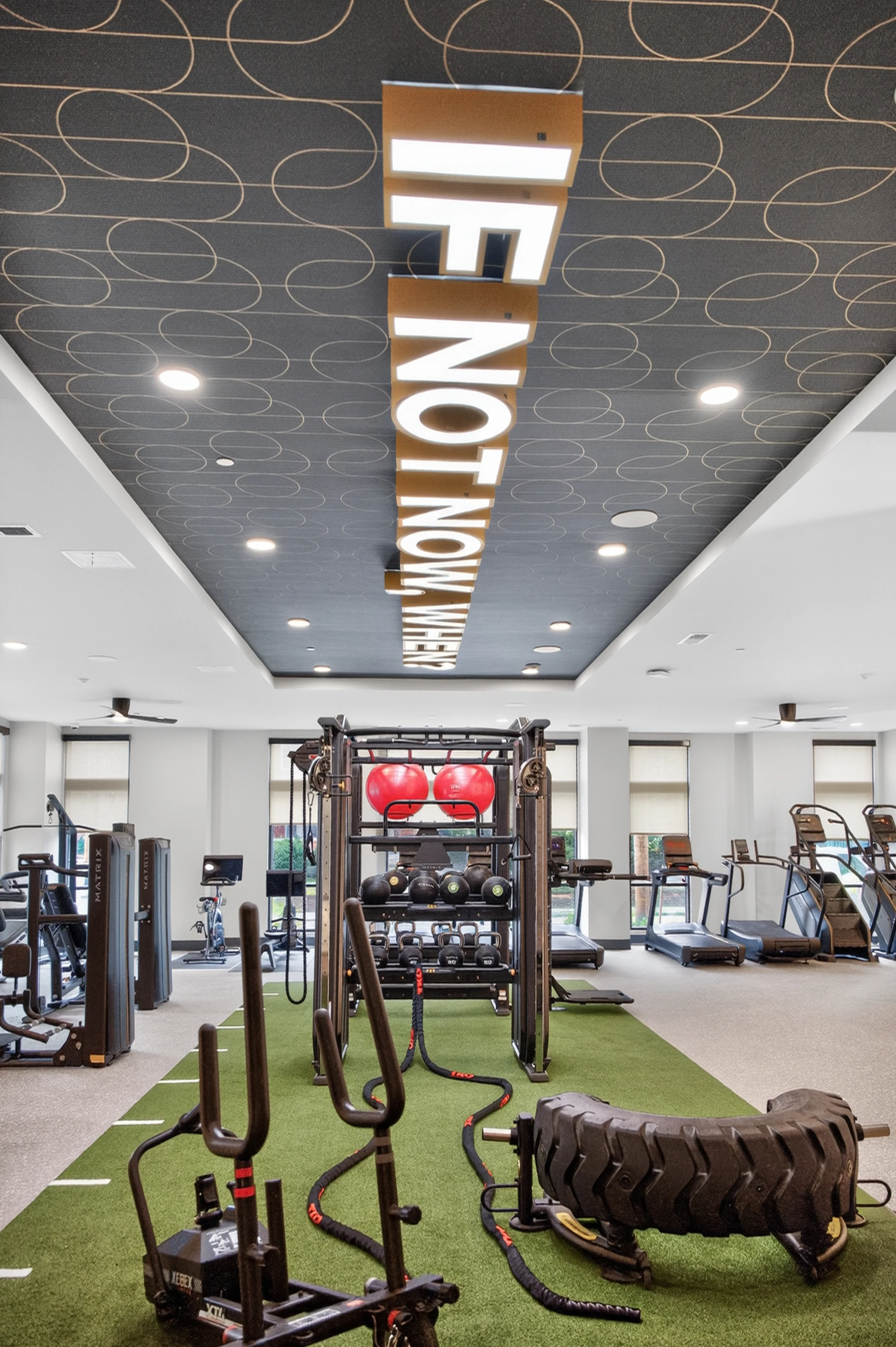
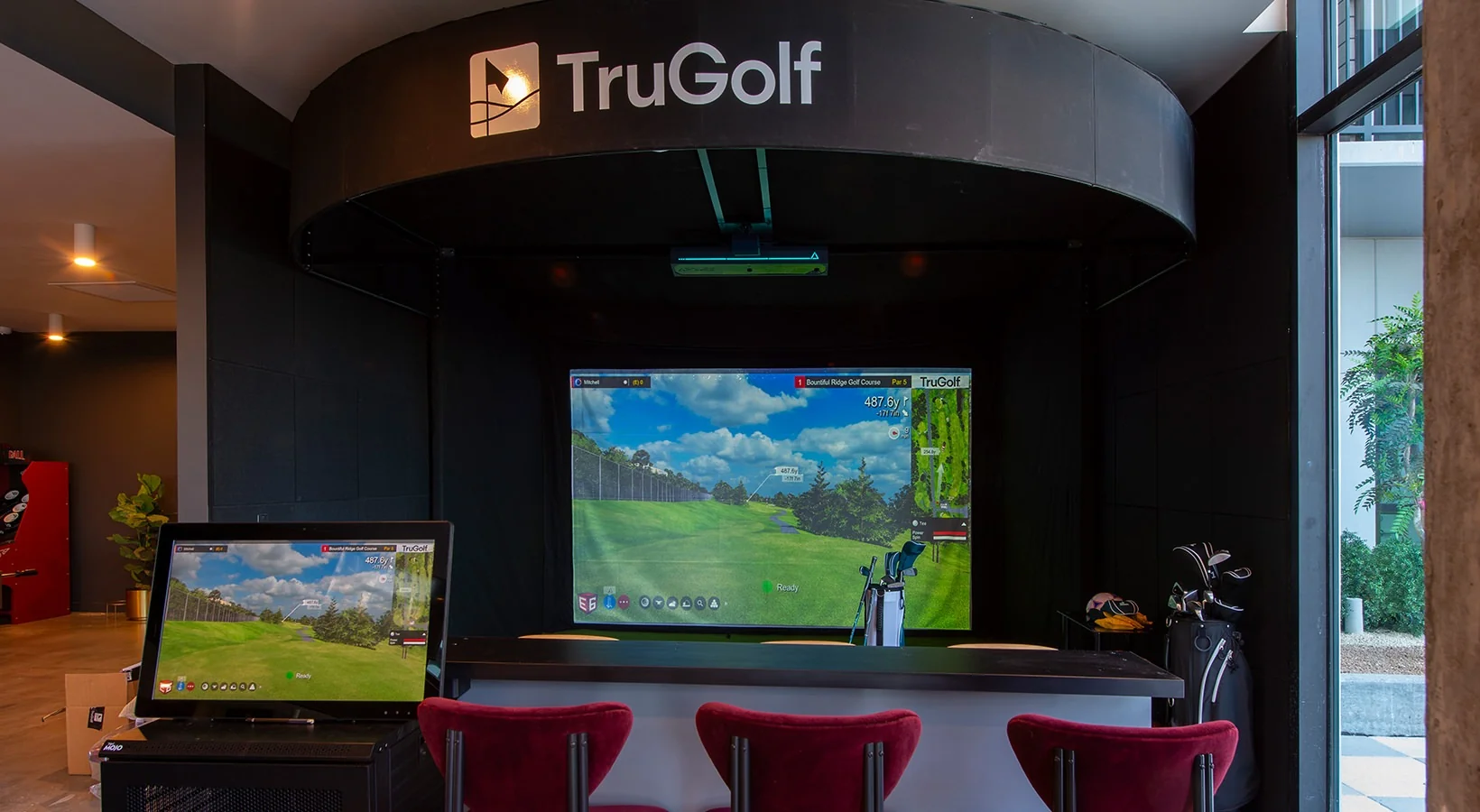
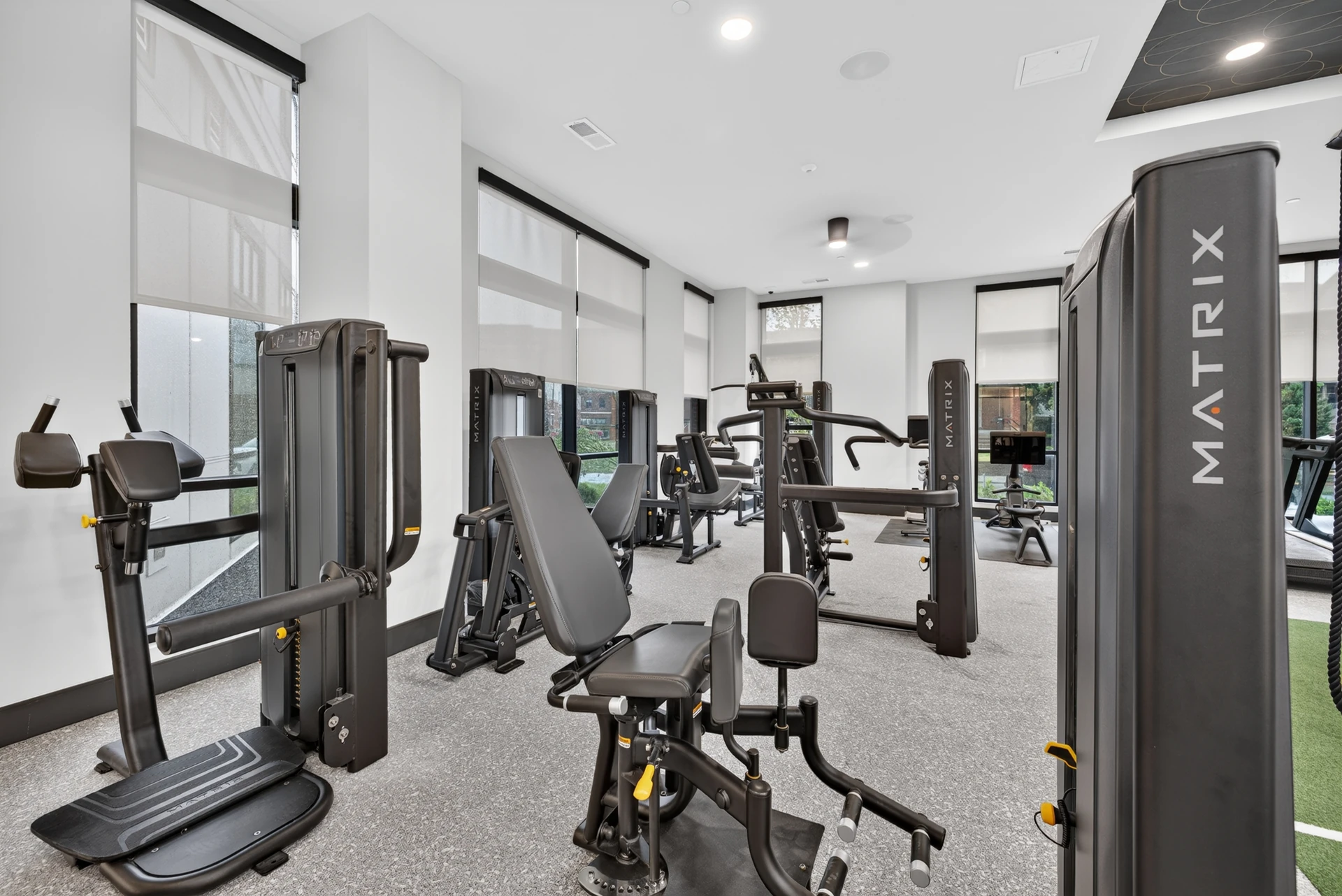
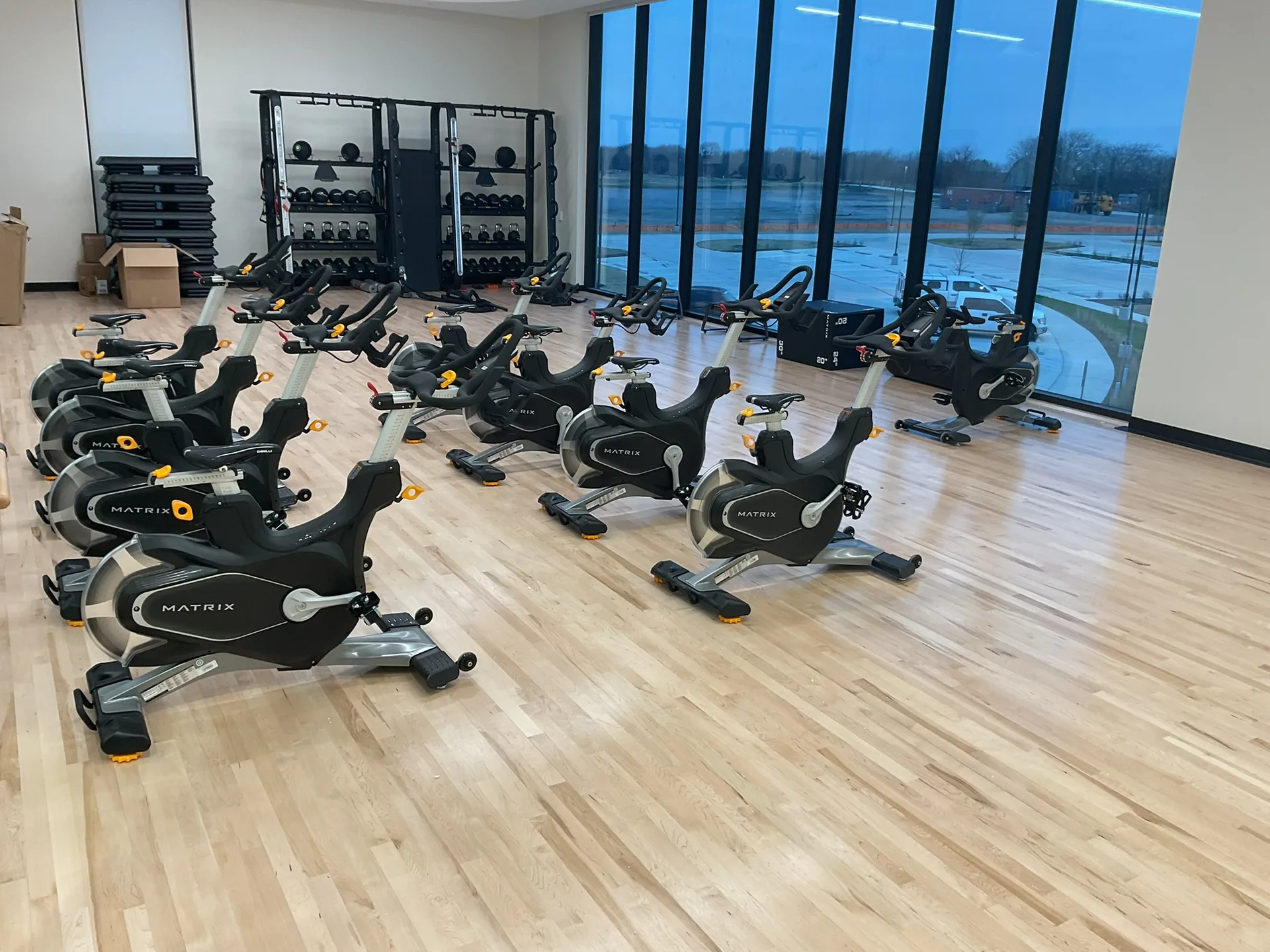
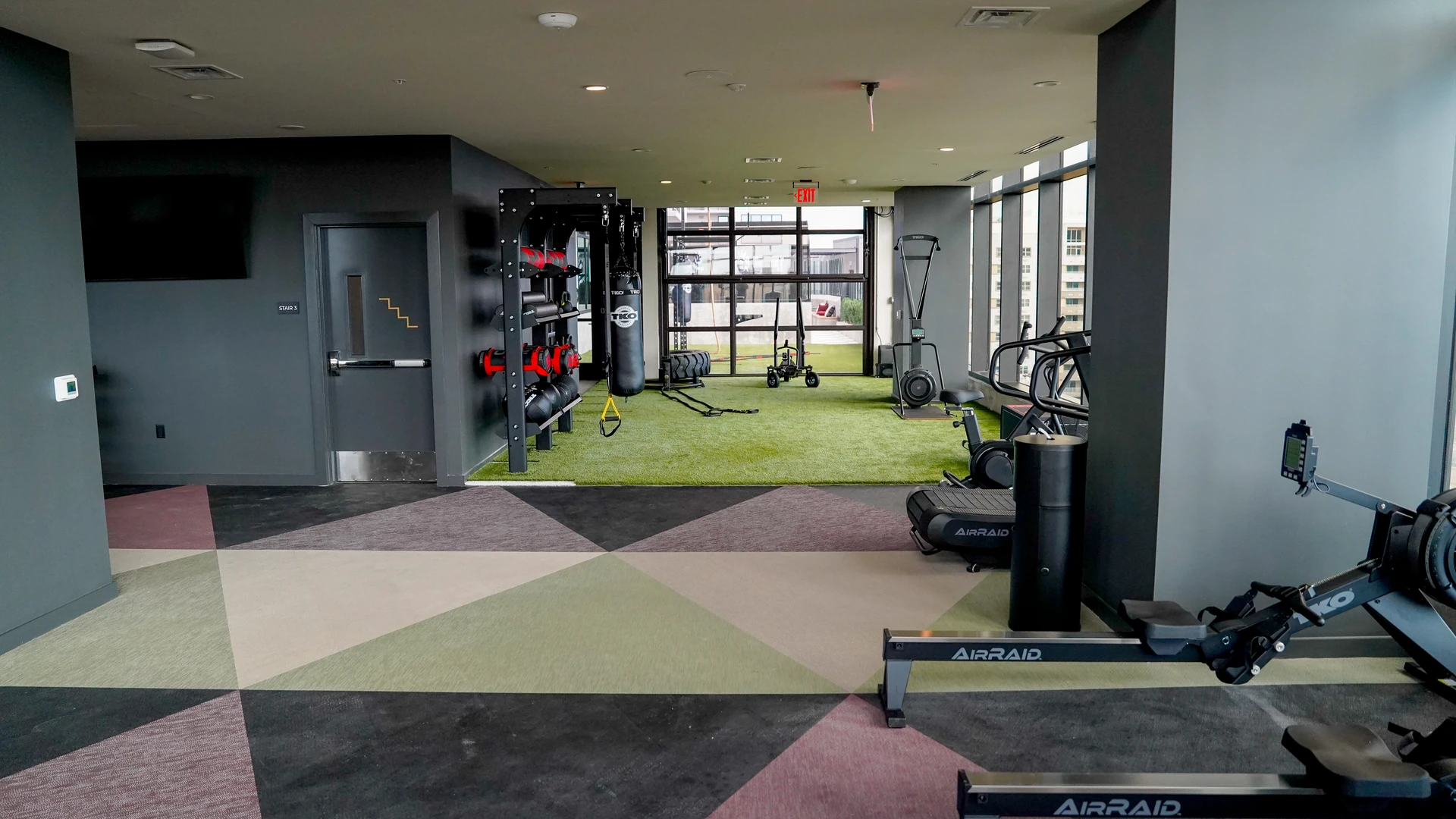
Campus Recreation Fitness Equipment for Universities, Junior Colleges and Career Colleges
A campus recreation center is the highest-volume room Fit Supply equips. It opens early, closes late, runs seven days a week through the semester, and serves a population that ranges from a varsity athlete to a first-year student who has never been in a gym — all of it paid for by the students themselves through a recreation fee, and all of it on the tour that helps a prospective student decide where to enroll. Throughput, durability and a specification wide enough to serve everyone are what a rec center director is actually buying.
University recreation centers, Division I to Division III
The competitive division of a university says nothing about its rec center — the athletic department’s team weight rooms are a separate specification — but it does track with scale.
The campus recreation floors we have equipped and re-equipped include four Division I universities — the University of North Texas in Denton, Texas State University in San Marcos, Texas Christian University in Fort Worth and the University of Arizona in Tucson — and, among many others, the University of Texas at Tyler in Division II, the University of Texas Rio Grande Valley in Edinburg, Stephen F. Austin State University in Nacogdoches, Baylor University in Waco, Lubbock Christian University, Southwestern Adventist University in Keene, Southwestern Assemblies of God University in Waxahachie, Dallas Baptist University, Concordia University Texas in Austin, Wiley College in Marshall, the University of North Georgia and Warner University in Lake Wales, Florida — cardio floors in the hundreds of stations, selectorized and plate-loaded strength, dumbbell walls to 100 lb and up, spin studios, and the functional and turf zones a modern rec center adds.
On a floor that size the work is rarely one order: it is a replacement program, machine by machine, run against a fiscal year. In Texas the service side of the business keeps other campus floors running as well — Texas A&M University–Commerce, the University of Dallas and the University of Texas at Dallas, to name a few.
Junior and community colleges
Community colleges are the deepest part of our college work, and Arizona is where it runs deepest of all: more than 80 orders to date across ten community colleges — Scottsdale Community College, Glendale Community College, Chandler-Gilbert Community College in Chandler, Mesa Community College, Phoenix College and South Mountain Community College in Phoenix, Pima Community College’s West and Desert Vista campuses in Tucson, Arizona Western College in Yuma, Yavapai College in Prescott and the Verde Valley, and Eastern Arizona College in Thatcher.
In Texas, Tarrant County College has bought for its Northwest and Southeast campuses in Fort Worth and Arlington over five years, with its Northeast campus in Hurst serviced through our sister company, and Dallas College’s Mountain View campus in Dallas sits on the same file. A community college fitness center serves students, staff and often the public on one floor with a smaller staff than a university, so it is specified for low supervision: selectorized strength that adjusts in one motion, cardio with a console anyone can start, and a layout a single attendant can see across.
Technical, vocational and professional colleges
Career colleges buy fitness rooms for reasons a university does not. Tarrant County’s public-safety training academy in Fort Worth bought a room for cadets who have to pass a physical-ability test to graduate; National Testing Network’s Phoenix center, which runs those tests for police and fire applicants, bought the equipment the test is run on; Parker University, the chiropractic college in Dallas, bought for a teaching clinic where students learn to prescribe rehabilitation exercise, which is medical fitness equipment — recumbent steppers, medical-grade treadmills and rehabilitation strength — rather than a gym floor.
Technical and vocational colleges building a student wellness room fall between the two: a compact commercial room, open long hours, on a campus that may never have had one.
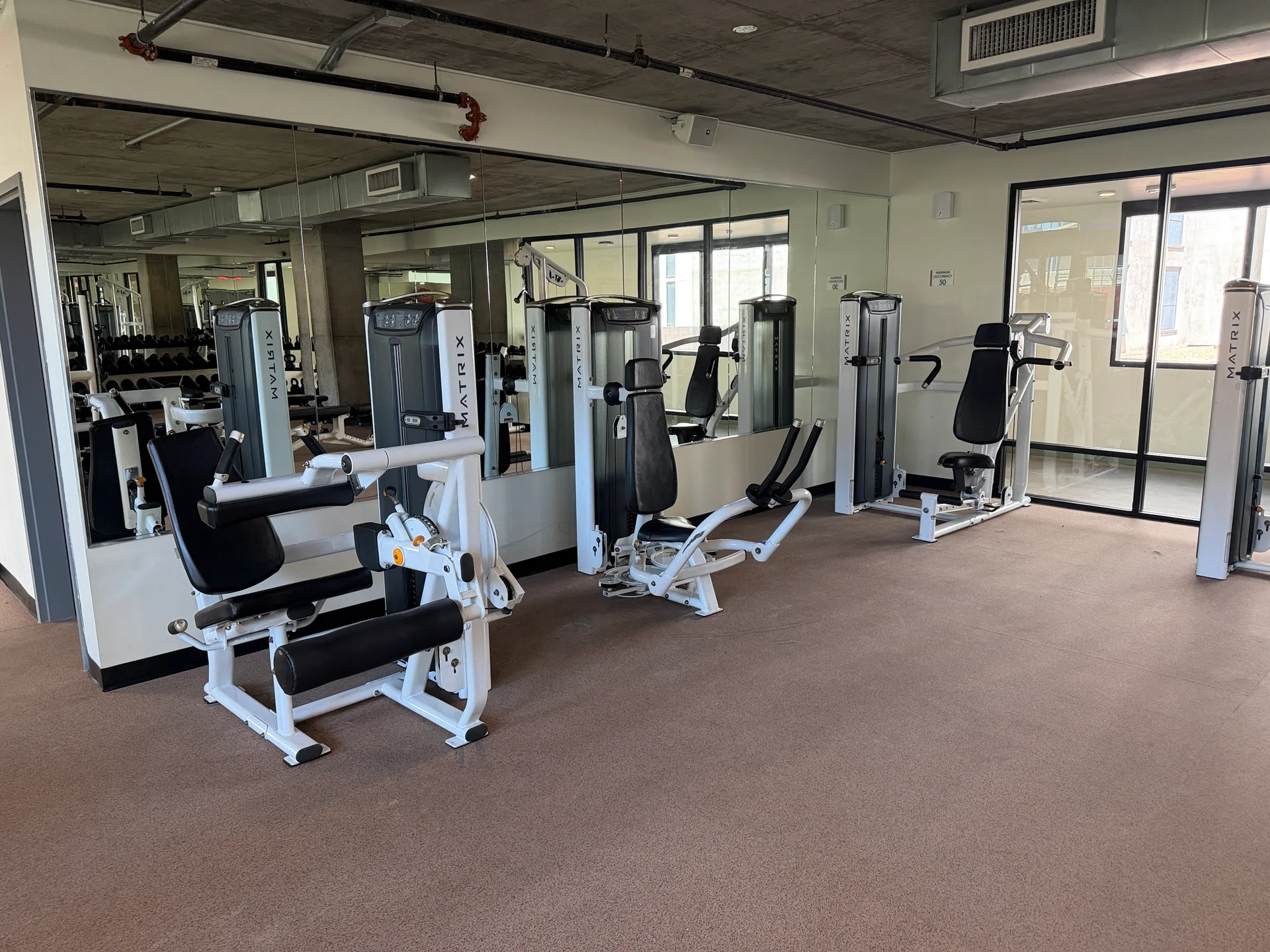
How a campus rec floor is specified
Volume sets the equipment grade, the whole student body sets the range, and the building sets the limits — all three are settled on the drawing before a machine is ordered.
-
Full commercial, on an hours-of-use interval
A rec center runs the hours of a commercial club with a heavier user load, so it is specified in full commercial equipment and maintained against hours of use rather than months.
-
Laid out for everyone on campus
The ACSM guideline of 25 to 50 sq ft per station, with a share of accessible cardio and strength, 30 by 48 in clear floor space, a 36 in route and a 60 in turning circle — a rec center is a public accommodation as well as an amenity.
-
Structure checked before the free-weight zone is placed
A loaded platform area is specified against IBC Table 1607.1’s 100 psf rather than an office floor’s 50, so an upper-floor weight zone is confirmed with the building’s engineer first.
-
Power on the electrical drawing
Every treadmill on its own dedicated 120-volt, 20-amp circuit, drawn in with the layout rather than discovered short on delivery day.
Purchasing on a campus
Colleges buy on formal bids, cooperative purchasing contracts and fiscal-year capital plans, and the paperwork is heavier than any other facility type: bid tabulations, board approvals, manufacturer documentation and, on a public campus, a procurement office with its own thresholds. We quote to that process, hold pricing through it and itemize to the line the purchasing office needs. Installation then lands in the window the building is actually empty — winter break, spring break or the summer — with the order planned backwards from that date.
Where our campus coverage runs deepest
Fit Supply supplies college and university fitness equipment nationwide and installs it through our own crews in Texas and Arizona and through our installation partners everywhere else. Texas carries more than 150 college and university orders across the state; Arizona’s community colleges and university rec centers are served directly from the Chandler office, whose own technicians also handle service and preventive maintenance. In Texas, Fit Supply provides equipment service, repairs, and preventive maintenance across Texas — delivered directly by Fit Supply or through our sister company, On Site Fitness Service.
The rest of the campus specification
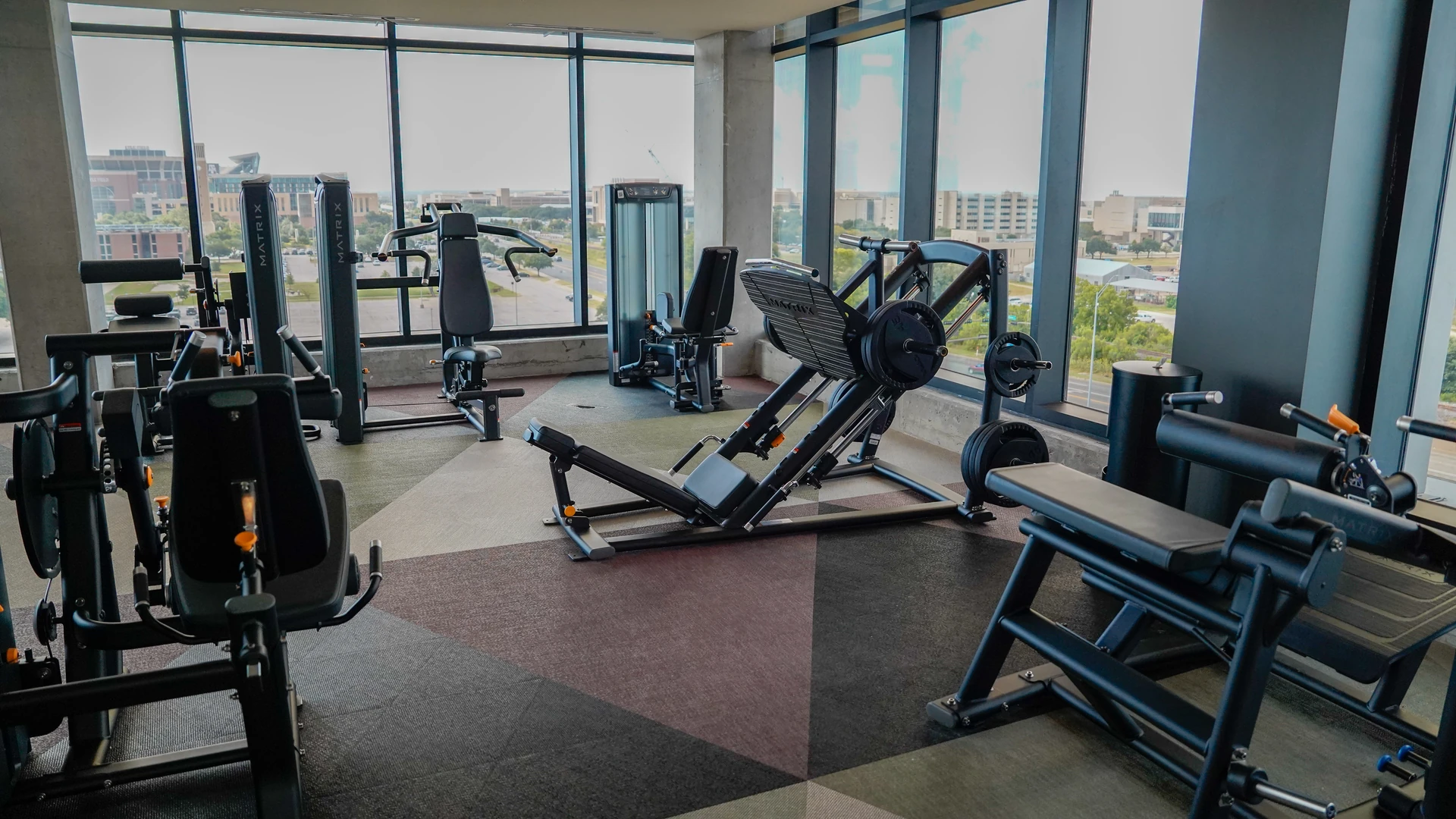
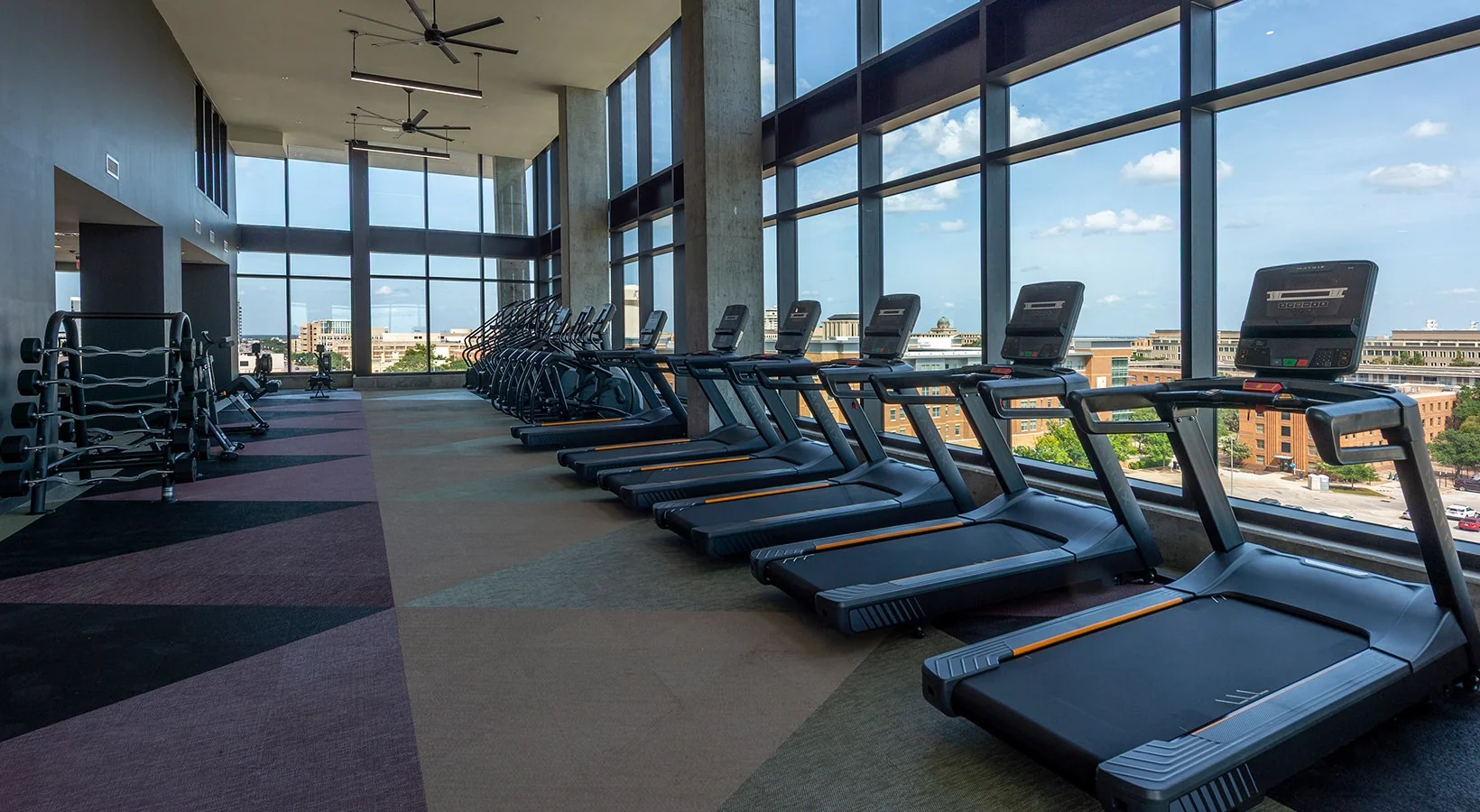
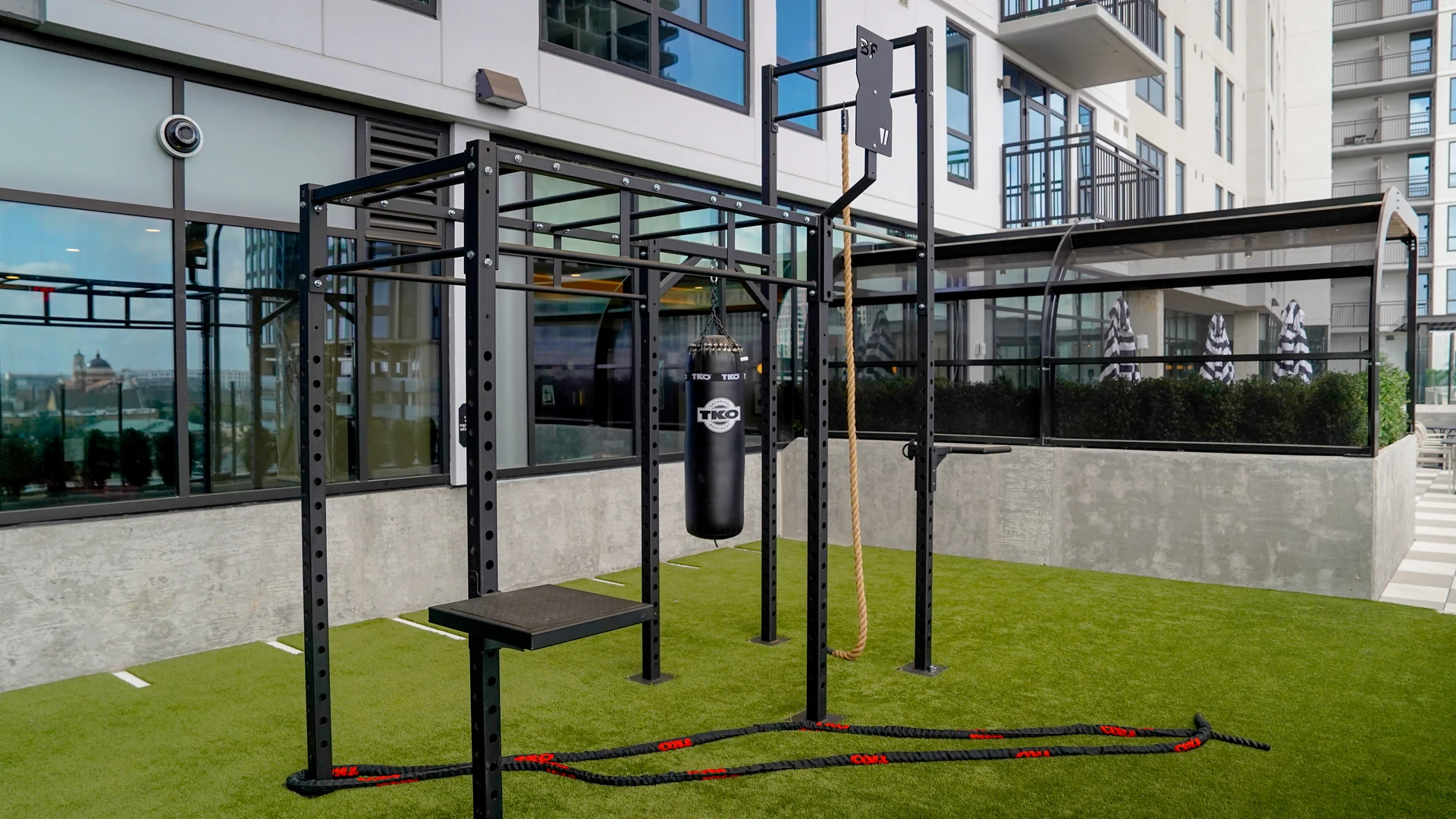
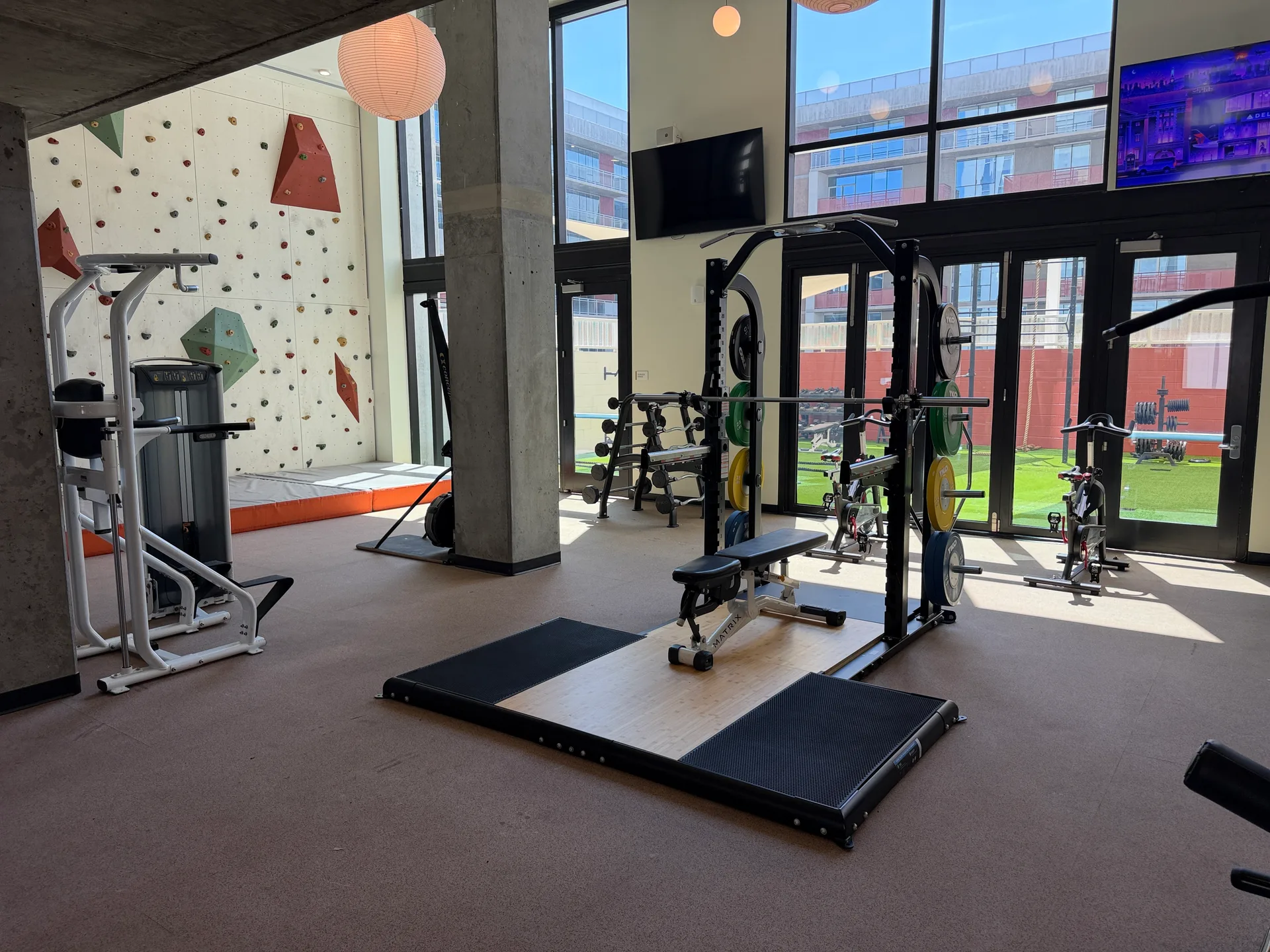
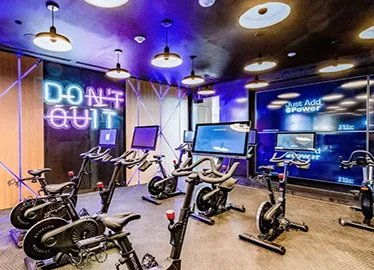
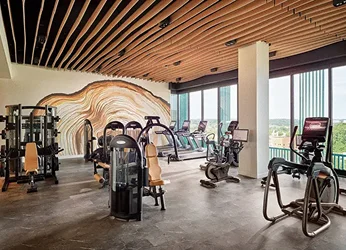
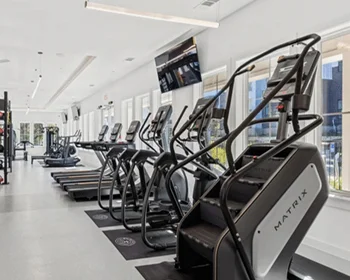
The rooms pictured on this page are our student-housing and recreation-center installations — the same cardio rows, strength floors, functional turf, climbing walls, golf-simulator lounges and outdoor decks a campus rec center draws on, built for the same students. The athletic department’s rooms are on athletic weight room equipment; the K-12 room is on school fitness equipment; and the housing built a few blocks from campus is its own category, student housing fitness amenities. A rec floor starts as a drawing — fitness facility design and layout — and the machines on it come from more than 50 manufacturer partners, matched to the room rather than to a house line.
What a rec center buys from us

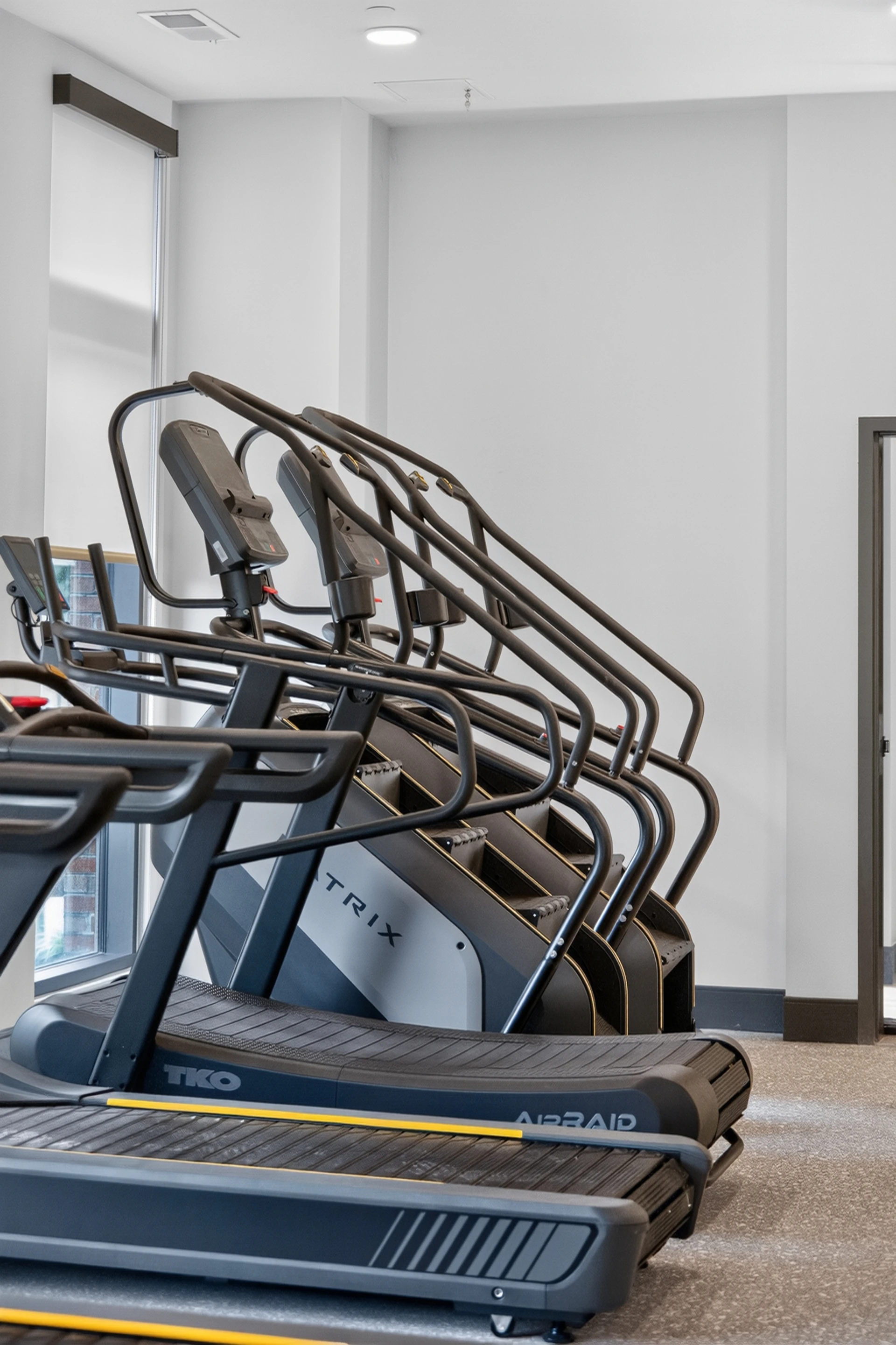
The cardio and machine floor
Rows of full commercial treadmills, climbmills, bikes and selectorized strength in duplicate, because a rec floor is judged by how many students it serves at 6 p.m. in October.

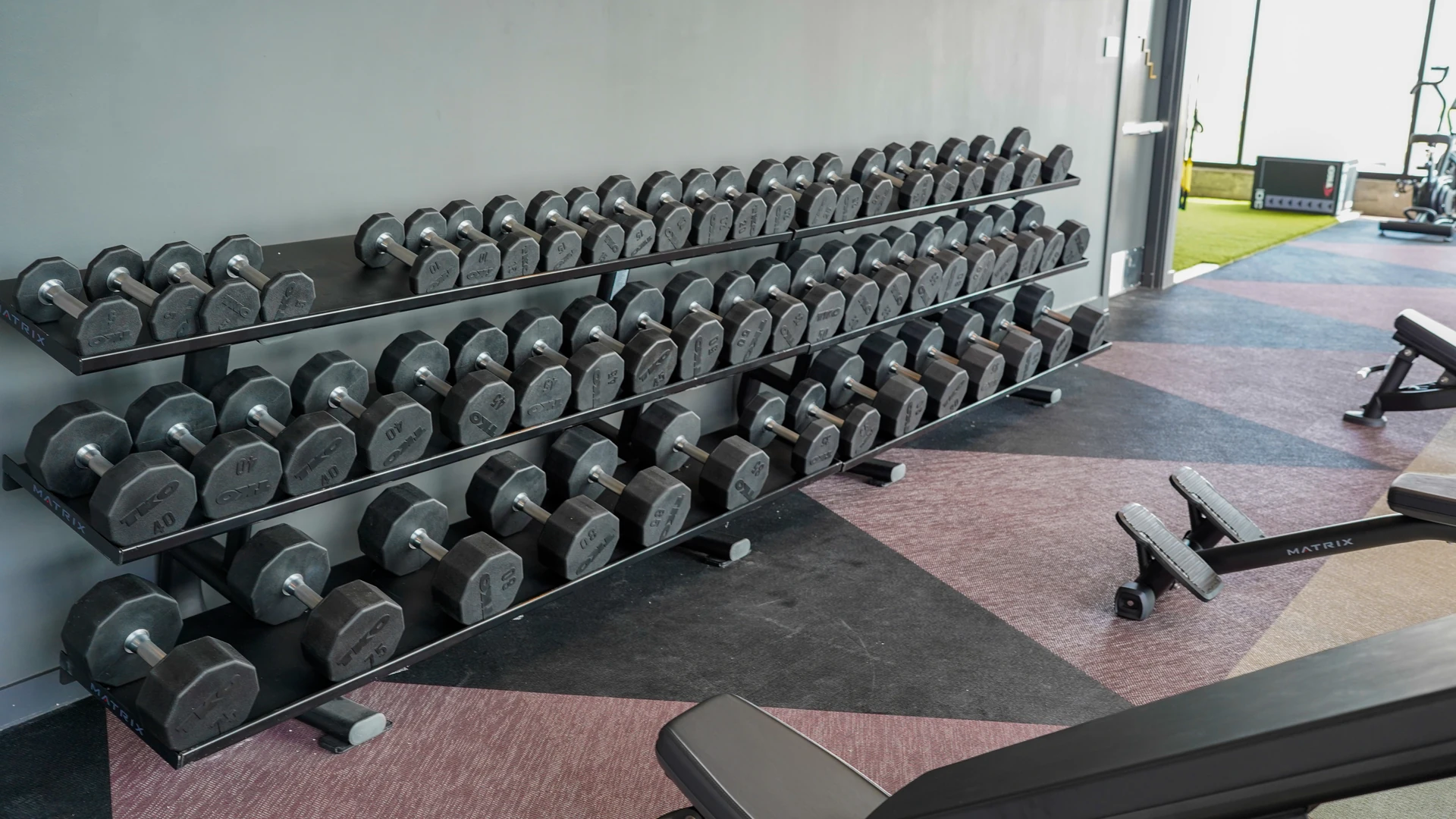
Free weights and functional space
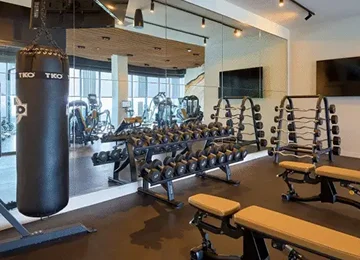
Dumbbell runs, racks, platforms and a turf or functional zone alongside the machine floor, specified so a varsity athlete and a first-year student can share the same room.

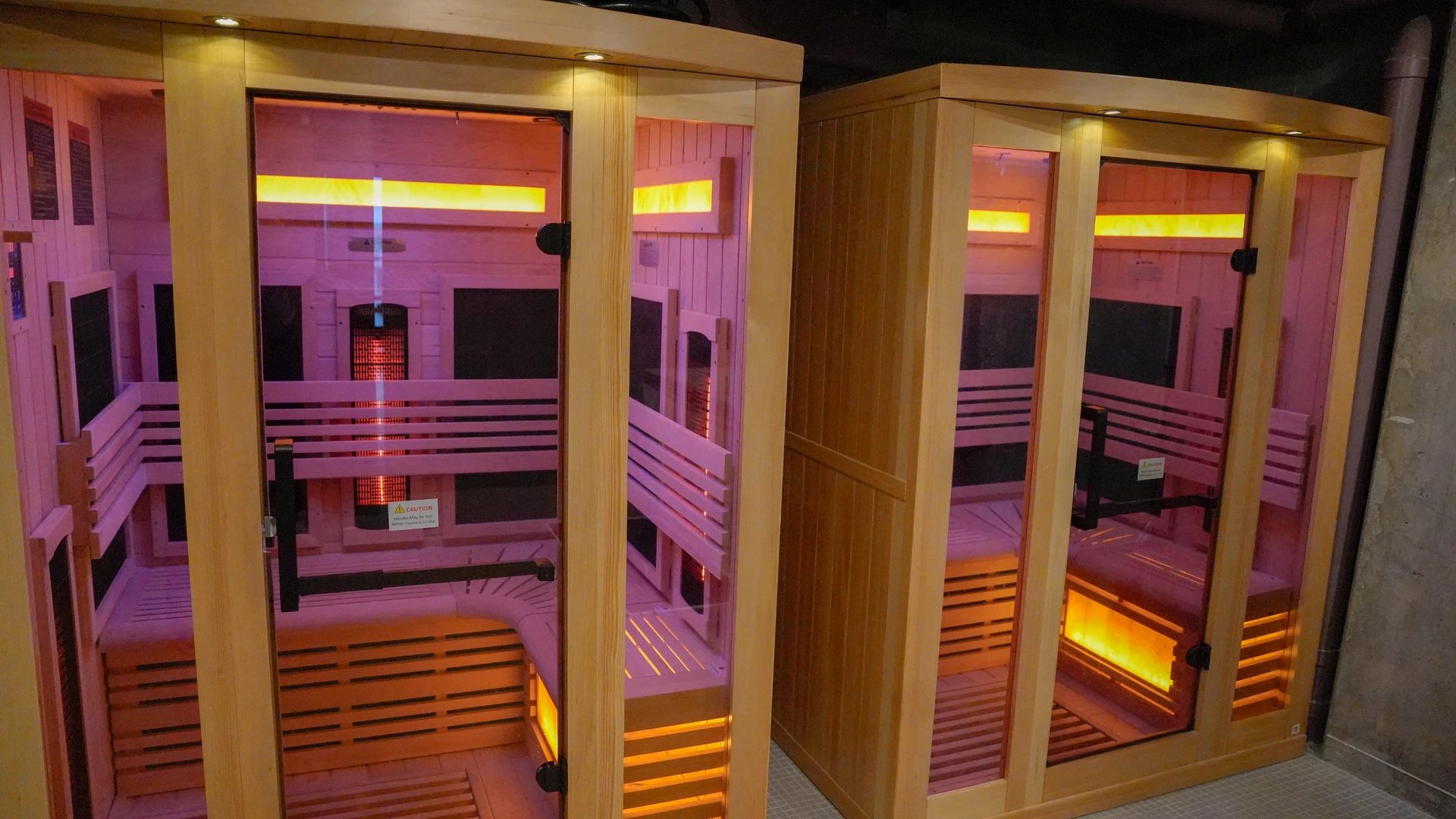
The rooms around the floor
Cycling and group-fitness studios, climbing walls, outdoor training decks and recovery space — the parts of a campus rec program that sit beside the main floor and are planned with it.
In short
Fit Supply supplies and installs commercial fitness equipment for college and university recreation centers nationwide — more than 250 sales orders from campuses, including Division I rec centers in Texas and Arizona and more than 80 orders from ten Arizona community colleges. A rec center is specified for extended-hours volume and the widest ability range of any room we build, purchased on a capital cycle or cooperative contract, and installed between semesters.
College rec centers — questions
Do you supply community colleges and junior colleges, or only universities?
Community colleges are the largest part of our college work. Ten Arizona community colleges have bought from us — Scottsdale, Glendale, Chandler-Gilbert, Mesa, Phoenix College, South Mountain, Pima, Arizona Western, Yavapai and Eastern Arizona — more than 80 orders between them, and Tarrant County College has re-equipped several campuses over five years. A community college fitness center is specified for low supervision and long hours — selectorized strength, simple cardio, a layout one attendant can see — and bought on a cooperative contract or a formal bid.
What does a college rec center need that a health club does not?
A wider ability range on a heavier schedule. A club’s members chose to be there; a rec center serves every student, from a varsity athlete to someone who has never been in a gym, for 16 or more hours a day through the semester. That means more accessible equipment, more duplicate stations of the simplest machines, a functional zone alongside the machine floor, and a maintenance interval set against hours of use rather than the calendar.
Can installation fit into a semester break?
Yes, and it usually has to. A rec floor is replaced or re-equipped in winter break, spring break or over the summer, so the order is planned backwards from the break — procurement, lead time and delivery all scheduled so the crew is on site while the building is empty. A machine-by-machine replacement program can run through the year during off-peak hours; a full re-equip needs the long window.
Do you work through university procurement, bids and cooperative contracts?
Yes. Formal bids, cooperative purchasing contracts and fiscal-year capital plans are the normal route for a public campus, and we quote to that process: itemized to the line the purchasing office needs, with manufacturer documentation and pricing held through the approval cycle. Private colleges usually buy more directly, on a purchase order against a capital budget.
Does a chiropractic or health-sciences college need different equipment?
Usually yes. A teaching clinic where students learn to prescribe rehabilitation exercise is a medical fitness room — recumbent steppers, medical-grade treadmills with handrails, low-start selectorized strength — rather than a rec floor. Parker University in Dallas has bought that kind of equipment from us; the specification is covered on our medical and rehab facilities page, and the campus’s general fitness room is specified separately.
Who services the equipment after the semester starts?
In Texas, Fit Supply provides service, repairs and preventive maintenance directly or through our sister company On Site Fitness Service; in Arizona our own Chandler technicians do the work. Elsewhere, warranty and preventive maintenance are coordinated through our network of installation and service partners. A rec floor is the case for a preventive interval more than any other room: hours of use accumulate faster than any calendar assumes.