

Our Work
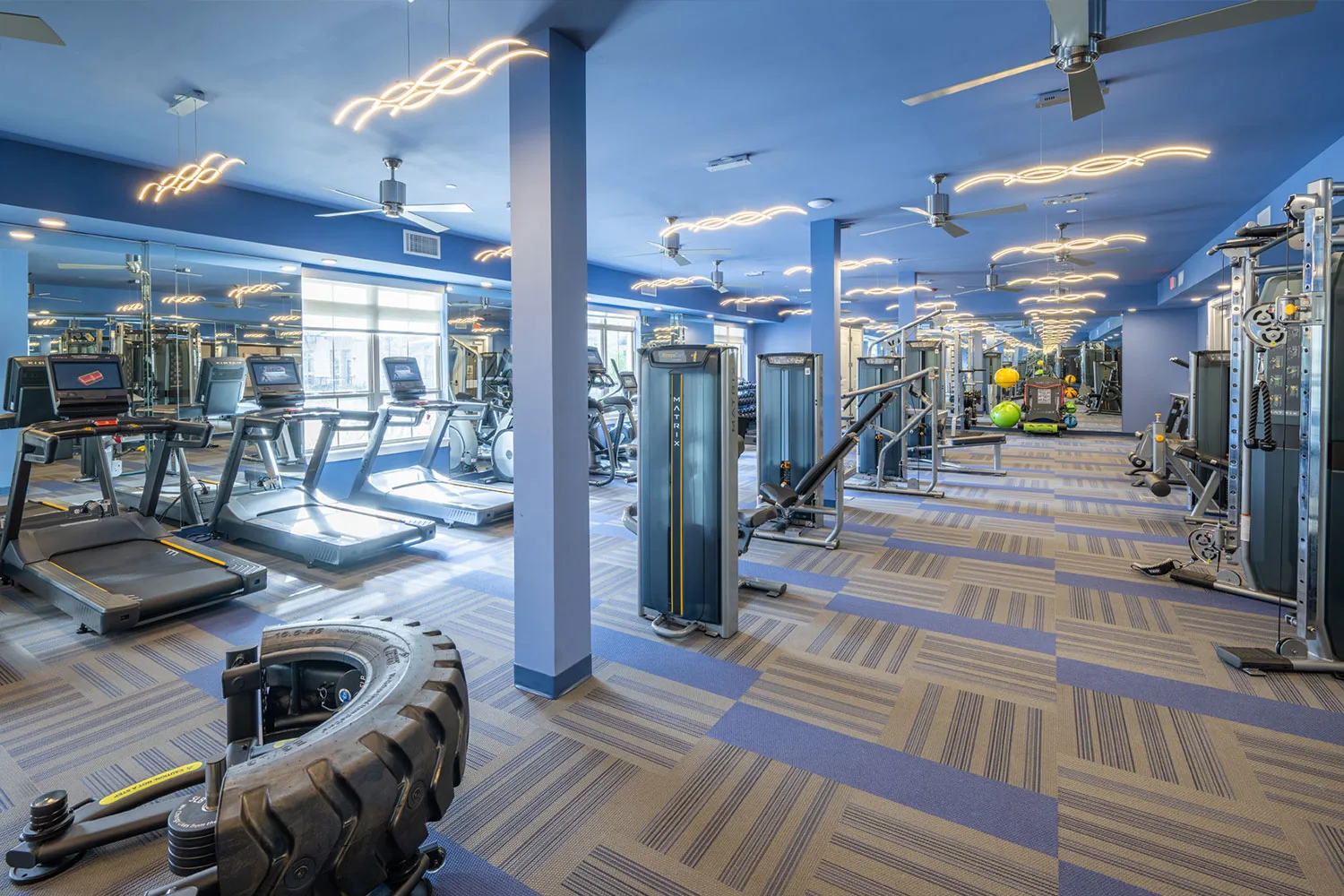
Illinois Fitness Centers
- 2007designing and equipping fitness facilities since
- 30,000+commercial orders delivered
- 500+cities served
- 50+manufacturer partners
Installed in Illinois
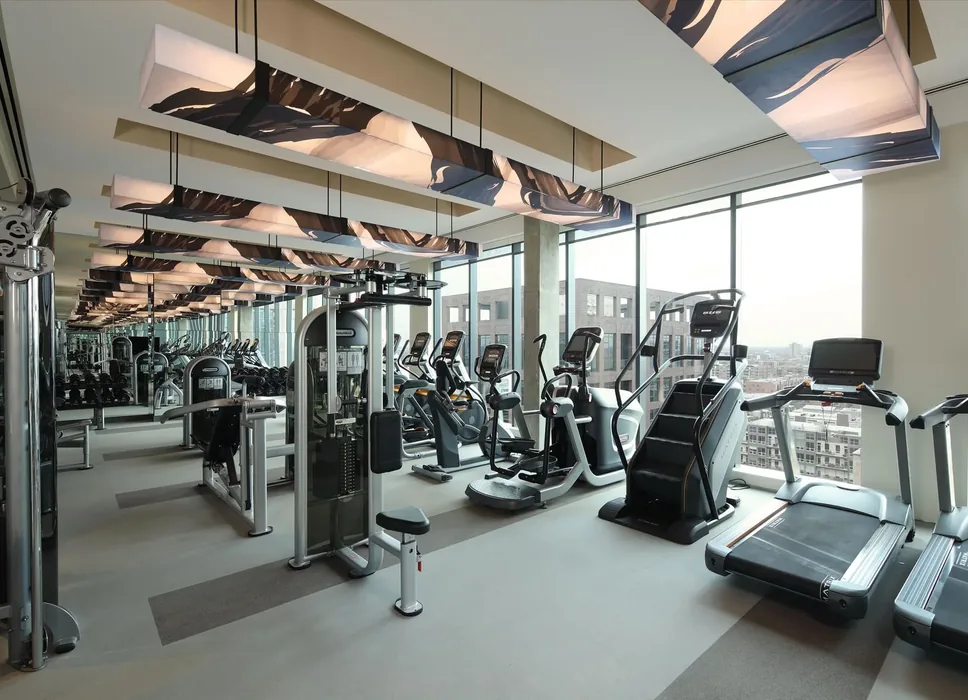
Commercial Fitness Facilities We Have Equipped in Illinois
Projects here run the same way they do anywhere: the room is measured and drawn to scale first, the equipment list follows from the layout, and delivery and installation are managed rather than left as a freight drop-off. Coverage is confirmed per project, since some equipment lines carry territory arrangements.
Markets we have equipped in Illinois
Chicago, Schaumburg, Plainfield, Glendale Heights, Northbrook, Edwardsville and Rockford. Facilities in the communities around them are served from the same projects, so it is worth asking even if your market is not named here.
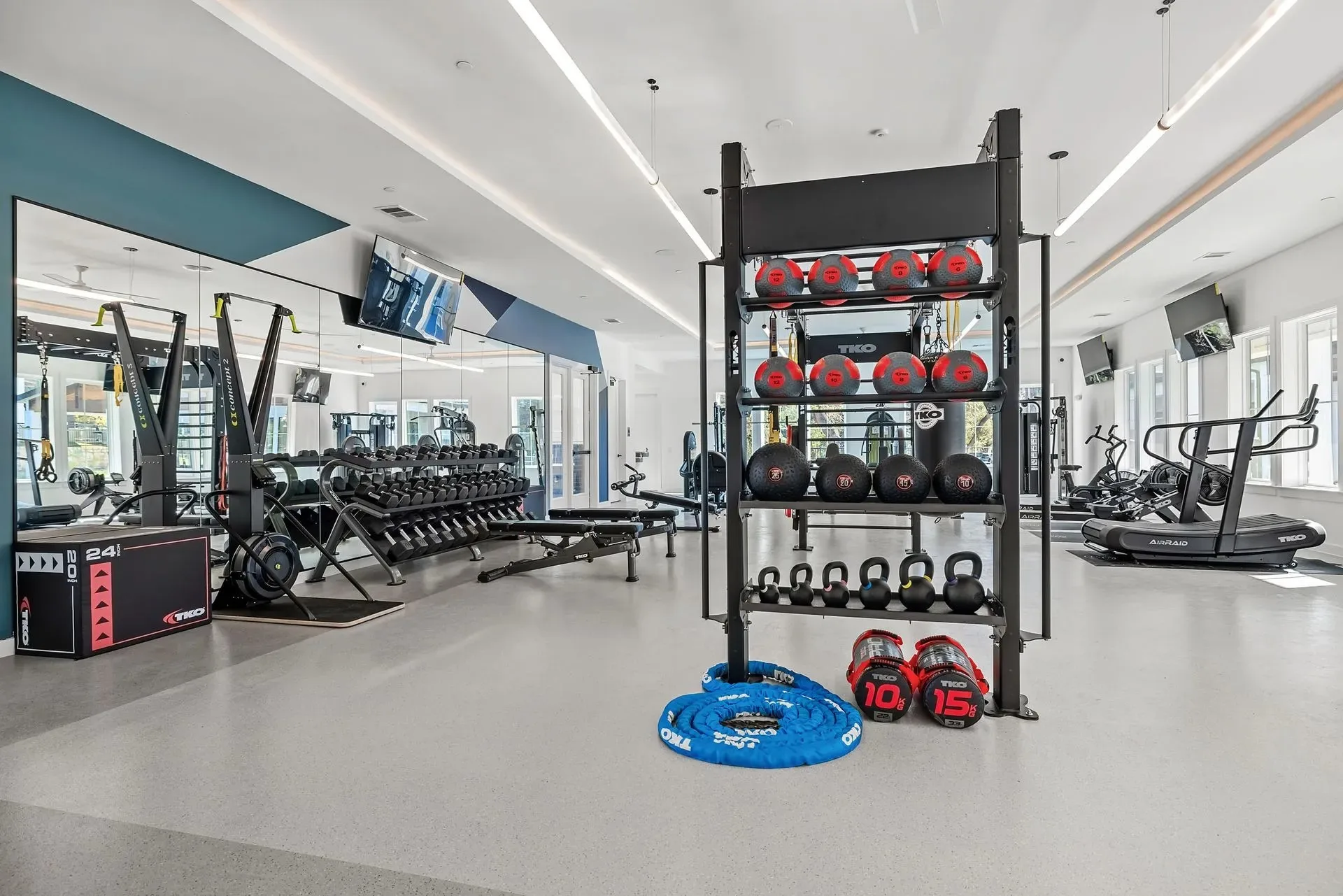
How a project runs, from drawing to installed room
-
The room is drawn before it is quoted
A layout to scale comes first, with ADA clearances, floor loading and power planned into it. Most of the work here is in apartment and condominium communities, health clubs and gyms, and the equipment list follows from the room rather than the other way round.
-
One order, several manufacturers
Cardio, strength, flooring and accessories rarely come from one brand. We consolidate them into a single order and a single delivery date, so the room lands together.
-
Managed installation, wherever it is
Equipment is assembled, placed to the approved layout and function-tested on site by crews we manage or installers we work with — never a bare freight drop-off.
One scope, one team
Design, equipment and installation as one scope
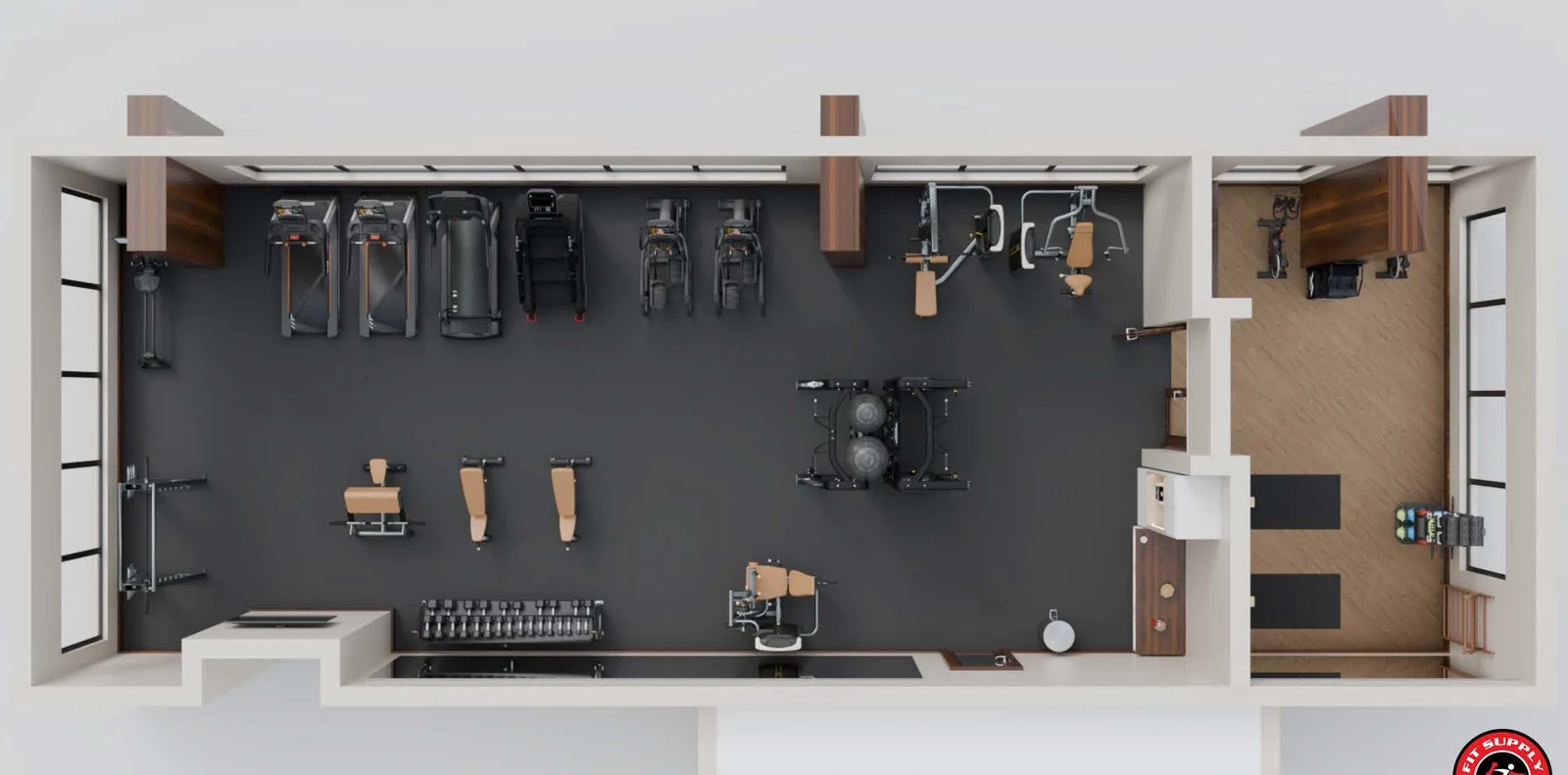
Design and layout
A layout drawn to scale before an equipment list exists, with ADA clearances, floor loading and power planned into it.
Equipment and flooring
Cardio, strength and functional equipment from several manufacturers, plus flooring and mirrors, consolidated into one order and one delivery date.
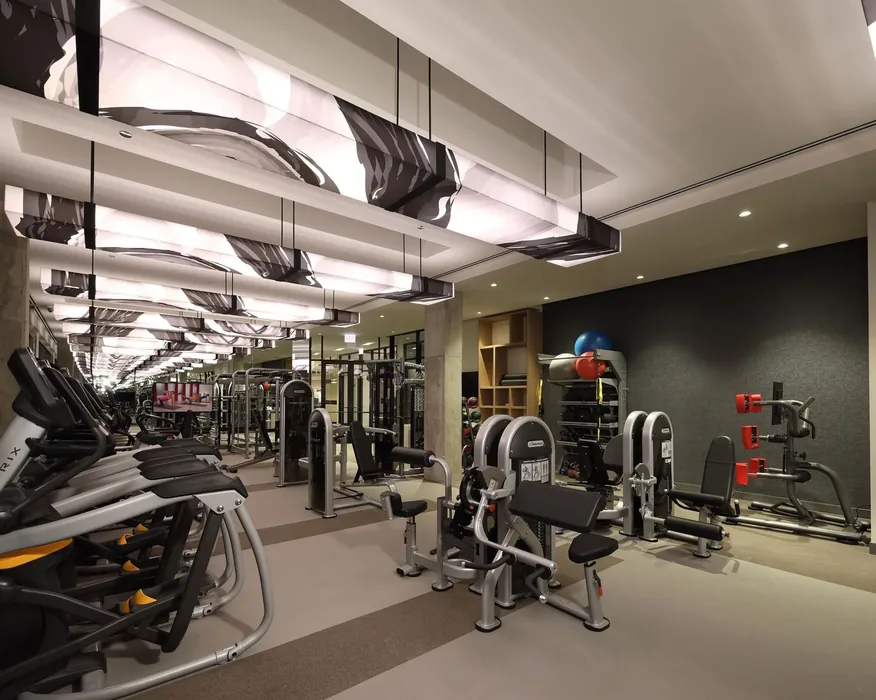
Installation and after
Delivery, installation and function testing, then finance options, extended warranties and maintenance once the room is open.
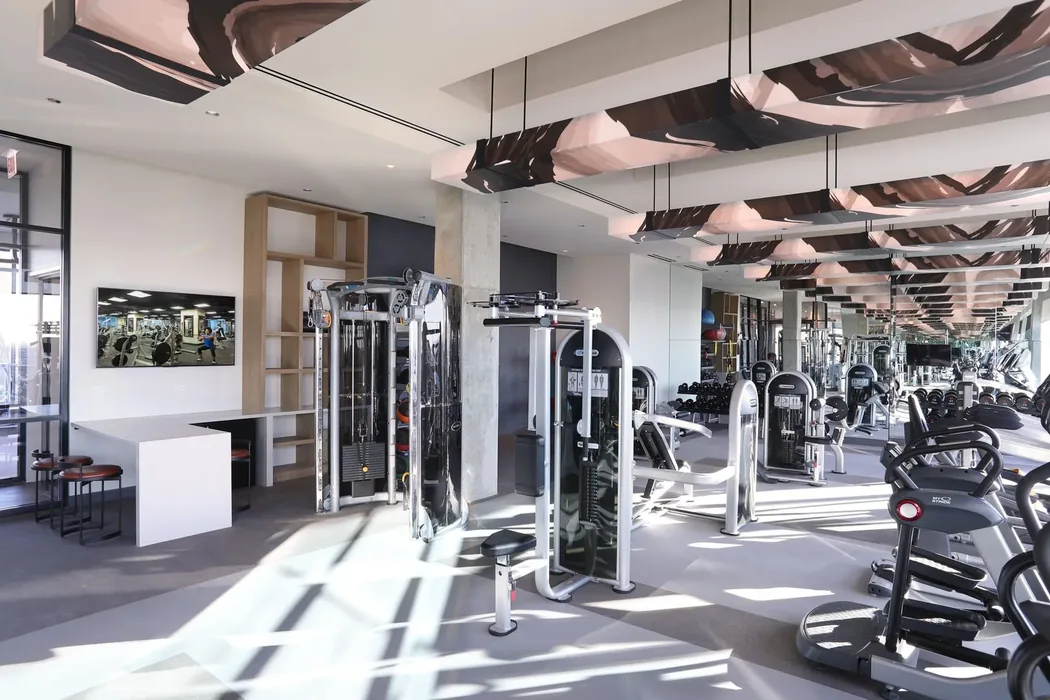
The facilities we equip in Illinois
Apartment and condominium amenity rooms
An unstaffed room open around the clock is a different specification from a supervised one, and treating it as the same is where liability creeps in. With nobody present to spot a lift, correct form or clear a jam, we favor equipment that is safe to use alone and hard to misuse, and we keep the clearances genuinely clear — ADA wants a 30 by 48 in clear floor space for at least one of each type of machine, reached by a 36 in accessible route. In a staffed club an obstruction gets moved within the hour; in a resident gym it stays there until somebody complains. More on apartment gym equipment and design.
Health clubs and training studios
Signing a retail lease for second-floor or mezzanine space before the structure is confirmed is the most expensive assumption in a club build. IBC Table 1607.1 designs fitness areas for a 100 psf live load, and live loads over 100 psf may not be reduced. Where a landlord’s drawings do not confirm the floor carries it, the engineer’s answer shapes the whole plan — heavy strength toward the bearing lines, cardio and functional space out over the span. Better to know that during lease negotiation than during fit-out. More on equipping health clubs and training studios.
The rest of what we equip there
Those two are what Illinois orders most, not the limit of what we supply there. The same design, flooring, delivery and installation work covers every other facility type:
- hotel and resort fitness rooms
- senior living fitness rooms
- medical and rehab training rooms
- schools and campus recreation
- fire, police and municipal gyms
- correctional facility fitness rooms
- YMCA and nonprofit gyms
- home and private training rooms
- student housing gyms
- HOA and property-managed gyms
- corporate fitness centers
What decides the room before the equipment list

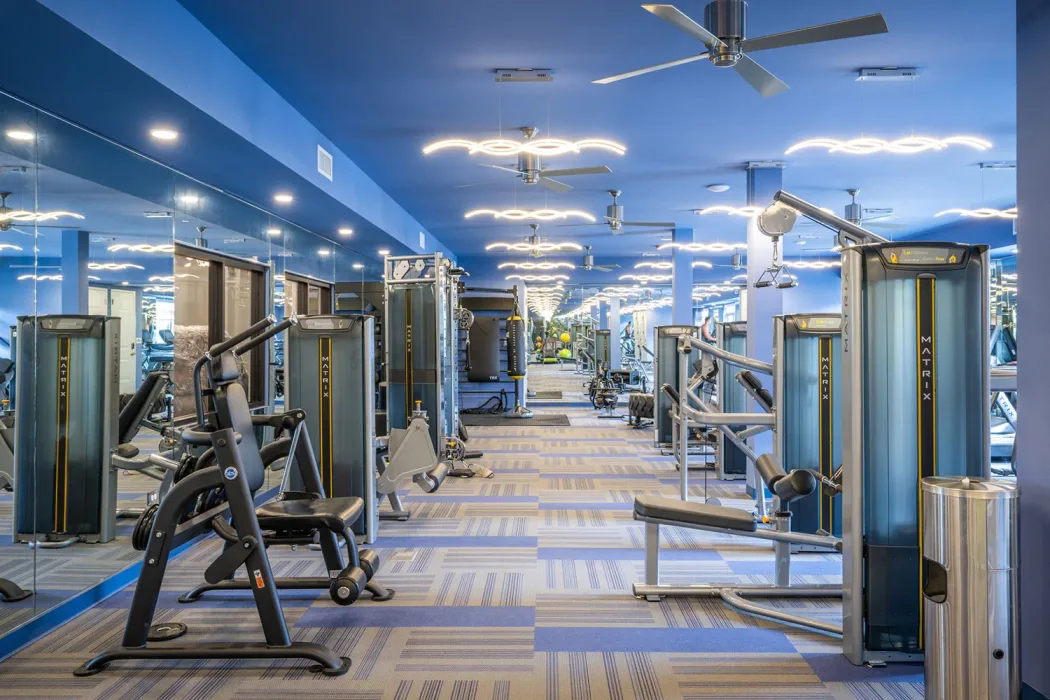
Access, doors and circulation
Getting equipment into a room is a survey item, not an assumption. ADA sets a 32 in minimum clear door opening, measured between the face of the door and the stop with the door open 90 degrees, rising to 36 in where the opening is deeper than 24 in, with a 36 in minimum clear route width and a 60 in diameter circular turning space. A nominal 3 ft leaf does not yield 36 in, which is the detail that catches renovations.

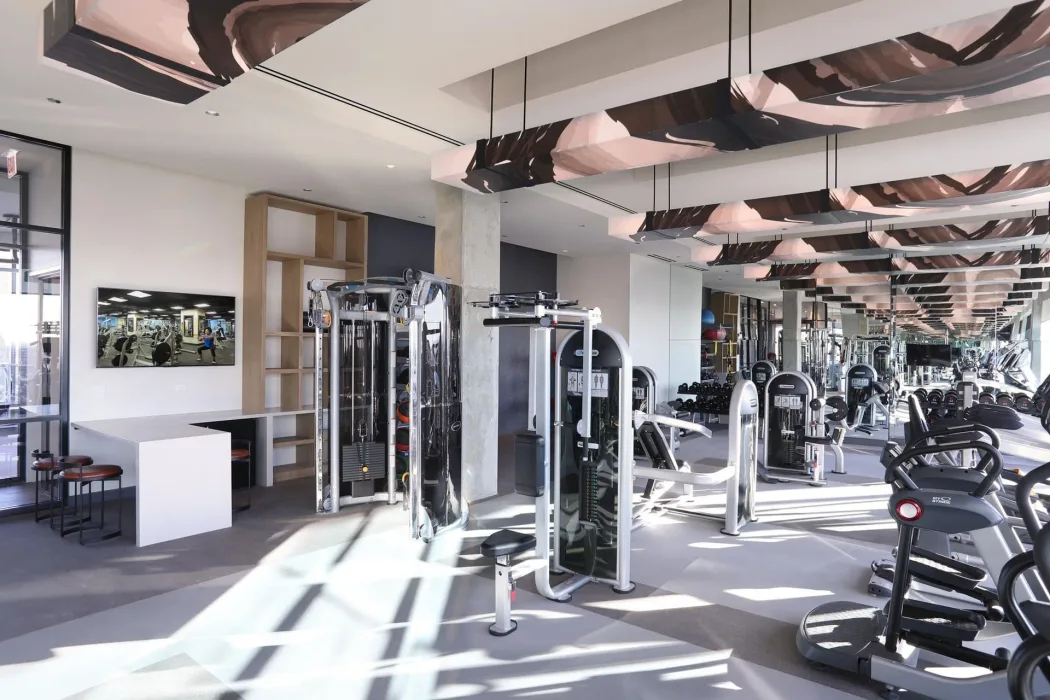
Circulation, and the space nobody budgets for
Rooms fail on circulation far more often than on equipment selection. ADA sets a 60 in diameter circular turning space and a 36 in minimum clear width on the accessible route, and in a room of 400 to 600 sq ft those two dimensions decide how many machines can face which way. Reserving them on the drawing costs nothing; recovering them after delivery usually means sending a piece back.

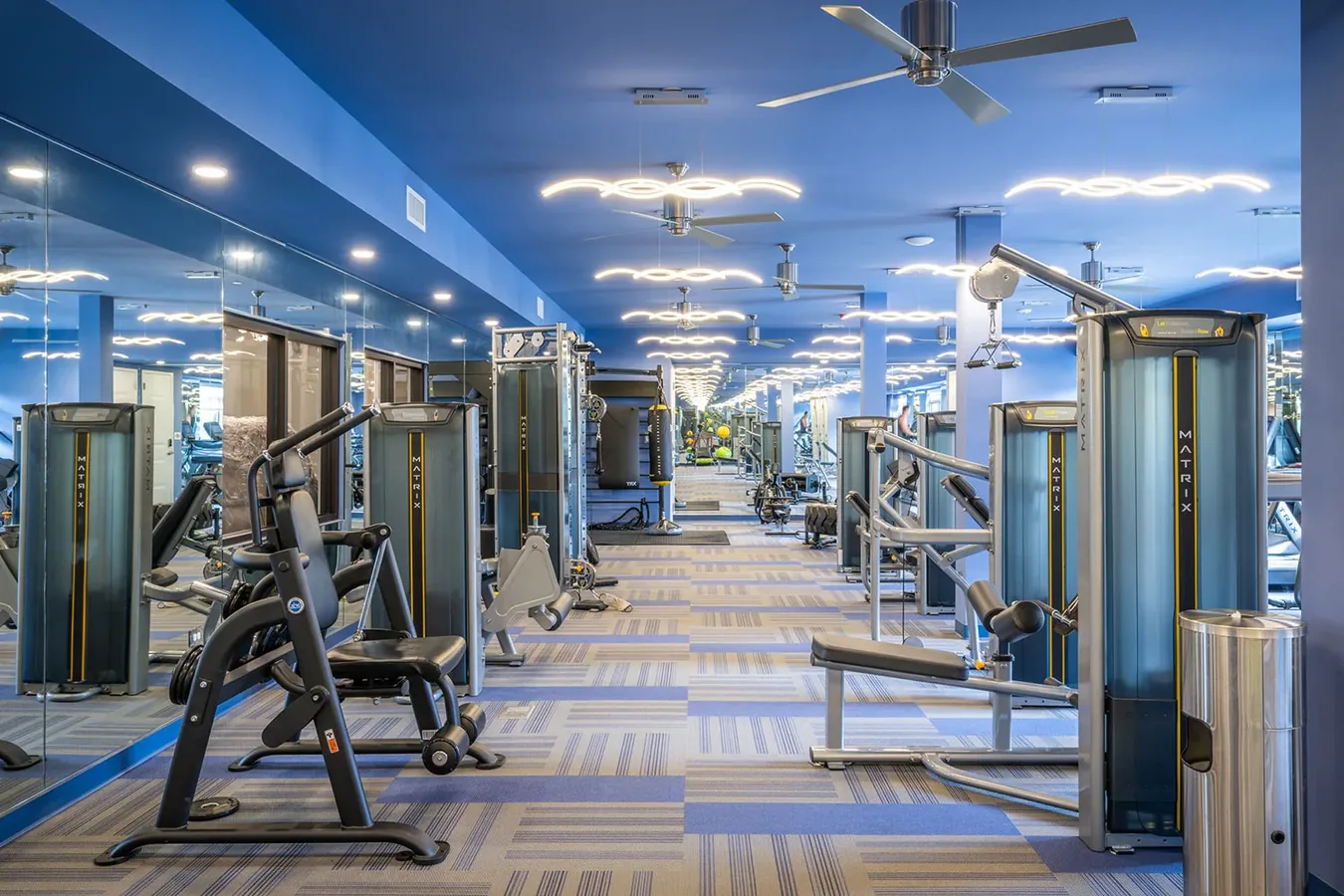
Replacing a room that already exists
Most projects are not empty rooms. Where equipment is being replaced we can appraise, buy back and remove what is there, which changes the arithmetic on the new floor and removes the disposal problem — a loaded selectorized stack is not something a property manager wants to arrange a truck for. Planning the swap also matters to residents and members: a room that is out of service for an unplanned week is the complaint that follows the project around.
In short
Commercial fitness facilities in Illinois including Chicago, Schaumburg, Plainfield and Glendale Heights have been designed, supplied and installed by Fit Supply. Work there runs to apartment and condominium communities, health clubs and gyms, home and individual customers. Floors are planned against the ACSM allowance of 25 to 50 square feet per station before an equipment list is drawn.
Common questions about Illinois projects
Does Fit Supply work in Illinois?
Yes. We have supplied and installed commercial fitness facilities in Illinois, including Chicago, Schaumburg, Plainfield, Glendale Heights and Northbrook. Facilities in surrounding communities are served from the same projects, so it is worth asking even if your market is not named. Coverage is confirmed per project, since some equipment lines carry territory arrangements.
Does an unstaffed resident gym change what you specify?
Considerably. With nobody present to spot or intervene, we favor equipment that is safe to use alone and hard to misuse, and we keep the ADA clearances genuinely clear — a 30 by 48 in space for at least one of each machine type, reached by a 36 in accessible route. In a staffed club an obstruction gets moved; in an unstaffed room it stays there.
How is power planned for a bank of cardio equipment?
Per machine. Commercial treadmill manufacturers specify a dedicated 120V, 20-amp branch circuit each, with a non-looped neutral and ground, so eight treadmills is eight circuits. We put that on the layout during design so the cardio bank can sit where the room wants it instead of where the existing outlets are.
Can I cancel or return equipment after I order it?
It depends what it is. Custom and modified products cannot be cancelled, returned, rescheduled or refused, and they require full payment up front. Standard stock products can be returned only with our prior written authorization, in new and resalable condition in the original packaging, at your expense and risk, and are subject to a 25% restocking charge. After a proposal is executed, cancellation carries a 25% fee of the proposal total. This is why we would rather spend the extra day on the layout than have you order twice.
Why buy through Fit Supply rather than direct from a manufacturer?
Because a single manufacturer can only sell you what it makes. Fit Supply carries more brands than most dealers, including some of the strongest lines in the industry, and that breadth extends into recovery and flooring where the specialist options genuinely differ. That means the equipment mix is chosen around your facility rather than around one catalog — and it comes with the design, installation and service around it.