

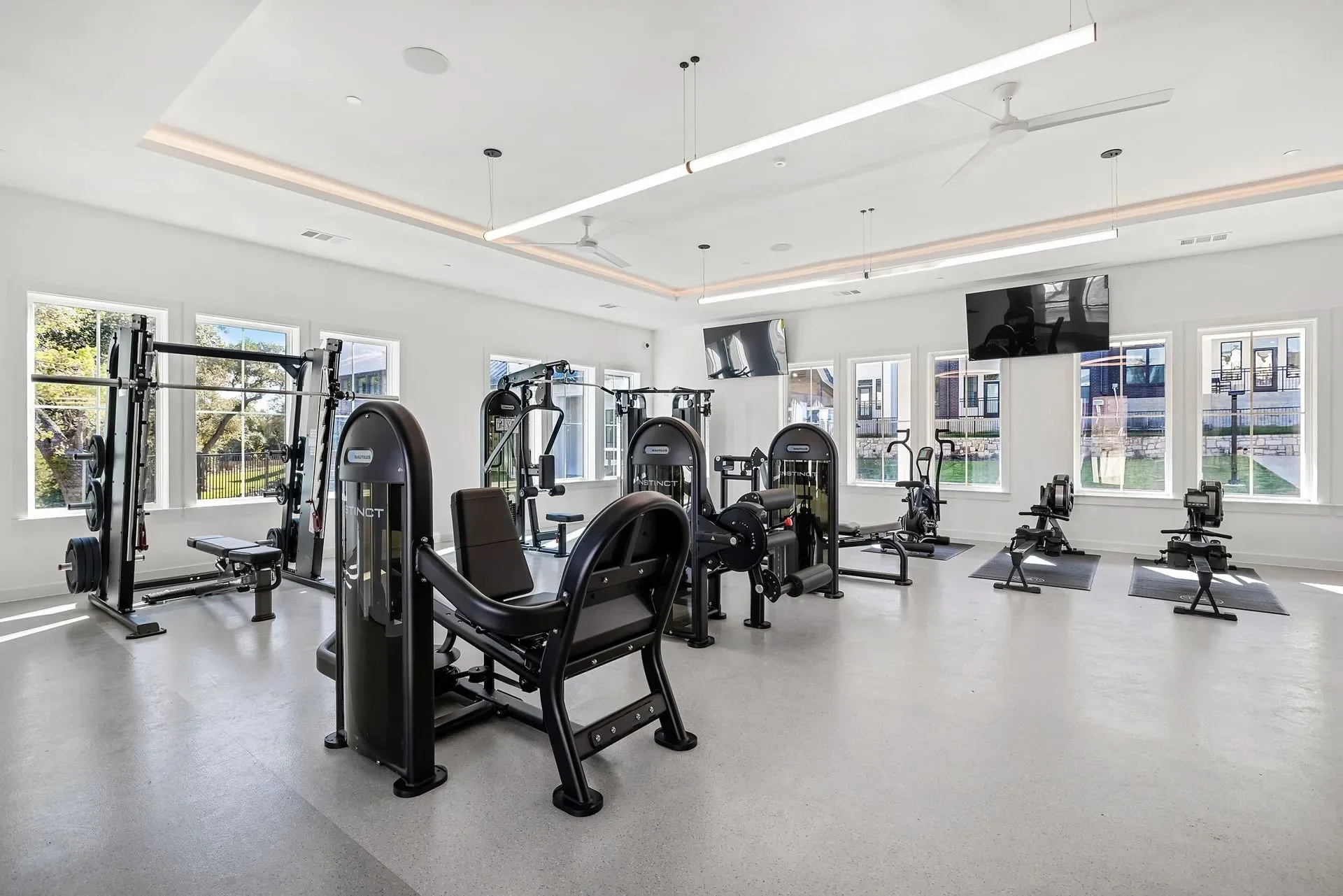
Multifamily
Replacing One Piece of Equipment in an Amenity Gym
Repair or Replace, and the Four Things a Replacement Has to Match
A treadmill dies in a 200-unit community, a resident has already mentioned it twice, and the manager needs it handled this week. It is a small purchase with several ways to go wrong, most of them avoidable in one phone call.
Repair or replace is an asset-record question before it is a price question
The information that settles it is make, model, serial number, install date, location and warranty status. Serial numbers do more work than they look like they do: parts frequently differ between production runs of the same model, and warranty status is often determined by serial rather than by purchase date. ASTM F2276 requires manufacturers to supply maintenance instructions with fitness equipment, and those instructions plus a documented service history are what a warranty claim is measured against.
Two realities shape the timing. Commercial fitness parts are not stocked in this industry, so most repairs are not completed on the first visit — the first visit identifies the exact part for the exact serial number so the right one is ordered rather than guessed at. And a machine that has needed the same repair repeatedly is usually telling you it is at the end of its economic life rather than asking for another part.
Four things a replacement has to match
None of these is difficult. All four are ordinary reasons a delivery gets refused at the door or a machine ends up somewhere it does not fit.
Footprint and clearance
A newer model of the same machine is frequently longer or wider than the one it replaces, and the room does not grow to meet it. The 2010 ADA Standards require a 30-by-48-inch clear floor space at one of each type of machine on an accessible route, with routes 36 inches wide minimum — so the check is the new footprint plus the clearances against the actual gap, not against the old machine.
The circuit
Commercial treadmill manufacturers specify a dedicated 120-volt, 20-amp branch circuit per unit with a non-looped neutral and ground. If the replacement is a networked console where the old one was not, it also needs a data path. Neither is a reason not to proceed; both are reasons to know before the unit is on a truck.
The route in
Door clear width, corridor turns, elevator dimensions and stairs decide whether a machine arrives assembled or is taken apart and rebuilt in the room. A nominal three-foot leaf does not give three feet of opening — the ADA minimum is 32 inches of clear width measured with the door open 90 degrees, and the real opening is what the installer has to work with. This is the single most common cause of a delivery that has to come back.
The floor
A heavier machine on a floor built for a lighter one concentrates load on small feet, and a surface specified for cardio is not necessarily specified for what is replacing it. Where the replacement moves a rack or a platform into a new position, the floor build-up under that position is part of the order rather than an afterthought.
One machine, or the beginning of a refresh?
Worth asking honestly, because equipment bought at the same time tends to fail at the same time. Where three or four units are approaching the same point, replacing them together usually buys a consistent room, one delivery and one install visit instead of four — and it is the moment a portfolio specification is easiest to introduce, since a mixed floor assembled one emergency at a time is what most properties end up with by default.
That is a budgeting conversation rather than a sales one, and it is better had before the second failure than after the fourth.
How the purchase gets approved
Nothing starts without an approved quote for that specific property — each property has its own budget and its own approval chain, and that applies to urgent work as much as to planned work. The practical help is a written scope and a number that a manager can take to whoever signs it, which is why the asset detail above is worth having on hand rather than gathered after the machine has already stopped.
Service and preventive maintenance are provided in Texas and Arizona; equipment supply, design and installation are nationwide, and reconditioned commercial equipment is available through our sister company, Discount Online Fitness.
Published August 17, 2026 · 5 minutes read
More on multifamily amenity fitness centers

The Fitness Amenity Decisions a Developer Makes, and When
Structure at design development, power and clearances in the CDs, the Texas accessibility review at permit. What each project stage decides about the fitness room. Read the post.

Remodeling an Apartment Fitness Center
A remodel inherits the structure, the panel and the slab. What that constrains, how to phase the work so residents keep a room, and where the old equipment goes. Read the post.

Designing an Unstaffed Multifamily Amenity Gym
A multifamily fitness room is open around the clock with nobody watching it. That single fact narrows what is safe to specify long before budget does. Read the post.
In short
One machine is the most common purchase in a multifamily portfolio and the one most often bought on a model number alone. Repair or replace is decided by the asset record — make, model, serial, install date and warranty status — because parts availability and cover both turn on the serial. A replacement then has to match four things: the footprint plus its 30-by-48-inch ADA clearance, the circuit, the route in, and the floor.
Part of what we do on multifamily amenity fitness centers.

Common questions
Should I repair or replace a broken gym machine?
Start from the asset record — make, model, serial number, install date and warranty status — because parts availability and warranty cover both turn on the serial. A machine that has needed the same repair repeatedly is usually at the end of its economic life. A machine still under cover with an available part is normally worth repairing.
Why is a replacement machine bigger than the one it replaces?
Newer models of the same equipment are frequently longer or wider, and the room does not grow to meet them. Check the new footprint plus the ADA clearances — a 30-by-48-inch clear floor space at one of each machine type and 36-inch routes — against the actual gap rather than against the machine coming out.
Can equipment be delivered into an existing amenity room?
Usually, and the survey is what settles how. Door clear width, corridor turns, elevator dimensions and stairs decide whether a machine arrives assembled or is taken apart and rebuilt in place. A nominal three-foot door does not give three feet — the ADA minimum clear width is 32 inches with the door open 90 degrees.
Does one new machine need its own electrical circuit?
A commercial treadmill does — manufacturers specify a dedicated 120-volt, 20-amp branch circuit per unit with a non-looped neutral and ground — and a networked console replacing a non-networked one also needs a data path. Neither prevents the purchase; both are worth confirming before the unit ships.
Is it better to replace several machines at once?
Often, because equipment bought together tends to fail together. Replacing three or four units approaching the same point buys a consistent room, one delivery and one install visit rather than four, and it is the easiest moment to introduce a specification that can be repeated across a portfolio.