

Multifamily
Designing an Unstaffed Multifamily Amenity Gym
What Changes When Nobody Is Watching the Room
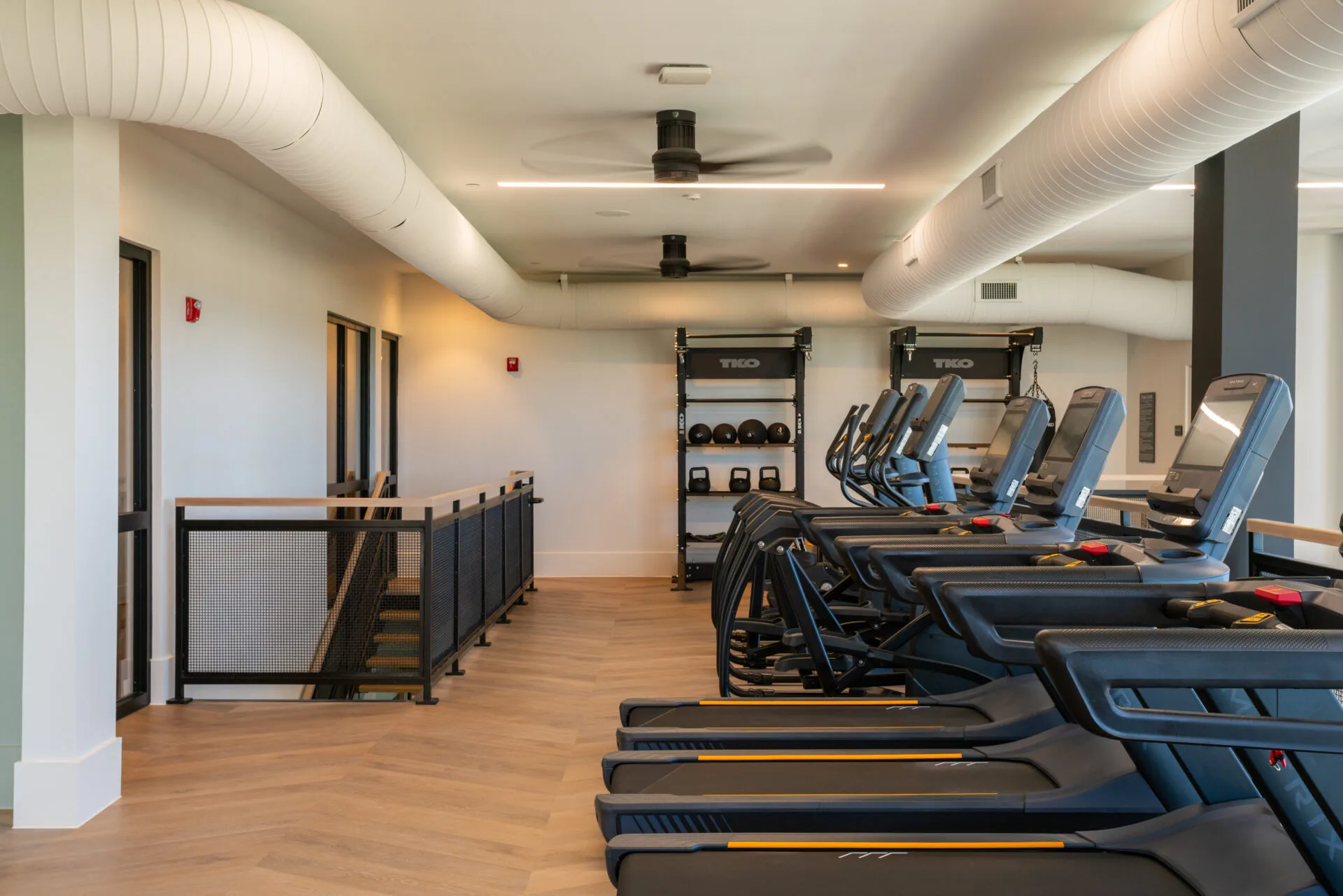
Multifamily is the largest single category of work we do, and the amenity gym is one of the most-toured rooms in a lease-up. It is also the room most often specified as if it were a small commercial club, which it is not.
No supervision changes the equipment list
In a staffed facility somebody can correct dangerous technique, reset a machine, or intervene. In an unstaffed amenity room nobody can. That pushes the specification toward equipment that is safe to use without instruction: selectorized strength with clear pictograms, cardio with simple consoles, fixed-path movements over free-weight work that needs a spotter.
It does not mean no free weights. It means being deliberate about which ones, how they are stored, and whether a rack that invites heavy loaded work belongs in a room where nobody will be there if it goes wrong.
Continuous traffic changes the durability requirement
A room open twenty-four hours does not have an off period in which to recover. Upholstery, cables, belts and decks all age by use rather than by date, which is why a maintenance schedule for one of these rooms should be set against hours of use rather than the calendar. It is also why light-commercial equipment specified to hit a budget tends to be a false economy here — the room simply does not stop.
Compact spaces make the clearances harder, not easier
Amenity rooms are often well under 1,500 square feet, and the ADA requirements do not scale down with them. At least one of each type of machine still needs its 30-by-48-inch clear floor space on an accessible route, routes are still 36 inches, and the turning circle is still 60 inches. In a small room those requirements consume a much larger proportion of the floor, and the only way to hit a sensible equipment count is to plan them in from the start — using the allowance that the clear space may overlap the route and sit in the aisle behind a machine.
Power is the constraint discovered last
Commercial treadmill manufacturers specify a dedicated 120-volt, 20-amp branch circuit per unit, with a non-looped neutral and ground. That single requirement drives outlet placement, which drives console orientation, which drives the whole cardio bank. Networked consoles need a data path on top of it. Electrical is the item most often discovered after the walls are closed and the most expensive to fix at that point.
One specification, many properties
Where a management company runs several properties, there is real value in settling a specification once and rolling it across the portfolio: consistent resident experience, consistent parts, one maintenance program rather than five, and a known quantity at each renewal. The room still has to be planned against its own dimensions and structure — but the equipment decisions do not need re-litigating property by property.
Published August 15, 2026 · 5 minutes read
More on multifamily amenity fitness centers

The Fitness Amenity Decisions a Developer Makes, and When
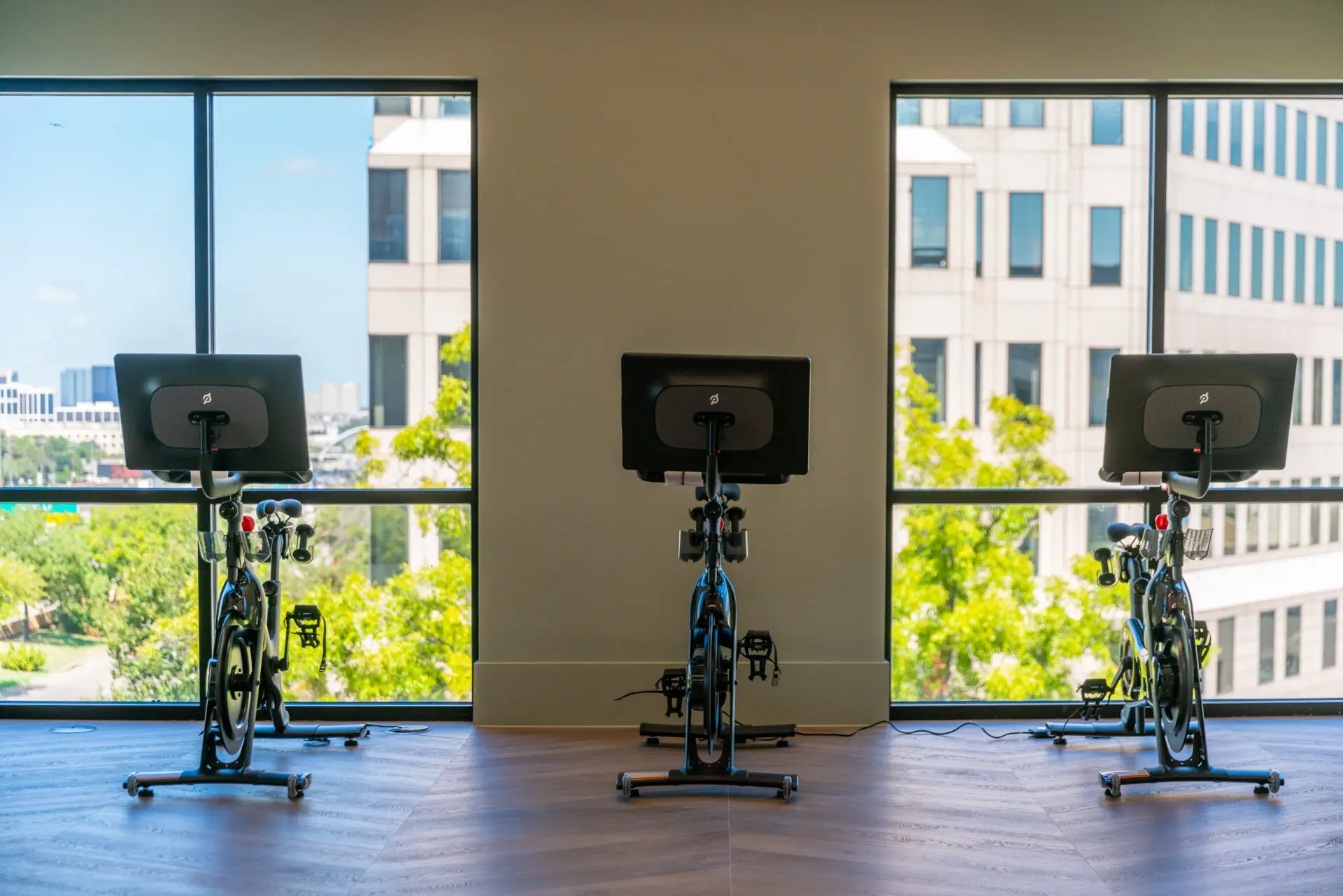
Structure at design development, power and clearances in the CDs, the Texas accessibility review at permit. What each project stage decides about the fitness room. Read the post.

Remodeling an Apartment Fitness Center
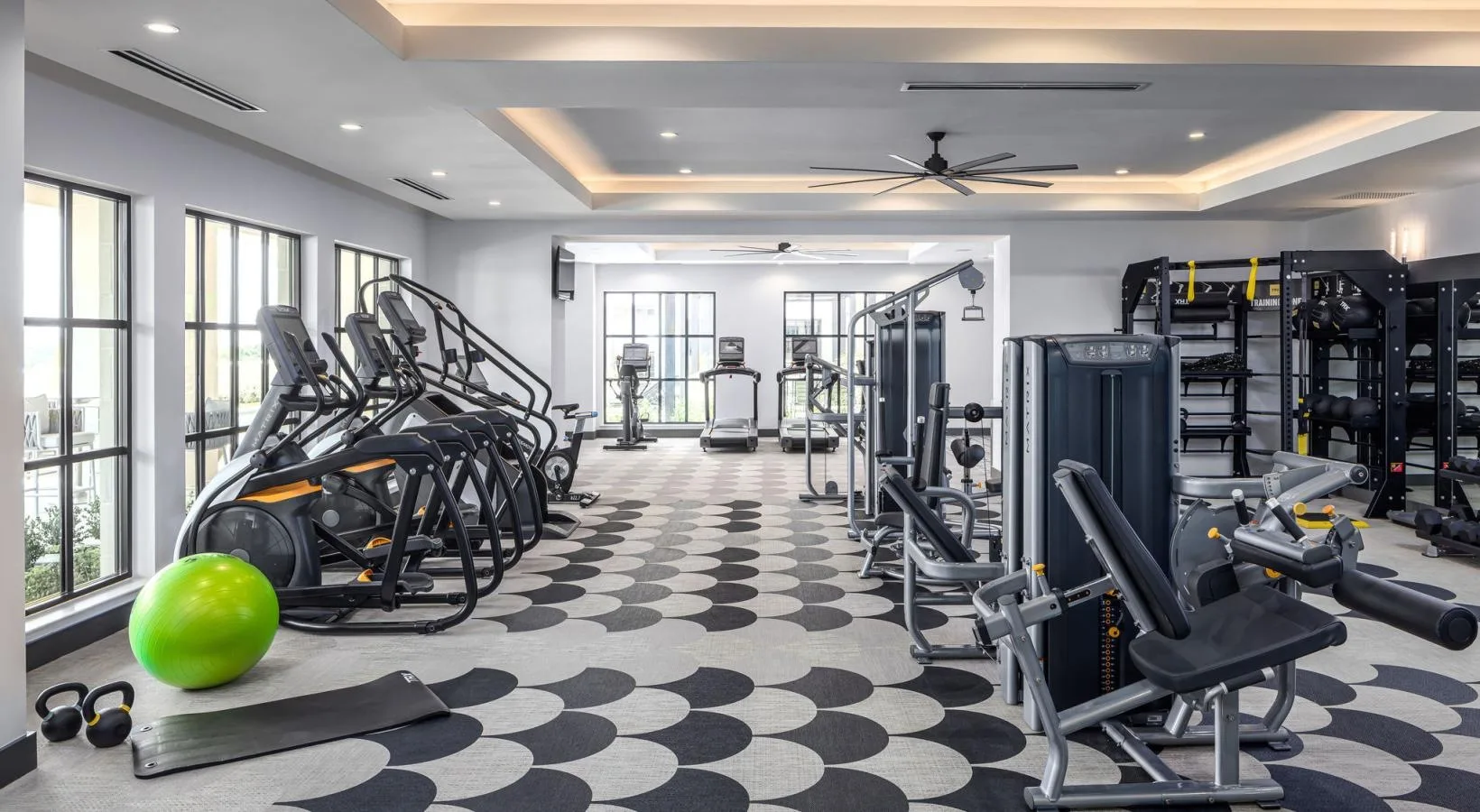
A remodel inherits the structure, the panel and the slab. What that constrains, how to phase the work so residents keep a room, and where the old equipment goes. Read the post.

Replacing One Piece of Equipment in an Amenity Gym
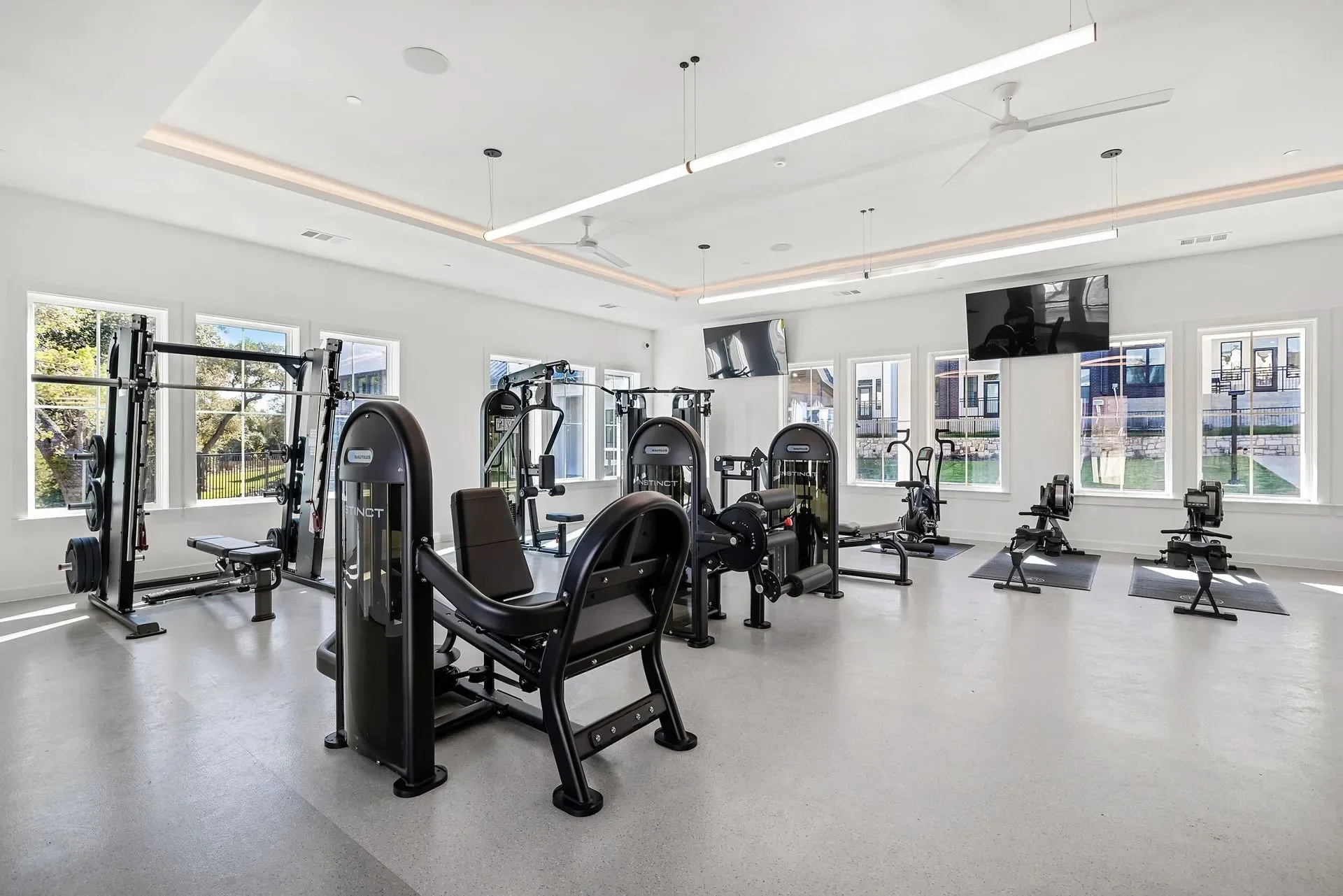
A single machine is the most common amenity purchase and the easiest to get wrong. What decides repair versus replace, and what the new unit has to match. Read the post.
In short
An unstaffed room open 24 hours has to be safe for a resident who has never had an orientation, durable enough for continuous traffic, and compact enough that the 36-inch accessible routes and 60-inch turning circle still fit. That constraint narrows the equipment list long before budget does, and it is the reason a multifamily room is specified differently from a staffed club.
Part of what we do on multifamily amenity fitness centers.
Common questions
What equipment suits an unstaffed apartment gym?
Equipment that is safe to use without instruction: selectorized strength with clear pictograms, cardio with simple consoles, and fixed-path movements over free-weight work that needs a spotter. It does not mean no free weights, but it does mean being deliberate about which.
How big does a multifamily fitness room need to be?
Allow 25 to 50 square feet per station per ACSM, then add circulation, storage and the ADA clearances. Amenity rooms are often under 1,500 square feet, and the clearances do not scale down with the room — they consume a larger proportion of a small floor.
What power does a multifamily gym need?
Commercial treadmill manufacturers specify a dedicated 120-volt, 20-amp branch circuit per unit with a non-looped neutral and ground. Networked consoles need a data path as well. Electrical is the item most often discovered after the walls are closed.
How often should an unstaffed gym be serviced?
Against hours of use rather than the calendar. A room open around the clock has no off period in which to recover, so belts, decks, bearings and cables wear by use — and catching that while it is still adjustment is cheaper than replacement.
Can one specification be used across several properties?
Yes, and there is real value in it: consistent resident experience, consistent parts, one maintenance program rather than several. Each room still has to be planned against its own dimensions and structure, but the equipment decisions do not need re-litigating per property.