

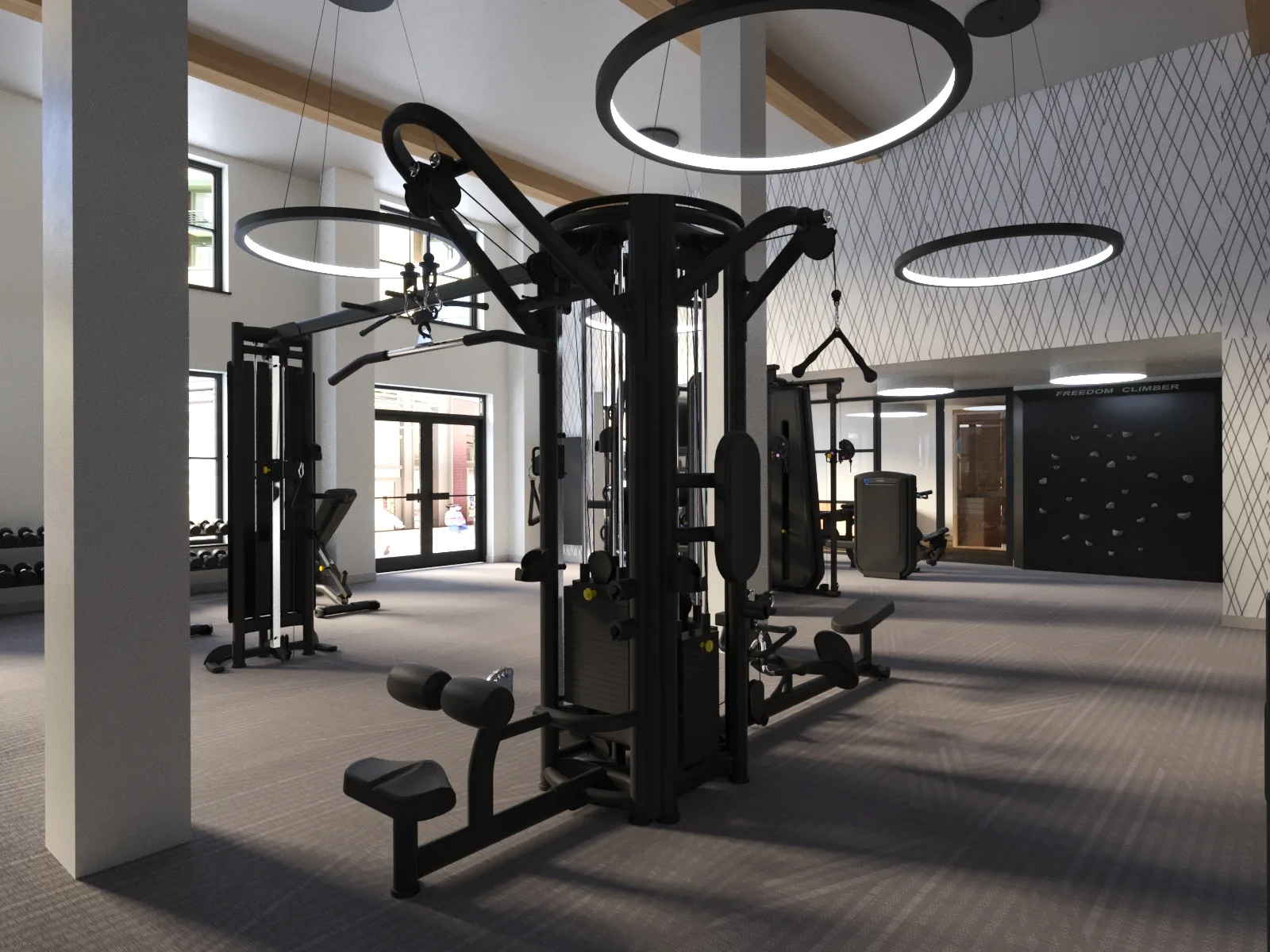
Vessels, platforms and crew quarters
Offshore Gym Equipment for Vessels and Platforms
What fits in a crew gym
Equipment that works below 8 feet
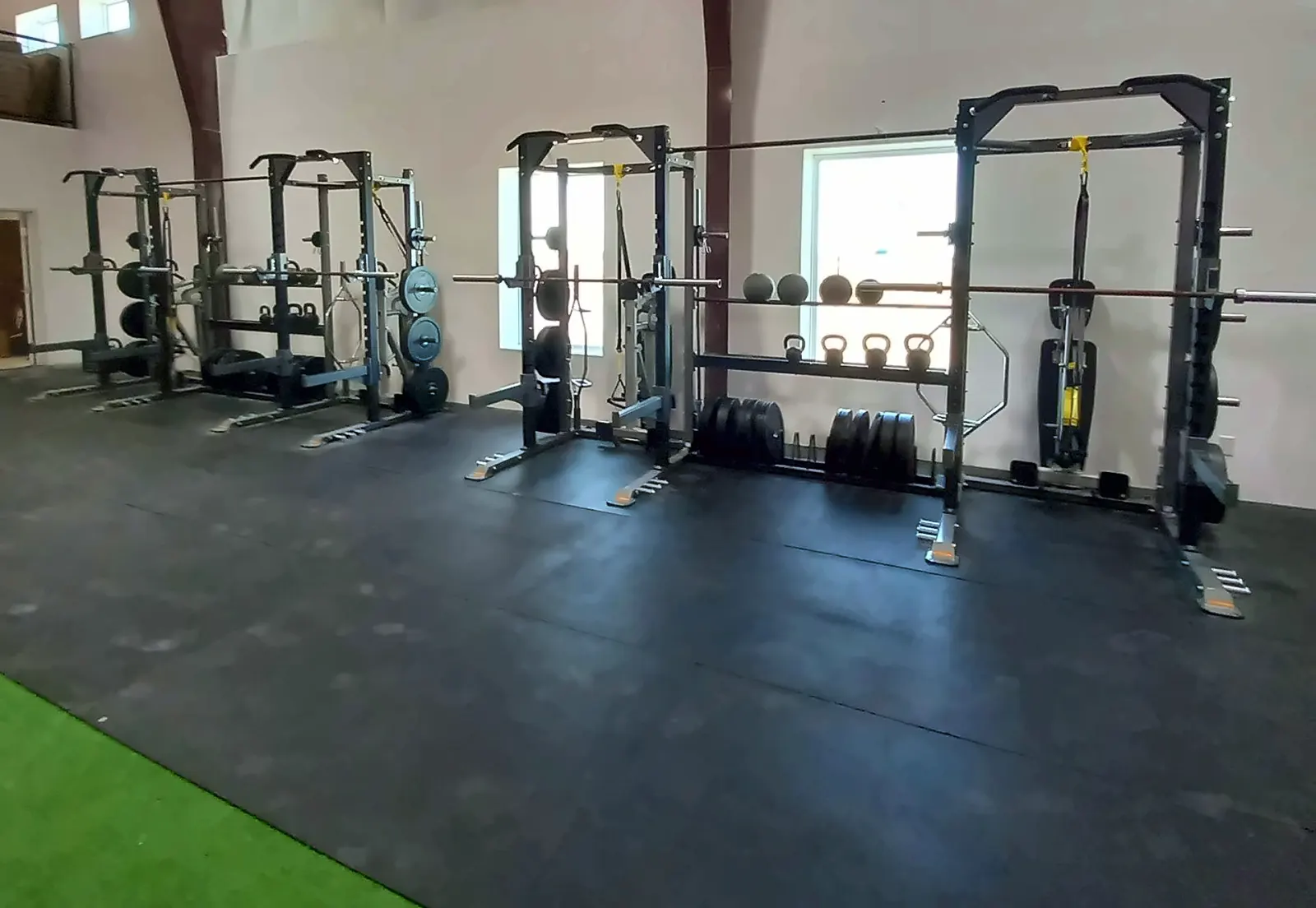
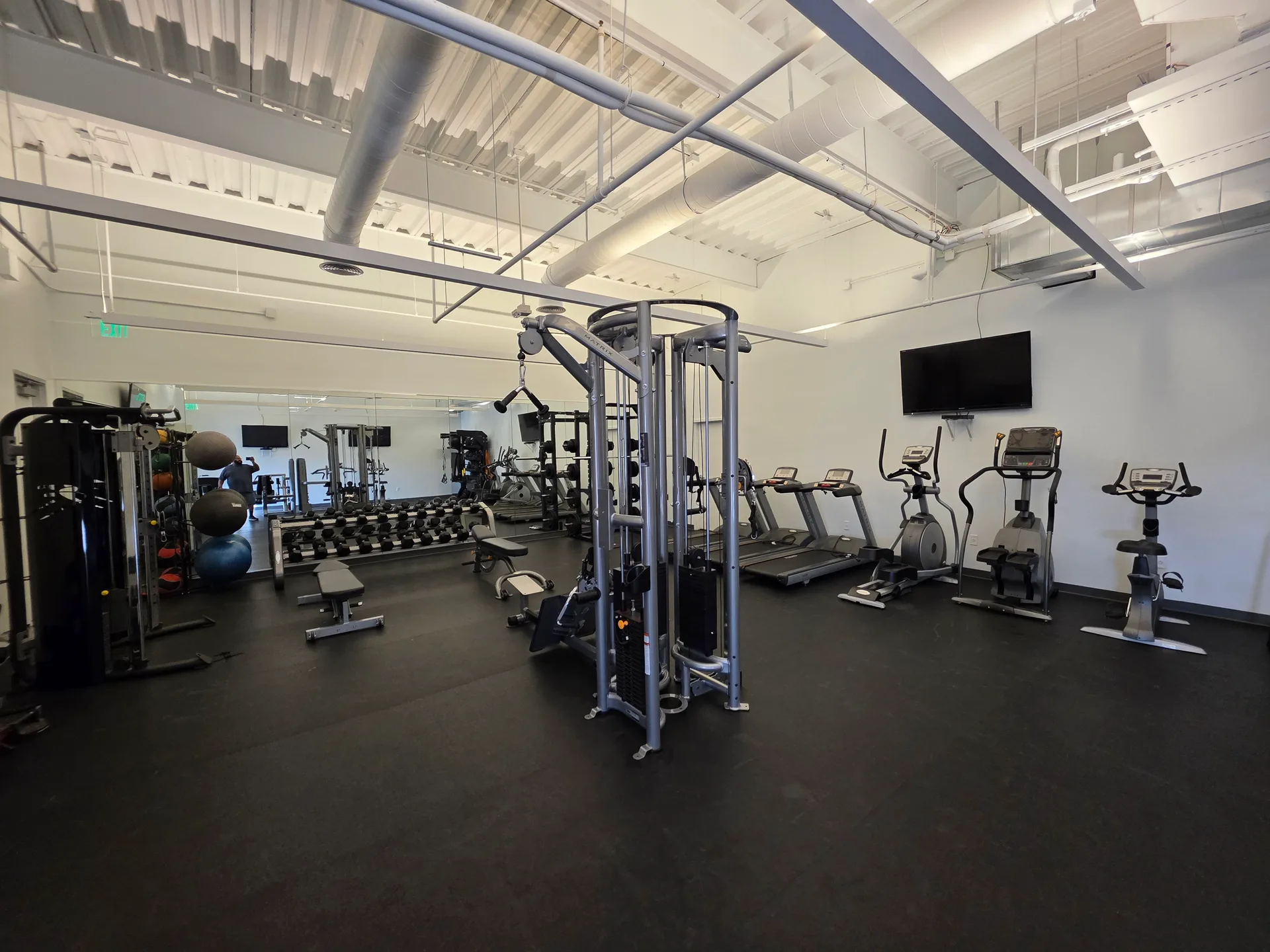
The core of most offshore rooms: compact, low-profile and useful for a whole crew in a small footprint.
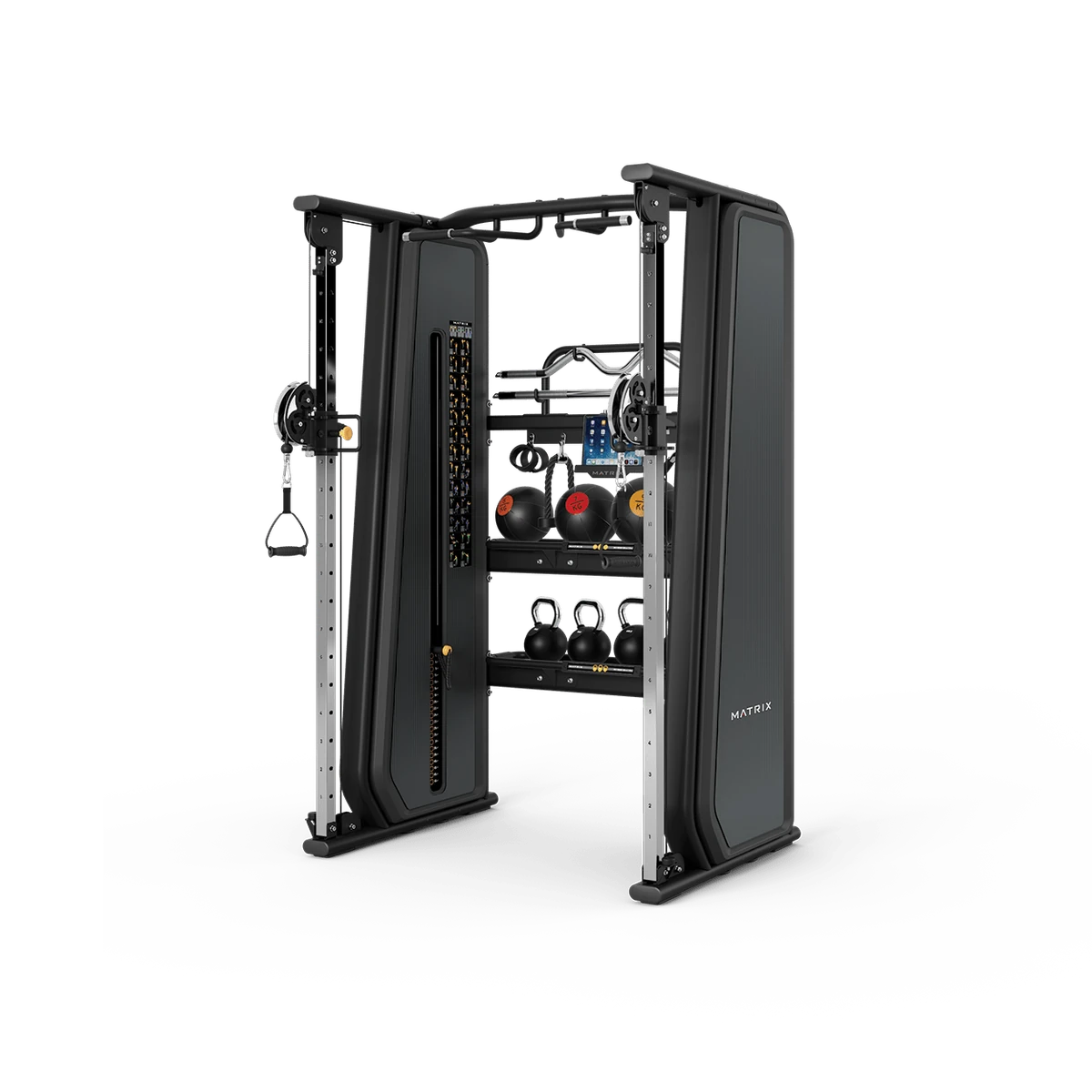
Functional trainer
OS-01Two cable towers, a pull-up bar and accessory storage: dozens of exercises from one footprint.
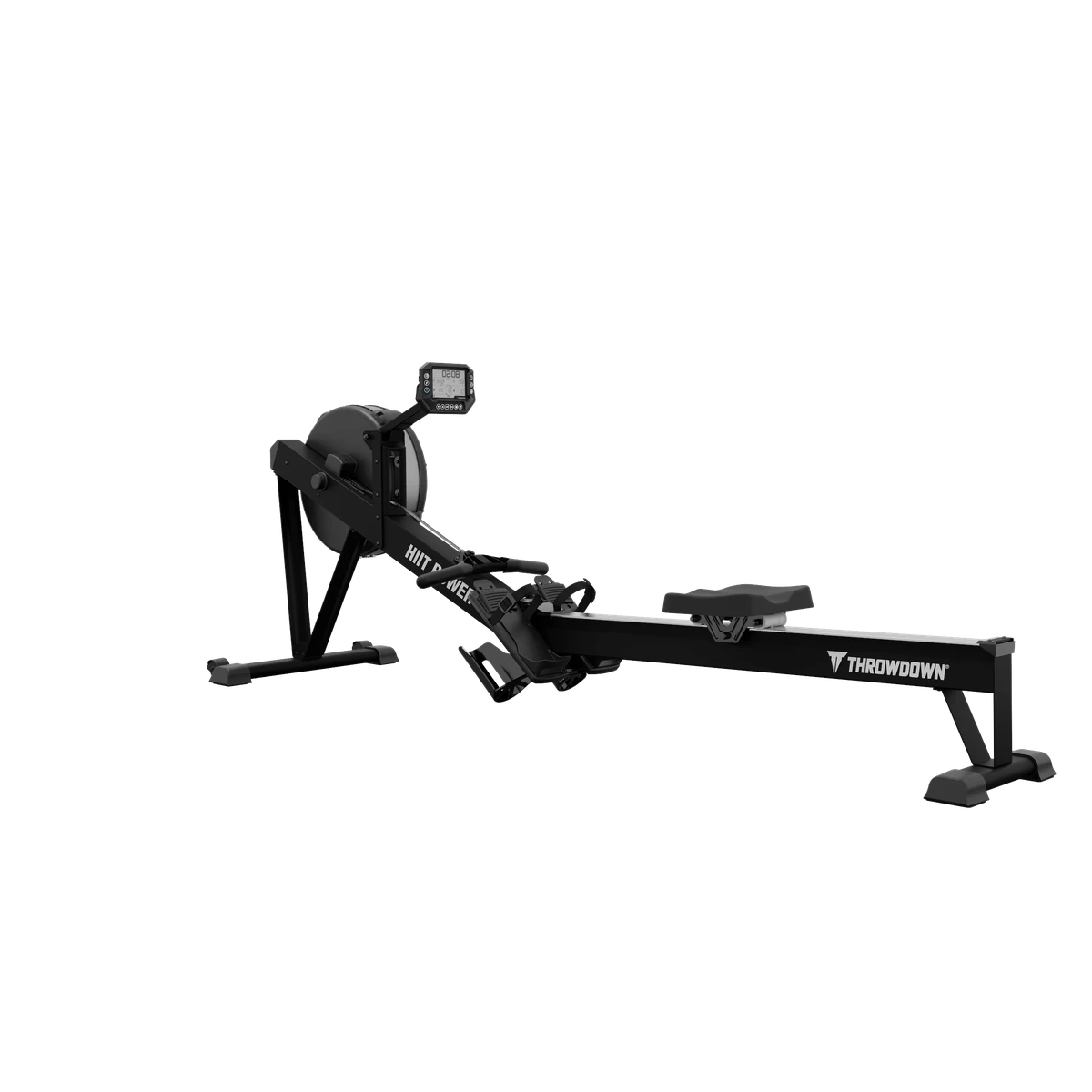
Rower
OS-02Full-body conditioning with no motor, a small footprint and nothing to plug in.
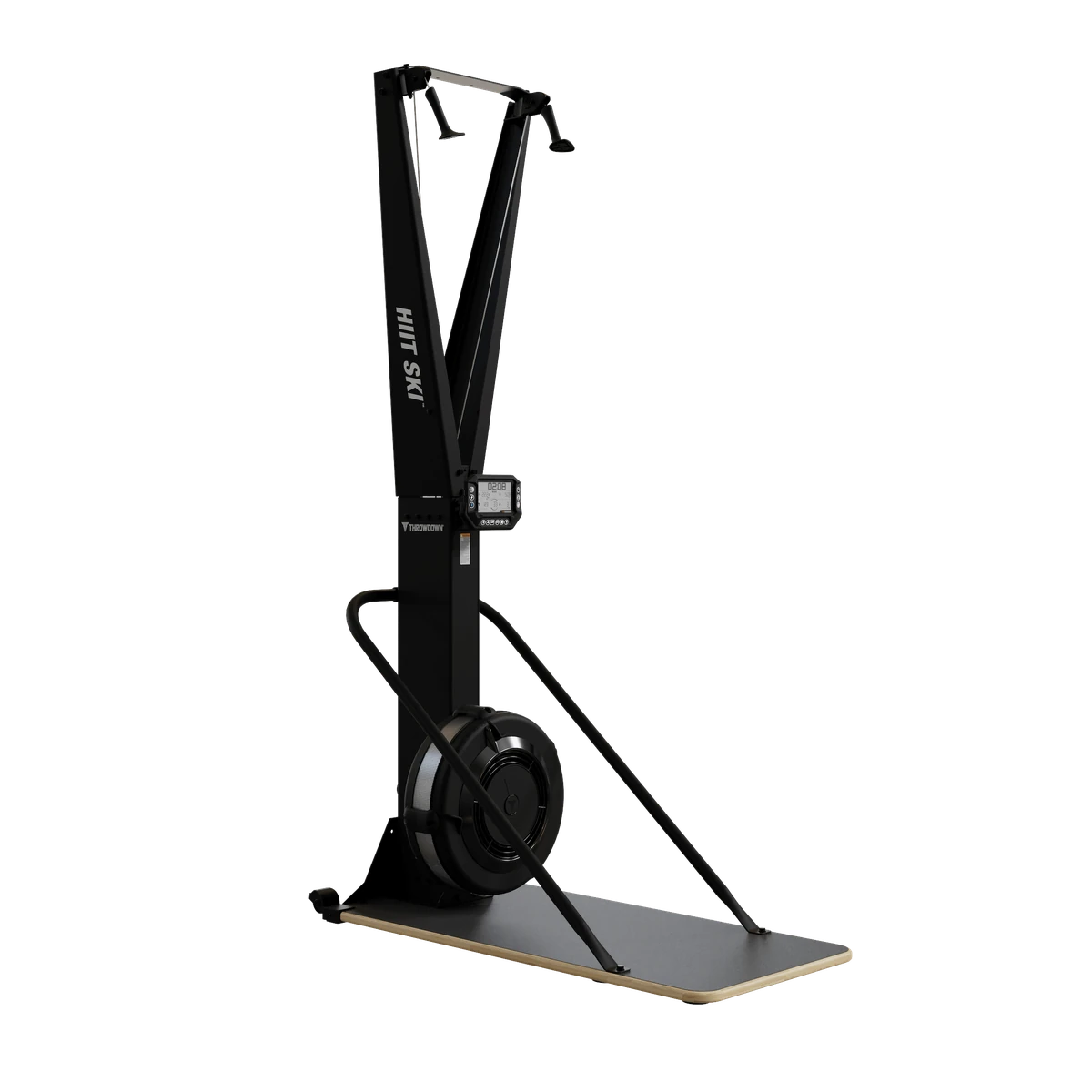
Ski erg
OS-03Upper-body and full-body conditioning on a small floor-standing base, with no power needed.
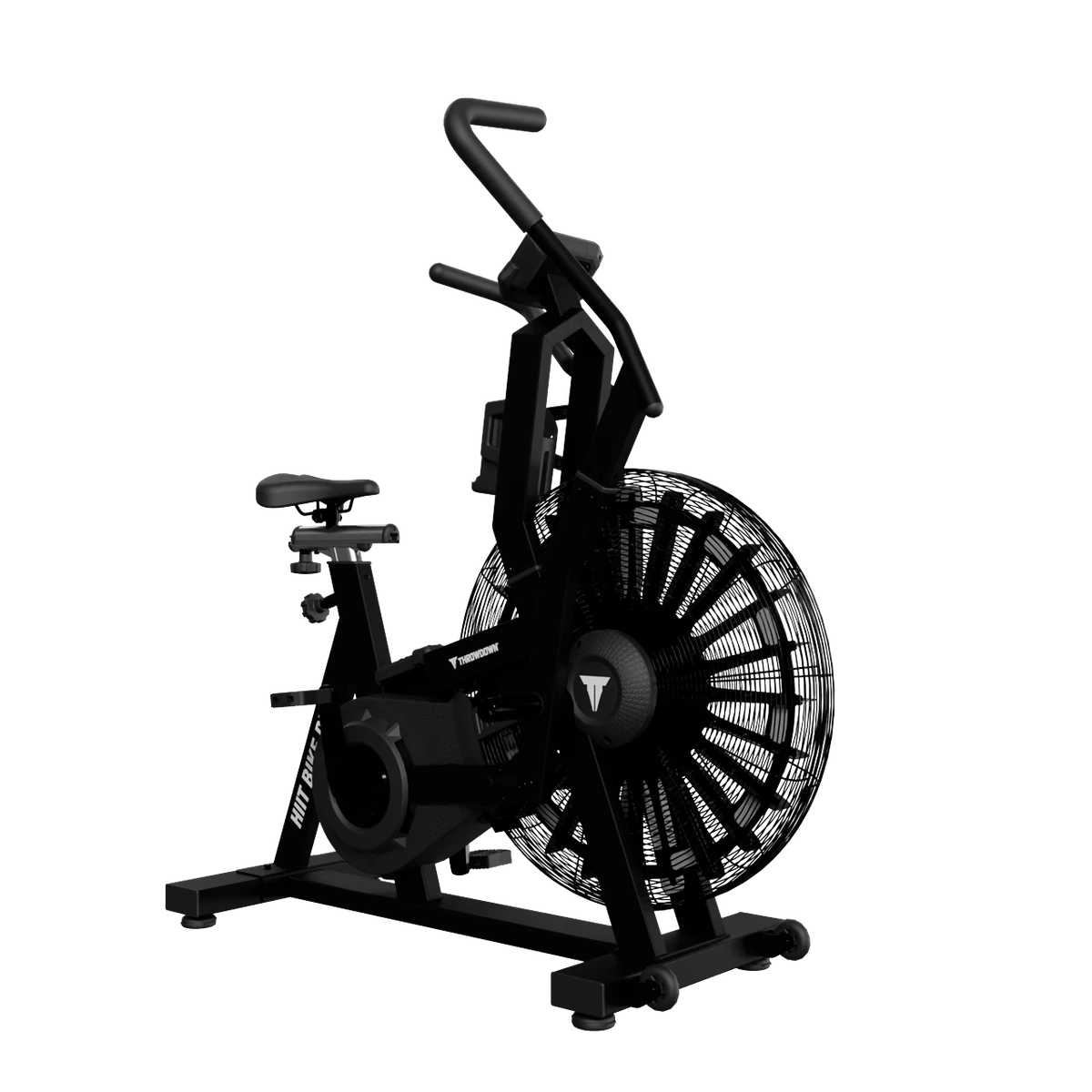
Air bike
OS-04Self-powered cardio that works anywhere a crew member can sit, with no power draw.
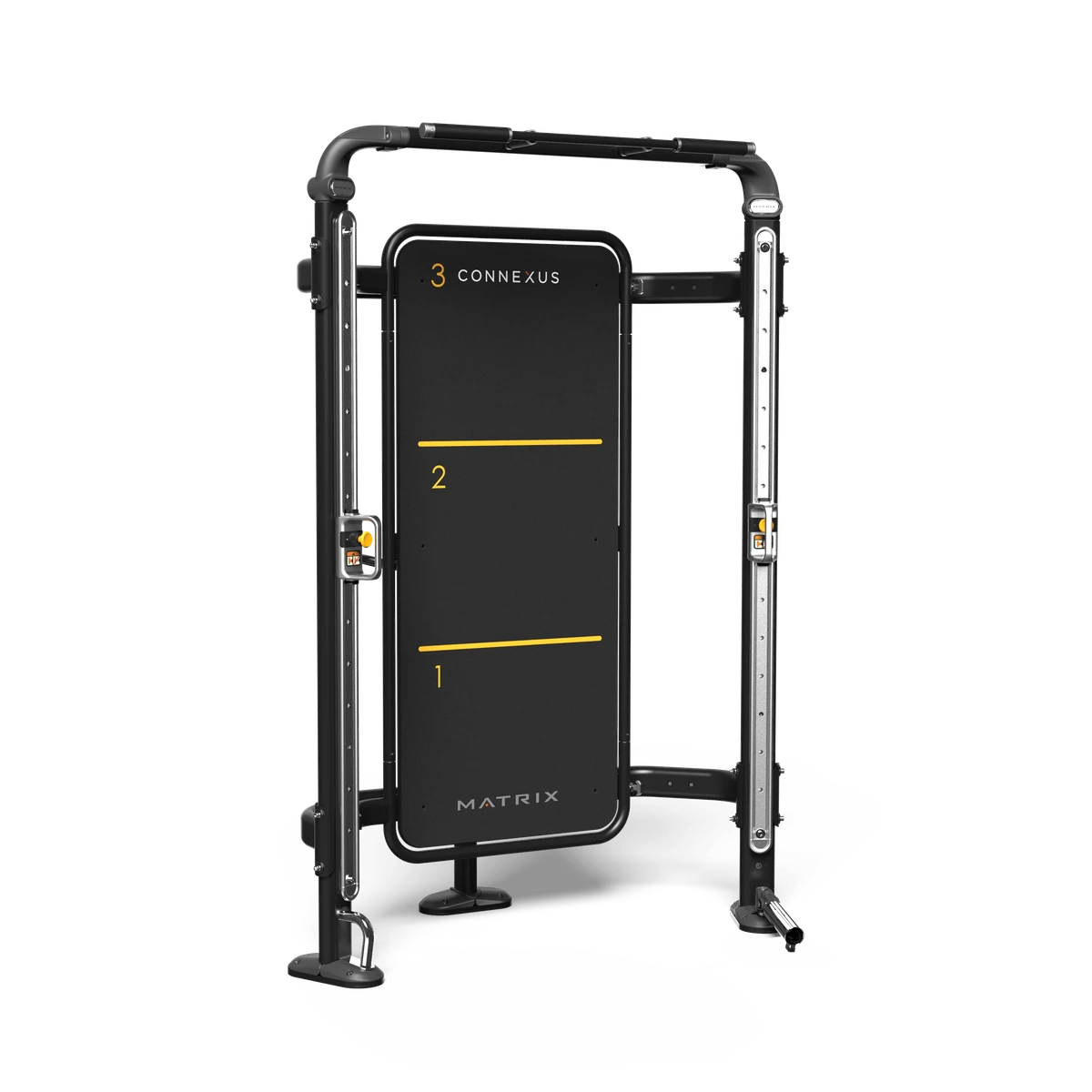
Compact functional frame
OS-05A pull-up bar and a medicine-ball target on one frame, for bodyweight and functional work in a corner.
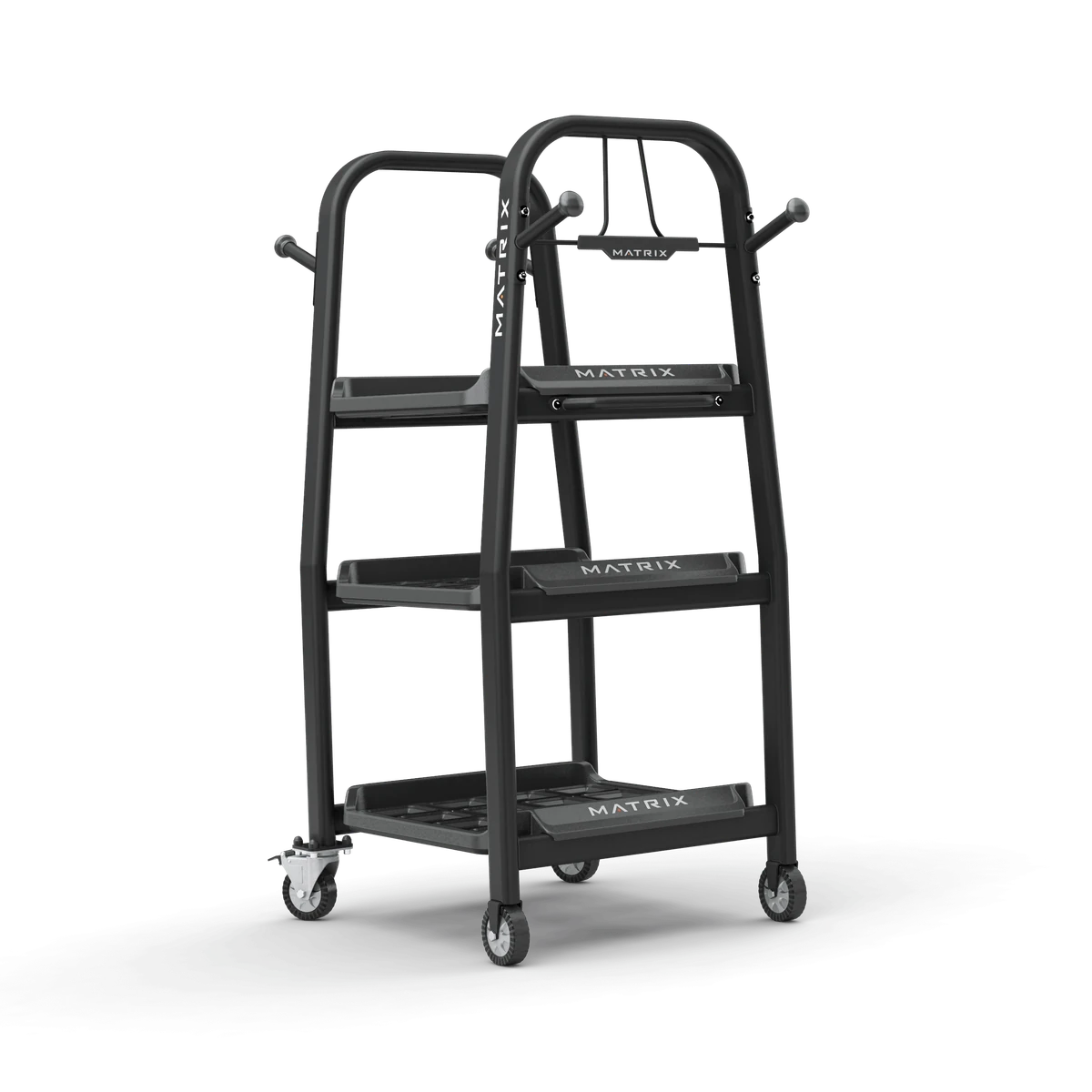
Storage
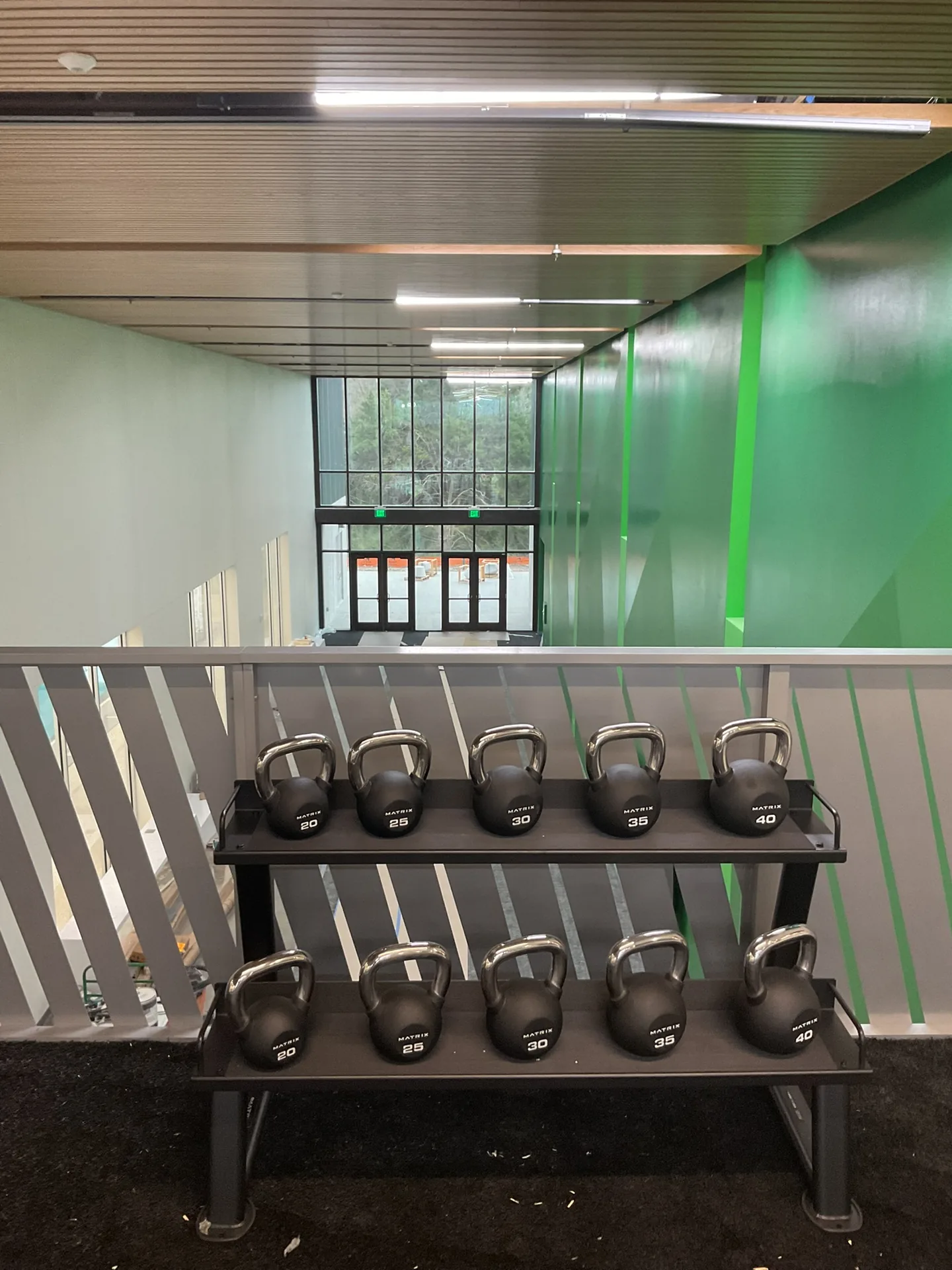
OS-06Dumbbells, balls and bands kept in one place — strapped or chocked at sea, so nothing moves when the room does.
Brands and models are chosen for the room and the budget, not from one catalog; the pieces above show the kind of equipment, not a fixed package.
Compact crew gyms for rooms that move, corrode and sit hours from shore
Fit Supply supplies crew-gym equipment for offshore operations in the Gulf of Mexico — on vessels and on platforms — chosen for small rooms, low headroom and salt air, and delivered to your dock or shore base. Offshore work is supply only: we specify, source and deliver, and fixing and upkeep at sea stay with your crew.
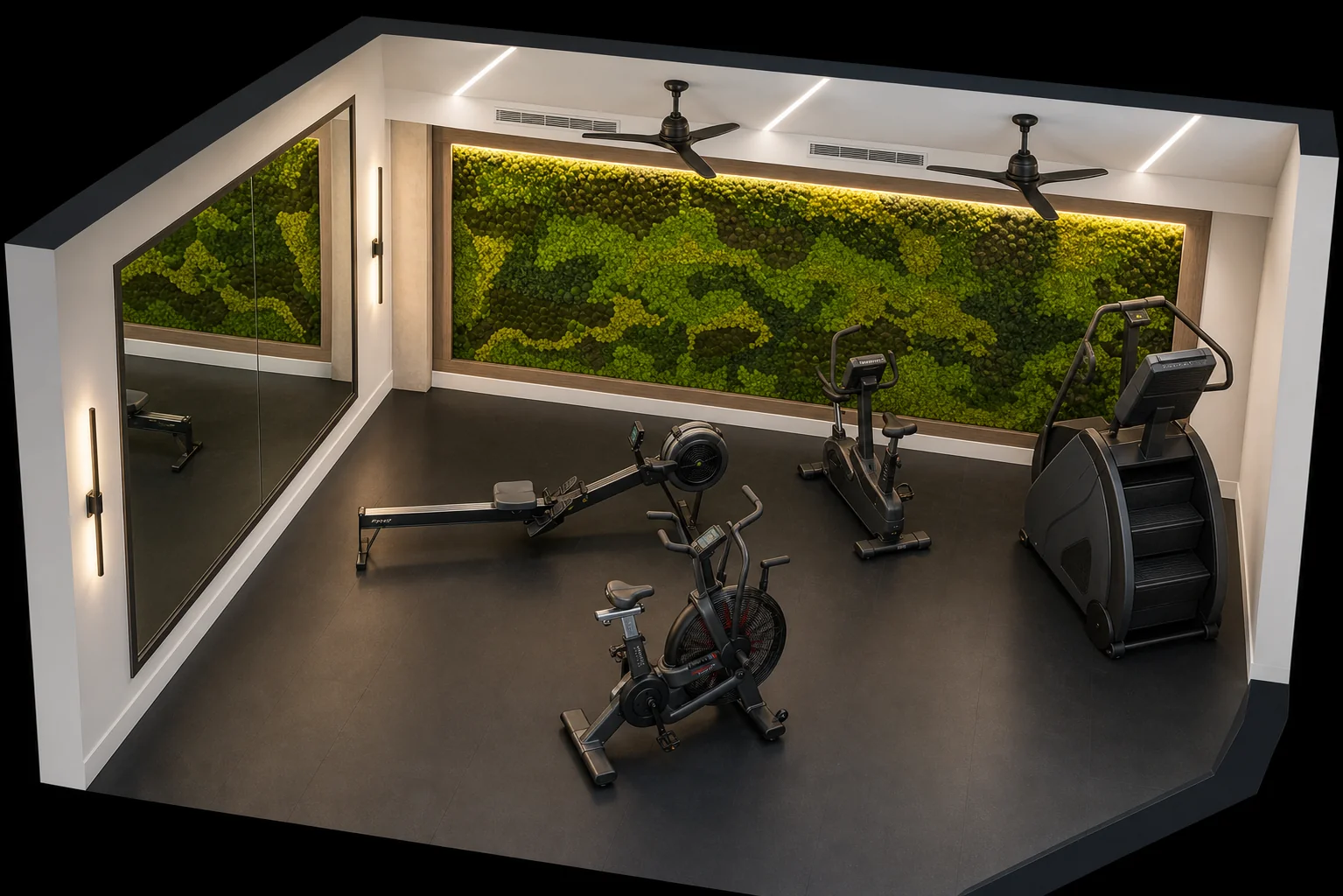
An offshore gym is usually a converted cabin or a module. Inside a standard container there is about 2.36 meters of headroom — roughly 7 feet 9 inches — and 2.69 meters in a high-cube unit. That single number rules out most power racks, tall cable towers and anything lifted overhead, and it is why offshore rooms are built around compact functional trainers, low-profile multi-stations, adjustable benches, dumbbells and space-efficient cardio.
Everything is chosen for an environment that moves and corrodes. Equipment that can be anchored, finishes that stand up to salt air, and machines that do not depend on a technician’s visit are worth more offshore than a longer feature list. Onshore crew quarters and shore bases are a different matter — there we design, supply and install like any other site; see workforce housing and camps.
Where offshore crews train
Four settings, each with its own limits on space, weight and access.
-
Offshore supply vessels
Crew gyms in converted cabins, where every piece has to work in a small room and stay put underway.
-
Platforms
Gym rooms and modules on fixed and floating platforms, sized to the crew on each hitch.
-
Container and module gyms
Equipment chosen for 20 ft and 40 ft units, with the headroom and floor area those boxes allow.
-
Shore bases and crew housing
Onshore quarters and dock facilities, where we design, supply and install the full room.
What decides an offshore gym
Headroom comes first
Inside dimensions of standard shipping containers, from a freight forwarder’s published table (Mainfreight):
- 20 ft standard — 5.89 m long, 2.35 m wide, 2.36 m high inside: about 149 sq ft of floor.
- 40 ft standard — 12.05 m long, 2.35 m wide, 2.36 m high inside: about 305 sq ft.
- 40 ft high-cube — the same floor with 2.69 m of headroom, which brings overhead pressing and pull-ups back into play.
Converted cabins vary more, so we work from the room’s own measurements, door and hatch sizes and the route aboard before anything is chosen.
Weight, lifting and certification
Offshore containers are certified as lifting units — under DNV 2.7-1 an offshore container is limited to a maximum gross mass of 25,000 kg — and the standard notes that loose or permanent equipment inside is not covered by the container’s certification unless specially agreed (DNV 2.7-1). We supply weights for every piece so the module’s owner can check them against the data plate and agree how heavy items are secured.
Motion and salt air
Sea spray and salt-laden air are the main cause of equipment degradation at sea, so we favor sealed, corrosion-resistant finishes and stainless fixings where a manufacturer offers them, and equipment that can be anchored to the deck or wall. Fewer moving parts and no motor where possible means fewer things that fail between port calls.
Getting it aboard
We consolidate and label each order by vessel or platform and deliver it to your dock, warehouse or shore base, packed for the transfer. Lifting it aboard and fixing it in place stay with your crew and your lifting plan. On-site service is offered in Texas and Arizona; offshore, warranty claims come back to us and we handle them with the manufacturer.
What an offshore order includes

A list built for the room
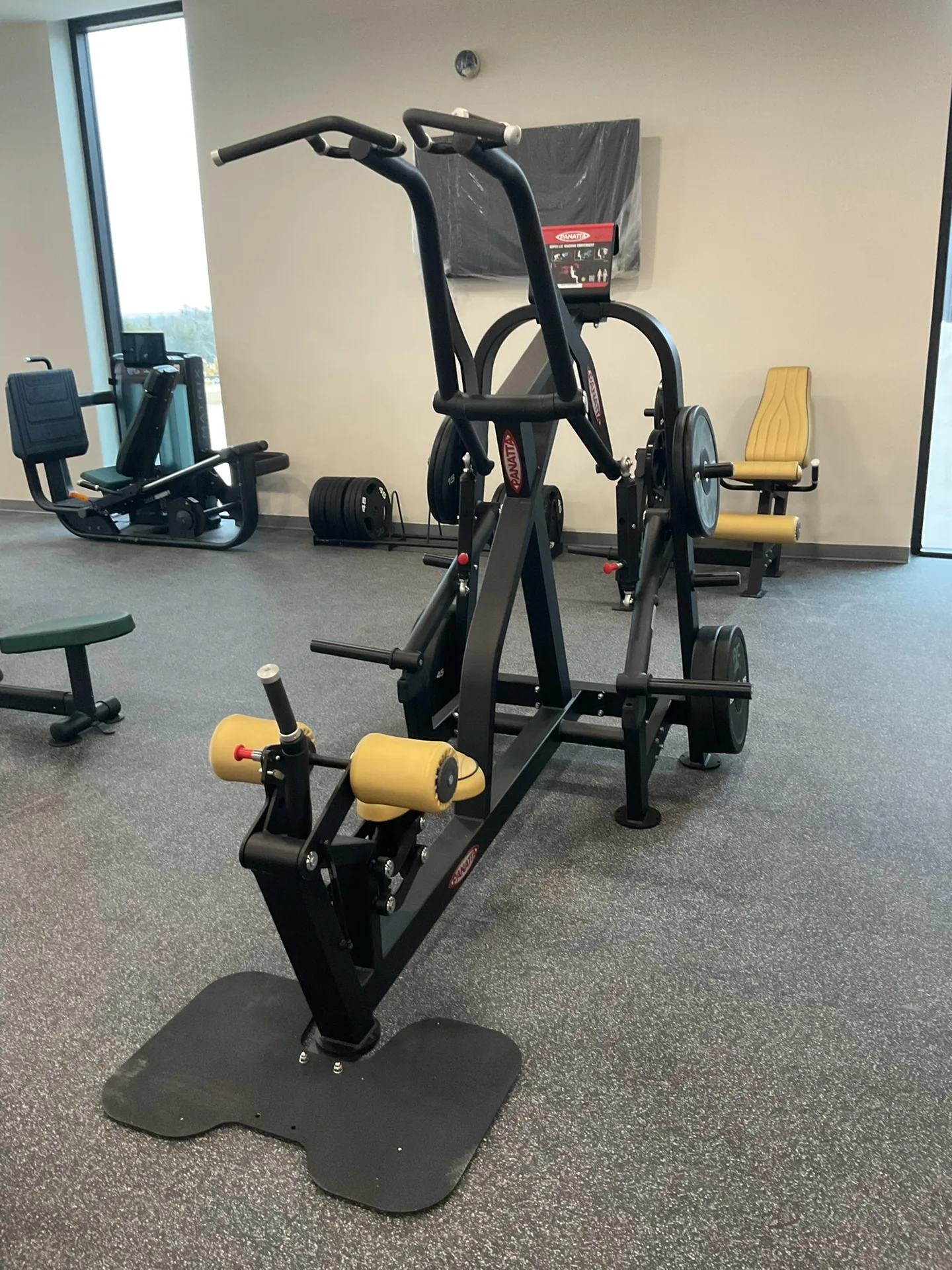
Equipment chosen from the room’s measurements and headroom, with weights and footprints for every piece so the crew knows what is arriving.

Delivered by vessel or platform
Consolidated and labeled per vessel or platform and delivered to your dock or shore base, so nothing is sorted on the quayside.

Warranty handled onshore
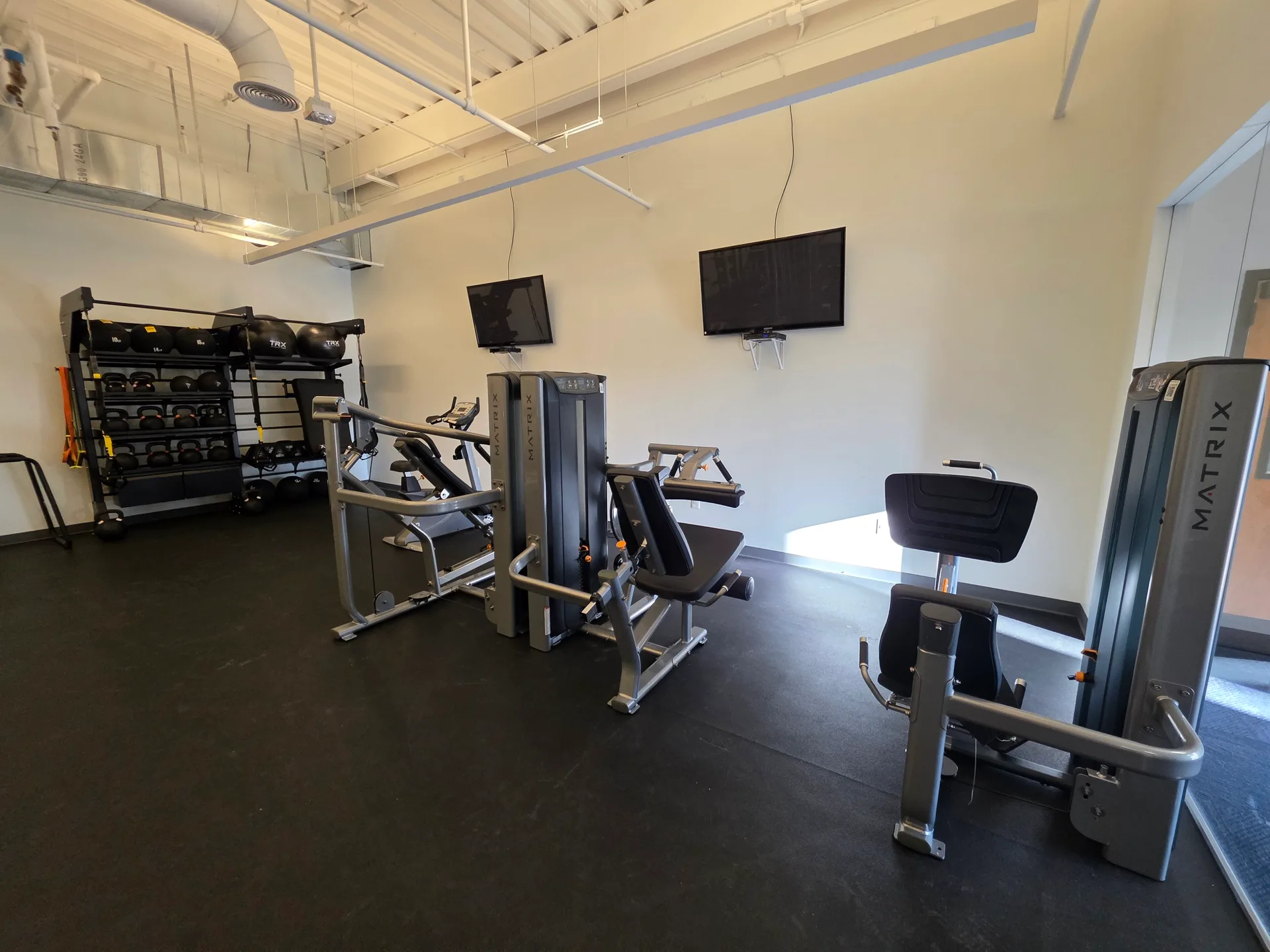
Manufacturer warranties passed through in full, with claims handled by us rather than by the crew. See extended warranties.
In short
Fit Supply supplies offshore gym equipment for vessels and platforms in the Gulf of Mexico: functional trainers, rowers, ski ergs, air bikes, benches and storage chosen for about 2.36 m of headroom in a standard container (2.69 m in a high-cube), motion and salt air, and delivered to the operator’s dock or shore base. Offshore work is supply only.
Offshore gym equipment — questions
What gym equipment fits on an offshore vessel or platform?
Compact, low-profile equipment that works within about 2.4 meters of headroom: a functional trainer that fits the room, adjustable benches and dumbbells, a rower, a ski erg, an air bike, and secured storage. Tall power racks and overhead lifting usually do not fit a standard container or cabin.
What fits in a 20 ft or 40 ft container gym?
A standard 20 ft container has about 149 square feet of floor and 2.36 meters of headroom inside; a 40 ft unit about 305 square feet. A 20 ft box typically takes a functional trainer that fits its headroom, two or three pieces of cardio, a bench, dumbbells and mats; a 40 ft unit or a 40 ft high-cube adds room for more stations and, with the extra headroom, some overhead work.
Do you install or service equipment offshore?
No. Offshore work is supply only: we specify, source and deliver to your dock or shore base, and fixing equipment in place at sea stays with your crew. Onshore crew quarters and shore bases can be fully installed, and on-site service is offered in Texas and Arizona.
Can offshore gym equipment be bolted down?
Yes. We favor equipment that can be anchored to the deck or wall and supply the weight and footprint of every piece, so the vessel or module owner can agree fixings and check them against the unit’s data plate.
How do you deal with salt air and corrosion?
By choosing sealed, corrosion-resistant finishes and stainless fixings where a manufacturer offers them, and equipment with fewer moving parts and no motor where possible. Salt-laden air is the main cause of equipment degradation at sea, so finish matters more offshore than features.
Where do you deliver offshore orders?
To your dock, warehouse or shore base, consolidated and labeled by vessel or platform. We supply nationwide, and Gulf of Mexico operators are the offshore customers we serve today.