


Maintenance
What Happens on a Service Call
Why the First Visit Diagnoses and the Second Visit Repairs
The most common surprise on a first service call is that it does not end in a repair. That is not a failure of the visit — it is what the visit is for, and understanding why makes the second visit fast instead of frustrating.
Parts are not stocked anywhere in this industry
This is the fact that shapes everything else. A commercial fitness technician does not carry a van of console boards, drive motors and lift actuators, because the range of models in service across a single portfolio makes it impossible — a rolling stock covering even the common failures would run to hundreds of parts, most of which never move. Any company promising a first-visit repair on an unseen fault is guessing about which fault it is.
The first visit is a diagnosis, and the serial number is the point of it
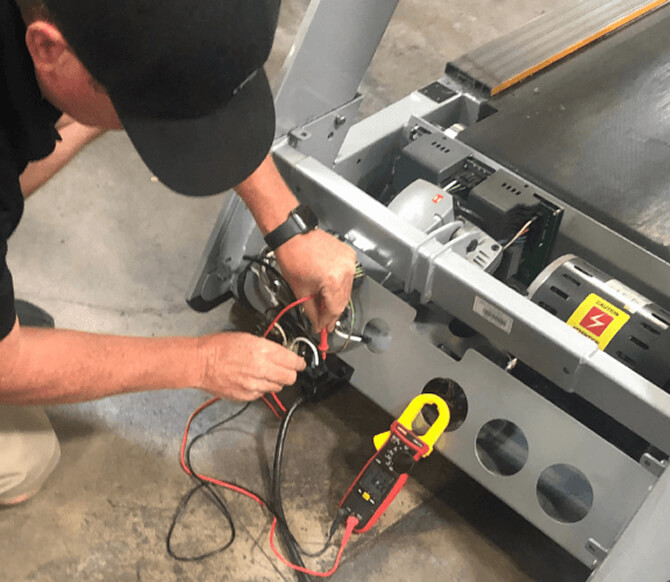
The technician confirms the reported symptom, reproduces it where possible, and works back to the failing component rather than the visible one — a treadmill that shuts down under load may be a motor, a controller, a belt friction problem or supply voltage, and those are four different parts. The serial number identifies the exact build, which is what a manufacturer parts desk answers to. A model name is not enough: the same model over a production run can take different boards.
What you should get back from it
A useful call ends with a written outcome: what failed, what part it needs, what the repair will cost, and whether the machine is safe to leave in service meanwhile. That last item matters more than it sounds — some faults are cosmetic and some are a reason to tag a machine out, and an unstaffed room has nobody to make that judgment. Where a fault turns out to be adjustment rather than failure, the call ends there.
Warranty changes the paperwork, not the sequence
A machine under manufacturer warranty still needs the same diagnosis; what changes is who pays for the part and how it is ordered, which usually means a claim against that serial before anything ships. Labor and warranty terms differ by manufacturer and by the age of the unit, so the answer comes from the specific claim rather than a general rule. Repairs, warranty work and diagnostics are quoted and approved per property.
Preventive maintenance is what makes service calls rarer
Most of what a technician finds on a reactive call is something a scheduled visit would have caught earlier and cheaper — belt tension, deck wear, loose hardware, lubrication that stopped reaching a pivot. That is the whole argument for a program rather than a phone number, and it is why cadence is set by how hard a room is used rather than by the calendar. The three preventive maintenance levels set out what each visit covers.
Published August 17, 2026 · Updated August 21, 2026 · 5 minutes read
More on equipment service and preventive maintenance

The Three Levels of a Preventive Maintenance Program
Silver inspects, adjusts and lubricates visible points. Gold adds full lubrication, internal cleaning and deck waxing. Platinum adds exterior and electrical. Read the post.

Gym Equipment Service and Maintenance in Arizona
Arizona service is run from Chandler across the state. What heat, dust and a seasonal population change about a maintenance schedule. Read the post.

When to Repair a Machine and When to Replace It
Repair-or-replace turns on part availability, cost against replacement, failure pattern and how the room uses the machine — not on the age on the asset tag. Read the post.
In short
A service call starts with a diagnosis: the technician confirms the fault, identifies the exact part for that serial number, and reports what it will take. Parts are not stocked anywhere in this industry, so most repairs need a return visit once the part arrives. Repairs and diagnostics are quoted and approved per property. Fit Supply has equipped commercial facilities since 2007, and provides service and preventive maintenance in Texas — delivered directly by Fit Supply or through our sister company, On Site Fitness Service — and in Arizona.
Part of what we do on equipment service and preventive maintenance.




Common questions
Why can a repair not be finished on the first visit?
Parts are not stocked anywhere in this industry. The range of models across a single portfolio would need hundreds of parts on a van, most of which never move, so the first visit identifies the exact part for that serial number and the return visit is the repair.
What should a service call report include?
What failed, which part it needs, what the repair will cost, and whether the machine is safe to leave in service meanwhile. That last point matters most in an unstaffed room, where nobody is there to judge whether a fault is cosmetic or a reason to tag the machine out.
Does a warranty change how the call works?
It changes the paperwork, not the sequence. The machine still needs the same diagnosis; what differs is who pays for the part and how it is ordered, usually a claim against that serial before anything ships. Labor and warranty terms vary by manufacturer and by the age of the unit.
Can a service call end without any repair at all?
Often, and that is a good outcome. Where a reported fault turns out to be adjustment, tension, leveling or lubrication rather than a failed component, the call ends there. It is also most of what a scheduled preventive visit catches before it becomes a call in the first place.
Where does Fit Supply run service calls?
Nationwide, through our network of 30+ certified service partners — and in Texas and Arizona, from the Irving and Chandler offices, Fit Supply is that provider directly, running our own Silver, Gold and Platinum program. Equipment supply, layout and design, and flooring are nationwide from either location too.