

Public Safety
What Makes a Fire Station Gym Different
Upper Floors, Rotating Shifts and Nobody Watching
Fire stations have been recurring work for Fit Supply since 2019, across more than sixty cities in Texas and Arizona. The constraints below are the ones that come up on nearly every station, in the order they usually bite.
The room is often above where people are sleeping
This is the constraint that decides the most and gets raised the least. Station gyms are frequently on an upper floor, and directly below them are bunk rooms occupied by crews trying to sleep between calls. Impact noise transmitted through the structure is not a comfort issue in that setting; it is a rest issue for people who then drive an engine.
It is also a structural question before it is an acoustic one. IBC Table 1607.1 designs gymnasium and fitness areas for a 100 psf live load, against 40 psf for ordinary residential floor areas and 30 psf for sleeping areas. A room converted upstairs in an older station may never have been designed for the use it is now being given, and that is a question for the engineer of record rather than for an equipment supplier.
Rotating shifts mean the room never really closes
A station gym does not have an off period. Crews use it around their shifts, which means at every hour, and the equipment wears by hours of use rather than by the calendar. That is why a maintenance schedule for a station should be set against usage rather than a fixed date, and why light-commercial equipment specified to hit a budget tends to be a false economy here — the room simply does not stop.
Job-task conditioning is not general fitness
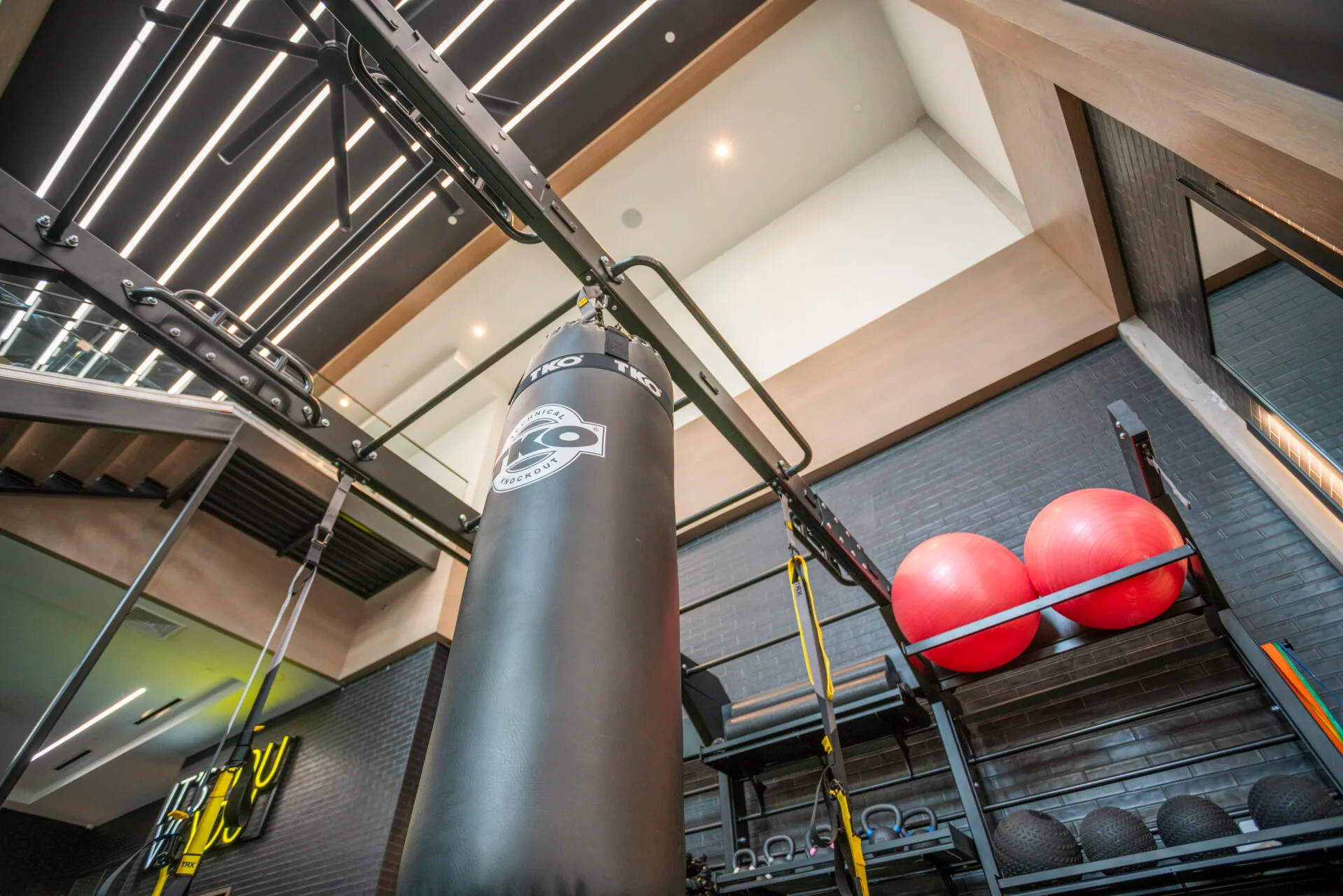
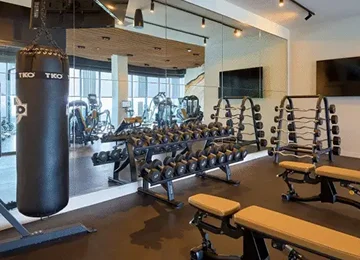
Firefighters train for a specific physical job: carrying, dragging, climbing and working in gear. That pushes the specification toward loaded carries, sleds, functional rigs and heavy strength work more than a general-population room would — which runs directly into the floor loading and the sleeping quarters below. Resolving that tension is most of the design work, and it is usually resolved by where the equipment goes rather than by removing it.
Nobody is supervising it
There is no attendant. Equipment has to be safe to use without instruction and durable enough that a fault is obvious rather than subtle. In practice that argues for fewer, better machines with clear guarding over a larger count of lighter ones, and for a layout that keeps loaded movements away from circulation.
Public procurement has its own timing
County jails and detention centers buy along the same route with a security review added on top — see correctional facility fitness equipment. Municipal buyers work to fiscal-year boundaries, procurement thresholds and bid requirements, and some have lease-purchase mechanisms available to them that private buyers do not. Those constraints are far easier to accommodate at the quoting stage than after a proposal has been issued — a quote that has to be reissued to satisfy a rule discovered later costs a cycle nobody has spare.
In Texas there is one more: a commercial project with an estimated cost of $50,000 or more must be registered with TDLR and reviewed by a Registered Accessibility Specialist, with registration due within 30 days of submitting for permit.
Published August 15, 2026 · 5 minutes read
In short
A fire station gym is used by rotating shifts at all 24 hours, with no supervision, and it is very often on an upper floor above sleeping quarters — where IBC Table 1607.1 designs the floor below for 30 psf and a fitness area for 100 psf. Those three facts drive the specification more than budget does — they decide the flooring, the equipment mix and, in many buildings, whether heavy free-weight work belongs in the room at all.
Common questions
Can a fire station gym go on an upper floor?
Often, but it has to be confirmed by the engineer of record from the building's drawings. IBC Table 1607.1 designs fitness areas for a 100 psf live load against 40 psf for ordinary residential areas and 30 psf for sleeping areas, and many station gyms sit directly above bunk rooms.
What flooring does a station gym need?
Specify by zone rather than by room. Cardio and selectorized areas are generally well served by 8 mm rubber, and any area where loaded bars come down needs a heavier build-up, often with a dedicated platform. Where crews sleep below, the acoustic performance of the assembly matters as much as the thickness.
How often should station equipment be serviced?
Against hours of use rather than the calendar. A station gym is used by rotating shifts at all hours and has no off period, so belts, decks, bearings and cables wear faster than a fixed schedule assumes.
What equipment suits job-task conditioning?
Loaded carries, sleds, functional rigs and heavy strength work map better to the physical demands of the job than a general-population cardio room does. The design question is where that equipment goes given the floor loading and what is below the room, not whether to include it.
Do municipal buyers have different purchasing options?
Frequently. Public entities often have lease-purchase arrangements structured around fiscal-year appropriations, alongside procurement thresholds and bid requirements. Telling us those constraints at the start avoids a quote having to be reissued to satisfy a rule discovered later.